Introduction to the Vietnam dental CAD design talent pool in 2026: skills, training and quality standards
The Vietnam dental CAD design talent pool in 2026: skills, training and quality standards represents a rapidly evolving and highly skilled workforce supporting the global dental industry’s shift towards digital workflows. As dental labs and dental service organizations (DSOs) increasingly outsource CAD/CAM design services, Vietnam has emerged as a key player due to its blend of technical expertise, robust training programs, and adherence to rigorous quality standards.
This article delves deep into the factors shaping Vietnam’s dental CAD design talent pool, highlighting how the country has positioned itself as a reliable outsourcing destination for crown & bridge, implants, surgical guides, dentures, orthodontic aligners, and night guards. We will analyze the skill sets, education pathways, certification systems, and quality control processes that define this emerging market, offering insights for dental labs and DSOs considering outsourcing partnerships.
What is the current state of Vietnam’s dental CAD/CAM design industry?
The current state of Vietnam’s dental CAD/CAM design industry is characterized by rapid growth, increasing adoption of advanced technologies, and a focus on international quality standards.
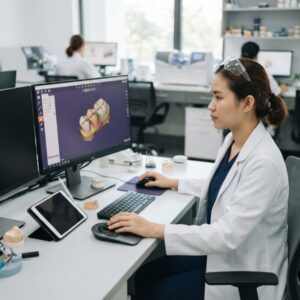
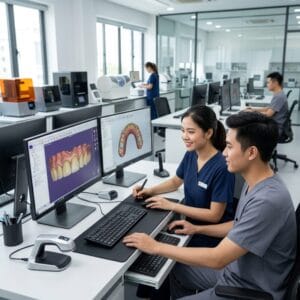
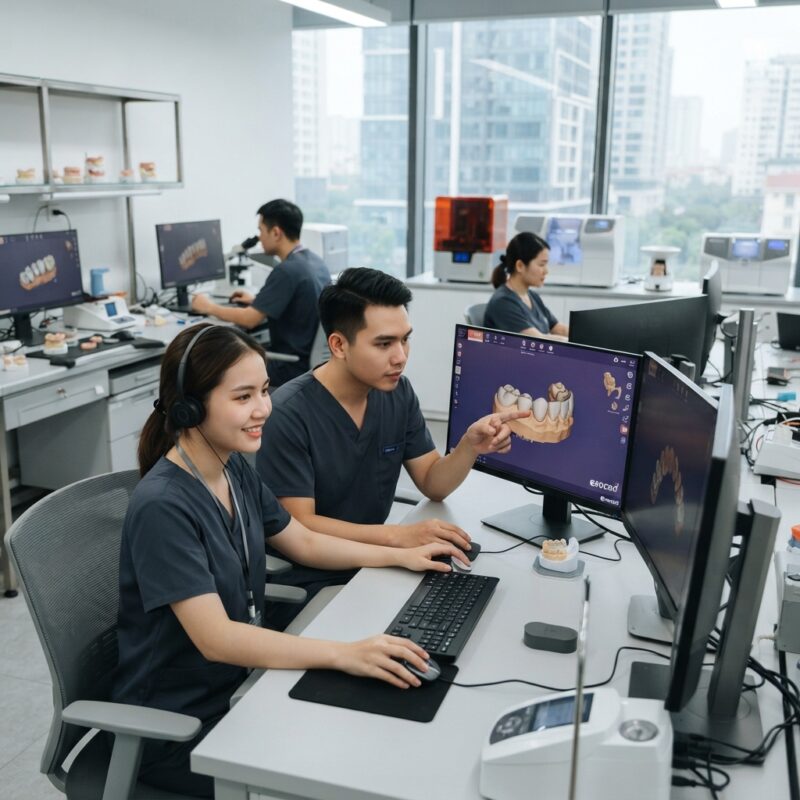
Vietnam has invested heavily in digital dental education and infrastructure over the past decade, enabling a new generation of dental CAD technicians proficient in software such as exocad and 3Shape. The industry is supported by government initiatives and private partnerships aimed at boosting healthcare and medical device sectors. Many dental labs in Vietnam now offer comprehensive CAD design outsourcing services to clients worldwide, ranging from crown & bridge designs to complex implant cases and surgical guides.
Furthermore, Vietnam benefits from a cost-effective labor market combined with high English proficiency among young professionals, facilitating smooth communication with global clients. This combination has helped the Vietnam dental CAD design talent pool in 2026: skills, training and quality standards reach a competitive level that meets or exceeds many international benchmarks.
Which skills define the Vietnam dental CAD design talent pool in 2026?
The Vietnam dental CAD design talent pool in 2026: skills, training and quality standards are distinguished by a mix of technical, clinical, and soft skills tailored to modern digital dental workflows.
- Proficiency in CAD software: Skilled use of leading dental CAD software platforms such as exocad and 3Shape is a baseline requirement. Vietnamese designers are trained to handle complex cases involving crowns, bridges, implants, and orthodontic appliances efficiently.
- Understanding of dental anatomy and prosthetics: Knowledge of dental morphology, occlusion principles, and prosthetic design ensures that digital models meet clinical requirements and patient comfort standards.
- Attention to detail and quality control: The ability to conduct rigorous quality checks and optimize digital designs for manufacturability and fit is a critical skill within the talent pool.
- Communication and collaboration: Effective communication skills facilitate close collaboration with overseas dental labs and clinicians, ensuring design specifications are met accurately.
- Adaptability to new technologies: Continuous learning and adaptability to emerging CAD/CAM tools, 3D printing technologies, and digital scanning methods are vital for staying competitive.
How does training contribute to the Vietnam dental CAD design talent pool in 2026?
Training is fundamental to the development of the Vietnam dental CAD design talent pool in 2026: skills, training and quality standards, providing structured pathways from novice to expert levels.
Vietnamese dental CAD technicians undergo formal education through specialized programs offered by universities and technical institutes focusing on dental technology and digital design. These programs combine theoretical coursework in dental anatomy and materials science with extensive practical CAD/CAM training.
Additionally, many training centers collaborate with global CAD software providers such as exocad and 3Shape to provide certified courses. Continuous professional development is encouraged through workshops and webinars covering new prosthetic design techniques, implant planning, and digital orthodontics.
On-the-job training within outsourcing companies also plays a critical role, allowing trainees to work on real clinical cases under expert supervision. This blend of formal education and practical experience ensures that the Vietnam dental CAD design talent pool in 2026: skills, training and quality standards is robust and industry-ready.
What quality standards govern the Vietnam dental CAD design talent pool in 2026?
The Vietnam dental CAD design talent pool in 2026: skills, training and quality standards is governed by internationally recognized quality management systems and protocols to ensure consistent output quality.
Most leading outsourcing providers in Vietnam comply with ISO 13485 standards for medical device quality management, which cover the digital design processes. This compliance ensures traceability, process control, and risk management throughout the design lifecycle.
Furthermore, dental CAD designers adhere to stringent internal quality assurance (QA) protocols, including multi-stage design reviews, digital fit simulations, and error detection algorithms. These QA steps are crucial for complex restorations such as implant-supported crowns or precision surgical guides.
Vietnamese providers also often align their processes with client-specific requirements and certifications, including those from the American Dental Association (ADA), ensuring their design files meet the highest clinical and manufacturing standards.
How does Vietnam’s talent pool compare with other global dental CAD design hubs?
Vietnam’s dental CAD design talent pool in 2026: skills, training and quality standards compares favorably with established global hubs, offering a unique combination of quality, cost-effectiveness, and cultural compatibility.
Compared to regions like Eastern Europe or India, Vietnam provides competitive pricing while maintaining high-quality output, leveraging its growing base of technically skilled designers and excellent English communication. The country’s commitment to adopting cutting-edge CAD/CAM software and training methodologies has accelerated its rise in the outsourcing market.
Although countries like the US and Germany have longer histories in dental CAD/CAM, Vietnam’s rapid development in education and quality assurance places it as a strategic alternative, especially for DSOs and labs seeking to scale their digital workflows efficiently without compromising standards.
What are the main challenges faced by the Vietnam dental CAD design talent pool in 2026?
The Vietnam dental CAD design talent pool in 2026: skills, training and quality standards faces challenges including talent retention, rapid technological changes, and standardization across providers.
One major hurdle is retaining experienced CAD designers amid growing global demand. Competitive offers from international companies and local startups require continuous incentives and career development opportunities.
Rapid advancements in CAD/CAM technology also demand ongoing training investments to keep skills current, which can strain smaller outsourcing labs with limited resources.
Standardizing quality and communication protocols across a diverse and expanding talent pool remains a priority to maintain client trust and reduce errors. Efforts to establish national certification frameworks and partnerships with international dental organizations are underway to address these issues.
Which software and technologies are most prevalent among Vietnam’s dental CAD designers?
The Vietnam dental CAD design talent pool in 2026: skills, training and quality standards predominantly utilizes industry-leading CAD/CAM platforms and complementary digital technologies.
Exocad and 3Shape dominate as the primary dental CAD software choices, favored for their user-friendly interfaces, versatility across prosthetic types, and integration capabilities with milling and 3D printing equipment. These tools enable designers to create precise digital models for crowns, bridges, implants, dentures, and orthodontic aligners.
In addition, many Vietnamese labs incorporate intraoral scanning data and digital impression workflows, often working with devices from brands like iTero to streamline design accuracy and reduce turnaround times.
Advanced 3D printing technologies from companies such as Formlabs and Asiga support rapid prototyping and surgical guide fabrication, enhancing the overall digital workflow capability of Vietnam’s talent pool.
How do training programs ensure quality standards in Vietnam’s dental CAD design workforce?
Training programs play a pivotal role in embedding quality standards within the Vietnam dental CAD design talent pool in 2026: skills, training and quality standards by combining theoretical knowledge with rigorous practical assessment.
Structured curricula include modules on international quality standards such as ISO 13485 and best practices for digital design validation. Trainees learn to perform comprehensive design checks, including margin accuracy, occlusion simulation, and implant positioning verification.
Many training centers also incorporate case-based learning, where students design for real or simulated clinical scenarios under supervision, fostering critical thinking and problem-solving skills essential for maintaining high-quality outputs.
Certification upon program completion often requires passing both written exams and practical tests, ensuring that graduates meet global outsourcing clients’ expectations. This systematic approach guarantees that the Vietnam dental CAD design talent pool in 2026: skills, training and quality standards is not only technically competent but also quality-conscious.
What role do dental labs and DSOs play in developing Vietnam’s talent pool?
Dental labs and DSOs are key catalysts in shaping the Vietnam dental CAD design talent pool in 2026: skills, training and quality standards through direct investment, mentorship, and collaborative partnerships.
Many established labs have set up in-house training academies or sponsor external education programs to upskill local designers. DSOs, with their larger clinical networks, create demand for specialized CAD designs such as surgical guides and implant prosthetics, pushing for higher technical standards.
This collaboration fosters a feedback loop where practical clinical needs inform training content, and newly trained designers contribute to improved service quality. Labs and DSOs also implement standardized workflows and quality control procedures, reinforcing consistency across the talent pool.
Such synergy helps Vietnam maintain its competitive edge as a premier outsourcing destination for digital dental design services.
What future trends will impact the Vietnam dental CAD design talent pool in 2026?
Several future trends are poised to shape the Vietnam dental CAD design talent pool in 2026: skills, training and quality standards, including AI integration, remote collaboration, and personalized digital dentistry.
Artificial intelligence is expected to automate routine design tasks, enabling Vietnamese designers to focus on complex customization and innovation. Training programs are adapting to include AI-assisted design skills.
Remote collaboration tools and cloud-based CAD platforms will enhance communication between Vietnamese designers and global clients, facilitating real-time feedback and faster turnaround.
Additionally, the movement towards personalized dentistry, including custom orthodontic aligners and digitally guided implant surgery, will require continuous upskilling and adoption of cutting-edge technologies, ensuring Vietnam’s talent pool remains at the forefront.
How can dental labs and DSOs leverage Vietnam’s dental CAD design talent pool in 2026?
Dental labs and DSOs can leverage the Vietnam dental CAD design talent pool in 2026: skills, training and quality standards by establishing strategic outsourcing partnerships that prioritize clear communication, quality assurance, and ongoing training support.
Choosing providers with certified designers, proven quality management systems, and experience across a broad range of prosthetic designs ensures high-quality digital outputs. Integrating Vietnam’s CAD design services into existing digital workflows can improve efficiency and reduce costs.
Furthermore, collaborative relationships that include joint training initiatives and technology sharing foster continuous improvement and innovation, maximizing the benefits of Vietnam’s skilled talent pool for crown & bridge, implant, denture, and orthodontic applications.
This approach enables labs and DSOs to meet increasing patient demands and complex case requirements with confidence, while scaling their digital design capacity.
What makes Vietnam a unique hub for dental CAD design outsourcing in 2026?
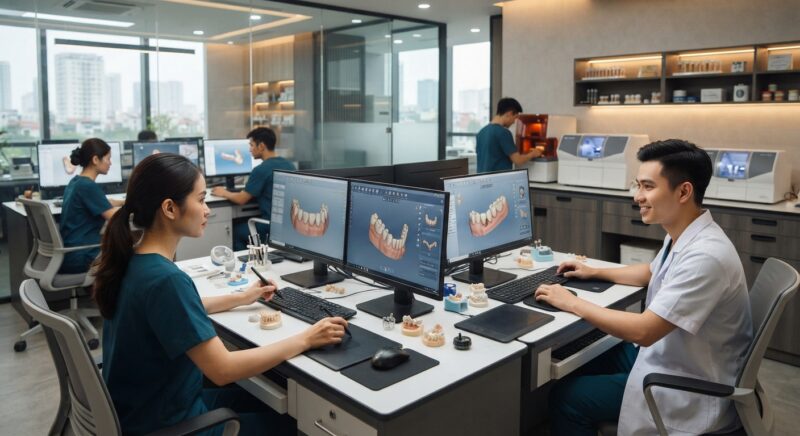
Vietnam stands out as a unique hub for dental CAD design outsourcing in 2026 due to its combination of high-quality skills, comprehensive training programs, cost advantages, and adherence to global quality standards.
The country’s strategic investment in education, technology adoption, and quality certification creates a workforce capable of delivering precise and innovative digital dental designs. Moreover, the cultural affinity, strong work ethic, and bilingual capabilities of Vietnamese CAD designers enhance collaboration with international clients.
Vietnam also benefits from a growing ecosystem of dental technology providers and manufacturers, supporting an integrated digital dentistry supply chain. This ecosystem flexibility allows outsourcing partners to access a wide range of services from digital design to 3D printing and finishing under one roof.
As a result, the Vietnam dental CAD design talent pool in 2026: skills, training and quality standards offers a compelling value proposition for dental labs and DSOs seeking reliable, scalable, and innovative digital dental design solutions.
Conclusion and call to action
Understanding the Vietnam dental CAD design talent pool in 2026: skills, training and quality standards offers dental labs and DSOs a pathway to harness world-class digital design expertise combined with cost-effective and reliable service delivery.
Implementing Effective Quality Control: Step-by-Step Guidance for Dental Labs Working with Vietnam CAD Designers
Ensuring consistent quality when outsourcing CAD design services to Vietnam requires dental labs and DSOs to implement rigorous quality control processes. These processes help identify design issues early, reduce remakes, and maintain excellent clinical outcomes. Below is a step-by-step guide to establishing an effective quality control workflow specifically tailored for collaborations with Vietnam’s dental CAD design talent pool.
Step 1: Define Clear Design Specifications and Expectations
Start by creating detailed, standardized design briefs that specify all clinical and technical parameters. These should include margin details, occlusion parameters, material preferences, and any laboratory-specific protocols. Clear communication upfront reduces ambiguity and minimizes revisions.
Step 2: Establish a Sample Approval Process
Before fully engaging with a new Vietnamese CAD designer or team, request a sample design case that represents typical work. Review this sample against your quality benchmarks to confirm compatibility with your lab’s standards.
Step 3: Train Your In-House Team on Vietnamese Design Practices
Understanding common methods and file formats used by Vietnam-based designers allows your technicians to better evaluate files and identify potential issues early in the workflow.
Step 4: Use Digital Tools for Quality Checking
Leverage software that can compare design files with scanned physical models or digital impressions. This helps detect deviations in margin fit, thickness, or anatomical contours before fabrication.
Step 5: Implement a Feedback Loop
Establish a structured feedback system where design errors or improvements are communicated promptly to the Vietnamese team. This loop fosters continuous quality improvement and skill refinement.
Step 6: Monitor Turnaround Times and Revision Rates
Track metrics such as average design turnaround time and frequency of revisions. High revision rates may indicate a need for additional training or clearer instructions.
Cost and Quality Considerations: Balancing Investment and Outcomes in Vietnam Dental CAD Design
While Vietnam offers competitive labor costs that make outsourcing dental CAD design attractive, labs and DSOs must carefully evaluate how cost savings align with quality and project complexity. Here are key practical considerations for balancing cost and quality when partnering with Vietnam’s dental CAD designers.
Understanding Pricing Models
Vietnamese dental CAD services typically offer pricing based on either per-case, hourly, or subscription models. Per-case pricing is common for labs with predictable volumes, while hourly rates may suit projects with evolving scope. Evaluate which model best fits your business needs and budget.
Cost Breakdown Beyond Labor
Remember that cost savings in design labor can be offset by expenses related to communication delays, file revisions, and potential remakes. Factoring in these hidden costs is critical for an accurate total cost of ownership calculation.
Quality Trade-Offs
Lower costs should not come at the expense of clinical accuracy or aesthetics. When reviewing vendor proposals, assess the following to ensure quality standards are met:
- Certifications and training credentials of the design team
- Examples of previous work and client testimonials
- Adherence to ISO or equivalent quality management systems
- Use of updated CAD software and hardware
Cost-Quality Optimization Checklist
- Confirm that the vendor’s pricing includes a defined number of revisions
- Request turnaround time guarantees to avoid costly delays
- Negotiate penalties or discounts for substandard work
- Ensure support for your preferred materials and prosthetic types
- Compare multiple vendors to benchmark price versus quality
Common Mistakes to Avoid When Outsourcing Dental CAD Design to Vietnam
Despite Vietnam’s growing reputation for dental CAD expertise, many dental labs and DSOs encounter pitfalls that can undermine the benefits of outsourcing. Understanding and avoiding these common mistakes can improve collaboration success and patient outcomes.
1. Inadequate Communication Channels
Failing to establish clear and reliable communication leads to misinterpretations of design instructions. Set up regular video calls, shared project management tools, and instant messaging platforms to maintain open dialogue.
2. Overlooking Time Zone Differences
Vietnam’s time zone can cause delays if not managed properly. Schedule overlapping working hours or use asynchronous workflows with clear deadlines to ensure smooth handoffs.
3. Neglecting Trial Periods
Jumping into large-scale outsourcing without testing the vendor’s capabilities through pilot projects often results in costly errors. Always start with smaller, lower-risk cases to evaluate quality and responsiveness.
4. Ignoring Cultural and Language Nuances
Misunderstanding cultural differences can hamper collaboration. Invest in cultural competence training for your team and consider bilingual coordinators to bridge communication gaps.
5. Insufficient File Format and Compatibility Checks
Using incompatible CAD file formats or software versions can delay production. Confirm supported formats and request test files before full engagement.
6. Relying Solely on Cost as a Decision Factor
Choosing vendors based only on low prices can result in poor design quality and higher downstream costs. Balance cost considerations with quality and reliability factors.
Market-Specific Opportunities and Challenges for Vietnam’s Dental CAD Talent Pool
Vietnam’s dental CAD design industry is shaped by unique market dynamics that offer both opportunities and challenges. Understanding these specifics can help dental labs and DSOs tailor their outsourcing strategies effectively.
Growing Domestic Dental Market
Vietnam itself has a rapidly expanding dental care market due to increasing urbanization and rising middle-class income. This domestic demand fuels the growth of local dental labs and provides a solid base for talent development.
Government Support and Investment
The Vietnamese government actively promotes technology-driven sectors including healthcare and digital manufacturing. Incentives such as tax breaks and infrastructure investments improve the ecosystem for dental CAD services.
Talent Retention and Career Progression
One challenge is retaining skilled CAD designers amid rising opportunities in other industries like software development and electronics manufacturing. Competitive salaries, ongoing training, and clear career paths are essential to maintain a skilled workforce.
Intellectual Property and Data Security Concerns
As dental data is sensitive and proprietary, labs must ensure that design partners in Vietnam comply with strict data protection protocols. This includes secure file transfer systems, NDAs, and compliance with relevant international privacy laws.
Logistical and Shipping Factors
Despite digital workflows, physical model or prosthetic shipments are sometimes necessary. Vietnam’s strategic location with major ports facilitates international shipping, but labs must account for customs clearance times and costs when planning production timelines.
Competitive Global Market Position
Vietnam competes with established hubs like India, Eastern Europe, and the Philippines. To stand out, Vietnamese CAD designers emphasize continuous skill upgrades, adoption of cutting-edge software, and competitive pricing structures.
Contact us today to explore how our experienced Vietnamese CAD design team can elevate your digital dentistry workflows with precision and efficiency.