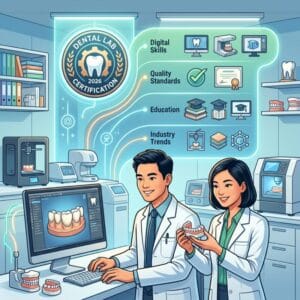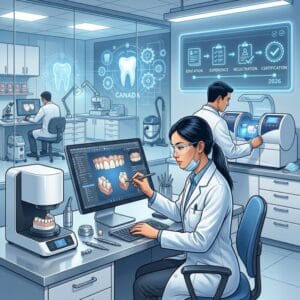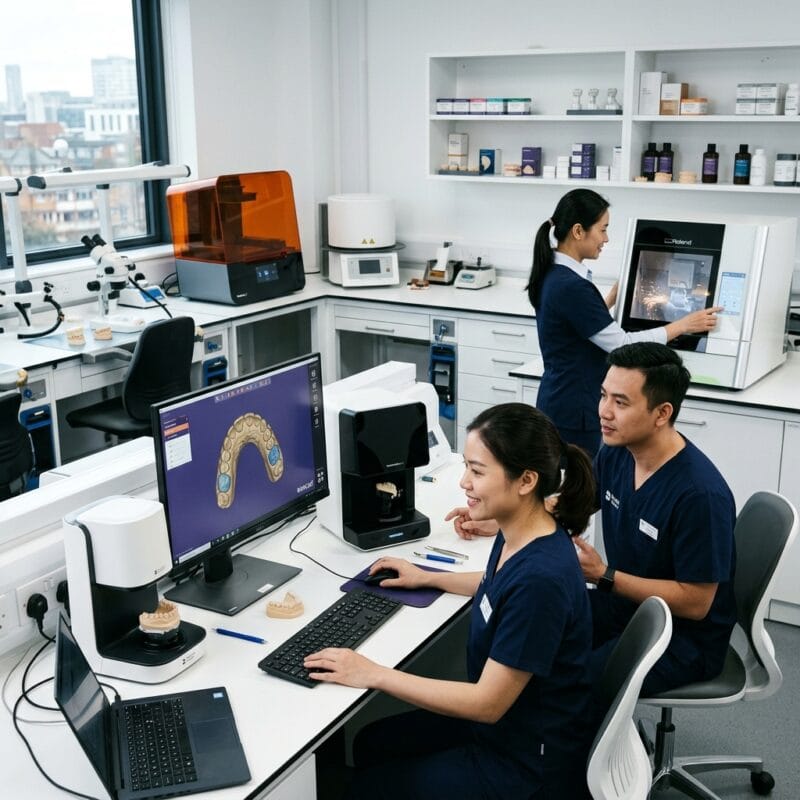
Launching a new dental laboratory in the United Kingdom requires navigating a rapidly evolving technological landscape, stringent regulatory requirements, and shifting market expectations. As dental practices increasingly transition to digital intraoral scanning, understanding realistic dental lab startup costs in the UK 2026 is critical for entrepreneurs, dental technicians, and Dental Support Organizations (DSOs) planning expansion. Whether your objective is to build a full-service manufacturing facility or a specialized digital laboratory, initial capital expenditure and ongoing operational costs will dictate your financial runway and long-term profitability.
Historically, opening a dental laboratory involved significant outlay for heavy physical machinery, casting ovens, plaster rooms, and manual polishing stations. In 2026, the initial investment profile has shifted heavily toward digital architecture, high-precision subtractive milling, additive 3D printing, and sophisticated Computer-Aided Design (CAD) software ecosystems. Consequently, analyzing dental lab startup costs in the UK 2026 requires looking beyond physical square footage and focusing on software licensing, hardware maintenance, specialized technician salaries, and digital workflow integrations.
This comprehensive guide details every financial component involved in founding a laboratory today. We will examine hardware capital expenditure, software subscriptions, facility fit-outs, regulatory compliance costs, and strategic operational models—such as digital design outsourcing—that allow startup laboratories to drastically reduce initial capital risk while maintaining high-volume output capability.
What are the average dental lab startup costs in the UK 2026?
The average dental lab startup costs in the UK 2026 range from £45,000 for a lean, design-focused digital setup to over £250,000 for a fully equipped, high-volume production facility.
This broad range reflects the distinct pathways an entrepreneur can choose when entering the UK market. A traditional laboratory that casts metal alloys, layers porcelain, and processes acrylic dentures requires extensive physical infrastructure, ventilation, and manual crafting equipment. Conversely, a modern digital dental laboratory focuses on processing intraoral scans, digital crown design, 3D printing models, and milling zirconia or composite restorations. When calculating your initial outlay, it is essential to segment expenses into capital expenditure (CapEx), operational expenditure (OpEx), and regulatory compliance fees.
To provide a clear baseline, consider the breakdown of primary financial commitments expected during year one:
- Lean Digital Startup (Outsourced Design & Offsite Milling): £45,000 – £75,000
- Mid-Tier Hybrid Laboratory (In-house Scanners, Printers & Small Mill): £85,000 – £150,000
- Full-Service Industrial Production Lab (Heavy Milling, Sintering, Multiple Workstations): £175,000 – £300,000+
Understanding how these figures assemble helps owners make informed decisions on capital allocation, loan applications, and strategic partnership choices. Evaluating your target client base—whether high-end aesthetic private clinics, NHS-focused practices, or regional DSOs—will dictate where your capital must be deployed first when estimating dental lab startup costs in the UK 2026.
Detailed Breakdown of Equipment and Technology Expenditures
Technology represents the single largest capital requirement when evaluating dental lab startup costs in the UK 2026. Choosing between open-architecture systems and closed proprietary ecosystems impacts both your initial purchase prices and long-term recurring software maintenance fees.
Desktop Scanners and Inspection Hardware
Even in an era dominated by intraoral optical impressions, a reliable laboratory desktop scanner remains indispensable for digitizing physical impression trays, master plaster models, and bite registrations. High-precision optical or blue-light laboratory scanners range between £8,000 and £22,000 depending on resolution, speed, and automated multi-die scanning capabilities. Investing in calibrated scanning equipment ensures your lab can handle legacy physical impressions from dental practices while smoothly ingesting digital STL, PLY, or OBJ files.
CAD Software Licensing and Annual Modules
CAD software forms the operational backbone of any modern dental facility. Leading software platforms require both an initial software module license fee and annual update contracts (subscriber fees). Industry-standard design software suites like exocad or advanced digital workflow platforms from 3Shape allow laboratories to design restorations ranging from single-unit crowns to complex full-arch implant bridges and removable prosthetics.
Core software licenses generally cost between £4,000 and £12,000 upfront, with ongoing annual maintenance fees running from £1,200 to £3,500 per seat. If your business plan calls for specialized offerings such as surgical guide planning, orthodontic aligner staging, or digital denture design, individual module add-ons will add £1,500 to £4,000 per module. These software overhead costs quickly add up, forming a substantial proportion of overall dental lab startup costs in the UK 2026.
Milling Machines and Sintering Ovens
Subtractive manufacturing remains the gold standard for high-strength zirconia, lithium disilicate, and PMMA restorations. A wet/dry 5-axis dental milling unit suitable for continuous production costs between £25,000 and £65,000. Additionally, high-temperature zirconia sintering furnaces cost between £6,000 and £15,000. These machines require dedicated compressed air systems, extraction units, and regular calibration, which further inflates overall dental lab startup costs in the UK 2026.
3D Printers and Post-Processing Units
Additive manufacturing is mandatory for modern labs producing working models, surgical guides, night guards, and try-in dentures. High-precision Medical Class IIa/IIb compliant DLP or SLA 3D printers range from £3,500 for entry-level desktop models to over £20,000 for industrial-grade production units. Post-processing equipment—including automated isopropyl alcohol washing stations and UV curing ovens—adds an extra £1,500 to £5,000 to your initial equipment budget.
Facility, Regulatory, and Compliance Costs in the UK
Operating a dental laboratory in the United Kingdom requires strict adherence to statutory regulatory frameworks, environmental health standards, and quality management requirements. These mandatory compliance elements form a fixed, non-negotiable portion of dental lab startup costs in the UK 2026.
MHRA Registration and Medical Device Regulations
In the UK, dental prosthetics and appliances are classified as custom-made medical devices. Laboratories must register with the Medicines and Healthcare products Regulatory Agency (MHRA) prior to placing custom devices on the market. MHRA registration, compliance audits, and establishing a robust Quality Management System (QMS)—such as ISO 13485 alignment—involve initial setup expenses ranging from £2,000 to £7,500, alongside ongoing audit fees. Ensuring compliance avoids catastrophic legal penalties but adds directly to initial dental lab startup costs in the UK 2026.
General Dental Council (GDC) Registration and Staffing Requirements
All dental technicians working within the UK must be individually registered with the General Dental Council (GDC). For lab owners, maintaining compliant staffing levels means accounting for annual retention fees, mandatory Continuing Professional Development (CPD) tracking, and competitive salary packages. In 2026, a qualified CAD/CAM dental technician in the UK commands an annual salary between £35,000 and £55,000 depending on experience and location. Factoring in employee national insurance contributions and workplace pension schemes significantly impacts your baseline monthly operational costs.
Premises, Extraction, and Safety Infrastructure
Leasing industrial or commercial real estate for a dental laboratory involves financial deposits, fit-out investments, and specialized utility installations. Key physical requirements include:
- Dedicated heavy-duty electrical supply (three-phase power for industrial mills and furnaces).
- Specialized dust extraction and air filtration systems to maintain safe working environments under COSHH guidelines.
- Plumbing for wet milling units and model trimming stations.
- Commercial rent, business rates, and utility bills, which typically sum to £15,000 – £35,000 annually for modest premises.
When calculating dental lab startup costs in the UK 2026, facility fit-outs often represent an underrated capital drain. Neglecting ventilation or electrical capacity during planning can cause costly operational delays during setup.
How does CAD/CAM design outsourcing reduce dental lab startup costs in the UK 2026?
CAD/CAM design outsourcing reduces dental lab startup costs in the UK 2026 by eliminating upfront CAD software license fees, specialized technician salaries, and expensive high-performance design workstation hardware.
By shifting digital design tasks to an expert third-party provider, startup laboratories transform massive fixed capital expenditures into predictable, pay-per-case operational expenses. Rather than purchasing five separate CAD software licenses and hiring multiple full-time CAD designers before securing client volume, lab owners can outsource digital design workflows. This approach allows new labs to launch immediately with minimal fixed overhead, scaling their expenses directly alongside their actual case volume.
When leveraging a dedicated design team, a new lab owner only needs basic scanning and milling equipment—or simply acts as a local service hub that receives intraoral scans, outsources the CAD design phase, and prints or mills final prosthetics locally. Integrating services such as expert digital crown and bridge design allows startups to market high-quality output to clinicians from day one without bearing the initial financial burden of recruiting senior technical talent.
Analyzing In-House Production vs. Hybrid CAD Outsourcing
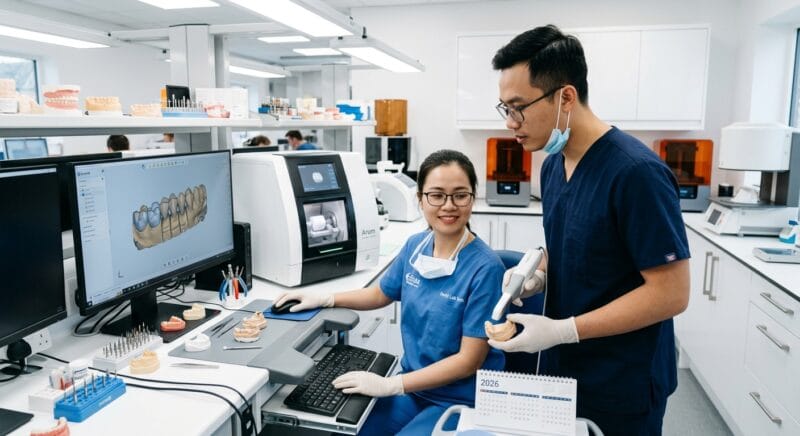
To fully grasp the financial benefit of design outsourcing, it is helpful to compare the initial capital outlay required for a traditional full in-house setup versus a modern hybrid outsourcing model when reviewing dental lab startup costs in the UK 2026.
The comparative model below illustrates how strategic design outsourcing alters your baseline capital and operational commitment during launch:
Full In-House CAD/CAM Setup
Building a complete in-house CAD/CAM infrastructure requires purchasing high-end desktop scanners, multiple CAD software modules, high-performance graphic workstations, 5-axis milling machines, 3D printers, and sintering furnaces. Furthermore, you must recruit, train, and retain experienced CAD designers. Under this traditional model, baseline dental lab startup costs in the UK 2026 easily cross £150,000 to £220,000 before taking your first case.
The Lean Hybrid Outsourcing Model
Under a hybrid outsourcing model, the laboratory focuses on client relationship management, physical finishing, shade matching, and local delivery. Digital STL files received from dental clinics are immediately uploaded to a specialized CAD outsourcing service. The offshore or external expert design team completes the digital design—whether for crowns, implants, night guards, or dentures—and returns the production-ready design files within hours.
The local lab simply inspects the design, mills or prints the restoration in-house (or via a regional milling center), and completes characterization. This model drastically lowers dental lab startup costs in the UK 2026 to approximately £35,000 – £60,000, as initial capital expenditure is restricted strictly to basic production hardware and customer acquisition.
Detailed Cost Comparison Table
To visualize how strategic choices impact your launch budget, review the following projected financial breakdown comparing setup models when planning dental lab startup costs in the UK 2026:
- CAD Software & License Fees: In-House Setup (£12,000 – £25,000) vs. Outsourced Hybrid Setup (£0 – £3,000)
- High-End Design Workstations: In-House Setup (£6,000 – £12,000) vs. Outsourced Hybrid Setup (£1,000 – £2,500)
- Senior CAD Designer Salaries (Year 1): In-House Setup (£40,000 – £55,000 per tech) vs. Outsourced Hybrid Setup (£0 fixed; pay-per-design)
- 5-Axis Industrial Milling Unit: In-House Setup (£35,000 – £65,000) vs. Outsourced Hybrid Setup (Optional; use outsourced center or light printer £4,000 – £15,000)
- Total Estimated Startup Expenditure: In-House Setup (£150,000 – £250,000+) vs. Outsourced Hybrid Setup (£35,000 – £75,000)
As displayed, choosing a hybrid design model dramatically mitigates risk while keeping total dental lab startup costs in the UK 2026 manageable for new business operators.
How to calculate ROI when evaluating dental lab startup costs in the UK 2026?
To calculate ROI when evaluating dental lab startup costs in the UK 2026, divide your projected annual net operating income by your total initial capital investment and multiply by 100.
Understanding your Return on Investment (ROI) timeline determines how fast your new laboratory becomes self-sustaining. Achieving rapid profitability requires controlling fixed overheads while maximizing production throughput from month one.
Consider the following simplified ROI formula for a new dental lab startup:
ROI (%) = (Net Annual Profit / Total Initial Startup Investment) x 100
Example Scenario A: Traditional In-House Startup
If your initial capital expenditure reaches £180,000 (covering heavy mills, software suites, and physical fit-out) and your business generates £45,000 in net profit during year one, your first-year ROI is 25%. It will take four full years of consistent production to recover your initial capital investment.
Example Scenario B: Lean Hybrid Setup with Design Outsourcing
If you optimize your initial dental lab startup costs in the UK 2026 down to £50,000 by outsourcing CAD design and utilizing localized 3D printing, generating that same £45,000 net profit yields an immediate first-year ROI of 90%. Your initial capital is virtually fully recovered within 13 to 14 months.
This mathematical reality explains why an increasing number of dental technicians and DSOs opt for design partnerships when analyzing dental lab startup costs in the UK 2026. Reducing capital lockup enhances liquidity, lowers financial stress, and allows rapid reinvestment into sales and marketing.
Expanding Product Offerings Without Capital Expenditure
One of the primary challenges when launching a business is managing client expectations. Dental practices expect their primary laboratory to handle a vast array of restorative treatments. Meeting these demands internally increases dental lab startup costs in the UK 2026 because each clinical specialty requires dedicated design software modules and skilled technical experts.
By leveraging an outsourced digital design team, a brand-new laboratory can instantly offer specialized, high-margin product lines without buying extra hardware or software licenses:
- Implant Restorations & Custom Abutments: Complex implant cases demand high precision. Outsourcing implant bridge and custom abutment designs eliminates the need for expensive dedicated implant CAD modules.
- Surgical Guides: Offering custom surgical guide design empowers your lab to capture lucrative digital implant workflows from local clinicians without mastering complex CBCT stack registration software on day one.
- Removable Prosthetics & Dentures: Digital denture design software carries steep learning curves. Partnering with expert digital designers allows you to deliver perfect 3D printed try-ins and final dentures immediately.
- Occlusal Splints and Night Guards: Night guards are consistent revenue generators for dental practices. Outsourcing splint design guarantees consistent bite clearance and passive fit, driving recurring order volume.
Unlocking diverse product categories on day one directly offsets your initial dental lab startup costs in the UK 2026 by maximizing revenue per clinical client from the very beginning.
Strategic Steps to Minimize Dental Lab Startup Costs in the UK 2026
For entrepreneurs ready to establish a market presence, executing a structured, cost-conscious launch plan is vital. Here are proven strategies to control dental lab startup costs in the UK 2026 while maintaining exceptional product quality.
1. Adopt an Open-Architecture Ecosystem
Avoid closed, proprietary hardware and software systems that lock your business into exclusive consumables and restricted export formats. Open STL/PLY workflows ensure you can transfer design files freely between domestic technicians, production centers, and external design partners.
2. Phase Your Hardware Acquisitions
Do not buy every piece of equipment upfront. Begin with high-precision desktop scanning and reliable Class IIa 3D printers. Outsource your complex CAD design and utilize specialized milling centers for heavy zirconia and cobalt-chromium milling until your monthly volume justifies buying an internal 5-axis mill.
3. Partner with an Established CAD Design Provider
Subscribing to a reliable B2B digital design service eliminates the single largest operational bottleneck facing startup laboratories: hiring qualified CAD designers. By partnering with external experts, your lab gains instant access to 24/7 turnaround times, expert design quality, and zero software software licensing overhead, dramatically reducing your dental lab startup costs in the UK 2026.
4. Negotiate Supplier and Consumable Pricing
Consumables—such as zirconia discs, 3D printing resins, PMMA blocks, and milling burs—quickly eat into operating margins. Establish trade accounts with major UK dental suppliers early to secure tiered volume discounts on raw materials.
5. Implement Lean Quality Management Systems
Streamline your MHRA compliance and ISO quality control procedures from day one using cloud-based management software. Establishing rigorous digital quality checkpoints minimizes remakes, protecting your profit margins during the critical early months of operation.
Conclusion: Building a Profitable Laboratory in 2026
Accurately calculating dental lab startup costs in the UK 2026 requires balancing initial equipment purchases against long-term operational flexibility. While full-scale traditional production facilities demand massive capital outlays, modern digital workflows and design outsourcing offer a faster, lower-risk path to market. By transforming fixed CAD design expenses into scalable, pay-per-case costs, ambitious lab owners can establish a highly profitable, resilient dental laboratory tailored for the digital future.
Ready to launch your dental lab while minimizing initial startup costs? Partner with our expert CAD/CAM design team to scale your digital workflow effortlessly from day one—contact us today to get started.