Introduction to Chairside Milling in 2026
The integration of chairside milling technology into dental practices and labs has revolutionized prosthetic workflows. The comparison of Dentsply Sirona CEREC vs Planmeca PlanMill chairside milling 2026 centers on how these leading systems meet the evolving demands of dental labs, DSOs, and single-dentist practices. Both systems enable rapid fabrication of crowns, bridges, implants, surgical guides, dentures, orthodontic aligners, and night guards, but their design philosophies, capabilities, and ecosystem integrations differ.
As digital dentistry continues to advance, understanding which system aligns with your operational needs and budget is critical for optimizing productivity and clinical outcomes.
What is the core functionality of Dentsply Sirona CEREC and Planmeca PlanMill?
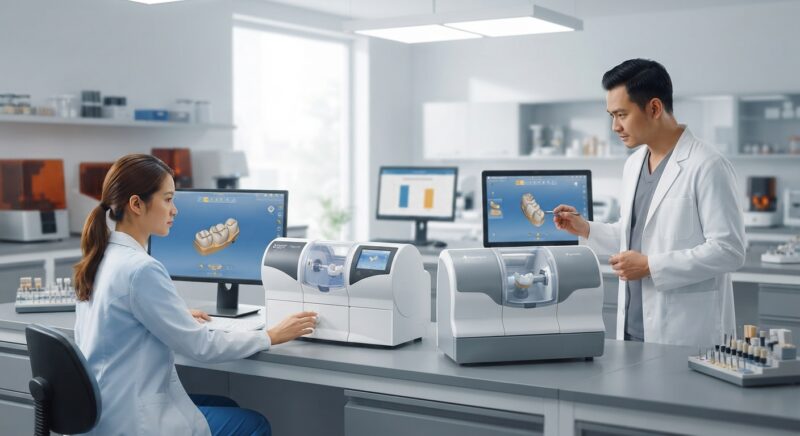
Both Dentsply Sirona CEREC and Planmeca PlanMill are chairside milling units designed to fabricate dental restorations quickly and accurately within a clinical or lab setting.
CEREC is a mature platform known for its comprehensive digital workflow, combining intraoral scanning, CAD software, and milling in one ecosystem. Planmeca PlanMill, meanwhile, emphasizes precision and modular integration with its PlanCAD software and offers flexible milling options for various materials.
Each system supports a broad range of indications including crowns and bridges, implant abutments, surgical guides, and more, enabling same-day restorations that reduce patient visits and streamline lab processes.
How do the two systems compare on scanning and design integration?
Dentsply Sirona CEREC is tightly integrated with the Primescan intraoral scanner, delivering high-resolution 3D scans that feed directly into its proprietary CAD software. This seamless connection supports efficient design and milling workflows within a single software environment.
Planmeca PlanMill relies on the PlanScan intraoral scanner, which is also fully integrated with PlanCAD software. The PlanMill system is designed to work with Planmeca’s open architecture, allowing for wider interoperability with third-party design software such as exocad and 3Shape solutions, which can be advantageous for labs requiring advanced customization.
In summary, CEREC offers a closed, optimized workflow ideal for practices seeking simplicity, while PlanMill’s openness benefits labs and DSOs needing integration flexibility.
What are the milling capabilities and materials supported in 2026?
Both chairside milling units support a variety of materials essential for modern restorative dentistry. The Dentsply Sirona CEREC system can mill ceramics such as lithium disilicate (e.max), zirconia, hybrid ceramics, and composite blocks, enabling single-visit crowns, veneers, and implant abutments.
Planmeca PlanMill is similarly versatile, milling zirconia, lithium disilicate, PMMA, wax, and composite materials. One differentiator is PlanMill’s capability to mill larger blocks and thicker materials, which can be beneficial for certain surgical guides and long-span restorations.
Material compatibility affects clinical outcomes and lab workflow. Both manufacturers regularly update their material portfolios, so it is advised to check the manufacturer for current specifications and available blocks, as these may vary by region and date.
What is the total cost of ownership comparison?
Understanding total cost of ownership (TCO) is key when choosing between Dentsply Sirona CEREC vs Planmeca PlanMill chairside milling 2026 systems.
- CEREC: Initial investment typically ranges from $90,000 to $150,000 depending on configuration, including scanner and milling unit. Annual maintenance and software updates add to costs. Consumables such as burs and blocks vary based on case volume.
- PlanMill: The PlanMill milling unit alone generally costs between $70,000 and $130,000. Scanner and software are additional but can be purchased modularly. Maintenance and consumables are comparable but can be less expensive for high-volume labs due to open material compatibility.
For DSOs and high-volume labs, PlanMill’s modular pricing and open system may offer more scalable cost advantages, whereas CEREC’s integrated environment reduces training and support resources in smaller practices.
Dentsply Sirona CEREC vs Planmeca PlanMill chairside milling 2026: Which workflow suits your practice?
Workflow efficiency is a critical factor in chairside milling adoption.
- CEREC workflow: From scanning to design to milling, the process is streamlined within one software interface, minimizing the learning curve. This is ideal for single-dentist practices or smaller labs seeking quick turnaround with limited staff.
- PlanMill workflow: Offers more flexibility with open software options. While slightly more complex, it supports additional customization and integration with lab management systems, suiting DSOs and high-output labs requiring tailored workflows.
Both systems reduce turnaround times dramatically compared to traditional lab outsourcing but differ in their adaptability to existing clinical or lab environments.
Comparison Table: Dentsply Sirona CEREC vs Planmeca PlanMill chairside milling 2026
| Feature | Dentsply Sirona CEREC | Planmeca PlanMill |
|---|---|---|
| Scanner Integration | Primescan, closed ecosystem | PlanScan, open architecture |
| Software | Proprietary CEREC Software | PlanCAD, compatible with exocad, 3Shape |
| Material Compatibility | Lithium disilicate, zirconia, composite | Zirconia, lithium disilicate, PMMA, wax |
| Target Users | Small to medium practices, labs | High-volume labs, DSOs, custom workflows |
| Cost Range (USD) | $90,000 – $150,000 | $70,000 – $130,000 (milling unit only) |
| Maintenance & Consumables | Proprietary, moderate cost | Open system, potentially lower cost |
Who benefits most from each chairside milling system?
Understanding the ideal user profile helps decision-makers in dental labs and DSOs select the right system.
- Dentsply Sirona CEREC best for:
- Single-dentist practices seeking an all-in-one solution
- Labs preferring a tightly integrated digital workflow
- Clinics prioritizing ease of use and fast learning curve
- Strengths: Seamless hardware-software integration, reliable materials portfolio, strong brand reputation
- Limitations: Less flexible software integration, higher upfront cost for full system
- Planmeca PlanMill best for:
- High-volume dental labs and DSOs requiring custom workflows
- Practices wanting modular system scalability
- Users needing compatibility with third-party CAD software
- Strengths: Open system flexibility, competitive cost, wide material compatibility
- Limitations: Steeper learning curve, requires more technical expertise
- CEREC: Uses proprietary burs and blocks which must be replaced periodically. Maintenance contracts typically cover software updates and hardware servicing at additional cost.
- PlanMill: Offers compatibility with a wider range of burs and materials, potentially lowering consumable expenses. Maintenance can be scheduled flexibly, and modular components simplify repairs.
- Evaluate Case Volume: Analyze current prosthetic case load and projected growth to determine if chairside milling can meet demand or if supplemental lab support remains necessary.
- Identify Material Preferences: Decide which restorative materials are most commonly used and verify compatibility with both systems.
- Consider Staff Readiness: Assess the digital literacy and CAD/CAM experience of clinicians and technicians who will operate the system.
- Infrastructure Compatibility: Confirm that existing computers, software, and network systems can support the chairside milling unit’s software and data requirements.
- Physical Space Planning: Measure operatory space to accommodate the system, ensuring adequate ventilation and accessibility for maintenance.
- Ergonomics and Workflow Positioning: Determine optimal system placement that minimizes staff movement and integrates seamlessly into the patient treatment process.
- Schedule On-site Training: Arrange initial comprehensive training sessions for all operators, focusing on scanning, design, milling, and troubleshooting.
- Establish Ongoing Support Channels: Confirm availability of remote assistance, software updates, and preventive maintenance plans.
- Develop Internal Champions: Identify and train super-users who can lead adoption efforts and mentor peers.
- Start with Low-Complexity Cases: Begin using the milling system for single crowns or small bridges to build operator confidence and identify bottlenecks.
- Collect Feedback: Gather input from clinicians, assistants, and patients on ease of use, turnaround times, and clinical outcomes.
- Refine Protocols: Adjust scanning protocols, design templates, and milling parameters based on pilot results to optimize quality and efficiency.
- Expand Case Complexity: Gradually increase the range of cases milled chairside, including implants and multi-unit restorations.
- Track Key Performance Indicators (KPIs): Monitor metrics such as case throughput, remakes, patient satisfaction, and cost savings.
- Continuous Improvement: Schedule periodic reviews to update workflows, train new staff, and implement software enhancements.
- Material Blocks: Prices range widely based on material type—zirconia, lithium disilicate, PMMA, or hybrid ceramics—with high-translucency zirconia often commanding premium prices.
- Burs and Milling Tools: Milling burs need regular replacement depending on case complexity and volume, typically every 10–30 cases.
- Maintenance Kits: Routine preventive maintenance is essential to avoid costly repairs; budget for annual maintenance contracts and parts replacement.
- North America: High patient demand for esthetic restorations and reimbursement structures support adoption of premium materials and sophisticated systems.
- Europe: Emphasis on minimally invasive dentistry and digital workflows aligns with comprehensive platforms offering integrated scanning and design.
- Emerging Markets: Cost sensitivity and infrastructure variability necessitate modular systems that can expand as practices grow.
How do these chairside milling systems impact clinical outcomes?
The precision and speed of chairside milling directly influence restoration fit, aesthetics, and patient satisfaction.
CEREC’s integrated workflow ensures consistent accuracy with minimal operator variability, supporting high-quality single-visit restorations. Its materials and milling precision are optimized for esthetic anterior and posterior crowns as well as implant abutments.
PlanMill’s open architecture allows for advanced design customization, which can enhance complex restorative cases including surgical guides and multi-unit bridges. The ability to mill a broader range of materials supports diverse clinical requirements, which is valuable for labs managing multiple case types.
Ultimately, both systems improve turnaround time and reduce remakes, but the choice depends on clinical complexity and lab capabilities.
What support and training are available for these systems?
Comprehensive training and support ensure successful implementation of chairside milling technology.
Dentsply Sirona offers extensive onboarding programs, including hands-on training, webinars, and local support through its global network. Their software updates and clinical resources are centralized, aiding user adoption.
Planmeca provides modular training with options tailored to hardware and software separately. Their open system sometimes requires additional third-party training, especially when integrating with software like exocad. Support is typically responsive, with regional representatives assisting large DSOs and labs.
Choosing a system with robust support can mitigate downtime and accelerate ROI.
How do these chairside milling units integrate with dental lab outsourcing?
Dental labs and DSOs increasingly outsource CAD/CAM digital design to optimize efficiency and expertise.
Both CEREC and PlanMill systems can be complemented by specialized design outsourcing services, which provide expert restorative design without requiring in-house CAD technicians. This approach helps clinics and labs maximize existing milling capacity while minimizing overhead.
Outsourcing also works well alongside surgical guide design services and can improve turnaround times for complex cases.
How scalable are Dentsply Sirona CEREC and Planmeca PlanMill for DSOs?
Scalability is paramount for DSOs managing multiple locations with varied clinical workflows.
CEREC’s standardized ecosystem simplifies deployment across smaller, uniform practices but may limit customization required by diverse workflows.
PlanMill’s modularity and open software compatibility provide DSOs with the flexibility to adapt workflows per site, integrate with existing lab management software, and scale milling capacity as needed.
DSOs should assess their IT infrastructure and clinical protocols before selecting a system to ensure seamless expansion.
What are the maintenance and consumable considerations?
Regular maintenance and consumable costs impact the long-term economics of chairside milling.
Both require routine calibration and cleaning to maintain milling accuracy, with costs varying by region and usage intensity.
Do you need design capacity for your new equipment?
Outsourced CAD design services enable dental labs and practices to operate their chairside milling units without hiring full-time digital designers. This approach reduces overhead and ensures access to expert restorative designs tailored for your milling system.
By leveraging external CAD/CAM design experts, your team can focus on clinical care and manufacturing, improving workflow efficiency and case quality. Our digital design outsourcing service is an ideal complement to both Dentsply Sirona CEREC and Planmeca PlanMill systems.
Conclusion and Call to Action
Choosing between Dentsply Sirona CEREC vs Planmeca PlanMill chairside milling 2026 depends on your practice size, workflow preferences, budget, and integration needs. Evaluate each system’s strengths carefully to ensure optimal ROI and clinical outcomes.
Step-by-Step Implementation Guide for Integrating Chairside Milling
Successfully integrating a chairside milling system into a dental practice or lab requires strategic planning and a structured approach. Below is a comprehensive step-by-step guide to help teams adopt either the Dentsply Sirona CEREC or Planmeca PlanMill systems effectively, minimizing disruptions and maximizing ROI.
1. Assess Practice Needs and Workflow
2. Conduct Technology and Space Audit
3. Engage Vendor for Customized Training and Support Setup
4. Pilot Testing and Workflow Refinement
5. Full Integration and Performance Monitoring
Common Mistakes to Avoid When Adopting Chairside Milling Systems
Many dental practices and labs encounter pitfalls when implementing chairside milling technology. Avoiding these common mistakes can help ensure smoother adoption and better long-term success.
Neglecting Workflow Integration Early
One of the biggest errors is treating the milling system as an isolated gadget rather than integrating it into the overall clinical workflow. This leads to inefficiencies, such as duplicate data entry, increased chair time, or underutilization of the system. Early involvement of the entire dental team in workflow mapping is critical.
Underestimating Training Requirements
Assuming minimal training needs due to intuitive interfaces often backfires. Both CEREC and PlanMill have advanced features that require dedicated learning. Insufficient training results in operator errors, material waste, and increased maintenance calls.
Ignoring Material and Consumable Costs
While chairside milling can reduce lab fees, the upfront and ongoing costs of blocks, burs, and maintenance kits can be substantial. Practices sometimes fail to budget adequately for these consumables, leading to higher-than-expected operating costs.
Overlooking Software and Hardware Compatibility
Purchasing a milling system without ensuring compatibility with existing scanners, practice management software, and lab workflows can create data silos and hinder case tracking. Ensuring that the entire digital ecosystem communicates smoothly is essential.
Failing to Plan for Maintenance Downtime
Unexpected downtime due to maintenance or repairs can disrupt patient scheduling and cause frustration. Establishing a preventive maintenance schedule and having backup plans, such as outsourcing critical cases during downtime, helps maintain continuity.
Cost and Quality Considerations: Balancing Investment and Clinical Excellence
When investing in chairside milling systems like Dentsply Sirona CEREC or Planmeca PlanMill, dental businesses must carefully weigh cost factors against quality parameters to achieve sustainable clinical and financial outcomes.
Upfront Capital and Financing Options
The initial purchase price for these systems varies typically between $100,000 and $150,000 depending on configuration and included software modules. Many vendors offer leasing or financing options to spread payments, which can be advantageous for cash flow management. Practices should evaluate total capital outlay including auxiliary devices such as intraoral scanners and CAD software licenses.
Consumables and Operating Costs
Quality of Restorations
Both systems are capable of producing high-quality, durable restorations; however, nuances in milling precision, software design algorithms, and supported materials can impact marginal fit, esthetics, and strength. For instance, CEREC’s advanced software may offer superior design customization and occlusal adjustments, while PlanMill is noted for its robust milling hardware capable of handling harder zirconia blocks effectively.
Return on Investment (ROI) Considerations
ROI is influenced by factors such as reduced laboratory outsourcing fees, faster case turnaround improving patient satisfaction and retention, and the ability to offer premium same-day services. Practices should model scenarios including case volume, average lab costs, consumable expenses, and staff time savings to forecast breakeven points and profitability timelines.
Market-Specific Insights: Tailoring Chairside Milling for Different Dental Practice Types
The utility and impact of chairside milling systems vary significantly depending on the practice type, size, and regional market dynamics. Understanding these nuances helps in selecting the optimal system and deployment strategy.
Single-Dentist Practices and Small Clinics
Single-dentist offices benefit greatly from chairside milling by offering same-day crowns and restorations that improve patient convenience and satisfaction. Cost sensitivity is high, so streamlined systems with straightforward workflows and minimal maintenance demands are preferred. CEREC’s integrated scanner-design-mill platform is often favored for its user-friendly interface and comprehensive support.
Multi-Doctor Group Practices and DSOs
Group practices and Dental Service Organizations (DSOs) require scalable solutions that can handle high case volumes and multiple operator profiles. Here, Planmeca PlanMill’s robust milling capabilities and flexible software integrations support more complex workflows and centralized design libraries. Networked data management becomes critical to harmonize cases across locations.
Dental Laboratories and Outsourcing Partners
Dental labs adopting chairside milling to supplement traditional workflows focus on precision, material versatility, and throughput. PlanMill’s compatibility with various CAD software and ability to mill complex restorations efficiently appeals to labs managing diverse case types. Labs also implement quality control protocols and digital case tracking to ensure consistency and minimize remakes.
Regional Market Considerations
Contact us today to learn how our expert CAD/CAM digital design outsourcing can help you maximize your chairside milling investment and streamline your restorative workflows.