Introduction to the Greater New York Dental Meeting recap checklist for dental clinic owners, December 2026
The Greater New York Dental Meeting is one of the largest and most comprehensive dental industry events worldwide, held this year from 27 November to 1 December 2026 at the Jacob K. Javits Convention Center in New York City. As a dental clinic owner, preparing for the event is essential, but equally important is the post-event follow-up. This article provides a thorough Greater New York Dental Meeting recap checklist for dental clinic owners, December 2026, designed to help you translate the knowledge gained and contacts made into actionable improvements for your dental practice.
Whether you specialize in crown & bridge, implants, surgical guides, dentures, orthodontic aligners, or night guards, this checklist will assist you in evaluating new technologies, integrating digital workflows such as CAD/CAM design outsourcing, and making informed decisions for your clinic’s growth.
What is the Greater New York Dental Meeting, and why should dental clinic owners attend?
The Greater New York Dental Meeting is a major dental congress and exhibition that gathers thousands of dental professionals, manufacturers, and service providers under one roof to showcase innovations and provide continuing education. For dental clinic owners, attending this meeting offers an unparalleled opportunity to stay updated on the latest advancements in dental materials, digital technologies, and clinical techniques.
At the 2026 event, with the congress running from 27 November to 1 December and the exhibit hall open from 29 November to 1 December, attendees can access a wide range of lectures, hands-on workshops, and demonstrations. The event is held annually at the Jacob K. Javits Convention Center in New York City, a central location that facilitates easy access for both regional and international visitors. The organiser’s official website, gnydm.com, should be checked for the latest updates on the program and registration details.
How does dental lab CAD/CAM outsourcing enhance your practice’s digital workflow?
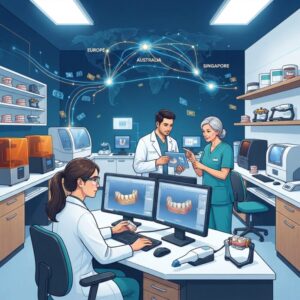
Dental lab CAD/CAM outsourcing involves partnering with specialized labs that provide digital design services for crowns, bridges, implants, surgical guides, dentures, and more, using advanced CAD (Computer-Aided Design) and CAM (Computer-Aided Manufacturing) technologies.
Outsourcing these digital design workflows allows dental clinics to focus on patient care while accessing high-quality, precise dental restorations and devices designed using software platforms such as those from 3Shape or exocad. This approach can reduce turnaround times, improve accuracy, and provide access to cutting-edge design expertise that might not be available in-house.
Integrating outsourced digital design services with scanning and printing technologies also works well alongside surgical guide design services, enhancing treatment planning and patient outcomes.
What should dental clinic owners prioritize during the Greater New York Dental Meeting recap checklist for dental clinic owners, December 2026?
The primary priorities after attending the Greater New York Dental Meeting involve organizing your notes, reviewing product information, and planning actionable steps to incorporate new knowledge and technologies into your clinic’s operations.
Start by categorizing your collected materials: brochures, business cards, lecture notes, and digital resources. Cross-reference these with your clinic’s current capabilities and needs. For example, if you explored new implant surgical guide options, assess how these can integrate with your existing CAD/CAM outsourcing solutions. Follow up with promising exhibitors or service providers to request demos or trials.
Additionally, evaluate the continuing education credits obtained during the congress and consider how these can support your professional development goals or licensure requirements through the American Dental Association.
How to evaluate new dental technologies and products introduced at GNYDM 2026?
Evaluating new dental technologies involves a critical assessment of clinical benefits, costs, integration feasibility, and supplier credibility. The Greater New York Dental Meeting recap checklist for dental clinic owners, December 2026 should include a structured evaluation framework.
First, verify if the technology or product has regulatory approvals and clinical evidence supporting its efficacy. Request technical datasheets and ask vendors for case studies or peer-reviewed research. Next, calculate the return on investment, considering factors like improved workflow efficiency, patient satisfaction, and long-term maintenance costs.
Don’t hesitate to ask about training and support services. Technologies that align well with your existing digital workflows, such as CAD/CAM outsourcing, scanning, or 3D printing, offer smoother adoption curves. Always keep an eye out for interoperability with platforms like those from Medit or Dentsply Sirona.
Tips for organizing contacts and following up with exhibitors and speakers
After the event, the Greater New York Dental Meeting recap checklist for dental clinic owners, December 2026 should emphasize systematic contact management. Begin by digitizing all collected business cards and entering notes into a CRM or spreadsheet.
Group contacts by relevance: suppliers of CAD/CAM outsourcing services, implant specialists, orthodontic aligner providers, or night guard manufacturers. Prioritize follow-ups based on your clinic’s immediate and strategic needs.
Send personalized emails referencing specific conversations or demos. Request additional information or arrange virtual meetings to explore collaboration opportunities. This proactive approach can deepen relationships and unlock tailored solutions for your practice.
How can dental clinic owners leverage continuing education sessions for maximum benefit?
Continuing education (CE) sessions at the Greater New York Dental Meeting provide vital knowledge updates and skill enhancements that can directly impact clinical outcomes and operational efficiency.
To maximize CE benefits, dental clinic owners should align session selection with their clinic’s areas of growth or clinical challenges. Take detailed notes during lectures and workshops, focusing on practical applications such as digital design workflows, implant placement techniques, or new materials for dentures and night guards.
After the event, incorporate learnings into team meetings and training programs. This promotes knowledge sharing and encourages adoption of new protocols. Also, track CE credits for compliance and professional development. Many CE providers coordinate with the ADA for credit reporting, so verify this when choosing sessions.
What are practical steps for integrating insights from the Greater New York Dental Meeting recap checklist for dental clinic owners, December 2026 into your clinic?
The final step in the Greater New York Dental Meeting recap checklist for dental clinic owners, December 2026 is action planning. Begin by identifying technologies, products, or workflows that showed the most promise for your practice.
Develop a phased implementation plan. For example, if you discovered a new digital impression scanner that complements your outsourced CAD/CAM design workflows, schedule a demo and pilot test. Train staff on new protocols and update patient communication materials to highlight improved services.
Review budget implications and adjust procurement plans accordingly. Engage with your financial team or advisors to ensure sustainable investment. Regularly monitor outcomes post-implementation to measure success and identify areas for further optimization. This continuous evaluation closes the loop from event attendance to clinic advancement.

How can dental clinic owners prepare for future Greater New York Dental Meetings?
Preparation is key to gaining maximum value from future Greater New York Dental Meetings. Start by reviewing the official organiser’s website gnydm.com well in advance for updates on dates, speakers, exhibitors, and registration procedures.
Create a personalized event plan based on your clinic’s priorities, such as exploring new implant systems or orthodontic aligners. Schedule meetings with key exhibitors and plan which CE sessions to attend. Pack necessary tools such as scanners or tablets for note-taking and digital demonstrations.
Consider travel and accommodation arrangements early to optimize costs and convenience. Engage your team in preparation, setting clear objectives and post-event follow-up responsibilities. This strategic approach ensures that your attendance translates into tangible clinic improvements year after year.
Why is a Greater New York Dental Meeting recap checklist for dental clinic owners, December 2026 essential for optimizing your digital dental practice?
A Greater New York Dental Meeting recap checklist for dental clinic owners, December 2026 is essential because it transforms the wealth of information and contacts gathered into actionable steps that enhance your clinic’s technology adoption and service quality.
Without a structured recap process, valuable insights risk being overlooked or forgotten. The checklist ensures systematic evaluation of new products, integration of cutting-edge CAD/CAM outsourcing solutions, and alignment with clinical goals. It also supports strategic decision-making and resource allocation, ultimately improving patient outcomes and competitive positioning.
Conclusion: Implementing your Greater New York Dental Meeting recap checklist for dental clinic owners, December 2026
In summary, the Greater New York Dental Meeting recap checklist for dental clinic owners, December 2026 is an indispensable tool for turning event attendance into meaningful clinic advancements. From organizing notes and evaluating new digital technologies to following up with contacts and applying continuing education insights, each step maximizes your investment in the event.
By leveraging this checklist, your dental practice can stay at the forefront of innovation, enhance patient care, and optimize workflows including digital crown design and implant surgical guides. Remember to verify all event details on the official organiser’s website and plan your participation thoughtfully for future meetings.
Ready to enhance your dental clinic’s digital capabilities?
Cost and Quality Considerations When Implementing New Technologies Post-GNYDM
One of the most critical aspects dental clinic owners face after attending the Greater New York Dental Meeting is evaluating the investment required to adopt new technology or products showcased during the event. Balancing cost with quality and long-term benefits is essential for sustainable practice growth. Here, we break down key considerations to help you make informed decisions.
Understanding Total Cost of Ownership (TCO)
Beyond the initial purchase price, consider the total cost of ownership, which includes:
- Installation and setup fees: Some advanced equipment may require professional installation or software integration.
- Training costs: Staff may need time and resources to learn new workflows or software platforms.
- Maintenance and service contracts: Regular upkeep ensures longevity but adds recurring expenses.
- Consumables and upgrades: Don’t overlook the cost of required materials or periodic software updates.
For example, a dental practice investing in an intraoral scanner might initially pay $30,000, but ongoing software subscription fees and calibration services could add thousands annually. Understanding these factors upfront prevents unexpected budget overruns.
Evaluating Return on Investment (ROI)
ROI isn’t just about cutting costs—it’s about enhancing patient care, efficiency, and revenue streams. Consider these practical metrics:
- Improved case acceptance rates: Technologies like 3D imaging can help patients visualize treatment, increasing acceptance.
- Reduced chair time: Faster workflows mean more patients can be seen per day.
- Enhanced treatment outcomes: Precision tools reduce remakes and adjustments, saving time and materials.
For instance, a dental practice that adopts CAD/CAM milling technology may see fewer lab remakes and faster turnaround, which can translate into increased profitability despite the upfront cost.
Quality Assurance: Selecting Trusted Vendors
Quality directly impacts patient satisfaction and clinical outcomes. Post-GNYDM, use these criteria to vet new vendors and products:
- Industry certifications and compliance: Ensure products meet ADA, FDA, or relevant regulatory approvals.
- User testimonials and case studies: Request real-world examples from other dental clinics or labs.
- Warranty and service support: Understand the terms and availability of technical support.
- Compatibility with existing systems: Confirm integration with your current practice management software or lab workflows.
Before committing to a large purchase, arrange a trial period or demo to assess fit for your practice.
Step-by-Step Guide to Conducting a Post-GNYDM Team Debrief
Maximizing the value of your Greater New York Dental Meeting experience requires effective internal communication. Organizing a structured team debrief ensures insights are shared, responsibilities assigned, and actionable plans developed.
Step 1: Schedule a Debrief Meeting Promptly
Set a date within one week after the meeting to ensure information is fresh. Invite all staff who attended and any relevant team members who can benefit from updates.
Step 2: Prepare and Share Meeting Notes
Compile your notes, brochures, and contact lists into a shared document or presentation. This allows everyone to review ahead of the meeting and come prepared.
Step 3: Present Key Takeaways
Each attendee should share highlights from sessions, demos, and vendor meetings. Encourage discussion on potential applications and concerns.
Step 4: Prioritize Initiatives
- Identify which technologies or workflows offer the most immediate benefit.
- Discuss resource allocation, including budget, time, and personnel.
- Set realistic timelines for evaluation, trials, and implementation.
Step 5: Assign Action Items
Designate team members responsible for follow-ups with vendors, training coordination, or pilot projects. Use project management tools to track progress.
Step 6: Document and Review
Record meeting minutes and circulate them. Schedule periodic reviews to assess progress and make adjustments as needed.
Common Mistakes to Avoid When Following Up After the GNYDM
Even with the best intentions, dental clinic owners often encounter pitfalls in translating event learnings into practice improvements. Awareness of these common mistakes can help you avoid costly delays or missed opportunities.
1. Delaying Follow-Up Communication
Waiting too long to contact vendors or speakers risks losing momentum and relevance. Aim for initial outreach within 48-72 hours of the event to capitalize on fresh connections.
2. Overcommitting to Too Many Initiatives
It’s tempting to want to implement every exciting technology or idea, but spreading resources thin can compromise effectiveness. Prioritize based on strategic fit and ROI potential.
3. Neglecting Staff Buy-In and Training
Introducing new workflows without adequately involving and training your team leads to resistance and errors. Engage staff early, solicit feedback, and provide comprehensive education.
4. Ignoring Compatibility and Integration Challenges
Failing to assess how new products fit with existing systems can result in costly double-work or inefficiencies. Always test interoperability before full-scale adoption.
5. Skipping Pilot Testing
Jumping straight into full implementation without pilot trials can expose your practice to unforeseen issues. Start with a small-scale test to identify adjustments needed.
Market-Specific Considerations for Dental Practices in the Greater New York Area
The Greater New York dental market presents unique challenges and opportunities shaped by its demographic diversity, competitive landscape, and regulatory environment. Tailoring your post-GNYDM strategies to these specifics will enhance your practice’s competitive edge.
Diverse Patient Demographics and Cultural Sensitivity
Greater New York is home to a vast array of ethnic and cultural groups, each with distinct dental health beliefs and preferences. When evaluating new technologies or treatment approaches from GNYDM:
- Consider how digital tools can support multilingual patient education materials.
- Use intraoral cameras and visual aids to overcome language barriers and build trust.
- Train staff on cultural competence to enhance patient communication and compliance.
High Competition and Differentiation Strategies
With numerous dental practices clustered in the metro area, standing out is critical. Leverage GNYDM insights to differentiate your clinic by:
- Offering cutting-edge treatments that competitors have yet to adopt.
- Emphasizing personalized patient experiences supported by technology.
- Highlighting accreditations and continuing education achievements gained through GNYDM sessions.
Regulatory and Insurance Nuances
The regulatory landscape in New York State includes specific licensing requirements and insurance reimbursements that may impact technology adoption decisions:
- Verify that new devices and workflows comply with New York State Board of Dentistry regulations.
- Understand how insurance carriers in the region reimburse for digitally-enabled procedures.
- Use GNYDM contacts to clarify coding and billing for innovative treatments.
Leveraging Local Networks and Partnerships
Post-GNYDM, capitalize on local connections by:
- Collaborating with nearby dental labs that have adopted compatible CAD/CAM systems.
- Participating in local dental society events to share best practices and referrals.
- Engaging with community health initiatives to expand patient base and brand recognition.
Contact us today to discover how our expert dental lab CAD/CAM digital design outsourcing services can support your clinic’s growth and innovation goals.