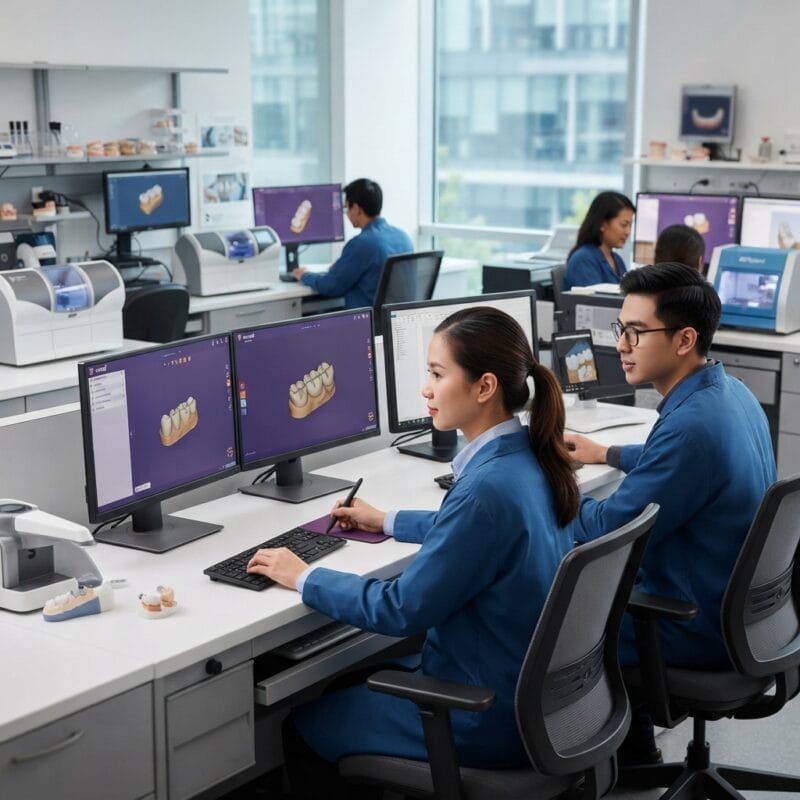
Understanding the Dental Technician Shortage in the USA: Solutions for Dental Labs in 2026
The dental technician shortage in the USA: solutions for dental labs in 2026 are imperative as the industry faces a critical workforce gap impacting crown & bridge, implants, surgical guides, dentures, orthodontic aligners, and night guards delivery. This shortage stems from demographic shifts, an aging workforce, and limited new technician training programs. To adapt, dental labs and dental service organizations (DSOs) must embrace innovative technologies and outsourcing strategies to maintain high-quality production while optimizing turnaround times.
What is causing the dental technician shortage in the USA?
The dental technician shortage in the USA is primarily caused by a retiring workforce and insufficient influx of new skilled technicians. Many experienced technicians are reaching retirement age, and fewer young professionals are entering the field due to limited educational programs and the perception of dental technology as a niche career. Additionally, the increasing complexity of dental prosthetics demands advanced skills, which further narrows the pool of qualified technicians available in traditional labs.
This shortage directly impacts dental labs’ capacity to meet growing demand for complex restorations such as implant-supported crowns and surgical guides. It also creates longer case turnaround times and potential quality issues, especially for smaller labs without access to advanced digital tools or outsourcing partners.
How does digital CAD/CAM outsourcing address the dental technician shortage in the USA: solutions for dental labs in 2026?
Digital CAD/CAM outsourcing allows dental labs to supplement or replace in-house technician work by leveraging specialized external design services, thus alleviating the dental technician shortage in the USA: solutions for dental labs in 2026 focus heavily on this approach.
Outsourcing digital design tasks—such as crown & bridge frameworks, implant abutments, surgical guides, dentures, orthodontic aligners, and night guards—enables labs to access expert technicians skilled in state-of-the-art software platforms from leaders like exocad and 3Shape. This reduces the bottleneck caused by limited in-house personnel and enhances product consistency and accuracy. Labs can submit intraoral or model scans and receive precise digital designs ready for milling or 3D printing, accelerating production timelines and improving patient outcomes.
Key Solutions to Combat the Dental Technician Shortage in the USA: Solutions for Dental Labs in 2026
1. Investing in Advanced Digital Technologies
Implementing CAD/CAM systems and digital scanners empowers labs to reduce manual labor and increase productivity. Digital workflows streamline design and manufacturing processes, allowing a smaller team to handle a larger volume of cases with higher precision.
- Automated design software: Use AI-enhanced design tools to simplify complex restorations.
- Cloud-based collaboration: Enables seamless communication between dentists, labs, and outsourcing partners.
- 3D printing and milling integration: Facilitates quick turnaround of physical prosthetics from digital designs.
2. Partnering with Specialized CAD/CAM Outsourcing Providers
Outsourcing to dedicated CAD/CAM design companies is a practical solution to the dental technician shortage in the USA: solutions for dental labs in 2026 must prioritize this option. These providers employ highly trained technicians focused solely on digital designs, ensuring consistent quality and scalability.
Such partnerships allow dental labs to:
- Expand capacity without hiring additional full-time staff.
- Access latest software updates and protocols without capital expenditure.
- Reduce errors and remakes through expert digital design review.
What are the benefits of outsourcing surgical guide design amid the technician shortage?
Outsourcing surgical guide design is a targeted solution to the dental technician shortage in the USA: solutions for dental labs in 2026 include this strategy to meet complex implant case demands efficiently.
Surgical guides require highly precise digital workflows and experience with implant planning software such as those offered by Straumann or Nobel Biocare. Outsourcing these designs helps labs maintain fast turnaround times and reduces the risk of inaccuracies that could compromise surgical outcomes.
This approach also frees internal technicians to focus on other prosthetic designs like dentures or orthodontic aligners, balancing workload effectively.
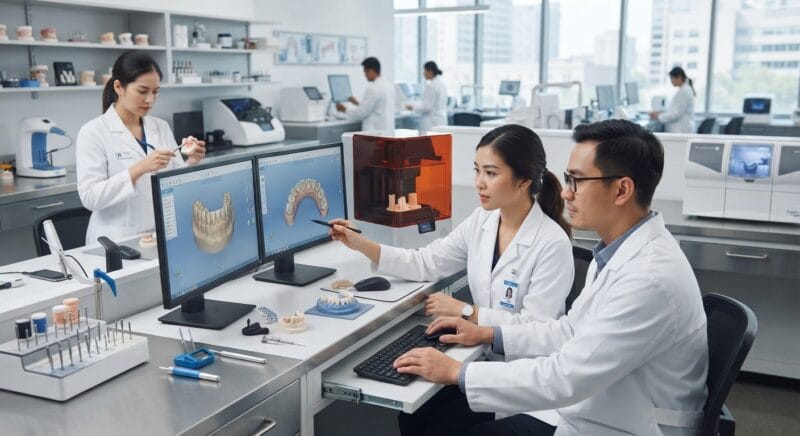
3. Enhancing Technician Training and Retention Programs
While outsourcing provides immediate relief, long-term strategies to address the dental technician shortage in the USA: solutions for dental labs in 2026 must include investing in workforce development.
Labs and DSOs should collaborate with dental schools and vocational programs to create apprenticeships and continuing education opportunities. Offering competitive salaries, flexible schedules, and career advancement pathways can improve recruitment and reduce turnover.
4. Implementing Hybrid In-House and Outsourced Workflows
Many dental labs find success by combining in-house technician expertise with outsourced digital design services. This hybrid model leverages internal knowledge for complex or custom cases while outsourcing routine or high-volume designs.
Such a model optimizes resource allocation, reduces burnout, and ensures consistent quality across all prosthetic types, including night guards and orthodontic aligners. It also allows labs to scale efficiently in response to fluctuating case volumes.
What are the industry trends shaping solutions for the dental technician shortage in 2026?
Several industry trends are influencing how dental labs address the dental technician shortage in the USA: solutions for dental labs in 2026 are evolving alongside technological and market changes.
- Increased adoption of AI and machine learning: These technologies enhance design accuracy and speed up workflows.
- Growth of Dental Service Organizations (DSOs): DSOs often centralize digital design and outsourcing to optimize cost and quality.
- Expansion of teledentistry: Digital impressions and remote consultations facilitate efficient case submission to labs.
- Standardization of digital protocols: Industry-wide adoption of interoperable software and file formats, such as STL and DICOM, improves collaboration.
How can dental labs measure the ROI of digital design outsourcing?
Measuring ROI involves analyzing increased case capacity, reduced labor costs, improved turnaround times, and fewer remakes due to design errors. Labs should track metrics such as:
- Number of cases completed monthly before and after outsourcing
- Technician overtime reduction and associated cost savings
- Client satisfaction scores and repeat business rates
- Material waste and remakes frequency
Effective outsourcing providers will also provide detailed case reports and quality assurance feedback, contributing to ongoing process improvements and maximizing return on investment.
Implementing Solutions: Practical Steps for Dental Labs and DSOs
Step 1: Assess Current Workflow and Capacity
Perform a detailed audit of your lab’s current technician workload, turnaround times, and pain points related to the dental technician shortage in the USA: solutions for dental labs in 2026 must begin with understanding internal bottlenecks.
Step 2: Select the Right CAD/CAM Outsourcing Partner
Evaluate potential partners based on software expertise, turnaround times, quality assurance processes, and communication protocols. Look for providers certified with top CAD platforms like Medit and equipped to handle a broad range of prosthetic designs.
Step 3: Integrate Digital Workflows
Ensure your lab’s scanning equipment, case management software, and milling/printing hardware are compatible with outsourcing partners’ systems for seamless data transfer. Training internal staff on digital communication protocols is essential.
Step 4: Monitor Performance and Adjust
Regularly review case outcomes, technician feedback, and client satisfaction to refine your outsourcing strategy. Maintain open communication channels with partners to address any quality or timing issues promptly.
Future Outlook: Adapting Beyond 2026
As the dental technician shortage in the USA: solutions for dental labs in 2026 mature, the industry will likely continue evolving towards fully digital ecosystems. Labs that invest early in digital design outsourcing and workforce development will remain competitive and agile in an increasingly complex dental prosthetics market.
Moreover, collaboration across stakeholders—educational institutions, software developers, and dental manufacturers—will be crucial to creating sustainable solutions that ensure a skilled technician pipeline and advanced digital capabilities.
By embracing these strategies, dental labs and DSOs can overcome the dental technician shortage in the USA: solutions for dental labs in 2026 will elevate operational efficiency, product quality, and patient satisfaction.
For more insights into improving workflows and technology adoption, consider exploring surgical guide design and digital crown design services.
Conclusion
The dental technician shortage in the USA: solutions for dental labs in 2026 are multifaceted but achievable through strategic adoption of CAD/CAM outsourcing, digital technology integration, and workforce development initiatives. These approaches empower labs to maintain high standards across crowns, bridges, implants, dentures, orthodontic aligners, and night guards while growing capacity and reducing turnaround times.
Contact us today to learn how our specialized CAD/CAM outsourcing services can help your lab overcome the dental technician shortage and thrive in 2026 and beyond.