Introduction to the Research Summary: Accuracy of Intraoral Scanners Versus Conventional Impressions 2026
The research summary: accuracy of intraoral scanners versus conventional impressions 2026 presents a comprehensive analysis of the latest studies comparing digital intraoral scanning technologies with traditional impression methods. Given the rapid adoption of CAD/CAM systems in dental labs and DSOs, understanding these accuracy differentials is critical for optimizing workflows, improving patient outcomes, and managing costs efficiently.
Intraoral scanners have evolved significantly, offering enhanced precision and streamlined digital workflows that integrate directly with CAD design services. However, conventional impressions remain a trusted standard for many practitioners due to their established reliability and material familiarity. This summary synthesizes peer-reviewed research, manufacturer data, and clinical trial results to inform decision-making for dental professionals considering outsourcing CAD/CAM digital design or investing in new scanning equipment.
What Are Intraoral Scanners and Conventional Impressions?
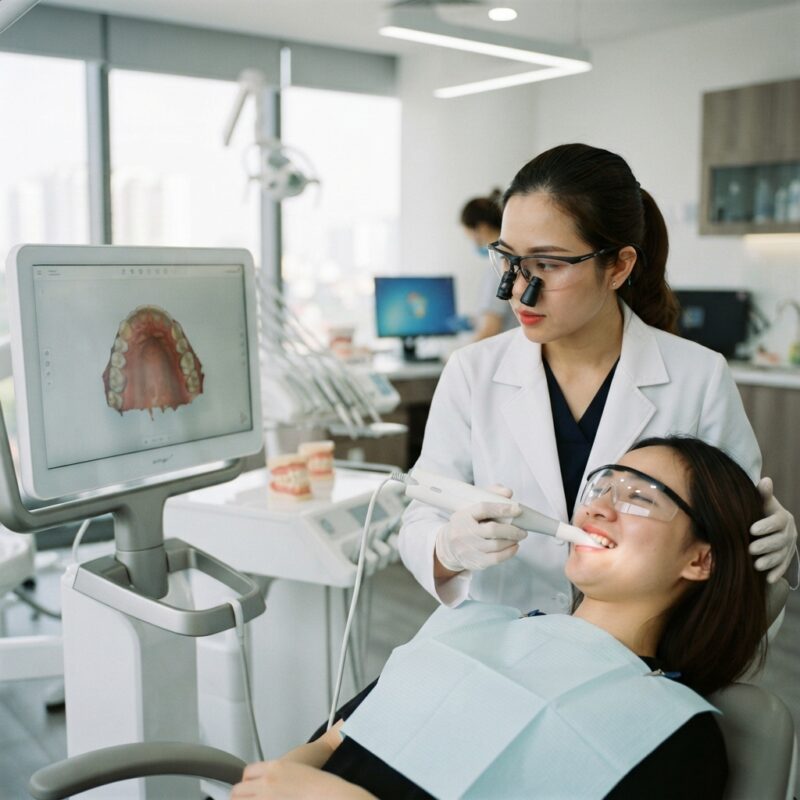
Intraoral scanners are digital devices that capture a 3D image of a patient’s dentition and oral tissues without physical impression materials, while conventional impressions involve using elastomeric materials to create a physical mold of the teeth and gums.
Intraoral scanners use optical technologies such as structured light or laser scanning to create detailed digital impressions. Conventional impressions typically use materials like polyvinyl siloxane or alginate to form physical negatives, which are then cast into stone models for prosthetic fabrication. Both methods serve as the foundational data sources for crown & bridge, implant restorations, dentures, surgical guides, orthodontic aligners, and night guards.
Why Is Accuracy Critical in Dental CAD/CAM Workflows?
Accuracy directly affects the fit, function, and longevity of dental restorations and appliances. Poorly fitting crowns or implants can lead to patient discomfort, increased chair time, and remakes that add cost to labs and practices.
The research summary: accuracy of intraoral scanners versus conventional impressions 2026 highlights that precision at every stage—from impression to final restoration—impacts clinical success. Digital impressions can reduce distortion risks inherent in physical materials, but scanning technique and device calibration also influence outcomes. Understanding these nuances helps dental labs optimize outsourcing partnerships and equipment investments.
What Does the 2026 Research Say About Intraoral Scanner Accuracy Compared to Conventional Impressions?
The research summary: accuracy of intraoral scanners versus conventional impressions 2026 reveals that modern intraoral scanners generally provide accuracy comparable to, or in some cases exceeding, that of high-quality conventional impressions for single crowns and short-span bridges.
For complex restorations involving multiple implants or full-arch prostheses, conventional impressions may still have a slight edge in absolute trueness, though recent scanner models are rapidly closing this gap. Studies consistently report lower patient discomfort and reduced chair time with digital scanning, supporting its growing adoption despite some remaining limitations in full-arch accuracy.
Comparison Table: Intraoral Scanners vs. Conventional Impressions
| Criteria | Intraoral Scanners | Conventional Impressions | Best Use Cases |
|---|---|---|---|
| Accuracy (Single Units) | High, often equal or superior | High, well-established | Crowns, small bridges |
| Accuracy (Full Arch) | Improving, slightly less precise | Very high, gold standard | Full-arch prostheses, implants |
| Patient Comfort | Very comfortable, non-invasive | Can cause gag reflex or discomfort | All patient types, especially sensitive |
| Workflow Integration | Seamless digital workflow, instant data | Requires casting, longer turnaround | Digital labs, CAD/CAM outsourcing |
| Cost of Materials | High initial device cost, no consumables | Lower equipment cost, consumables required | Variable, depends on volume |
Who Benefits Most from Intraoral Scanning Versus Conventional Impressions?
The research summary: accuracy of intraoral scanners versus conventional impressions 2026 outlines that different dental settings benefit differently from each option.
- High-Volume Labs and DSOs: Benefit from intraoral scanners that integrate well with CAD/CAM outsourcing services, reduce turnaround time, and support large-scale digital workflows.
- Small Labs and Single-Dentist Practices: May prefer conventional impressions due to lower upfront costs and familiarity, though newer affordable scanners are making digital more accessible.
- Clinics Focused on Complex Cases: Often combine both methods depending on case complexity, with full-arch or implant cases sometimes still relying on conventional impressions for maximum accuracy.
What Are the Total Cost of Ownership Considerations?
Understanding the total cost of ownership (TCO) for intraoral scanners versus conventional impression methods is essential for budget planning in dental labs and DSOs.
Intraoral scanners require a significant initial investment—ranging from $20,000 to $50,000 depending on brand and features—and ongoing software, hardware updates, and maintenance fees. However, they eliminate consumables such as impression materials and shipping costs associated with physical models. This can result in cost savings over time, especially in high-volume settings.
Conversely, conventional impressions have lower equipment acquisition costs but incur ongoing expenses for materials, storage, and shipping, as well as potential delays from model fabrication errors. The research summary: accuracy of intraoral scanners versus conventional impressions 2026 advises labs and DSOs to evaluate workflow efficiencies and volume needs when calculating TCO.
How Do Workflow Impacts Differ Between Digital and Conventional Methods?
Intraoral scanners streamline workflows by producing digital models instantly, enabling faster turnaround times and immediate data transfer to CAD/CAM design outsourcing services. This accelerates production of crowns, bridges, implants, dentures, surgical guides, orthodontic aligners, and night guards.
Conventional impressions require physical handling, shipping to the lab, and stone model fabrication, introducing additional steps and potential errors. Additionally, digital workflows facilitate easier integration with manufacturing technologies like 3D printing and milling, supporting more agile and scalable production models.
Dental labs using intraoral scanners benefit from enhanced communication with clinicians and better case tracking, while conventional methods remain reliable when digital infrastructure is limited.
What Are the Limitations and Challenges of Intraoral Scanners?
Despite advances, intraoral scanners still face challenges that can affect clinical outcomes, as outlined in the research summary: accuracy of intraoral scanners versus conventional impressions 2026.
- Full-Arch Scanning: Slightly less precise than conventional methods, potentially impacting long-span prosthetics.
- Operator Technique: Scanning accuracy depends heavily on clinician skill and experience.
- Initial Cost and Training: High upfront investment and learning curves may be barriers for smaller practices.
- Software Compatibility: Ensuring seamless integration with CAD/CAM outsourcing services requires updated software and open file formats.

What Are the Best Practices for Selecting an Intraoral Scanner in 2026?
Choosing the right intraoral scanner involves evaluating accuracy, ease of use, integration capabilities, and support services. The research summary: accuracy of intraoral scanners versus conventional impressions 2026 emphasizes these key factors:
- Accuracy and Precision: Review published clinical studies and manufacturer data on trueness and precision.
- Compatibility: Ensure the scanner supports industry-standard file formats like STL or proprietary formats compatible with your CAD/CAM outsourcing partner.
- User Experience: Consider ergonomics, scanning speed, and software interface.
- Service and Support: Evaluate manufacturer training, customer service, and software update policies.
Leading brands such as 3Shape and iTero offer scanners with proven track records and continuous improvements aligned with industry standards.
How Does This Research Affect Dental Lab CAD/CAM Digital Design Outsourcing?
The research summary: accuracy of intraoral scanners versus conventional impressions 2026 confirms that digital impressions facilitate faster and more accurate CAD/CAM design outsourcing. Labs and DSOs leveraging intraoral scans can reduce turnaround times, improve case predictability, and optimize resource allocation.
Outsourcing digital design to specialized CAD/CAM providers enables dental labs to focus on manufacturing excellence while accessing expert design capabilities without hiring full-time staff. Digital data transfer reduces errors from physical impression shipping and scanning inconsistencies, supporting higher quality restorations.
This synergy also benefits clinics by offering streamlined workflows and predictable scheduling, ultimately enhancing patient satisfaction. Outsourcing CAD design services also works well alongside surgical guide design services.
What Are the Implications for Different Dental Practice Models?
The research summary: accuracy of intraoral scanners versus conventional impressions 2026 highlights that practice models ranging from single-dentist offices to large DSOs face distinct considerations:
- Single-Dentist Practices: May delay scanner investment due to cost but benefit from outsourcing CAD design to remain competitive without in-house expertise.
- Mid-Sized Practices: Often adopt scanners for efficiency gains and utilize CAD/CAM outsourcing for complex cases, balancing costs and quality.
- Large DSOs: Prioritize high-throughput digital workflows and invest in multiple scanners integrated with centralized CAD/CAM outsourcing hubs to maximize standardization and scalability.
Decision-makers should assess volume, case complexity, and staff expertise in line with the research summary findings to select the optimal impression and design workflows.
Do You Need Design Capacity for Your New Equipment?
If you invest in intraoral scanners or digital impression systems, having expert CAD design capacity is crucial to leverage their full potential. Our outsourced CAD/CAM digital design services allow your lab or clinic to operate milling or 3D printing equipment efficiently without hiring a dedicated designer.
By partnering with us, you gain access to experienced digital designers skilled in crowns, bridges, implants, dentures, orthodontic aligners, and night guards, ensuring accurate, timely, and high-quality restorations.
Conclusion and Next Steps
The research summary: accuracy of intraoral scanners versus conventional impressions 2026 demonstrates that intraoral scanners have reached a maturity level that makes them highly competitive with conventional impression methods in many clinical scenarios. While conventional impressions still hold advantages for specific complex cases, the overall trend favors digital workflows integrated with CAD/CAM outsourcing.
Dental labs and DSOs should weigh accuracy, cost, workflow impact, and practice model needs carefully to make informed equipment decisions. Adopting intraoral scanning technology combined with expert outsourced CAD design can enhance efficiency, reduce remakes, and improve patient satisfaction.
Step-by-Step Guide to Integrating Intraoral Scanners into Your Dental Workflow
Implementing intraoral scanners in a dental practice or lab involves more than just purchasing the device. A successful integration requires careful planning, staff training, and workflow adjustments to maximize accuracy and efficiency.
1. Assess Your Current Workflow and Identify Gaps
Start by mapping out the existing impression-taking and model fabrication process. Identify bottlenecks, error-prone steps, and areas where turnaround time can be improved. For example, if your lab frequently deals with delays caused by impression shipping or model trimming, digital scanning can help streamline these steps.
2. Select the Appropriate Intraoral Scanner
Choose a scanner that aligns with your clinical and laboratory needs. Factors to consider include scanning accuracy, ease of use, compatibility with current CAD/CAM software, and cost. It’s practical to trial several models and request demos to evaluate their performance in your specific environment.
3. Plan Staff Training Sessions
Successful scanner adoption depends heavily on operator proficiency. Schedule comprehensive training for dentists, assistants, and lab technicians. Include hands-on practice with scanning, data transfer, and troubleshooting. Experienced users report that initial training reduces rescanning rates and improves patient comfort.
4. Establish Standardized Scanning Protocols
Create detailed step-by-step guidelines for intraoral scanning to ensure consistency. For example, specify the scanning sequence (starting with occlusal surfaces, then buccal and lingual), recommended angles for scanner positioning, and how to handle common challenges like saliva or patient movement.
5. Integrate Digital Data Transfer and CAD/CAM Workflow
Set up reliable data transfer protocols between the intraoral scanner and your CAD software or external lab. Consider encrypted cloud services or secure local networks to protect patient data. Test the entire digital chain before going live to prevent delays or data loss.
6. Monitor Accuracy and Efficiency Metrics
After integration, track key performance indicators such as scanning time per patient, number of rescans needed, turnaround time for prosthetics, and patient satisfaction. Use this data to refine protocols and identify areas for continuous improvement.
7. Conduct Periodic Equipment Maintenance and Updates
Regularly calibrate your intraoral scanner according to manufacturer recommendations. Keep firmware and software up to date to benefit from enhanced accuracy and new features. Assign a responsible staff member for routine maintenance checks.
Common Mistakes to Avoid When Transitioning to Intraoral Scanners
Despite the many benefits of intraoral scanners, common pitfalls can hinder their effectiveness. Being aware of these errors can save time, reduce costs, and improve outcomes.
- Neglecting Adequate Training: Underestimating the learning curve can result in poor scan quality and repeated rescans. Allocate sufficient time and resources for comprehensive staff education.
- Ignoring Patient Preparation: Failing to manage saliva, blood, or debris can degrade scan accuracy. Use isolation devices or air drying before scanning.
- Skipping Calibration and Maintenance: Infrequent equipment upkeep can cause gradual accuracy loss. Regularly check and calibrate scanners.
- Not Standardizing Scanning Protocols: Inconsistent scanning methods lead to variable results. Develop and enforce clear protocols.
- Overlooking Data Management and Security: Improper handling of digital files increases risk of data breaches and delays. Implement secure and organized data workflows.
- Failing to Evaluate Cost-Benefit Impact: Investing in high-end scanners without analyzing ROI or practice needs can strain budgets unnecessarily.
- Relying Solely on Scanner Output Without Clinical Verification: Always cross-check digital impressions with clinical observations to avoid unnoticed errors.
Cost and Quality Considerations: Balancing Investment with Clinical Outcomes
Choosing between intraoral scanners and conventional impressions often comes down to evaluating costs against expected quality improvements and operational benefits. Here are key factors to weigh:
Initial and Recurring Costs
- Scanner Purchase Price: High-accuracy scanners with advanced features can range from $20,000 to $60,000 or more. Lower-cost models may compromise on resolution or software support.
- Software Licenses and Updates: Many scanners require annual software subscriptions or CAD/CAM module fees.
- Consumables: While digital scanning reduces impression materials, it may require investment in scanning sprays or protective sleeves.
- Training and Support: Initial and ongoing staff education represents a hidden but vital cost.
Impact on Quality and Case Acceptance
Higher accuracy of intraoral scanners can translate into better-fitting restorations, fewer remakes, and improved patient satisfaction. However, some complex cases (e.g., large edentulous spans or subgingival margins) may still benefit from conventional impressions or hybrid workflows.
Return on Investment (ROI) Analysis
Calculate ROI by considering:
- Reduction in material and shipping costs
- Shortened turnaround times leading to faster patient treatment
- Lower rates of remakes and adjustments
- Increased patient throughput and satisfaction
- Potential to attract tech-savvy patients seeking digital dentistry
Real-world examples show practices recouping scanner investments within 18-24 months by optimizing these factors.
Quality Control Measures
Implement routine quality checks comparing scanned models to conventional impressions during the transition period. Partner with trusted dental labs to evaluate fit and function of restorations fabricated from digital impressions.
Market-Specific Considerations for Dental Labs and Practices
Geographic location, patient demographics, and practice size significantly influence the adoption and success of intraoral scanners.
Dental Labs: Adapting to Client Demands and Workflow Changes
- Remote Collaboration: Labs serving multiple practices benefit from digital workflows allowing quick turnaround and communication. Cloud-based platforms enable real-time case reviews and adjustments.
- Investment in Design Capacity: Labs must decide whether to expand in-house CAD design or outsource. Increased digital data inflow demands skilled designers and adequate software licenses.
- Customization and Material Options: Digital impressions facilitate more precise customization, but labs need to maintain diverse material inventories to match clinical needs.
Dental Practices: Tailoring Scanner Selection to Patient Profiles
- High-Volume Practices: Practices with large patient throughput require scanners offering rapid scan speeds without compromising accuracy.
- Pediatric and Special Needs Patients: Smaller scanner heads and shorter scan times improve patient comfort and compliance.
- Multi-Specialty Clinics: Orthodontics, prosthodontics, and implantology have specific scanning requirements; selecting versatile scanners that support varied indications optimizes investment.
Regional Regulatory and Reimbursement Environments
Some regions offer incentives or reimbursements for adopting digital dentistry technologies, which can offset initial costs. Conversely, regulatory requirements for data security and patient privacy may necessitate additional investments in IT infrastructure.
Competitive Differentiation through Technology
In saturated markets, integrating intraoral scanning can enhance a practice’s or lab’s reputation as a technology leader, attracting referrals and improving patient loyalty. Case studies from urban centers show increased case acceptance when digital impressions are presented as part of a modern, patient-friendly experience.
Contact us today to discuss how our CAD/CAM digital design outsourcing can complement your equipment investments and streamline your lab or practice workflow.