Understanding the 3D dental workflow from scan to design in 2026
The 3D dental workflow from scan to design in 2026 represents the integration of advanced digital technologies that streamline the entire dental prosthetic creation process, from initial patient scan to final CAD design. This workflow enhances accuracy, reduces turnaround times, and facilitates collaboration between dental practices, labs, and outsourcing providers.
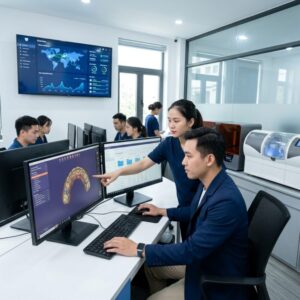
Dental labs and Dental Service Organizations (DSOs) increasingly rely on sophisticated intraoral scanners and CBCT imaging to capture precise digital impressions. These scans serve as the foundation for CAD software programs to create detailed 3D models of crowns, bridges, implants, dentures, orthodontic aligners, and night guards. Outsourcing CAD/CAM design services allows labs to access expert design talent and cutting-edge software without the cost of in-house infrastructure.
What is the significance of the 3D dental workflow from scan to design in 2026?
The 3D dental workflow from scan to design in 2026 is significant because it dramatically improves the precision, efficiency, and scalability of dental prosthetic production. By digitizing the entire process, dental labs can reduce errors caused by traditional impressions and manual design, leading to better patient outcomes and faster case completion.
With the rise of digital dentistry, the workflow minimizes physical material waste and enables remote collaboration, making CAD/CAM outsourcing an ideal solution for labs handling high volumes or complex cases. The ability to design surgical guides, implants, and orthodontic devices in a fully digital environment revolutionizes treatment planning and execution.
Key components of the 3D dental workflow from scan to design in 2026
The digital workflow involves several critical steps that seamlessly connect to produce a final dental restoration or appliance:
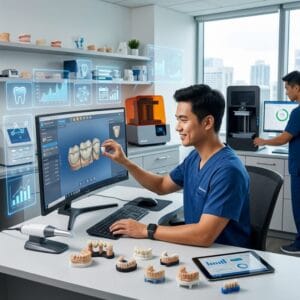
- 1. Digital scanning: Using intraoral scanners (e.g., from Medit or 3Shape) or CBCT imaging to capture accurate 3D data of the patient’s oral anatomy.
- 2. Data processing: Cleaning and optimizing scan data to prepare it for CAD design, often utilizing specialized software tools.
- 3. CAD design: Employing advanced design software such as Exocad or 3Shape Dental System to create virtual models of crowns, bridges, implants, surgical guides, dentures, orthodontic aligners, and night guards.
- 4. Validation and adjustment: Reviewing the design for fit, occlusion, and aesthetics, with the ability to make real-time modifications digitally.
- 5. Export and manufacturing preparation: Preparing design files for CAM production methods such as milling or 3D printing, ensuring compatibility and precision.
How does CAD/CAM dental lab outsourcing fit into this workflow?
CAD/CAM dental lab outsourcing fits into the 3D dental workflow from scan to design in 2026 by providing expert digital design services that labs or DSOs can leverage to optimize efficiency and quality. Outsourcing partners use state-of-the-art CAD software and experienced technicians to take raw scan data and convert it into precise, manufacturable designs.
This arrangement allows dental labs to focus on manufacturing and finishing while outsourcing complex design tasks, reducing overhead costs associated with software licenses and training. Outsourcing also offers scalability during peak workloads and access to specialists skilled in designing various restorations including implants and surgical guides, which require high technical accuracy.
Benefits of adopting the 3D dental workflow from scan to design in 2026
Dental labs and DSOs that implement this comprehensive digital workflow enjoy numerous benefits:
- Improved accuracy: Digital scans eliminate distortions inherent in traditional impressions, resulting in better-fitting restorations.
- Faster turnaround: Digital data transfer and design reduce manual steps, accelerating case completion.
- Enhanced collaboration: Cloud-based platforms enable seamless communication between dentists, labs, and outsourcing partners.
- Cost efficiency: Outsourcing design reduces capital expenditures on software and personnel while optimizing labor costs.
- Versatility: Supports a wide range of prosthetics, from crowns and bridges to orthodontic aligners and night guards.
- Consistent quality: Standardized digital protocols minimize errors and ensure reproducible results.
What are the challenges labs face when implementing this workflow?
While the 3D dental workflow from scan to design in 2026 offers clear advantages, labs may encounter challenges such as the initial investment in scanning equipment and software, the need for training to operate digital tools effectively, and data management complexities. Additionally, integration with existing lab management systems can require careful planning.
Reliability on digital communication also means that secure data handling and privacy compliance are critical. Labs must choose outsourcing partners that adhere to industry standards and maintain robust cybersecurity measures. However, these challenges are outweighed by long-term gains in efficiency and quality, especially when partnering with experienced CAD/CAM design providers.
Technologies powering the 3D dental workflow from scan to design in 2026
The evolution of digital tools is central to the efficiency of this workflow. Some key technologies include:
- Intraoral scanners: High-resolution devices capable of capturing detailed 3D images of teeth and soft tissue, such as those from Medit and 3Shape.
- CAD software: Platforms like Exocad provide intuitive interfaces for designing prosthetics with precision and customization options.
- 3D printing and milling: Advanced manufacturing machines that produce final restorations directly from digital designs, improving speed and accuracy.
- Cloud-based collaboration: Secure portals that allow real-time sharing of scan data and design files among dental teams and outsourcing vendors.
How do surgical guides and implant workflows integrate into this process?
Surgical guides and implant workflows are seamlessly integrated into the 3D dental workflow from scan to design in 2026 by combining CBCT scans with intraoral digital impressions to create precise, patient-specific surgical templates. CAD software enables virtual implant planning, ensuring optimal positioning and angulation.
The surgical guide designs are then outsourced or produced in-house to assist clinicians during implant placement, reducing surgical risks and improving outcomes. This digital approach also supports pre-surgical simulations and better communication between surgeons and lab technicians, enhancing overall treatment predictability.
Future trends shaping the 3D dental workflow from scan to design in 2026 and beyond
Looking ahead, several trends are expected to further advance the 3D dental workflow from scan to design in 2026:
- Artificial intelligence (AI): AI-driven design automation will enhance efficiency and enable predictive modeling for improved prosthetic fit and longevity.
- Augmented reality (AR): AR tools will facilitate virtual try-ins and real-time design adjustments, improving patient engagement and clinical outcomes.
- Material innovations: New biocompatible and aesthetic materials compatible with digital manufacturing will expand restorative options.
- Integration with practice management software: Streamlining data flow from patient records to lab design and manufacturing, reducing administrative overhead.

Why choose a specialized CAD/CAM dental lab outsourcing partner?
Partnering with a specialized CAD/CAM dental lab outsourcing provider ensures access to the latest technology and expert design services essential for a smooth 3D dental workflow from scan to design in 2026. These providers bring deep experience with diverse restoration types and can handle complex cases requiring precision and customization.
Outsourcing reduces the burden on internal teams, allowing labs and DSOs to focus on high-quality manufacturing and patient care. A trusted partner also guarantees faster turnaround times, consistent quality control, and secure data handling aligned with industry standards.
How can dental labs ensure quality when outsourcing digital design?
Dental labs can ensure quality in outsourcing by selecting partners with proven CAD/CAM expertise, certifications, and transparent quality assurance protocols. It’s important to establish clear communication channels, define expectations for design accuracy, and perform regular audits of delivered work.
Labs should also verify that the outsourcing provider uses compatible software platforms and stays updated with the latest digital dentistry innovations. Collaborative workflows supported by cloud platforms enable real-time feedback and corrections, maintaining high standards throughout the design process.
Case studies: Successful integration of the 3D dental workflow from scan to design in 2026
Many dental labs and DSOs have reported significant improvements in efficiency and patient satisfaction after adopting the 3D dental workflow from scan to design in 2026. For example, a large multi-location DSO reduced case turnaround by 30% and improved restoration fit precision by partnering with a specialized CAD/CAM outsourcing firm.
Another lab specializing in implant and surgical guide fabrication leveraged digital workflows to expand its service offerings while reducing overhead costs. These successes highlight the critical role of digital design outsourcing in modern dental laboratory operations.
What are the most common restoration types designed using this workflow?
The most common restoration types designed in the 3D dental workflow from scan to design in 2026 include crowns and bridges, implant abutments and crowns, surgical guides, full and partial dentures, orthodontic aligners, and night guards. Each restoration benefits from precise digital modeling that ensures an accurate fit and optimal function.
Specialized design techniques accommodate the unique requirements of these prosthetics, such as occlusal surface morphology for crowns, implant angulation for abutments, and flexible aligner geometries. Outsourcing providers often have dedicated teams for each restoration type to maximize customization and quality.
How does the 3D dental workflow from scan to design in 2026 improve patient outcomes?
By leveraging the 3D dental workflow from scan to design in 2026, dental labs and clinicians can offer patients restorations that fit better, function more naturally, and look aesthetically superior. Digital precision reduces the need for adjustments and remakes, leading to fewer patient visits and increased satisfaction.
Real-time digital communication also enables faster case approvals and more predictable clinical results. The ability to plan implants and surgical guides virtually enhances surgical precision, reducing complications and improving healing times.
Integrating software and hardware for a seamless digital experience
Successful implementation of the 3D dental workflow from scan to design in 2026 requires careful integration of hardware like scanners and 3D printers with software solutions for design and case management. Leading companies such as Dentsply Sirona and Straumann offer comprehensive digital ecosystems that support interoperability.
Labs should evaluate their existing equipment and software to ensure compatibility and invest in training staff on the latest digital protocols. Cloud-based platforms facilitate cross-location collaboration for DSOs, enabling standardized workflows and centralized quality control.
What role does data security play in digital dental workflows?
Data security is paramount in the 3D dental workflow from scan to design in 2026 because patient scans and design files contain sensitive health information. Compliance with HIPAA and other relevant regulations mandates secure data transfer, storage, and access controls.
Outsourcing partners must implement encryption, secure cloud storage, and audit trails to protect data integrity and confidentiality. Labs should establish clear data governance policies and verify that all software providers adhere to stringent cybersecurity standards.
Conclusion: Embrace the future with the 3D dental workflow from scan to design in 2026
The 3D dental workflow from scan to design in 2026 is revolutionizing dental laboratory operations and patient care through digital precision, scalability, and collaboration. By adopting this workflow and leveraging specialized CAD/CAM outsourcing services, dental labs and DSOs can enhance efficiency, quality, and profitability.
Embracing these technologies today positions your practice or lab for success in the rapidly evolving field of digital dentistry, ensuring you can meet the demands of modern restorative and orthodontic treatments with confidence.
Contact us to learn how our expert CAD/CAM design outsourcing services can optimize your 3D dental workflow from scan to design in 2026 and beyond.