Introduction to the Digital Dentistry Market Report: Key Findings for Clinics in the United States 2026
The digital dentistry market report: key findings for clinics in the United States 2026 provides a comprehensive overview of how emerging technologies and outsourcing models are reshaping dental care delivery. This report is invaluable for clinics, dental service organizations (DSOs), and dental labs aiming to stay competitive by leveraging advanced CAD/CAM digital design and manufacturing capabilities.
As digital dentistry adoption accelerates, clinics face increasing demands for faster turnaround times, higher precision, and cost-effective prosthetic solutions. Outsourcing digital design services, especially CAD/CAM workflows for crowns, bridges, implants, surgical guides, dentures, orthodontic aligners, and night guards, has become a strategic approach to meeting these challenges. This article delves deep into the report’s key findings to inform decision-making for clinics in the United States preparing for 2026 and beyond.
What are the main growth drivers identified in the digital dentistry market report?
The primary growth drivers in the digital dentistry market report: key findings for clinics in the United States 2026 include increasing adoption of CAD/CAM technology, rising demand for aesthetic restorations, and the expansion of dental service organizations (DSOs) seeking scalable solutions.
Specifically, the report highlights that clinics are increasingly investing in digital scanners, 3D printers, and milling machines to enhance workflow efficiency. Additionally, patient preference for same-day crowns and minimally invasive procedures fuels demand for precise digital prosthetics. DSOs benefit from outsourcing CAD/CAM design to specialized dental labs, which allows them to reduce overhead and improve case consistency across multiple locations.
This growth is also underpinned by technological advances in scanning accuracy and software integration, such as those offered by 3Shape and exocad, which streamline communication between clinics and labs. The report stresses that these drivers will continue to propel market expansion through 2026.
How does CAD/CAM outsourcing enhance clinic and DSO operations?
CAD/CAM outsourcing enhances clinic and DSO operations by providing expert digital design services that improve turnaround times, reduce capital investment, and increase prosthetic quality.
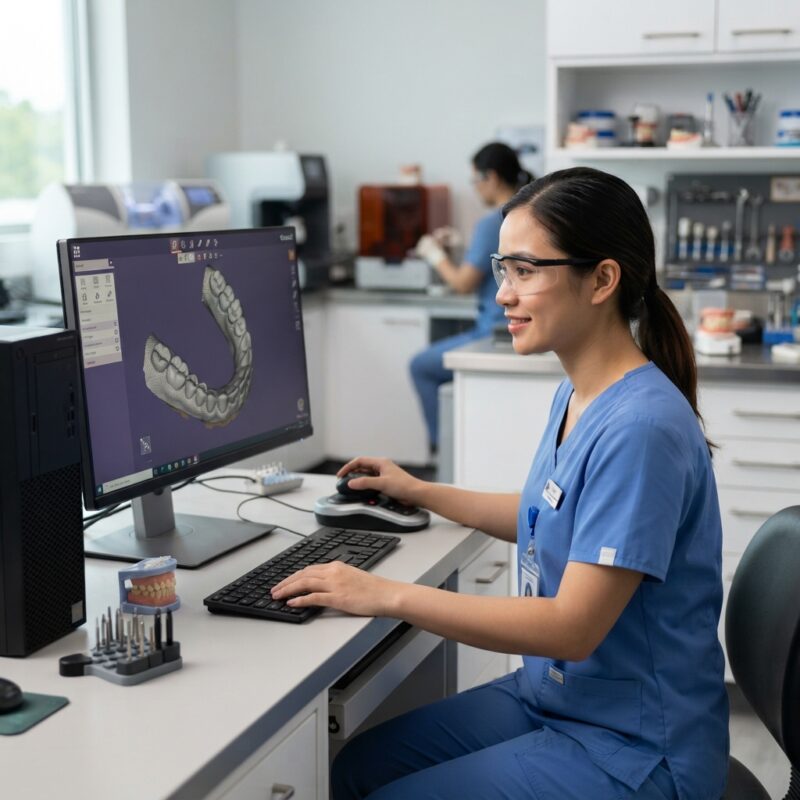
Dental labs specializing in CAD/CAM digital design offer clinics access to trained technicians and cutting-edge software without the need to invest heavily in in-house digital infrastructure. This arrangement enables clinics to focus on patient care while outsourcing complex digital workflows for crowns, implants, dentures, and orthodontic appliances.
Outsourcing also supports scalability for DSOs managing multiple locations, ensuring standardized prosthetic design across their network. The digital dentistry market report: key findings for clinics in the United States 2026 emphasizes that clinics leveraging outsourcing partnerships report higher patient satisfaction due to improved fit and aesthetics, as well as quicker delivery times.
Moreover, labs providing these services often integrate directly with clinic intraoral scanners and printers, creating seamless digital workflows that reduce manual error and rework. This efficiency is critical in meeting the demands of modern dental practices.
What technologies are shaping the digital dentistry market for 2026?
Key technologies shaping the digital dentistry market by 2026 include advanced intraoral scanners, AI-driven design software, high-precision 3D printing, and improved materials for prosthetics.
The digital dentistry market report: key findings for clinics in the United States 2026 identifies intraoral scanners as foundational tools that capture accurate digital impressions, replacing traditional molds. Leading scanner manufacturers such as iTero continue to innovate with faster scanning speeds and better patient comfort.
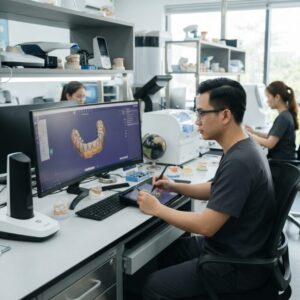
AI-powered CAD software automates design processes for crowns, bridges, and surgical guides, reducing technician workload and enhancing design consistency. Solutions from companies like exocad enable customized designs tailored to each patient’s anatomy.
Additionally, 3D printing technology advances, such as those offered by Formlabs, enable rapid production of surgical guides and night guards with biocompatible materials. The report stresses that these technologies collectively reduce production cycles and improve clinical outcomes.
What are the implications of the digital dentistry market report for dental labs?
The implications for dental labs are significant, as the report highlights a growing preference for outsourcing digital design and manufacturing services among clinics and DSOs.
Dental labs that invest in CAD/CAM digital design expertise and infrastructure position themselves as critical partners for clinics adapting to digital workflows. The report indicates that labs offering comprehensive design services for crowns, implants, dentures, and orthodontic aligners will capture a larger share of the market.
Moreover, labs that integrate cloud-based collaboration platforms and maintain compatibility with various scanner and milling systems can streamline communication and case management. This integration supports faster revisions and more accurate final prosthetics.
The digital dentistry market report: key findings for clinics in the United States 2026 suggests that dental labs focusing on specialization, quality control, and timely delivery outperform competitors in this evolving landscape. Outsourcing digital design functions also enables labs to reduce labor costs and improve margins.
What challenges do clinics face adopting digital dentistry technologies?
Clinics face challenges including high initial investment costs, training requirements, and integration complexities when adopting digital dentistry technologies.
Implementing in-house CAD/CAM systems requires significant capital expenditure on scanners, design software, milling machines, and 3D printers. The digital dentistry market report: key findings for clinics in the United States 2026 notes that smaller practices often lack the resources or expertise to fully leverage these technologies immediately.
Staff training to operate complex software and devices adds another layer of difficulty, impacting workflow efficiency during the transition period. Additionally, ensuring seamless integration between various hardware and software platforms from different vendors can be technically challenging.
Outsourcing digital design to specialized labs mitigates many of these issues by offloading technical complexity, allowing clinics to adopt digital workflows incrementally and cost-effectively.
Which clinical applications show the highest adoption rates according to the report?
According to the digital dentistry market report: key findings for clinics in the United States 2026, crown and bridge restorations, implant prosthetics, and surgical guides exhibit the highest adoption rates of digital technology.
Crowns and bridges remain the most common digital restorations, benefiting from precise digital impressions and automated design workflows that improve fit and reduce chair time. Implant surgical guides also see robust adoption, supported by 3D printed guides that enhance surgical accuracy and patient outcomes.
The report also highlights growing interest in digital dentures and orthodontic aligners, although these markets are somewhat less mature. Night guards are increasingly produced using digital design and additive manufacturing methods, offering custom fit and comfort advantages.
These clinical applications are driving demand for outsourced CAD/CAM design services that can handle diverse prosthetic types with accuracy and speed.
How can clinics evaluate potential CAD/CAM outsourcing partners?
Clinics can evaluate potential CAD/CAM outsourcing partners by assessing their technology capabilities, turnaround times, quality assurance processes, and integration support.
The digital dentistry market report: key findings for clinics in the United States 2026 advises clinics to select partners that utilize industry-leading CAD software such as exocad or 3Shape and offer compatibility with the clinic’s scanner and printer systems.
Turnaround time is critical; reliable labs provide consistent delivery schedules to support clinical workflows. Quality assurance protocols, including digital fit verification and material certifications, ensure prosthetic reliability and patient safety.
Moreover, strong communication channels and digital collaboration platforms facilitate case review and modification, reducing errors and remakes. Clinics should also consider labs with experience supporting DSOs, as scalable processes and standardized outputs benefit multi-location practices.
Choosing the right partner enables clinics to maximize the benefits of digital dentistry without the burden of managing complex technology in-house.

What trends are emerging in the digital dentistry market beyond 2026?
Emerging trends in the digital dentistry market beyond 2026 include increased use of artificial intelligence, expanded tele-dentistry capabilities, and integration of augmented reality for treatment planning.
The digital dentistry market report: key findings for clinics in the United States 2026 predicts AI will play a larger role in automating design optimization, predictive diagnostics, and personalized treatment planning. Tele-dentistry platforms will facilitate remote consultations and case reviews, enabling labs and clinics to collaborate more efficiently across distances.
Augmented reality and virtual reality technologies are also expected to enhance patient education and surgical training, improving clinical confidence and outcomes.
Dental labs that stay ahead by adopting these innovations will offer enhanced value to clinics and DSOs. Additionally, sustainability concerns are encouraging the development of eco-friendly materials and waste reduction practices in digital manufacturing.
These trends underscore the dynamic nature of the digital dentistry ecosystem and the importance of continuous adaptation.
How do digital dentistry advancements impact patient outcomes and satisfaction?
Digital dentistry advancements significantly improve patient outcomes and satisfaction by enabling faster, more accurate, and aesthetically superior restorations.
The digital dentistry market report: key findings for clinics in the United States 2026 emphasizes that digital impressions reduce discomfort compared to traditional molds, enhancing patient experience. Precision CAD/CAM designs yield prosthetics with better marginal fit and occlusion, reducing post-operative adjustments and complications.
Same-day prosthetics and reduced appointment times increase convenience and reduce patient anxiety. Surgical guides produced via digital workflows increase implant placement accuracy, minimizing invasive procedures and recovery time.
Patients also appreciate the improved aesthetics possible with digitally designed crowns, bridges, and aligners, which replicate natural tooth morphology more closely. Overall, these advancements foster higher treatment acceptance rates and loyalty.
Clinics that partner with expert digital design labs maximize these benefits by ensuring consistent quality and timely delivery.
Conclusion and Call to Action
The digital dentistry market report: key findings for clinics in the United States 2026 reveals that embracing CAD/CAM digital design outsourcing is essential for clinics and DSOs aiming to thrive in an increasingly digitalized dental landscape. Leveraging expert outsourcing partners enhances efficiency, quality, and patient satisfaction while mitigating the costs and complexities of in-house technology management.
Implementing Digital Workflows: A Step-by-Step Guide for Clinics and Labs
Transitioning to a fully digital workflow can seem daunting for many dental clinics and labs. However, breaking down the process into manageable steps helps ensure a smooth adoption and maximizes the benefits of digital dentistry technologies. Below is a practical step-by-step guide tailored to dental practices and labs aiming to integrate CAD/CAM systems and digital design tools effectively.
Step 1: Assess Current Capabilities and Needs
- Inventory existing equipment: Identify which analog or digital tools are currently in use and their condition.
- Staff skill evaluation: Determine the team’s familiarity with digital tools and identify training needs.
- Workflow analysis: Map out your current patient treatment and lab production processes to pinpoint bottlenecks and inefficiencies.
Step 2: Define Clear Objectives and Budget
- Set measurable goals: For example, reducing turnaround time by 30%, improving prosthetic fit accuracy, or lowering production costs by 15%.
- Budget planning: Consider upfront costs for hardware (scanners, milling machines), software licenses, training, and ongoing maintenance.
- ROI estimation: Calculate expected savings or revenue increases from faster case completion and improved patient satisfaction.
Step 3: Choose the Right Technology and Partners
- Evaluate scanner options: Intraoral versus desktop scanners, considering accuracy, ease of use, and integration.
- Select CAD software: Prioritize user-friendly interfaces, compatibility with lab equipment, and support for various prosthetic designs.
- Identify outsourcing opportunities: Decide if partial or full case outsourcing to specialized CAD/CAM labs fits your model.
Step 4: Train Staff and Pilot the Workflow
- Hands-on training: Engage in vendor-led workshops and simulation sessions.
- Run pilot cases: Start with simple prosthetics or single units to troubleshoot process flaws.
- Gather feedback: Collect input from clinical and lab staff to refine procedures and address challenges.
Step 5: Scale and Monitor Performance
- Expand deployment: Gradually increase case complexity and volume managed digitally.
- Track KPIs: Monitor turnaround time, case accuracy, patient satisfaction scores, and cost per case.
- Continuous improvement: Use data to optimize workflows, update software, and plan refresher trainings.
Common Pitfalls in Digital Dentistry Adoption and How to Avoid Them
Despite the clear benefits of digital dentistry, many clinics and labs face obstacles that can hinder successful implementation. Recognizing and proactively addressing common pitfalls can save time, money, and frustration.
Overlooking Staff Training and Change Management
One of the biggest mistakes is underestimating the learning curve for new digital tools. Without adequate training and clear communication, staff resistance and errors can derail the adoption process. Investing in comprehensive education, hands-on practice, and ongoing support is essential.
Choosing Technology Based Solely on Cost
While budget constraints are real, opting for the cheapest scanners or software often results in poor integration, lower accuracy, and higher long-term costs. Clinics should weigh factors like reliability, vendor support, and scalability alongside price to select solutions that deliver consistent value.
Ignoring Data Management and Security Protocols
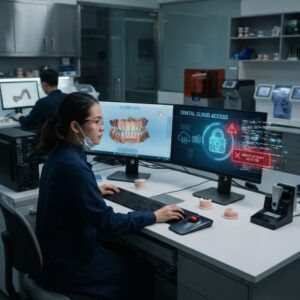
Digital workflows generate large volumes of sensitive patient data. Clinics must implement strict cybersecurity measures, data backup systems, and compliance with HIPAA regulations. Failure to do so risks data breaches and legal liabilities.
Underestimating Workflow Integration Complexity
Digital dentistry isn’t just about acquiring new equipment; it requires reengineering workflows to align clinical, laboratory, and administrative processes. Overlooking this integration can create inefficiencies and errors. Involving multidisciplinary teams in planning and piloting phases helps ensure smooth transitions.
Cost and Quality Considerations in Outsourcing CAD/CAM Services
Outsourcing digital design and manufacturing to specialized labs offers many advantages, but clinics must carefully evaluate cost and quality factors to maximize benefits.
Cost Factors to Consider
- Per-case pricing: Understand if charges are fixed, tiered by case complexity, or volume-dependent.
- Setup fees and minimums: Some labs require initial onboarding fees or minimum monthly order volumes.
- Turnaround time premiums: Expedited services often come at higher prices; balance urgency with cost-effectiveness.
- Shipping and logistics: Factor in costs and risks associated with sending impressions or prosthetics back and forth.
Quality Metrics and Evaluation
- Accuracy and fit: Request sample cases or references to assess prosthetic precision and marginal fit.
- Material quality: Verify the types and grades of materials used, ensuring compliance with clinical standards.
- Certification and compliance: Choose labs accredited by relevant dental associations and adhering to FDA or ISO guidelines.
- Case revision policies: Understand how the lab handles remakes or adjustments, including costs and turnaround implications.
Balancing Cost and Quality
While low-cost outsourcing may be attractive, poor quality can lead to increased chair time, patient dissatisfaction, and repeat lab fees. Conversely, premium labs with proven quality records may reduce clinical complications and enhance reputation. Clinics must define their quality thresholds and negotiate pricing structures that reflect their priorities.
Market-Specific Considerations for Dental Labs Serving U.S. Clinics
Dental labs operating within or targeting the U.S. market face unique regulatory, operational, and competitive dynamics that influence their service strategies.
Regulatory Environment
Labs must navigate FDA regulations governing dental devices, including registration, labeling, and manufacturing practices. Compliance with the Health Insurance Portability and Accountability Act (HIPAA) is mandatory when handling patient information digitally. Staying current with evolving state-level laws and guidelines is also important.
Geographic and Demographic Demand Variations
Urban centers and affluent regions tend to have higher adoption rates of digital dentistry and greater demand for premium prosthetics. Labs must tailor marketing and service offerings accordingly, potentially providing expedited services or luxury materials in these areas. Rural or underserved markets may prioritize cost-effective solutions and remote consultation capabilities.
Competitive Landscape and Differentiation
The U.S. dental lab market is highly competitive, with both large national chains and small specialized providers. Labs can differentiate by focusing on niche applications such as implant-supported restorations, aesthetic ceramics, or rapid turnaround for emergency cases. Building strong relationships with DSOs and multi-location clinics through customized solutions and dedicated support is also a key strategy.
Technological Infrastructure and Integration
To remain competitive, U.S.-based labs must invest in interoperable digital platforms that seamlessly connect with various clinic practice management systems and intraoral scanners. Offering cloud-based portals for case submissions, real-time tracking, and communication enhances customer experience and operational efficiency.
Contact us today to learn how our dental lab CAD/CAM digital design outsourcing services can help your practice stay ahead with precise, timely, and scalable prosthetic solutions.