Understanding Outsourcing CAD Design vs Replacing Departing Technicians: A Cost Comparison for Dental Labs in 2026
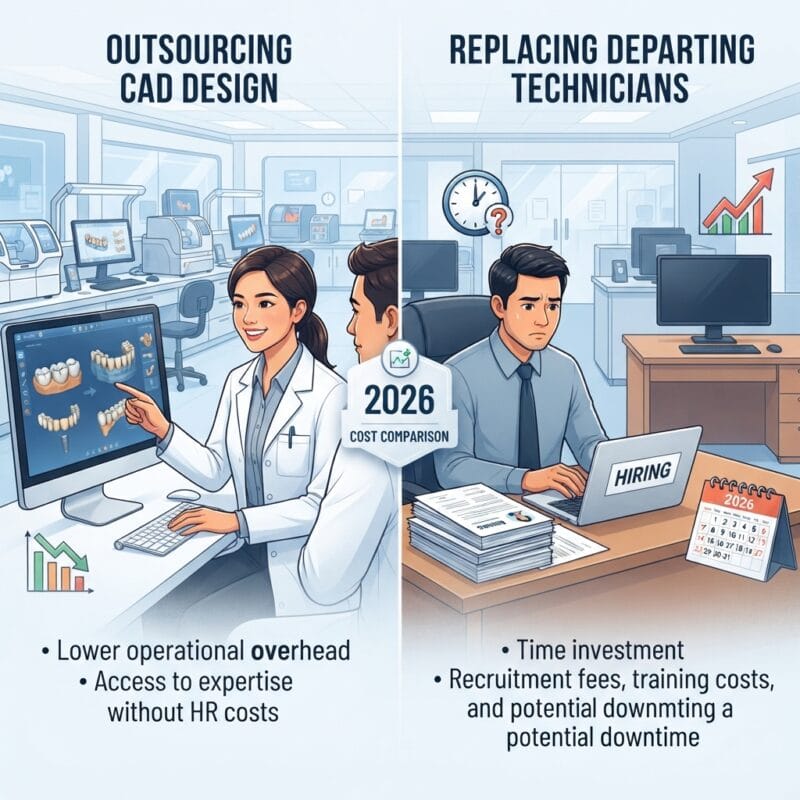
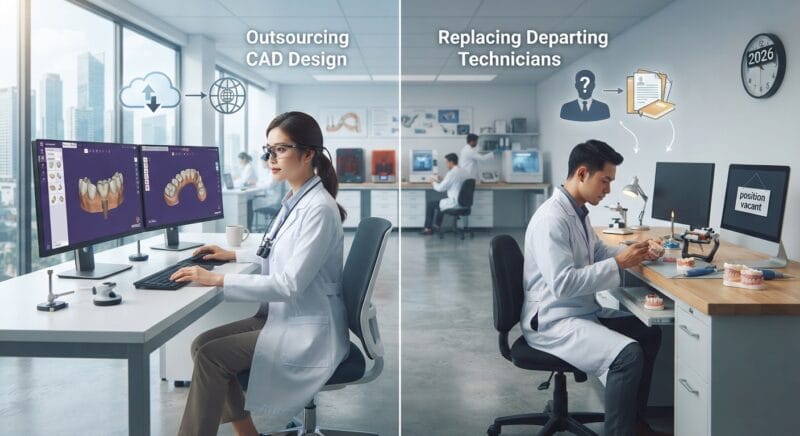
The decision between outsourcing CAD design and replacing departing technicians is a critical one for dental labs aiming to optimize costs and maintain high-quality production. The phrase outsourcing CAD design vs replacing departing technicians: a cost comparison for dental labs in 2026 encapsulates the evaluation of financial, operational, and strategic factors that influence a lab’s choice in managing its CAD/CAM digital design needs.
Dental labs face rising labor costs, increased demand for complex restorations such as crowns, bridges, implants, surgical guides, dentures, orthodontic aligners, and night guards, and the pressure to adopt advanced technology. Outsourcing CAD design can often provide flexibility and cost control, whereas hiring replacement technicians entails direct employment costs and challenges associated with recruitment, training, and retention.
What Is Dental Lab CAD/CAM Digital Design Outsourcing?
Dental lab CAD/CAM digital design outsourcing is the process by which a dental lab contracts an external specialized service provider to handle its computer-aided design (CAD) and computer-aided manufacturing (CAM) workflows, instead of performing these tasks in-house.
This approach allows labs and Dental Service Organizations (DSOs) to leverage expert digital designers focused on crown and bridge, implants, surgical guides, dentures, orthodontic aligners, and night guards, without the overhead of maintaining a full-time design staff. Outsourcing typically includes secure digital file transfer, quality control protocols, and integration with the lab’s existing production systems.
Experts from leading CAD software providers such as 3Shape and exocad often support outsourced services, ensuring up-to-date design standards and compatibility with the latest milling or 3D printing equipment.
How Does Replacing Departing Technicians Impact Dental Labs Financially?
Replacing departing technicians involves direct and indirect costs that significantly impact a dental lab’s bottom line. The first sentence: It requires recruitment expenses, onboarding, and a ramp-up period before new hires reach full productivity.
Recruitment costs include advertising, agency fees, and time spent by HR and management to screen candidates. Onboarding entails training on proprietary workflows and CAD software (often customized), which delays production capacity. Additionally, new technicians might have a learning curve affecting design accuracy and turnaround times.
Labor costs for skilled CAD/CAM technicians continue to rise, especially in 2026 with the increasing demand for digital restorations. Benefits, payroll taxes, and potential overtime payments add to the total cost. Moreover, high turnover rates in dental labs cause continuous disruption and additional costs each time a technician departs.
What Are the Direct Cost Benefits of Outsourcing CAD Design?
Outsourcing CAD design offers direct cost benefits by converting fixed labor expenses into variable costs based on case volume. The first sentence: Labs pay only for the CAD design services they use without bearing recruitment, benefits, or training expenses.
This model improves cash flow management and reduces financial risk. Outsourcing providers typically employ highly experienced designers proficient in multiple restoration types, ensuring consistent quality and efficiency. Moreover, outsourcing partners invest in continuous training and software upgrades, relieving labs from these capital expenditures.
Outsourcing also minimizes downtime caused by staff absence or turnover. Labs can scale their CAD design needs flexibly according to workflow peaks and seasonal demands, avoiding the costs associated with idle technician time.
Evaluating Quality and Turnaround Time: Does Outsourcing Affect Production Speed?
When comparing outsourcing CAD design vs replacing departing technicians: a cost comparison for dental labs in 2026, it is important to consider quality and turnaround time as critical performance indicators.
Outsourcing can enhance turnaround times by leveraging specialized teams equipped with the latest CAD software and standardized workflows. Many outsourcing providers offer 24/7 design services, accelerating case completion compared to in-house teams constrained by working hours and availability.
However, effective communication and digital integration between the lab and the outsourcing partner are essential to avoid delays caused by file transfer or revision cycles. Advanced cloud-based platforms and secure data exchange protocols, such as those recommended by the American Dental Association, facilitate seamless collaboration.
Replacing technicians may restore full in-house control but often results in slower ramp-up, especially if the new hires are less experienced, impacting turnaround and potentially customer satisfaction.
What Hidden Costs Should Dental Labs Consider When Replacing Technicians?
The first sentence: Beyond salary, hidden costs such as lost productivity, quality errors, and staff turnover impact dental labs financially when replacing technicians.
New technicians may require several months to achieve the quality standards expected by clients, leading to costly remakes or adjustments. Quality control processes might intensify, requiring management time and resources. Mistakes in implant surgical guide CAD design or orthodontic aligner digital setup can be particularly expensive due to the precision required.
Additionally, morale and team dynamics may suffer during transitions, affecting overall lab efficiency. Recruitment cycles can divert focus from core business activities, while the risk of repeated turnover amplifies these costs.
Technology Investment Considerations: Does Outsourcing Reduce Capital Expenditures?
Outsourcing CAD design can significantly reduce capital expenditures for dental labs. The first sentence: Labs avoid large upfront investments in CAD/CAM hardware, software licenses, and ongoing maintenance by partnering with an external digital design provider.
In 2026, dental labs aiming to stay competitive must keep pace with rapidly evolving technology, including AI-assisted design, high-precision implant planning, and advanced material simulation. Outsourcing providers typically maintain state-of-the-art infrastructure and software updates.
Conversely, labs choosing to replace technicians may need to purchase or upgrade expensive CAD software like those from Dentsply Sirona or Medit scanning solutions to support new staff, further increasing costs. Outsourcing also mitigates risks associated with technology obsolescence.
How Does Outsourcing CAD Design Support Scalability Compared to Hiring?
Outsourcing CAD design provides superior scalability compared to hiring replacement technicians. The first sentence: Outsourcing allows dental labs to adjust design capacity quickly without the fixed costs and delays linked to recruitment and training.
For labs experiencing fluctuating case volumes, such as seasonal peaks or rapid growth in implant or orthodontic cases, outsourcing ensures the ability to meet demand without overburdening internal staff. This flexibility is especially valuable for DSOs managing multiple sites with varying digital design needs.
Hiring technicians involves long-term commitments and limited flexibility, which can result in either understaffing during peaks or overstaffing during slow periods, both of which negatively impact profitability.
What Are the Strategic Advantages of Outsourcing Versus In-House Replacement?
Strategically, outsourcing CAD design allows dental labs to focus on core competencies such as fabrication and customer service, while leveraging expert digital designers for complex CAD/CAM workflows. The first sentence: Outsourcing enhances operational efficiency, reduces risk, and accelerates innovation adoption compared to in-house technician replacement.
By outsourcing, labs gain access to a wider talent pool and specialized expertise in niche areas like surgical guides and orthodontic aligners, which might be difficult to sustain in-house. This leads to improved case accuracy and patient outcomes.
Replacing technicians entails ongoing management challenges and limits the ability to quickly implement new digital workflows or software updates, potentially causing delays in adopting cutting-edge restorative techniques.
Outsourcing also aligns with lean operational models, where variable costs are preferable to fixed labor expenses, helping labs remain agile in a competitive dental market.
Case Example: Cost Comparison for a Mid-Sized Dental Lab in 2026
Consider a mid-sized dental lab processing 500 cases per month, including crowns, bridges, implants, and night guards. Replacing a departing CAD technician would cost approximately $70,000-$90,000 annually in salary plus $15,000 in recruitment and training expenses. The ramp-up period could reduce capacity by 20% for 3-4 months, impacting revenue.
In contrast, outsourcing CAD design services for the same volume might cost $5-$7 per case, totaling $30,000-$35,000 monthly, but with no recruitment, training, or downtime costs. While the monthly expense appears higher, the lab saves on hidden costs and gains immediate access to expert designers, leading to faster turnaround and higher quality.
This example illustrates the financial and operational benefits of outsourcing when evaluated through the lens of outsourcing CAD design vs replacing departing technicians: a cost comparison for dental labs in 2026.
Conclusion and Call to Action
Dental labs and DSOs seeking to optimize their digital workflows in 2026 should carefully weigh outsourcing CAD design vs replacing departing technicians: a cost comparison for dental labs in 2026. Outsourcing offers flexibility, cost savings, and access to specialized expertise that can significantly enhance operational efficiency.
Step-by-Step Guide to Successfully Transitioning CAD Design Outsourcing
For dental labs considering the shift from in-house CAD technicians to outsourcing, a structured approach is essential for minimizing disruption and maximizing return on investment. Below is a practical, step-by-step guide to help labs navigate this transition effectively.
1. Conduct a Comprehensive Needs Assessment
- Volume Analysis: Evaluate the average number of cases requiring CAD design monthly and peak periods to understand capacity needs.
- Complexity Inventory: Identify the types of restorations and their design complexity to ensure the outsourcing partner can handle the specific workflows.
- Skill Gap Identification: Assess the skill levels of departing technicians and determine if outsourcing can meet or exceed those standards.
2. Research and Select the Right Outsourcing Partner
- Request Samples and References: Collect design samples and client testimonials to verify quality and consistency.
- Evaluate Communication Channels: Ensure the partner offers reliable and responsive communication, including time zone compatibility and language proficiency.
- Assess Technological Compatibility: Confirm that file formats, software versions, and digital workflows align with your existing systems.
3. Develop a Pilot Program
- Test with Limited Cases: Start outsourcing a small batch of cases to evaluate turnaround, quality, and communication.
- Gather Feedback: Involve your technicians, dentists, and clients to collect feedback on the outsourced designs and fit.
- Refine Processes: Adjust submission guidelines, feedback loops, and expectations based on pilot results.
4. Formalize Contracts and Service Level Agreements (SLAs)
- Define Deliverables: Clearly specify turnaround times, revision policies, and quality standards.
- Include Penalties and Incentives: Set terms to ensure accountability and motivate high performance.
- Plan for Confidentiality and Data Security: Protect patient data and intellectual property through binding agreements.
5. Implement Training and Integration
- Train Internal Staff: Educate your team on new workflows, submission protocols, and feedback mechanisms.
- Coordinate with Outsourcing Partner: Establish regular meetings and reporting to monitor progress and resolve issues.
6. Monitor, Evaluate, and Optimize
- Track Key Performance Indicators (KPIs): Monitor turnaround time, revision rates, and cost savings.
- Solicit Ongoing Feedback: Maintain open lines of communication with all stakeholders to identify improvement areas.
- Iterate and Scale: Gradually increase outsourced volume as confidence and processes mature.
Common Pitfalls and How to Avoid Them When Outsourcing CAD Design
Outsourcing CAD design offers many advantages, but dental labs must be aware of common mistakes that can undermine the benefits. Understanding these pitfalls can save labs time, money, and frustration.
1. Inadequate Vetting of Outsourcing Providers
Choosing a provider based solely on cost can lead to poor design quality and missed deadlines. Labs should:
- Conduct thorough due diligence including site visits or virtual audits.
- Request detailed portfolios showcasing relevant case types and complexity.
- Check references specifically for reliability and responsiveness.
2. Neglecting Clear Communication Protocols
Miscommunications often cause errors and delays. To prevent this:
- Establish standardized formats for case submissions, including detailed prescription forms and digital files.
- Set expectations for response times and feedback cycles.
- Use collaborative platforms or project management tools to track case status and revisions.
3. Failing to Protect Patient and Proprietary Data
Data breaches or misuse can have legal and reputational consequences. Labs should:
- Ensure outsourcing partners comply with all relevant privacy regulations (e.g., HIPAA in the U.S.).
- Sign non-disclosure agreements and data protection clauses.
- Confirm secure methods for transferring and storing digital files.
4. Underestimating Change Management Needs
Resistance or confusion within the lab team can derail outsourcing initiatives. Labs should:
- Communicate transparently about the reasons for outsourcing and expected benefits.
- Involve staff in planning and pilot phases to build buy-in.
- Provide training and support to adapt to new workflows.
5. Overlooking Cost Implications of Rework and Revisions
Subpar initial designs can increase total costs through repeated corrections. To mitigate this:
- Set clear quality standards and acceptance criteria in contracts.
- Include provisions for free revisions within specified limits.
- Track revision rates and address root causes with the partner.
Cost and Quality Checklist for Dental Labs Evaluating CAD Design Outsourcing
When comparing outsourcing versus in-house CAD design, dental labs should systematically evaluate multiple factors to make an informed decision. Below is a detailed checklist to guide this process.
Financial Considerations
- Direct Labor Costs: Salary, benefits, training, and recruitment expenses for in-house technicians.
- Outsourcing Fees: Per-case or subscription pricing, including any volume discounts.
- Capital Expenditures: Cost of CAD workstations, software licenses, and upgrades.
- Maintenance and Support: Software updates, hardware repairs, and IT support for in-house setups.
- Overtime and Rush Fees: Additional costs for expedited cases in either model.
- Hidden Costs: Downtime during technician turnover, onboarding, or training periods.
Quality and Operational Considerations
- Design Accuracy: Error rates, fit consistency, and compliance with clinical requirements.
- Turnaround Time: Average delivery time and ability to meet urgent deadlines.
- Communication Efficiency: Ease of collaboration, feedback cycles, and clarity of specifications.
- Customization and Flexibility: Capability to handle unique cases or last-minute changes.
- Technology Currency: Access to latest CAD software features and design tools.
- Scalability: Ability to ramp volumes up or down without impacting quality or costs.
Risk and Strategic Considerations
- Business Continuity: Risk of downtime if key technicians leave versus reliability of outsourcing partner.
- Data Security: Protection of patient information and intellectual property.
- Control Over Processes: Degree of oversight and ability to influence design decisions.
- Long-Term Cost Trends: Forecasted wage inflation, software costs, and outsourcing price stability.
- Competitive Advantage: Potential to innovate faster with access to specialized design expertise.
Market-Specific Factors Influencing the Outsourcing Decision in 2026
The landscape of dental lab operations is shifting rapidly in 2026 due to evolving market dynamics. Understanding these factors can help labs tailor their outsourcing strategies.
1. Regional Labor Market Variability
Dental labs located in regions with high labor costs and technician shortages may find outsourcing more attractive to maintain production volumes without escalating payroll expenses. For example, labs in urban centers with competitive labor markets face higher turnover rates, making outsourcing a stable alternative.
2. Increasing Demand for Complex Restorations
The rise in implantology, multi-unit bridges, and digital surgical guides requires highly skilled CAD technicians. Labs unable to recruit or train experts for these niche areas can leverage outsourcing partners specializing in advanced cases to maintain quality and expand service offerings.
3. Regulatory and Compliance Pressures
Stringent regulations around patient data and medical device manufacturing standards are intensifying globally. Labs must ensure outsourcing partners comply with these regulations, which can add complexity and cost but also reduce internal compliance risks.
4. Technological Advancements and Integration
Rapid innovations in AI-driven design software and automation tools are reshaping CAD workflows. Outsourcing providers investing heavily in cutting-edge technology can offer labs access to superior design capabilities without upfront capital investment, leveling the playing field for smaller labs.
5. Economic Volatility and Cost Control
Economic uncertainties and inflationary pressures in 2026 drive labs to seek flexible cost structures. Outsourcing offers variable costs tied to production volume, allowing labs to adjust expenses more dynamically compared to the fixed costs of in-house staffing.
6. Client Expectations and Industry Trends
Dental practices increasingly demand faster turnaround and higher aesthetic standards, pressuring labs to optimize design workflows. Outsourcing can provide the agility and specialized expertise required to meet these heightened expectations, enhancing customer satisfaction and retention.
Contact us today to learn how our CAD/CAM digital design outsourcing services can help your lab reduce costs and improve turnaround times while maintaining the highest quality standards.