Understanding the Industry Report: DSO Growth and What It Means for Independent Dentists in 2026
The industry report: DSO growth and what it means for independent dentists in 2026 provides an in-depth analysis of the expanding presence of Dental Service Organizations (DSOs) and the resulting implications for independent dental practitioners. DSOs have been rapidly increasing their market share by consolidating dental practices, offering centralized management, and leveraging economies of scale. This growth trajectory is reshaping how independent dentists operate amid heightened competition, evolving patient expectations, and technological advancements.
For independent dentists, the critical takeaway from this industry report is the necessity to adapt by optimizing operational efficiencies and embracing digital transformation, particularly through CAD/CAM dental lab outsourcing. By partnering with specialized dental labs for digital design and manufacturing services—including crowns, bridges, implants, surgical guides, dentures, orthodontic aligners, and night guards—independent practitioners can remain competitive and profitable despite DSO expansion.
Dental labs and DSOs alike are investing heavily in digital workflows, driven by technologies from leaders like 3Shape and exocad. This industry report highlights that independent dentists who integrate outsourced CAD/CAM solutions can improve turnaround times, reduce costs, and enhance case acceptance rates.
What Are Dental Service Organizations (DSOs) and Why Is Their Growth Significant?
Dental Service Organizations (DSOs) are companies that provide business management and support services to dental practices, allowing dentists to focus primarily on clinical care. The industry report: DSO growth and what it means for independent dentists in 2026 confirms that DSOs have grown by over 20% annually in recent years, now operating thousands of dental offices across the United States.
Their significance lies in their ability to leverage centralized purchasing, marketing, staffing, and technology investments that reduce overhead costs and improve patient acquisition. This scale advantage directly challenges independent dentists who often lack such resources. DSOs also incorporate advanced digital tools and CAD/CAM dental lab outsourcing to streamline prosthetic workflows, enhancing patient outcomes and profitability.
Because DSOs often negotiate volume discounts with dental labs and invest in cutting-edge design software, independent dentists must carefully evaluate their supplier partnerships to stay competitive. Independent practitioners who embrace outsourced digital design capabilities are better positioned to meet patient expectations for speed and quality, a key insight from this industry report.
How Does CAD/CAM Dental Lab Outsourcing Benefit Independent Dentists Facing DSO Competition?
CAD/CAM dental lab outsourcing offers independent dentists access to advanced digital design and manufacturing without the need for in-house infrastructure. According to the industry report: DSO growth and what it means for independent dentists in 2026, outsourcing digital design services enables independent practices to deliver high-quality restorations faster and at competitive prices.
Outsourced CAD/CAM services include digital crown and bridge design, implant abutments, surgical guides, dentures, orthodontic aligners, and night guards. These services are provided by specialized labs equipped with the latest software from providers such as Dentsply Sirona and Roland DG. The benefits for independent dentists include:
- Reduced capital expenditure: Avoid costly investments in scanners, design software, and milling machines.
- Improved turnaround times: Faster case completion through expert digital workflows and scalable lab capacity.
- Access to expert design talent: Skilled technicians with CAD/CAM specialization ensure optimal fit and esthetics.
- Scalability: Ability to handle fluctuating case volumes without the burden of permanent staffing or equipment.
By integrating outsourced CAD/CAM digital design, independent dentists can compete more effectively with DSOs, offering comparable quality and speed while maintaining control over patient care decisions.
What Are the Key Market Trends Driving DSO Growth in 2026?
The industry report: DSO growth and what it means for independent dentists in 2026 identifies several critical market trends fueling DSO expansion:
- Consolidation and Practice Acquisition: DSOs continue acquiring independent practices to gain market share, benefiting from economies of scale and centralized management.
- Investment in Technology: DSOs invest heavily in digital dentistry platforms, including intraoral scanners, AI-powered diagnostics, and CAD/CAM outsourcing, enhancing clinical outcomes and operational efficiency.
- Changing Patient Demographics: Millennials and Gen Z patients prefer tech-enabled care with faster turnaround and esthetic solutions, favoring providers who deliver digitally designed prosthetics.
- Regulatory Environment: Evolving healthcare regulations and insurance models incentivize DSOs to optimize cost structures, driving further adoption of outsourced lab services.
These trends reinforce why independent dentists must leverage digital CAD/CAM outsourcing to remain competitive and responsive to patient needs in 2026.
How Can Independent Dentists Leverage Outsourced Digital Dental Lab Services to Adapt?
Independent dentists can leverage outsourced digital dental lab services by strategically partnering with firms specializing in CAD/CAM design and manufacturing. The industry report: DSO growth and what it means for independent dentists in 2026 suggests several actionable steps:
- Identify Labs with Proven Digital Expertise: Select labs that utilize advanced software platforms like Medit or Asiga and offer comprehensive prosthetic options.
- Streamline Digital Workflows: Integrate intraoral scanning and digital prescription submissions to reduce manual errors and speed production.
- Focus on Case Complexity: Outsource complex cases such as implant abutments and surgical guides to expert labs to ensure precision and success.
- Educate Staff and Patients: Train staff on benefits of digital prosthetics and communicate advantages to patients to increase acceptance rates.
These measures enable independent dentists to provide high-quality, efficient care that rivals DSO offerings, as emphasized in this industry report.
What Impact Does DSO Growth Have on Dental Lab CAD/CAM Outsourcing Services?
The industry report: DSO growth and what it means for independent dentists in 2026 also examines how DSO expansion affects dental lab CAD/CAM outsourcing. As DSOs consolidate practices and centralize purchasing, they drive demand for standardized, scalable digital prosthetic services.
This surge in volume has led dental labs to invest more in automation, AI-driven design software, and advanced manufacturing technologies to meet DSO requirements. Consequently, labs are able to offer faster turnaround times and competitive pricing, which benefits independent dentists outsourcing their cases as well.
However, the increase in DSO-driven volume also intensifies competition for lab capacity, potentially impacting turnaround times for smaller independent practices. The industry report recommends that independent dentists establish strong partnerships with trusted labs capable of prioritizing their cases while maintaining quality standards.
Dental labs that partner with both DSOs and independent dentists are adapting by offering customizable digital design services that accommodate various practice sizes and case complexities, ensuring everyone benefits from technological advances in CAD/CAM outsourcing.
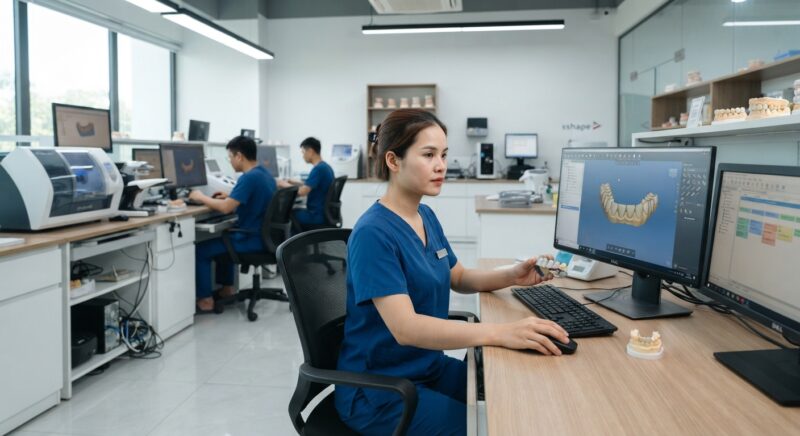
What Are the Technological Innovations Shaping the Future of Dental Lab CAD/CAM Outsourcing?
Technological innovation is a cornerstone theme in the industry report: DSO growth and what it means for independent dentists in 2026. Key advancements include:
- Cloud-Based CAD Software: Platforms like 3Shape and exocad offer cloud collaboration, enabling real-time design adjustments and seamless communication between labs and clinicians.
- AI and Machine Learning: AI algorithms improve design accuracy for crowns, bridges, and aligners by analyzing vast datasets and predicting optimal fit and occlusion.
- 3D Printing and Milling: Enhanced additive manufacturing and milling technologies from companies like Formlabs and SprintRay enable rapid production of surgical guides, dentures, and night guards with high precision.
- Digital Impressions and Scanners: Cutting-edge intraoral scanners reduce errors and improve patient comfort, feeding directly into CAD/CAM workflows.
These technologies empower dental labs to deliver superior digital design outsourcing services, critical for independent dentists to compete with DSOs equipped with similar tools.
How Will Independent Dentists’ Patient Care Models Evolve by 2026 Amid DSO Growth?
Independent dentists’ patient care models will evolve by integrating more digital tools and outsourcing strategies, as highlighted in the industry report: DSO growth and what it means for independent dentists in 2026. This evolution includes:
- Personalized Treatment Plans: Utilizing digitally designed prosthetics tailored to individual anatomical nuances.
- Faster Turnaround Times: Outsourced CAD/CAM labs enable quicker delivery of crowns, bridges, and aligners, reducing chairside visits.
- Enhanced Patient Communication: Digital smile design and visualization tools improve patient understanding and acceptance.
- Focus on Preventive and Cosmetic Care: Independent dentists may concentrate more on niche services and personalized care to differentiate from DSOs.
This shift helps independent practices maintain patient loyalty by offering high-tech, patient-centered care comparable to DSOs but with the advantage of individualized attention.
What Are the Financial Implications of DSO Growth for Independent Dentists?
The industry report: DSO growth and what it means for independent dentists in 2026 outlines several financial implications for independent practitioners:
- Pressure on Revenue: DSOs’ scale allows aggressive pricing strategies, potentially reducing patient volume for independents.
- Rising Operating Costs: Investment in digital technologies and outsourcing is essential but can strain budgets without careful management.
- Opportunities for Cost Savings: Outsourcing CAD/CAM design reduces the need for capital expenditures on equipment and training.
- Access to Financing and Partnerships: Some independent dentists explore joint ventures or alliances with labs or DSOs to share costs and resources.
Financial prudence combined with strategic outsourcing partnerships is essential for independent dentists to thrive amid DSO expansion.
How Can Independent Dentists Choose the Right Dental Lab Outsourcing Partner?
Choosing the right dental lab outsourcing partner is crucial for independent dentists adapting to the competitive landscape described in the industry report: DSO growth and what it means for independent dentists in 2026. Key criteria include:
- Technology Adoption: Labs should utilize advanced CAD/CAM software and equipment, ensuring compatibility with the dental practice’s digital workflows.
- Range of Services: Comprehensive offerings for crowns, bridges, implants, surgical guides, dentures, orthodontic aligners, and night guards.
- Turnaround Times and Reliability: Proven track record of consistent, timely case delivery.
- Customization and Communication: Ability to collaborate closely on case design and modifications.
- Compliance and Quality Standards: Adherence to regulatory guidelines and use of biocompatible materials.
These factors ensure that independent dentists receive superior digital design services that support their clinical and business goals, complementing other offerings like surgical guide design.
Conclusion: Preparing for 2026 with Insight from the Industry Report
The industry report: DSO growth and what it means for independent dentists in 2026 underscores a rapidly changing dental marketplace where DSOs are expanding influence through scale, technology, and efficiency. Independent dentists face intensified competition but also new opportunities by embracing advanced digital workflows and outsourcing dental lab CAD/CAM design services.
By partnering with expert dental labs offering cutting-edge digital design and manufacturing, independent practices can deliver superior prosthetic quality, reduce costs, and improve patient satisfaction. Staying informed about market trends and technological innovations will be essential to maintaining a competitive edge in 2026 and beyond.
For more detailed insights on digital dental solutions, dentists should explore resources from authoritative organizations like the American Dental Association and technology providers.
Practical Step-by-Step Guide to Transitioning from In-House to Outsourced CAD/CAM Dental Lab Services
For independent dental practices considering outsourcing their CAD/CAM dental lab work to better compete with DSOs, a structured approach is essential. Transitioning from in-house lab work to outsourcing requires careful planning to avoid disruption in patient care and practice operations.
Step 1: Assess Your Current Workflow and Needs
- Inventory your existing lab capabilities: Identify which procedures and restorations you currently fabricate in-house and the associated costs, turnaround times, and quality metrics.
- Evaluate demand volume: Analyze patient case volume to estimate how much outsourcing capacity you require.
- Identify technology gaps: Determine if your current equipment and software support smooth digital file transfer and integration with external labs.
Step 2: Research and Select Potential Dental Lab Partners
- Request detailed service offerings: Ensure labs can handle your specific case types (e.g., crowns, bridges, implants) with CAD/CAM precision.
- Evaluate turnaround times and reliability: Ask for performance data and client references to confirm consistency.
- Confirm digital compatibility: Verify labs can accept files from your intraoral scanners and practice management systems.
- Assess quality assurance processes: Understand their protocols for scanning accuracy, milling precision, and final restoration quality.
Step 3: Negotiate Contracts and Define Service Level Agreements (SLAs)
- Set clear expectations: Specify acceptable turnaround times, revision policies, and communication protocols.
- Agree on pricing structures: Discuss volume-based discounts, bundled pricing, and any hidden fees.
- Include contingency clauses: Outline steps for handling quality issues or delays to minimize patient impact.
Step 4: Implement Pilot Testing and Staff Training
- Start with a small batch: Outsource a limited number of cases to monitor quality and workflow integration.
- Train your clinical and administrative teams: Ensure staff understand new digital submission processes and communication channels.
- Collect feedback and monitor outcomes: Track patient satisfaction, restoration fit, and any adjustments needed.
Step 5: Full Integration and Continuous Improvement
- Scale up outsourcing volume: Gradually transition more cases as confidence in the lab’s performance grows.
- Establish regular performance reviews: Schedule quarterly meetings to discuss quality metrics and process enhancements.
- Maintain open communication: Foster a partnership mindset to quickly resolve issues and adapt to evolving practice needs.
Common Pitfalls and Cost-Quality Considerations When Outsourcing Dental Lab Work
While outsourcing CAD/CAM dental lab services can offer significant benefits, independent dental practices must navigate potential challenges to maximize value and patient outcomes.
Common Mistakes to Avoid
- Choosing a lab based solely on lowest price: Cost-saving is important, but extremely low fees often correlate with compromised quality or slower service, negatively impacting patient satisfaction.
- Underestimating communication needs: Poor coordination between the dentist and lab can lead to remakes, delayed restorations, and frustrated patients.
- Ignoring digital compatibility: Using labs that do not integrate seamlessly with your scanner or practice software can create inefficiencies and data loss.
- Lack of contingency planning: Not having backup options in case of lab delays or quality failures risks patient care disruptions.
Balancing Cost and Quality
Cost and quality are often perceived as opposing factors, but strategic outsourcing can optimize both:
- Invest in labs with proven quality: High-quality CAD/CAM restorations reduce chairside adjustments and remakes, saving time and patient goodwill.
- Leverage volume discounts: Consolidating all restorative lab work with one trusted partner can unlock better pricing without sacrificing quality.
- Consider total cost of ownership: Factor in indirect costs such as staff time, equipment maintenance, and material waste when comparing in-house versus outsourced solutions.
- Review warranty and support policies: Labs offering robust post-delivery support minimize out-of-pocket expenses for fixes or replacements.
Market-Specific Strategies for Independent Dentists in Competitive DSO Regions
DSO growth is not uniform nationally or regionally; understanding local market dynamics can help independent dentists tailor their strategies effectively.
Analyzing Regional DSO Penetration
- Identify DSO density: Use industry data to map areas with high DSO presence versus those with fewer corporate competitors.
- Assess patient demographics: Consider factors like age, income, and insurance coverage that influence patient preferences and affordability.
- Understand referral patterns: In some regions, DSOs dominate referrals to labs and specialists, impacting independent dentists’ access to services.
Tailored Approaches for Different Markets
- In high DSO penetration areas:
- Focus on personalized care and niche services (e.g., cosmetic dentistry, sedation) that DSOs may not prioritize.
- Partner with local CAD/CAM labs that emphasize flexibility and fast turnaround to match DSO speed advantages.
- Invest in digital marketing emphasizing community roots and patient testimonials to build loyalty.
- In low DSO saturation markets:
- Leverage your independent status to build strong patient relationships and word-of-mouth referrals.
- Use outsourcing to improve efficiency and reduce costs, positioning your practice as a modern, tech-savvy alternative.
- Explore collaborative networks with other independents to share best practices and negotiate better lab pricing.
Monitoring and Adapting to Market Changes
- Regularly review local competitive landscape: Stay informed about new DSO acquisitions or expansions.
- Solicit patient feedback: Understand shifting patient expectations, particularly around convenience and digital engagement.
- Adjust service offerings: Consider adding teledentistry or flexible financing options to improve accessibility and retention.
If you want to future-proof your practice with expert CAD/CAM outsourcing tailored for independent dentists, contact us today to learn how we can help you thrive in the evolving dental industry landscape.