Introduction to how dental assistants and hygienists in Singapore can earn referral commission from a dental CAD design lab 2026
Dental assistants and hygienists in Singapore have a unique opportunity to earn passive and recurring income by participating in referral programs offered by dental CAD design labs. Specifically, dental CAD/CAM digital design outsourcing services for crowns, bridges, implants, surgical guides, dentures, orthodontic aligners, and night guards are in high demand. By referring dental clinics, dental service organizations (DSOs), or labs that would benefit from these specialized digital design services, assistants and hygienists can earn commission on the actual revenue collected by the lab for up to 24 months per client.
This article details exactly how dental assistants and hygienists in Singapore can earn referral commission from a dental CAD design lab 2026, including the financial mechanics, ethical considerations, and practical steps to maximize earnings. For those interested, the Dental 3D Lab referral partner program is an example of a transparent and well-structured initiative providing this opportunity.
What is a dental CAD design lab and how does outsourcing work?
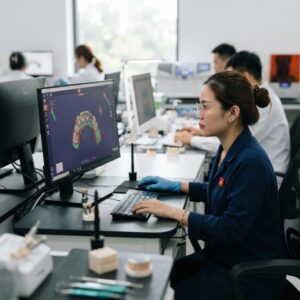
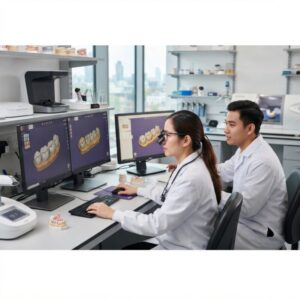
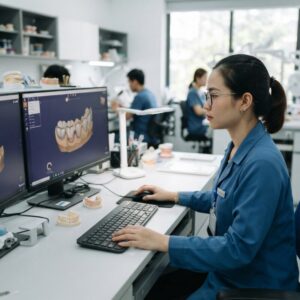
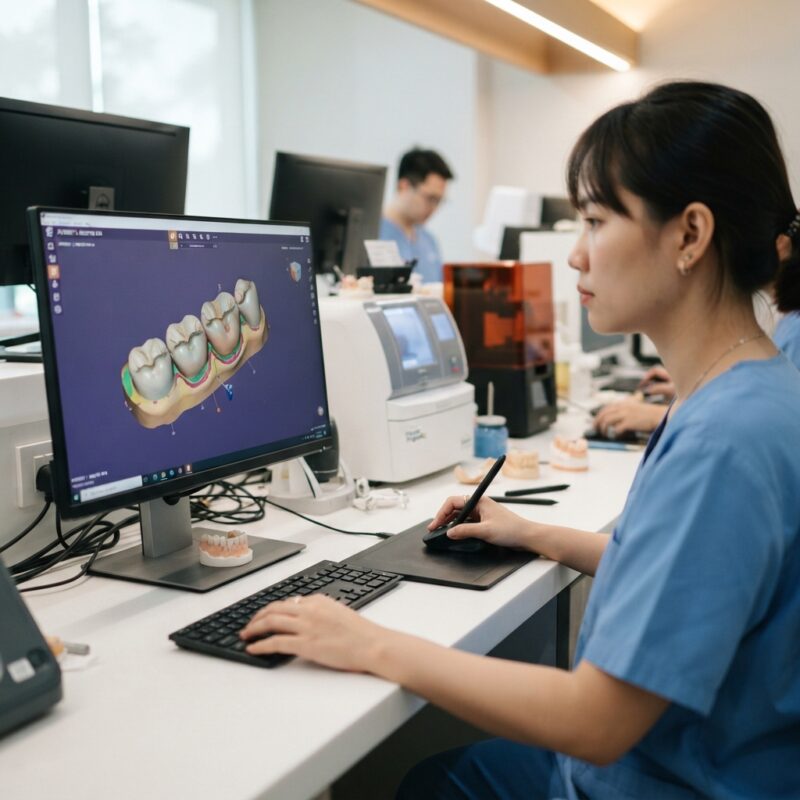
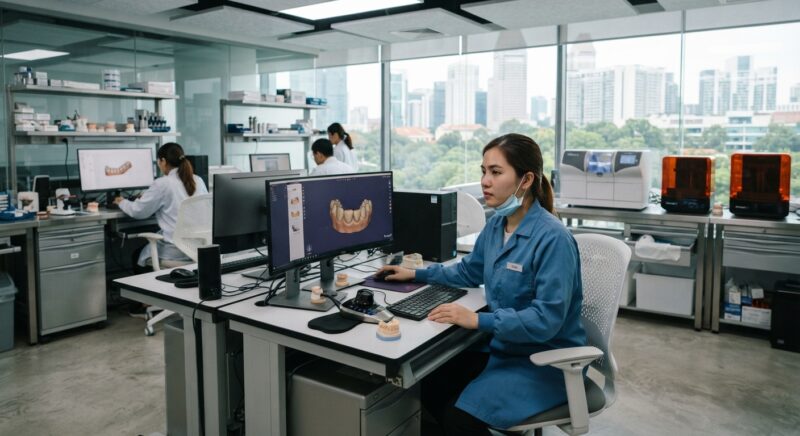
A dental CAD design lab specializes in creating detailed computer-aided design (CAD) files for dental prosthetics and appliances, which dental clinics and labs then use for manufacturing. Outsourcing involves dental practices or labs sending digital impressions or scans to these design specialists who produce precise 3D designs for crowns, bridges, implants, and other devices.
This outsourcing model saves clinics time and overhead costs by allowing them to focus on patient care while relying on expert digital designers for prosthetic planning. The lab typically delivers the finalized CAD files for milling or 3D printing, but does not perform manufacturing. Outsourcing dental CAD design also supports digital workflows and enhances accuracy.
How dental assistants and hygienists in Singapore can earn referral commission from a dental CAD design lab 2026: Program basics
Dental assistants and hygienists can join referral partner programs offered by dental CAD design labs, which reward them for introducing new clients. Each agent receives a personal referral link that tracks registrations and orders from referred clinics or labs. Commissions are calculated as a percentage of the revenue the lab actually collects from those clients, paid monthly via PayPal, for 24 months from each client’s registration date.
Commission rates vary between 5% and 25%, with no cap on the monthly amount. The agent can monitor their clients, revenue, and commissions through a dedicated dashboard that also provides direct chat access to the lab team. The program is purely a CAD design referral; no access to patient data or clinical files is given to agents.
Why is this referral program especially suitable for dental assistants and hygienists?
Dental assistants and hygienists hold trusted positions within dental clinics and DSOs, often interacting with multiple providers and labs. Their professional networks and credibility make them ideal referral agents for dental CAD design labs. They understand the clinical workflow and can identify practices that would benefit from outsourcing digital design services, such as clinics wanting to upgrade to digital prosthetics or reduce in-house design workload.
Since many assistants and hygienists already communicate with labs during case management, recommending a reliable CAD design partner naturally fits into their role without extra clinical burden. This creates a genuine referral opportunity to generate recurring income while supporting clinic efficiency.
How much can dental assistants and hygienists realistically earn? Illustrative examples
Though commission depends on actual client orders and payments, here are some illustrative examples of potential earnings:
- Example 1: An assistant refers 3 clinics each generating $1,000 CAD design revenue monthly. At a 10% commission rate: 3 clients × $1,000 × 10% = $300/month.
- Example 2: A hygienist refers 5 clinics averaging $500 revenue monthly. At 15% commission: 5 × $500 × 15% = $375/month.
- Example 3: An agent reaches 10 clients with $800 monthly revenue each. At 5% commission: 10 × $800 × 5% = $400/month.
Agents can scale up their earnings with more referrals and higher-value clients. Importantly, the commission continues month after month for two years per client, creating a valuable recurring income stream. The exact commission rate and detailed terms are revealed after creating an account on the referral platform.
What are the ethical and contractual considerations for dental assistants and hygienists?
Before engaging in referral activities, dental assistants and hygienists should carefully review their employment contracts, confidentiality agreements, and conflict-of-interest policies. It is essential to disclose participation in referral programs when required by employer policies to maintain transparency and avoid conflicts.
Professionals should only refer clients they are legally and ethically free to recommend, avoiding solicitation of patients or inappropriate sharing of patient information. This program focuses on referring clinics and labs, not individual patients. Agents are responsible for their own taxation on commissions and should consult an accountant for advice.
How does the referral tracking and payment process work?
Upon joining the referral program, each agent receives a unique personal referral link. When a clinic or lab registers through this link, the client is permanently linked to the agent’s account. The dental CAD design lab tracks all orders and payments from these referred clients.
At the start of each month, the system closes the previous month’s commission calculations automatically. The agent receives a statement detailing client revenue collected and their commission earned. Payments are made monthly via PayPal. Agents can access a dashboard to monitor real-time metrics and communicate with the lab team for support.
What types of dental CAD design services are typically included in these referral programs?
Referral programs usually cover a broad range of digital dental design services, including:
- Crown and bridge designs
- Implant planning and surgical guides
- Removable dentures and partials
- Orthodontic aligner setups
- Night guards and occlusal splints
Dental assistants and hygienists referring clinics with interest in any of these services can benefit from the referral program commissions, since these services are in high demand and often outsourced to expert CAD design labs for precision and efficiency.
How to effectively find and refer clients as a dental assistant or hygienist?
Successful referral agents leverage their existing professional network and communication channels. This includes:
- Discussing the benefits of digital CAD design outsourcing with dentists, office managers, and treatment coordinators within their clinic or network
- Attending industry events or continuing education courses where dental professionals gather
- Sharing educational materials or case studies about the advantages of digital dental design
- Using social media and professional forums to highlight the referral opportunity and share the lab’s preferred pricing and service quality
Agents should always emphasize the value to the referred clinic — including cost savings, faster turnaround, and access to cutting-edge digital workflows. Referral programs also work well alongside surgical guide design services, which are increasingly sought by implant-focused clinics.
How does this referral opportunity fit within the future dental landscape in Singapore?
Singapore’s dental market is rapidly embracing digital workflows and CAD/CAM technologies, driven by DSOs and independent clinics alike. The demand for outsourced dental CAD design services is expected to grow significantly through 2026 and beyond, fueled by the need for precision, faster case turnarounds, and cost efficiencies.
By understanding how dental assistants and hygienists in Singapore can earn referral commission from a dental CAD design lab 2026, professionals position themselves to capitalize on this growth. The recurring income from referrals not only supplements their salary but also aligns with the industry’s digital transformation trends.
For more details on CAD/CAM innovations, visit authoritative sources like 3Shape and exocad.
What legal and tax responsibilities do agents have?
Agents are responsible for reporting their referral commission income in accordance with Singapore tax laws. The program pays commissions via PayPal, and agents should keep accurate records of payments received. It is advisable to consult an accountant or tax professional to ensure compliance.
No legal or tax advice is provided by the referral program operator. Agents should also respect all applicable laws regarding solicitation and advertising, especially within the healthcare sector.
How to get started with earning referral commission from a dental CAD design lab?
The first step is to create an account on the referral partner program platform, where the exact commission rate and full program terms will be disclosed. Once registered, agents receive their unique referral link and access to a dashboard.
Agents should then identify potential clinics or labs to refer and share their link along with information on the preferred pricing and quality of services. Persistence and clear communication are key, as finding the first clients requires real effort but leads to long-term recurring income.
Dental assistants and hygienists interested in this opportunity can apply now through the Dental 3D Lab referral partner program.
Conclusion: Why dental assistants and hygienists should consider this referral program in 2026
Understanding how dental assistants and hygienists in Singapore can earn referral commission from a dental CAD design lab 2026 is crucial for leveraging professional networks in a growing digital dental market. With commission rates from 5% to 25%, no monthly cap, and recurring payments for 24 months per client, the potential for meaningful supplemental income is significant.
Ethical participation, clear communication, and knowledge of contractual obligations ensure a smooth referral experience. This program offers a practical way to monetize existing relationships while supporting the adoption of advanced dental CAD/CAM technologies.
Next steps: Apply now to start earning referral commission
If you are a dental assistant or hygienist in Singapore looking to generate recurring income, apply today to join the referral partner program and receive your personal referral link. Start referring clinics and dental labs and watch your commission grow as they order trusted digital dental CAD design services.
Step-by-Step Guide for Dental Assistants and Hygienists to Maximize Referral Success
Understanding the referral program is just the start. To truly benefit from this opportunity, dental assistants and hygienists must approach client referrals systematically. Below is a detailed, practical roadmap to help you navigate the process efficiently and ethically while maximizing your commissions.
Step 1: Identify Potential Referral Clients
- Scan your professional network: Identify dental clinics, DSOs, or labs you frequently interact with that could benefit from dental CAD design services.
- Evaluate their current workflow: Does the practice rely on traditional lab methods or struggle with turnaround times? These pain points are key selling points for CAD design outsourcing.
- Consider clinic size and case volume: Larger clinics or those with high implant or prosthetic case volumes are ideal candidates as they have greater ongoing needs.
Step 2: Educate Yourself Deeply on the Services and Value Propositions
- Understand the technical advantages: Learn how CAD/CAM technology improves precision, reduces remakes, and speeds up delivery.
- Know cost benefits: Be prepared to explain how outsourcing digital design can reduce in-house labor costs and overhead.
- Familiarize with turnaround times: Highlight how reliable labs can help clinics meet patient expectations faster.
Step 3: Approach Potential Referrals Professionally
- Prepare a brief, clear pitch: Focus on benefits relevant to their unique challenges.
- Use real-world examples: Mention how other clinics improved efficiency or reduced costs by partnering with the lab.
- Offer to facilitate initial contact: Act as a liaison between the clinic and the CAD design lab to build trust on both sides.
Step 4: Follow Up and Maintain Relationships
- Check in on their experience: Ask if the lab’s services are meeting expectations and if there are any issues.
- Provide support with orders or troubleshooting: Sometimes clinics need assistance navigating new workflows.
- Keep communication open: Regular contact can lead to repeat referrals and higher commissions.
Checklist: Referral Readiness
- Have I identified at least three clinics or labs that would benefit?
- Do I understand the key benefits of dental CAD design outsourcing?
- Have I prepared my referral pitch with examples?
- Do I know the referral program’s terms and commission structure?
- Am I ready to follow up and provide ongoing support?
Common Pitfalls and Mistakes in Referral Programs and How to Avoid Them
While referral programs offer exciting income opportunities, dental assistants and hygienists must be aware of common mistakes that can reduce earnings or cause professional issues. Below are frequent errors and tips to avoid them.
1. Ignoring Ethical Boundaries
One of the most critical pitfalls is compromising professional ethics. Referral commissions must never be offered or accepted in ways that contravene regulatory policies or create conflicts of interest. For instance, promoting a lab’s services aggressively without full transparency to the clinic’s dentist or management may raise ethical concerns.
Tip: Always disclose your referral relationship clearly and ensure the clinic’s leadership agrees with engaging the CAD design lab.
2. Overpromising Benefits
Some referrers exaggerate turnaround times or cost savings to close referrals, only to disappoint clients later. This can damage your reputation and reduce future referral potential.
Tip: Stick to facts and real-world case examples provided by the CAD lab. Confirm typical turnaround times and pricing before sharing.
3. Lack of Follow-Up
Failure to maintain contact after the initial referral often leads to lost commissions, as clinics may switch providers or fail to place repeat orders.
Tip: Schedule regular check-ins to gather feedback and offer help. This builds trust and encourages ongoing business.
4. Not Understanding Program Terms
Referral programs often have detailed requirements for commissions, such as minimum order values or payment windows. Missing these details can delay or forfeit your earnings.
Tip: Read all program documents carefully and keep a log of your referrals, order dates, and payments received.
5. Overlooking Documentation and Compliance
Failing to keep records or ignoring tax reporting obligations can create legal or financial headaches.
Tip: Keep copies of referral agreements, invoices, and payments. Consult a tax professional if unsure about reporting referral income.
Cost and Quality Considerations When Recommending a Dental CAD Design Lab
When referring clients to a dental CAD design lab, it’s essential to balance cost-effectiveness with quality to ensure client satisfaction and long-term partnerships. Below are key factors to consider and communicate during referrals.
Understanding Cost Structures
- Fixed vs Variable Pricing: Some labs charge per case (fixed fee), while others have tiered pricing depending on complexity.
- Volume Discounts: High-volume clinics may qualify for reduced rates, an attractive point when pitching referrals.
- Additional Charges: Be aware of potential fees for expedited cases, design revisions, or shipping, and clarify these upfront.
Quality Metrics to Evaluate
- Accuracy and Fit: Check how closely the digital designs translate to well-fitting prosthetics with minimal adjustment.
- Material Compatibility: Ensure the lab supports a wide range of materials preferred by the clinic, from zirconia to PMMA.
- Technological Capability: The lab’s CAD software and hardware should be state-of-the-art to handle complex cases like implant surgical guides and orthodontic aligners.
- Customer Service: Timely communication and support are critical for resolving issues and maintaining workflow.
Real-World Example: Cost vs Quality Tradeoff
A mid-sized dental clinic in Singapore initially partnered with a low-cost CAD design lab to minimize expenses. However, frequent remakes due to poor fit and communication delays caused patient dissatisfaction and increased chair time costs. Upon switching to a higher-quality lab recommended by a dental assistant referral, the clinic saw a 30% reduction in remakes and faster case turnaround, offsetting the slightly higher service fees. Such examples highlight why cost alone should not drive referral recommendations.
Tips for Dental Assistants and Hygienists
- Request sample cases or testimonials from the CAD lab before referring.
- Discuss typical case costs openly with clinics to align expectations.
- Encourage clinics to track the impact of outsourcing on operational efficiency and patient satisfaction.
Market-Specific Insights: Navigating the Singapore Dental Landscape for Referral Success
Singapore’s dental market has unique characteristics that dental assistants and hygienists should understand to optimize their referral efforts. These insights help tailor approaches and identify the most promising referral opportunities.
High Demand for Digital Dentistry Solutions
Singapore’s dental sector is rapidly adopting digital technologies, driven by patient demand for faster, more accurate dental restorations and government initiatives supporting healthcare innovation. Dental CAD design labs offering cutting-edge digital workflows are well-positioned to meet this demand.
Concentration of Dental Clinics and DSOs
The city-state hosts a dense network of both private dental clinics and several large DSOs. DSOs often have centralized procurement and may be more open to outsourcing digital design services for cost control and efficiency. Referring a DSO can yield larger, recurring commissions compared to smaller standalone clinics.
Regulatory Environment and Compliance
Singapore’s dental regulatory framework emphasizes patient safety and ethical practice. Dental assistants and hygienists must ensure that any referral complies fully with Singapore Dental Council guidelines and avoid any perception of inducement or kickbacks.
Language and Cultural Considerations
Singapore’s multicultural environment means communication styles vary. Tailoring your referral pitch to align with local business etiquette—such as demonstrating respect, professionalism, and transparency—can make a significant difference.
Example: Targeting Private Specialist Clinics
Specialist clinics focusing on implants or orthodontics often use complex digital designs for surgical guides and aligners. Referring these clinics to a lab with specialized expertise in these areas can create strong value and higher referral commissions.
Checklist for Singapore Market Success
- Understand key regulatory requirements and ensure ethical compliance.
- Focus on DSOs and high-volume specialist clinics for maximum impact.
- Stay informed on government programs supporting digital dentistry adoption.
- Adapt communication style to Singapore’s multicultural context.
- Leverage success stories from local clinics to build credibility.