Understanding the Hidden Costs of Outsourcing Dental Lab Work from the UK in 2026
The hidden costs of outsourcing dental lab work from the UK in 2026 extend far beyond the initial pricing quotes and can significantly impact your lab’s profitability and operational efficiency.
While outsourcing CAD/CAM digital design services for crowns, bridges, implants, surgical guides, dentures, orthodontic aligners, and night guards can reduce overhead and speed turnaround times, dental labs and DSOs must carefully evaluate all associated costs. These include communication delays, quality control issues, data security, and logistics complications. Without careful management, these costs can erode the apparent savings and affect patient satisfaction.
As the dental industry in the UK moves further into digital workflows, understanding these hidden costs is crucial to making informed outsourcing decisions in 2026 and beyond.
What Are the Primary Hidden Costs of Outsourcing Dental Lab Work?
The primary hidden costs of outsourcing dental lab work from the UK in 2026 typically include communication inefficiencies, quality assurance challenges, data management expenses, and logistical delays.
Communication inefficiencies arise when time zone differences or language barriers slow down clarification of design requirements or modifications. Quality assurance issues can emerge when outsourced designs or prosthetics do not meet UK clinical standards, requiring costly remakes or adjustments. Data management expenses relate to ensuring secure and compatible transfer of digital impressions and CAD files, often necessitating additional software licenses or cybersecurity measures. Logistics delays involve shipping prosthetics or surgical guides internationally, which can increase turnaround times unpredictably and add customs fees.
These hidden factors can accumulate, making the total cost of outsourcing higher than anticipated, especially for labs dependent on rapid and precise delivery.
How Does CAD/CAM Digital Design Outsourcing Work for UK Dental Labs?
CAD/CAM digital design outsourcing for UK dental labs involves sending intraoral scans or digital impressions to a specialized external lab or design service that uses advanced software and 3D printing or milling technology to create dental prosthetics.
UK dental labs typically provide the outsourced partner with detailed prescriptions and digital files using platforms from companies like 3Shape or exocad. The partner then designs crowns, bridges, implants, dentures, orthodontic aligners, or night guards according to specified parameters. The completed designs or physical prosthetics are then shipped back to the UK lab for final finishing and delivery to the clinician.
This process reduces the need for in-house design staff and expensive CAD/CAM equipment, but requires tight integration and quality control measures to avoid the hidden costs of outsourcing dental lab work from the UK in 2026.
What Are the Risks of Quality Control When Outsourcing Dental Lab Work?
The risks of quality control when outsourcing dental lab work stem from inconsistent manufacturing standards, lack of direct oversight, and difficulty in verifying prosthetic fit and aesthetics remotely.
Outsourced labs or design firms may use different materials or production techniques that do not fully align with UK clinical expectations. Miscommunication about design specifications can lead to ill-fitting crowns or surgical guides, increasing the need for remakes and patient chair time. Additionally, variations in certification and regulatory compliance between countries can pose risks to patient safety and legal liability.
Implementing rigorous incoming quality checks and establishing clear standards in contracts are essential to mitigate these quality control risks and reduce the hidden costs of outsourcing dental lab work from the UK in 2026.
How Can Communication Challenges Increase Costs in Outsourcing?
Communication challenges increase costs by causing delays, errors, and rework in the outsourcing process for dental labs.
When dental labs in the UK outsource CAD/CAM design or prosthetic fabrication overseas or even domestically to remote providers, time zone differences can slow response times. Language or technical jargon misunderstandings may result in incorrect design parameters being used. These issues necessitate back-and-forth clarifications, which extend turnaround times and increase labor costs.
Effective communication protocols, including dedicated project managers and real-time collaboration tools, help reduce these hidden costs of outsourcing dental lab work from the UK in 2026.
What Are the Data Security and Intellectual Property Concerns?
Data security and intellectual property concerns arise from transferring sensitive patient scans and proprietary design files to external providers.
Dental labs must ensure that outsourced partners comply with UK data protection regulations such as GDPR when handling digital impressions and treatment planning data. There is also the risk of design theft or unauthorized use of proprietary CAD workflows and implant libraries. These concerns require investment in secure file transfer protocols, encryption, and legal agreements to protect intellectual property.
Failure to address these issues can lead to financial penalties and reputational damage, contributing to the hidden costs of outsourcing dental lab work from the UK in 2026.
What Logistics and Shipping Costs Should UK Labs Expect?
UK labs should expect logistics and shipping costs related to international customs, expedited freight, and potential returns when outsourcing dental lab work abroad.
Fragile prosthetics and surgical guides require careful packaging and insurance during transit, which adds expense. Customs duties, VAT, and import/export paperwork can cause delivery delays, impacting case turnaround and patient scheduling. In the event of remakes, additional shipping costs compound the financial burden.
To minimize these costs, many UK labs partner with digital design providers who also offer local or regional production hubs, reducing shipping distances and fees.
How Does Outsourcing Affect Turnaround Times and Patient Satisfaction?
Outsourcing can both improve and complicate turnaround times, affecting patient satisfaction positively or negatively depending on management.
While outsourcing CAD/CAM digital design can leverage specialized expertise and advanced technology to speed design phases, logistics and communication delays can offset these gains. Unexpected delays in receiving prosthetics or surgical guides may force clinicians to reschedule or extend treatment times, frustrating patients.
Transparency about realistic turnaround times and contingency planning helps labs manage expectations and reduce the hidden costs of outsourcing dental lab work from the UK in 2026.
What Financial Factors Are Often Overlooked in Outsourcing Contracts?
Financial factors often overlooked include variable pricing for remakes, minimum order quantities, software licensing fees, and costs for design revisions.
Contracts may quote attractive base prices but fail to detail fees for changes after initial design approval or for urgent rush orders. Additionally, some outsourcing providers require labs to purchase compatible CAD software licenses or subscriptions, increasing ongoing costs. Minimum order requirements can force labs to consolidate cases, delaying delivery or increasing inventory costs.
Careful contract review and negotiation are critical to avoid these hidden costs of outsourcing dental lab work from the UK in 2026.
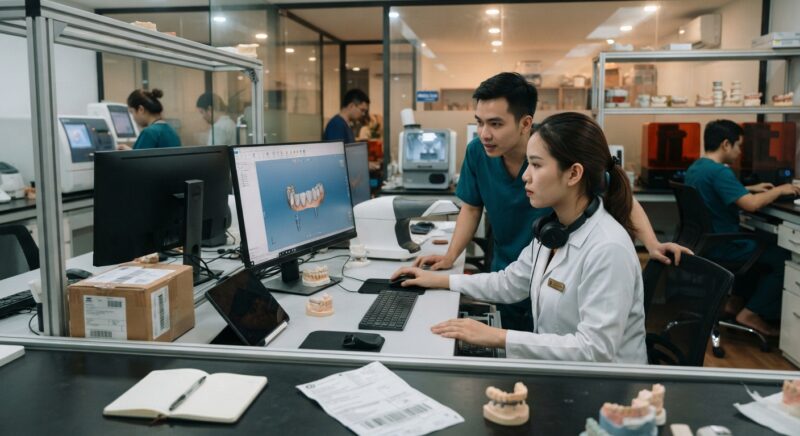
How Can UK Dental Labs Mitigate the Hidden Costs of Outsourcing?
UK dental labs can mitigate the hidden costs of outsourcing dental lab work from the UK in 2026 by implementing stringent quality checks, establishing clear communication protocols, and choosing experienced outsourcing partners with local support.
Using digital platforms from vendors like Medit or Dentsply Sirona can streamline data exchange and allow for real-time collaboration. Labs should also request sample cases to verify quality and turnaround times before committing to large contracts. Investing in cybersecurity and legal safeguards protects intellectual property and patient data.
Finally, integrating outsourced services with in-house capabilities and leveraging hybrid workflows reduces dependency risks and hidden costs. This approach also works well alongside surgical guide design services.
What Role Does Technology Play in Reducing Outsourcing Costs?
Technology, particularly advanced CAD/CAM software and 3D printing, plays a crucial role in reducing the hidden costs of outsourcing dental lab work from the UK in 2026 by enhancing accuracy, speed, and traceability.
State-of-the-art design software from companies like 3Shape and exocad, combined with high-precision 3D printers from Formlabs or Asiga, ensure prosthetics meet exact specifications, reducing remakes. Cloud-based platforms facilitate seamless data sharing and version control, minimizing errors. Automation in design workflows also lowers labor costs and turnaround times.
Adopting these technologies strategically can offset many hidden costs and improve overall outsourcing ROI for UK dental labs.
How Will Market Trends Impact Outsourcing Costs in 2026 and Beyond?
Market trends such as increasing demand for digital dentistry, supply chain volatility, and regulatory changes will influence the hidden costs of outsourcing dental lab work from the UK in 2026 and beyond.
Growing adoption of digital workflows and personalized prosthetics will raise expectations for precision and speed, pressuring outsourcing providers to invest in technology and skilled labor, which may increase prices. Supply chain disruptions can cause material shortages and shipping delays. Additionally, evolving UK and EU medical device regulations will require compliance audits and certifications, adding administrative costs.
Staying informed about these trends allows dental labs and DSOs to negotiate better contracts and plan for fluctuating expenses.
Final Considerations and Strategic Recommendations
While outsourcing dental lab CAD/CAM digital design offers many advantages, understanding and managing the hidden costs of outsourcing dental lab work from the UK in 2026 is essential for sustainable success.
- Perform thorough due diligence on outsourcing partners’ quality and compliance credentials.
- Establish clear communication channels and project management protocols.
- Negotiate contracts with detailed cost structures covering revisions, shipping, and software requirements.
- Invest in complementary in-house capabilities to maintain flexibility.
- Leverage advanced technologies to improve accuracy and reduce turnaround times.
By proactively addressing these areas, UK dental labs and DSOs can maximize the benefits of outsourcing while minimizing financial surprises and operational risks. Outsourcing also complements orthodontic aligner design services by expanding capacity and technical expertise.
Contact Us to Learn More
Step-by-Step Guide to Selecting the Right Outsourcing Partner
Choosing the right dental lab outsourcing partner is critical to minimizing hidden costs and ensuring smooth operations. The selection process should be systematic and thorough to avoid costly mistakes and delays. Here is a detailed step-by-step guide that UK dental labs and practices can follow:
Step 1: Define Your Needs and Priorities
- Identify specific services: Are you outsourcing crown and bridge work, surgical guides, orthodontic appliances, or full dentures? Clarify exactly what you need.
- Set quality benchmarks: Determine acceptable tolerances, materials, and certification standards required.
- Consider turnaround times: Establish maximum acceptable delivery times based on patient scheduling.
- Budget constraints: Define your cost limits including allowances for unexpected expenses like shipping or remakes.
Step 2: Research Potential Partners
- Compile a list: Use industry directories, trade shows, and peer recommendations.
- Check credentials: Verify certifications such as ISO 13485 or CE marking for medical devices.
- Review case studies and testimonials: Look for evidence of successful projects similar to your needs.
- Assess technological capabilities: Confirm if they support your preferred CAD/CAM systems and digital workflows.
Step 3: Request Detailed Proposals and Samples
- Ask for quotes including hidden costs: Shipping, customs, revision policies, and communication fees.
- Request turnaround time guarantees: Include penalties or remedies for delays.
- Obtain product samples: Evaluate fit, finish, and material quality.
- Test communication responsiveness: Gauge their customer service and problem-solving approach.
Step 4: Conduct a Pilot Project
- Start small: Outsource a limited number of cases to test processes end-to-end.
- Monitor quality and delivery: Compare outcomes against your benchmarks.
- Gather feedback: From clinicians, patients, and lab technicians.
- Identify bottlenecks: Communication issues, data transfer glitches, or shipping delays.
Step 5: Negotiate and Formalize the Contract
- Include clear SLAs (Service Level Agreements): Define quality standards, delivery times, and revision policies.
- Specify cost structures: Outline all charges including contingency fees for remakes or rush orders.
- Set confidentiality and data security clauses: Protect your intellectual property and patient data.
- Agree on dispute resolution mechanisms: Establish clear pathways to address disagreements or failures.
Step 6: Implement a Continuous Monitoring System
- Track key performance indicators (KPIs): Such as defect rates, turnaround time adherence, and cost overruns.
- Schedule regular reviews: Quarterly or biannual meetings to discuss performance and improvements.
- Encourage open communication: Maintain direct lines between your team and the outsourcing partner.
- Adapt and optimize workflows: Based on data and feedback to reduce hidden costs over time.
Common Mistakes in Outsourcing Dental Lab Work and How to Avoid Them
Many dental labs and practices fall into predictable pitfalls when outsourcing lab work, leading to unexpected costs, delays, and quality issues. Understanding these common mistakes can help mitigate risks and maximize benefits.
1. Focusing Solely on Price
While competitive pricing is important, selecting a partner based only on the lowest bid often results in compromised quality or hidden fees. For example, a lab offering ultra-low quotes may use inferior materials or outsource to substandard facilities, causing remakes and patient dissatisfaction.
Tip: Balance cost with quality, service reliability, and technological compatibility. Conduct a total cost of ownership analysis rather than looking at unit price alone.
2. Neglecting Data Security and Compliance
Outsourcing exposes sensitive patient information. Failure to verify a partner’s compliance with GDPR and medical device regulations can lead to data breaches, legal penalties, and reputational damage.
Tip: Include stringent data security requirements in contracts and perform regular audits of data handling practices.
3. Inadequate Communication and Documentation
Poorly defined workflows, unclear instructions, or lack of documentation often cause errors and delays. Misunderstandings about prescription details, materials requested, or delivery expectations generate costly remakes.
Tip: Establish standardized communication protocols, use centralized digital platforms for case management, and document every step meticulously.
4. Underestimating Shipping Complexities
International shipments can encounter customs delays, damage in transit, or lost packages. Labs that fail to account for these risks may face unpredictable turnaround time extensions and increased costs.
Tip: Choose reliable couriers with experience in medical device logistics, insure shipments, and build buffer times into schedules.
5. Skipping Pilot Testing
Jumping directly into large-scale outsourcing without a pilot phase increases the risk of systemic failures going unnoticed until costly issues arise.
Tip: Always conduct a small-scale pilot to validate partner capabilities and workflows before committing significant volumes.
Cost and Quality Considerations in Outsourced Dental Lab Work
Balancing cost-effectiveness with uncompromising quality is fundamental for UK dental labs and practices outsourcing lab work. Here are some practical considerations and examples illuminating this balance.
Material and Manufacturing Quality
High-quality materials such as monolithic zirconia or lithium disilicate can increase upfront costs but reduce adjustments and remakes. Outsourcing partners that use outdated or cheaper materials may save money initially but cause problems downstream.
Example: A UK practice outsourced crown fabrication to a low-cost provider using generic ceramic. The crowns frequently required chairside adjustments, increasing clinical time and patient dissatisfaction, ultimately costing more than sourcing premium materials domestically.
Labor and Overhead Savings vs. Hidden Charges
Outsourcing can reduce in-house labor costs, equipment depreciation, and maintenance. However, extra charges for rush orders, revisions, or digital file conversions often offset these savings.
- Checklist for evaluating cost savings:
- Compare total cost including shipping, customs, and remakes.
- Calculate potential savings in labor hours and overhead.
- Factor in costs of communication management and error resolution.
- Assess the impact of longer turnaround times on clinical scheduling.
Quality Control and Inspection Costs
Outsourced work requires rigorous incoming inspection to catch defects early. This means allocating resources to quality control staff, inspection equipment, and potentially returning defective cases.
Example: A dental lab outsourcing surgical guide fabrication found a 7% defect rate in initial shipments, requiring costly reworks and patient rescheduling. Instituting a 3-point inspection protocol reduced this to under 1% but added overhead.
Market-Specific Pricing Factors
UK dental labs must consider currency fluctuations, Brexit-related customs tariffs, and regulatory changes when outsourcing abroad. These factors can unpredictably affect pricing and delivery reliability.
Tip: Negotiate contracts with clauses for currency adjustment and customs cost sharing to mitigate market volatility impacts.
Implementing Checklists to Streamline Outsourcing and Reduce Hidden Costs
Establishing detailed checklists can help teams manage the complex process of outsourcing dental work, ensuring critical steps are not overlooked and minimizing hidden costs.
Pre-Outsourcing Checklist
- Define case scope and clinical requirements clearly.
- Verify outsourcing partner’s certifications and capabilities.
- Confirm data security and compliance measures.
- Agree on pricing, turnaround times, and revision policies.
- Test digital file compatibility and transfer protocols.
- Arrange logistics and shipping insurance.
- Set up communication channels and points of contact.
Order Submission Checklist
- Complete all prescription forms with detailed instructions.
- Attach accurate digital scans or impressions.
- Confirm material and shade selections.
- Specify delivery deadlines and shipping preferences.
- Double-check patient identifiers and case numbering.
Receiving and Quality Inspection Checklist
- Inspect packaging integrity and shipping documentation.
- Perform dimensional and aesthetic quality checks.
- Compare delivered products against original prescriptions.
- Document any discrepancies or defects immediately.
- Communicate issues promptly to the outsourcing partner.
- Approve or reject cases based on inspection findings.
Post-Delivery Review Checklist
- Record patient and clinician feedback regarding fit and comfort.
- Track turnaround time adherence and delays.
- Review cost variances against budgeted amounts.
- Evaluate communication effectiveness throughout the process.
- Update internal databases with lessons learned.
- Plan corrective actions or process improvements.
Discover how our expert CAD/CAM dental lab outsourcing services can support your UK lab’s growth and profitability. Contact us today to discuss your needs and get a customized solution.