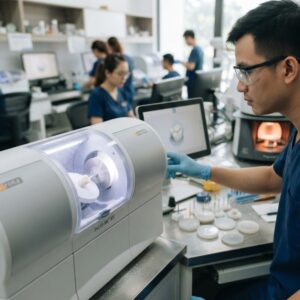
Introduction to PMMA vs PEEK for Temporary Restorations 2026
PMMA vs PEEK for temporary restorations 2026 is a critical topic for dental labs and DSOs seeking the optimal balance between material performance, cost, and workflow efficiency. Temporary restorations demand materials that offer biocompatibility, strength, aesthetics, and ease of processing. With advancements in CAD/CAM technology, labs must carefully evaluate these two leading materials—PMMA (polymethyl methacrylate) and PEEK (polyether ether ketone)—to meet evolving clinical and operational requirements in 2026.
This comprehensive guide dives deeply into their properties, applications, and suitability within the digital dental lab environment, helping professionals make informed outsourcing and in-house production decisions.
What are PMMA and PEEK materials in dental temporary restorations?
PMMA is a widely used acrylic resin known for its ease of milling and polishing, while PEEK is a high-performance thermoplastic polymer noted for its strength and biocompatibility.
PMMA has been the standard for temporary crowns and bridges due to its affordability and aesthetic qualities. PEEK, on the other hand, offers superior mechanical properties and chemical resistance, making it suitable for longer-term temporaries and implant-supported restorations. Both materials are compatible with CAD/CAM milling systems and digital workflows, but their unique characteristics influence the choice depending on clinical and lab needs.
Key material properties comparison: PMMA vs PEEK for temporary restorations 2026
Understanding the physical and chemical properties of PMMA and PEEK is essential for labs and DSOs considering these materials for temporary restorations in 2026.
| Property | PMMA | PEEK |
|---|---|---|
| Flexural Strength | 80-120 MPa | 90-180 MPa |
| Wear Resistance | Moderate | High |
| Biocompatibility | Good | Excellent |
| Color Stability | Fair (can discolor over weeks) | Excellent |
| Ease of Milling | High (fast milling) | Moderate (requires sharper tools) |
| Cost per Block | Lower ($30-$50 approx.) | Higher ($150-$250 approx.) |
Figures provided are indicative and vary by region and date; always check with manufacturers for current specifications.
What are the clinical applications of PMMA vs PEEK for temporary restorations in 2026?
Both PMMA and PEEK find distinct clinical applications based on their material properties and cost-benefit ratios.
- PMMA is commonly used for short-term temporaries such as provisional crowns, bridges, and orthodontic appliances. It is favored for single units or multi-unit temporaries where cost containment is vital.
- PEEK excels in cases requiring higher strength and chemical resistance, such as implant-supported temporaries, surgical guides, and long-term provisional restorations. Its biocompatibility makes it ideal for patients with sensitivities.
The choice depends on the intended duration of temporization, patient-specific factors, and lab capabilities.
Workflow impact of PMMA vs PEEK for temporary restorations 2026
Choosing between PMMA and PEEK affects the digital workflow in dental labs and DSOs, influencing milling time, finishing processes, and overall turnaround.
- PMMA blocks mill faster and require less tool wear, enabling higher throughput in labs with tight deadlines. Polishing PMMA is straightforward, ensuring quick delivery.
- PEEK requires more advanced milling tools and longer processing times due to its hardness but results in highly durable restorations. Finishing PEEK demands specialized polishing protocols, potentially increasing labor time.
Understanding these workflow differences helps labs optimize production schedules and resource allocation.
Cost analysis: PMMA vs PEEK for temporary restorations 2026
Cost is a significant factor when evaluating PMMA vs PEEK for temporary restorations 2026. The total cost of ownership includes material cost, milling time, tool wear, labor, and potential remakes.
- PMMA offers a low upfront material cost and faster milling times, reducing labor expenses, which makes it ideal for high-volume labs or practices prioritizing cost-efficiency.
- PEEK has a higher material cost and requires more maintenance for milling equipment but can reduce remakes because of better durability, potentially offsetting initial expenses in medium to long-term temporaries.
Labs should perform a detailed cost-benefit analysis based on their case mix and client expectations.
How does the choice between PMMA and PEEK influence patient outcomes?
The selection of temporary restoration materials directly affects patient satisfaction, comfort, and clinical success.
PMMA restorations provide acceptable aesthetics and function for shorter durations but may discolor or fracture if used beyond recommended time frames. PEEK’s superior mechanical and chemical stability offers longer-lasting temporaries with minimal wear and excellent biocompatibility, reducing allergic reactions and promoting better tissue response.
Clinicians must balance patient needs, esthetic demands, and clinical indications when recommending materials.
What are the environmental and sustainability considerations?
In 2026, dental labs increasingly consider environmental impact when selecting materials.
- PMMA is derived from acrylic polymers that may generate waste difficult to recycle, but some suppliers now offer recyclable or bio-based PMMA blocks.
- PEEK is a high-performance polymer with a longer lifecycle, reducing waste frequency. However, its production is energy-intensive, and recycling options are limited.
Labs aiming for sustainability should evaluate supplier initiatives and consider material lifecycle impact in their purchasing decisions.
Technical compatibility: PMMA vs PEEK in CAD/CAM systems
Both PMMA and PEEK blocks are compatible with most contemporary CAD/CAM milling machines, but there are technical nuances.
- PMMA is easier to mill with less tool wear, compatible with entry-level and high-end milling units.
- PEEK requires harder milling burs and optimized milling parameters to avoid overheating or tool damage. Machines like those from exocad and 3Shape support design workflows for both materials.
For best results, labs should consult their milling machine and software providers for updated protocols tailored to these materials.
How do PMMA and PEEK compare in digital design outsourcing contexts?
Digital design outsourcing services can accommodate both PMMA and PEEK fabrication, but material characteristics influence design considerations.
Outsourced CAD/CAM design teams must account for PEEK’s higher strength and lower translucency when designing temporaries, compared to PMMA’s more forgiving milling and polishing characteristics. Precision fit and occlusal adjustments are critical in both cases but can differ slightly based on material behavior during milling.
Utilizing experienced outsourcing partners ensures optimized designs that leverage each material’s strengths while minimizing post-processing challenges digital crown design.
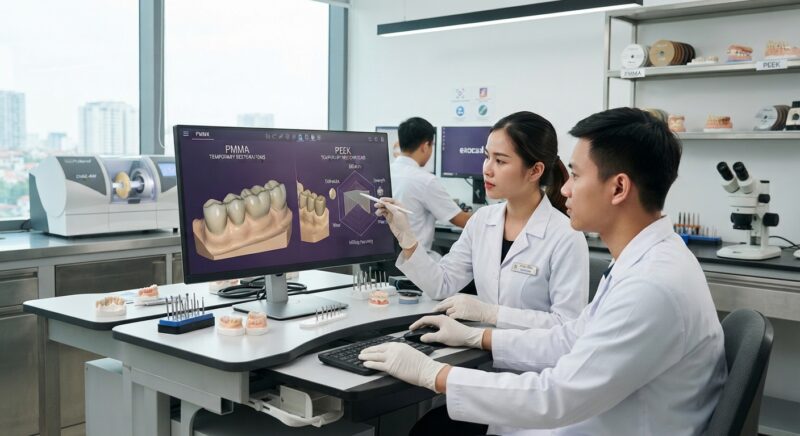
Best use cases for PMMA vs PEEK for temporary restorations 2026
Understanding where each material excels helps labs and DSOs tailor their offerings and optimize workflows.
PMMA
- Best for: Short-term temporaries, provisional crowns and bridges, orthodontic appliances, and night guards.
- Strengths: Cost-effective, fast milling, aesthetic, easy to polish.
- Limitations: Lower wear resistance, potential discoloration, less suitable for long-term use.
PEEK
- Best for: Implant temporaries, surgical guides, long-term provisional restorations, and cases with sensitivity concerns.
- Strengths: High strength, excellent biocompatibility, chemical resistance, color stability.
- Limitations: Higher cost, more demanding milling, requires specialized finishing.
What are the considerations for DSOs when choosing between PMMA and PEEK?
Dental Service Organizations (DSOs) managing multiple clinics prioritize scalability, cost control, and consistent quality.
DSOs may prefer PMMA for high-volume, fast turnaround temporary restorations across multiple sites due to its affordability and ease of processing. However, for implant cases or where patient retention depends on superior aesthetics and durability, PEEK becomes advantageous despite its higher cost and technical demands.
DSOs benefit from integrating outsourced CAD design services to harmonize these material choices across their network, ensuring efficiency and quality control surgical guide design.
Do you need design capacity for your new equipment?
Outsourced CAD design services provide the flexibility to operate new milling or printing equipment without hiring in-house designers, reducing overhead and accelerating workflow adoption. By partnering with specialized dental CAD/CAM design providers, labs and DSOs can maximize equipment utilization for both PMMA and PEEK restorations, ensuring precision and efficiency.
Step-by-Step Guide to Optimizing Temporary Restorations Using PMMA and PEEK
1. Case Assessment and Material Selection
Begin by thoroughly evaluating the patient’s clinical needs, including the duration of temporary restoration, occlusal load, esthetic requirements, and biocompatibility considerations. For short-term temporaries, PMMA often suffices due to its cost-effectiveness and ease of processing. However, for longer-term temporaries or cases requiring enhanced strength and lower wear, PEEK may be the better choice.
2. Digital Impression and Design
Utilize intraoral scanners to capture precise digital impressions. When working with PMMA, ensure that the design accounts for its material shrinkage during polymerization. PEEK, with its dimensional stability, allows greater design freedom but requires awareness of its stiffness to avoid over-contouring, which could affect patient comfort.
3. Milling and Fabrication
For PMMA, milling can be performed on wet or dry milling machines, but wet milling typically yields smoother surfaces, reducing post-processing time. PEEK requires dry milling with diamond or carbide burs due to its high melting point and toughness. Adjust milling parameters to prevent surface damage — for example, reduce feed rates and increase spindle speed with PEEK.
4. Post-Processing and Finishing
PMMA restorations benefit from light curing or polishing to improve aesthetics and reduce residual monomer content. PEEK restorations require careful polishing to achieve a smooth, bioinert surface, often using specialized polishing kits designed for high-performance polymers. Avoid aggressive polishing that could generate heat and deform PEEK.
5. Try-In and Adjustment
Perform a clinical try-in to assess fit, occlusion, and esthetics. PMMA allows relatively easy intraoral adjustments with conventional rotary instruments. PEEK’s high hardness demands diamond burs for effective trimming. Check for any sharp edges or pressure points that could cause patient discomfort.
6. Cementation and Final Placement
Select cements compatible with the chosen material. PMMA can be bonded using standard resin-based temporary cements, whereas PEEK requires surface treatment such as sandblasting or application of specific primers to enhance bonding efficacy. Always follow manufacturer guidelines for surface preparation to ensure retention.
Common Mistakes to Avoid When Working with PMMA and PEEK Temporaries
- Ignoring Material-Specific Milling Parameters: Using identical milling settings for PMMA and PEEK can lead to tool wear, poor surface finish, and restoration inaccuracies. Labs should calibrate machines for each material’s distinct properties.
- Skipping Surface Treatment for PEEK: PEEK’s inert surface resists bonding; failure to sandblast or prime before cementation often results in poor retention and restoration failure.
- Overlooking Occlusal Adjustments: Both PMMA and PEEK require precise occlusal adjustments. Neglecting this can cause premature wear or patient discomfort, especially given PEEK’s higher rigidity.
- Underestimating Material Thickness: Thin restorations made from PEEK may fracture due to brittleness, while PMMA requires sufficient bulk to avoid flexural failure. Proper thickness guidelines must be followed.
- Neglecting Biocompatibility Checks: Though both materials are biocompatible, allergic reactions or sensitivities may arise. Always verify patient history and monitor for adverse responses post-placement.
- Inadequate Communication Between Lab and Clinic: Misalignment of expectations regarding turnaround times, material handling, and design specifications can compromise restoration success.
Cost vs. Quality Considerations: Balancing Budget Constraints with Clinical Excellence
Material Acquisition Costs
PMMA blocks are generally less expensive, making them attractive for high-volume labs or practices with tight budgets. PEEK blocks command a premium price owing to their superior mechanical and chemical properties, which translates into higher upfront costs.
Equipment and Maintenance
Both materials require CAD/CAM milling centers, but PEEK’s hardness necessitates more frequent tool replacement and maintenance, increasing operational costs. Wet milling PMMA may require additional equipment or consumables, like coolant fluids, which add incremental expenses.
Labor and Processing Time
PMMA’s easier milling and post-processing often result in shorter turnaround times and less technician labor. PEEK demands more careful handling and polishing, potentially extending fabrication time and labor costs.
Longevity and Rework Rates
PEEK’s higher fracture resistance and dimensional stability can reduce the frequency of remakes and adjustments, potentially lowering long-term costs despite the initial investment. PMMA temporaries may require more frequent replacement, especially in complex or long-duration cases.
Cost-Benefit Decision Matrix
- Short-Term Temporaries, Limited Budget: PMMA offers excellent cost-efficiency.
- Extended Temporization or High-Load Cases: PEEK justifies higher costs through durability.
- Esthetic-Driven Cases: PMMA’s superior translucency may be preferred despite shorter durability.
- High-Volume Lab Workflows: Balancing speed and cost may favor PMMA.
Market Specifics and Trends Impacting PMMA and PEEK Usage in 2026
Regional Adoption Patterns
In North America and Western Europe, there is a growing trend toward PEEK for temporary restorations driven by increasing patient demands for durability and biocompatibility, as well as widespread access to advanced CAD/CAM technology. Conversely, emerging markets in Asia, Latin America, and Eastern Europe tend to favor PMMA due to cost constraints and limited access to high-end milling equipment.
Regulatory and Reimbursement Landscape
Regulatory approvals and standards for dental materials vary by region, affecting the adoption rates of PEEK and PMMA. Some countries offer reimbursement incentives or recognize longer-lasting temporary restorations made from premium materials like PEEK, encouraging their use in dental practices and DSOs.
Supply Chain Considerations
Global supply chain disruptions in recent years have impacted availability and pricing of both PMMA and PEEK blocks. Labs should maintain diversified supplier relationships and inventory strategies to mitigate delays and cost volatility.
Technological Innovations Shaping Material Use
Emerging hybrid materials and composite PMMA blocks with enhanced mechanical properties are gaining traction, offering intermediate solutions that combine some benefits of PEEK with PMMA’s cost advantages.
Advances in milling technology, such as multi-axis milling and AI-driven design optimization, enable more efficient fabrication and better clinical outcomes, influencing the choice and application of both materials.
DSO and Lab Consolidation Effects
As dental service organizations (DSOs) and lab consolidations continue, standardized material protocols are becoming common. Large groups often prioritize materials that streamline workflows and reduce costs, favoring PMMA. However, flagship clinics within these groups may adopt PEEK for complex cases to enhance reputation and patient satisfaction.
Practical Checklist for Dental Labs Implementing PMMA and PEEK Temporary Restorations
To effectively incorporate PMMA and PEEK materials into your dental lab’s workflow, it is essential to follow a detailed checklist addressing material handling, equipment readiness, and quality control. This ensures consistency, minimizes errors, and optimizes efficiency.
- Material Storage and Handling: Verify that PMMA and PEEK blanks or blocks are stored in temperature-controlled environments to prevent degradation. Avoid exposure to moisture and UV light, especially for PMMA, which can be sensitive to polymerization changes.
- Equipment Calibration: Ensure milling machines and CAD/CAM systems are calibrated specifically for the hardness and milling characteristics of PMMA and PEEK. PEEK’s high melting point requires robust tooling and potentially slower milling speeds.
- Tooling Compatibility: Use carbide or diamond-coated burs optimized for each material. Regularly inspect burs for wear—overused tools can cause rough surfaces or inaccuracies, especially with PEEK’s toughness.
- Design Software Settings: Set material-specific parameters such as shrinkage compensation, milling paths, and tool compensation in your CAD software. PEEK may require different support structures or wall thickness than PMMA due to its mechanical properties.
- Quality Inspection Protocol: Implement a multi-step inspection including dimensional accuracy verification, surface finish evaluation, and fit confirmation on models or intraoral scans.
- Post-processing Preparation: Prepare protocols for polishing, staining, or glazing, noting that PEEK often requires specialized finishing techniques to optimize aesthetics without compromising strength.
- Documentation and Traceability: Maintain records of material batch numbers, milling parameters, and technician details to assist in troubleshooting or quality audits.
Common Pitfalls When Transitioning from PMMA to PEEK: Real-World Examples
Many dental labs and practices experience challenges when introducing PEEK as an alternative or complement to PMMA for temporary restorations. Understanding these pitfalls can help avoid costly mistakes and optimize outcomes.
1. Underestimating Milling Requirements
Example: A mid-sized dental lab switched to PEEK but used the same milling speed and tool set as for PMMA. This resulted in frequent tool breakage and inconsistent surface quality, causing delays and increased costs.
Solution: Before full-scale adoption, conduct pilot runs to determine optimal spindle speeds, feed rates, and tool types. PEEK generally requires slower feeds and more robust tools due to its higher toughness.
2. Insufficient Training on Material Handling
Example: A dental practice’s in-house design team was unfamiliar with PEEK’s optical properties, leading to improper shade matching and limited aesthetic acceptance by patients.
Solution: Invest in comprehensive training sessions covering the physical and optical characteristics of both PMMA and PEEK. Include hands-on workshops focusing on polishing techniques and coloration methods for PEEK.
3. Neglecting Patient-Specific Factors
Example: A DSO ordered PEEK temporaries for all cases without considering patient habits such as bruxism, resulting in premature failures when PEEK’s flexibility wasn’t adequately leveraged.
Solution: Develop a patient assessment protocol that guides material choice based on clinical factors like occlusion, restoration duration, and esthetic expectations.
4. Overlooking Post-Processing Time and Costs
Example: A lab underestimated the additional finishing time required for PEEK temporaries compared to PMMA, impacting turnaround times and labor costs.
Solution: Adjust scheduling and cost models to account for longer post-processing and polishing times, and explore automation options to reduce labor intensity.
Cost and Quality Considerations: A Deeper Dive into Total Cost of Ownership
Beyond initial material purchase price, the choice between PMMA and PEEK impacts several cost centers and quality parameters that affect the long-term profitability and clinical success of temporary restorations.
Material and Production Costs
- PMMA: Typically lower upfront cost per block, faster milling cycles, and simpler finishing processes contribute to lower per-unit production costs.
- PEEK: Higher raw material costs combined with longer milling times and specialized tooling increase production expenses.
Labor and Training Costs
- PEEK requires more specialized training for technicians in design adjustments, milling settings, and finishing techniques, which may increase onboarding and continuous education expenses.
- PMMA’s familiarity among dental technicians often reduces training investments.
Clinical Longevity and Remake Rates
- PEEK’s superior mechanical properties often translate to fewer fractures or adjustments, potentially lowering remake rates and chairside time.
- PMMA may require more frequent repairs or replacements due to its relative fragility.
Patient Satisfaction and Aesthetic Considerations
- PEEK’s natural tooth-like flexibility and biocompatibility may improve patient comfort and reduce allergic reactions, indirectly influencing practice reputation and patient retention.
- PMMA’s translucency and color matching options are often superior for high-aesthetic zones, which can affect patient acceptance and perceived value.
Equipment Depreciation and Maintenance
- PEEK’s tougher machining requirements may accelerate wear on milling equipment, increasing maintenance frequency and costs.
- PMMA’s ease of milling generally results in lower equipment strain.
Summary: A comprehensive cost-quality analysis should weigh not only direct material and production costs but also labor, equipment depreciation, patient outcomes, and long-term remake rates. This total cost of ownership perspective helps labs and DSOs make financially sustainable and clinically effective decisions.
Market-Specific Considerations for Dental Labs Serving Diverse Patient Populations
When choosing between PMMA and PEEK for temporary restorations, dental labs must consider the specific demands of their target markets, including regional clinical trends, patient demographics, and regulatory environments.
High-Volume Urban Practices vs. Specialized Boutique Labs
High-volume urban labs often prioritize speed and cost-efficiency, making PMMA an attractive choice due to faster milling and lower material costs. In contrast, boutique labs focusing on premium, long-term temporaries may prefer PEEK for its superior strength and aesthetics, despite higher upfront costs.
Geographic Regulatory and Reimbursement Factors
Some regions have specific regulations on biocompatibility and material certifications that favor PEEK due to its FDA-approved status for various medical applications. Additionally, insurance reimbursement structures may influence the choice if temporary restorations are covered differently based on material type.
Demographic and Clinical Needs
- Elderly Populations: PEEK’s flexibility and biocompatibility make it suitable for geriatric patients with sensitive tissues or higher risk of allergic reactions.
- Young Adults and Aesthetics-Driven Patients: PMMA’s superior translucency and ease of customization often better meet the aesthetic expectations in this group.
- Patients with Parafunctional Habits: PEEK’s resilience to fracture under stress suits bruxers or patients requiring longer-term temporaries.
Supply Chain Stability and Material Availability
In markets with supply chain disruptions or limited access to premium materials, PMMA’s widespread availability and lower dependence on specialized suppliers can be advantageous. Conversely, labs aiming for cutting-edge materials may establish strategic partnerships with PEEK manufacturers to ensure consistent supply.
Contact us today to learn how our digital design outsourcing can support your lab’s growth and material versatility.