Understanding the Minimum Occlusal Clearance for Lithium Disilicate and Zirconia Restorations 2026
The minimum occlusal clearance for lithium disilicate and zirconia restorations 2026 refers to the smallest vertical space required between opposing teeth to accommodate these materials without compromising strength or esthetics. As dental materials and CAD/CAM technology evolve, updated clearance guidelines ensure restorations are durable, functional, and esthetically pleasing. Lithium disilicate and zirconia, favored for their strength and translucency, have distinct clearance requirements due to their mechanical properties and fabrication processes.
For dental labs and DSOs, adhering to these updated parameters is crucial to avoid restoration failure, ensure patient satisfaction, and optimize milling or printing workflows when outsourcing digital design. This article will detail the specifics of minimum occlusal clearance, compare material requirements, and offer guidance on integrating CAD/CAM outsourcing for efficient production.
What Is the Recommended Occlusal Clearance for Lithium Disilicate and Zirconia Restorations in 2026?
The recommended minimum occlusal clearance for lithium disilicate restorations is generally 1.0 to 1.5 mm, while zirconia requires approximately 0.8 to 1.0 mm clearance depending on translucency and strength grade.
Lithium disilicate, known for its esthetic qualities, requires slightly more thickness to maintain fracture resistance, especially in posterior crowns and bridges. Zirconia, particularly high-translucency types, can be milled thinner due to superior strength but still demands careful clearance planning to avoid occlusal interference. These values reflect the latest manufacturer guidelines and clinical research, but it’s essential to check specific brand recommendations. For example, Ivoclar Vivadent suggests a minimum of 1.0 mm for lithium disilicate crowns, while 3Shape design software incorporates these parameters into its CAD workflows.
How Does Minimum Occlusal Clearance Impact Restoration Longevity and Function?
The minimum occlusal clearance for lithium disilicate and zirconia restorations 2026 directly influences the restoration’s structural integrity and clinical success. Insufficient clearance can lead to premature fracture, wear, or poor occlusion, while excessive clearance may compromise esthetics and require unnecessary tooth reduction.
Proper clearance ensures optimal material thickness, which distributes occlusal forces evenly and reduces stress concentration. This is especially critical for implant-supported crowns, bridges, and surgical guides, where precision and fit affect long-term outcomes. Digital design outsourcing services help labs and DSOs achieve ideal clearance by leveraging expert knowledge and software optimized for current material standards, reducing remakes and chairside adjustments.
What Are the Differences in Occlusal Clearance Between Lithium Disilicate and Zirconia?
Lithium disilicate and zirconia differ in their mechanical properties, which affects the minimum occlusal clearance required for durable restorations.
- Lithium Disilicate: Requires 1.0 to 1.5 mm clearance due to moderate flexural strength (~360–400 MPa) and translucency; thickness affects translucency and esthetics.
- Zirconia: Requires 0.8 to 1.0 mm clearance; high flexural strength (~900–1200 MPa) allows thinner restorations, but translucency varies with thickness and type.
In clinical practice, anterior restorations may tolerate thinner zirconia with adequate translucency, whereas posterior restorations benefit from slightly increased thickness for strength. The minimum occlusal clearance for lithium disilicate and zirconia restorations 2026 takes these nuances into account, guiding labs in margin design and occlusal surface anatomy.
How Can Dental Labs and DSOs Optimize Workflow with CAD/CAM Digital Design Outsourcing?
CAD/CAM digital design outsourcing enables dental labs and DSOs to streamline production without investing heavily in in-house design expertise or software licenses. Outsourcing partners provide precise digital models that respect the minimum occlusal clearance for lithium disilicate and zirconia restorations 2026 standards, ensuring high-quality crowns, bridges, implants, and orthodontic devices.
Benefits include:
- Access to experienced technicians familiar with current occlusal clearance guidelines
- Reduced turnaround times by focusing internal resources on milling and finishing
- Scalability for high-volume production or complex cases such as surgical guides and night guards
Outsourcing design also mitigates risks of remakes due to inaccurate occlusal clearance or margin errors, making it a cost-effective solution for labs and DSOs adapting to evolving material requirements. The synergy between outsourced design and advanced milling machines or 3D printers from manufacturers like Dentsply Sirona or Straumann further improves quality and efficiency.
Comparison of Minimum Occlusal Clearance Requirements and Outsourcing Options
| Material | Min Occlusal Clearance (mm) | Best For | Strengths | Limitations |
|---|---|---|---|---|
| Lithium Disilicate | 1.0 – 1.5 | Anterior esthetic crowns, veneers, bridges | Excellent esthetics, good strength | Requires more clearance, less fracture resistant than zirconia |
| Zirconia (High-Translucency) | 0.8 – 1.0 | Posterior crowns, bridges, implant abutments | Superior strength, thinner restorations possible | Lower translucency in thicker areas, complex shading |
| Outsourced CAD Design | Adheres to material guidelines | Labs and DSOs lacking design staff | Expert designs, scalable, reduces remakes | Dependent on communication and turnaround times |
What Should You Consider When Selecting CAD/CAM Equipment for Your Lab or Clinic?
Choosing CAD/CAM equipment involves evaluating your lab or practice’s volume, case complexity, and budget while ensuring compatibility with material-specific design parameters like the minimum occlusal clearance for lithium disilicate and zirconia restorations 2026. Key considerations include:
- Volume of Cases: High-volume labs benefit from integrated design and milling units, while smaller setups may prefer outsourcing design to reduce overhead.
- Material Compatibility: Equipment must support the milling or printing of lithium disilicate and zirconia with precision that respects occlusal clearance.
- Software Integration: CAD software should incorporate updated occlusal clearance parameters and allow easy communication with outsourcing partners.
- Total Cost of Ownership: Factor in initial investment, consumables, maintenance, and staff training.
Leading CAD software providers like exocad and hardware from Roland DG often include material libraries preloaded with clearance requirements, facilitating compliance with the minimum occlusal clearance for lithium disilicate and zirconia restorations 2026.
How Does Accurate Occlusal Clearance Design Affect Patient Outcomes and Satisfaction?
Precise occlusal clearance design prevents common complications such as restoration fracture, poor fit, and occlusal discomfort, directly impacting patient satisfaction. When the minimum occlusal clearance for lithium disilicate and zirconia restorations 2026 is respected, crowns and bridges exhibit:
- Improved longevity and resistance to chipping or cracking
- Better occlusal harmony, reducing the risk of temporomandibular joint stress
- Enhanced esthetic integration due to optimal thickness and translucency
Clinicians benefit from fewer adjustments and remakes, reducing chair time and improving workflow efficiency. Outsourcing CAD design helps ensure these parameters are met consistently, supporting high standards of clinical care.
Do You Need Design Capacity for Your New Equipment?
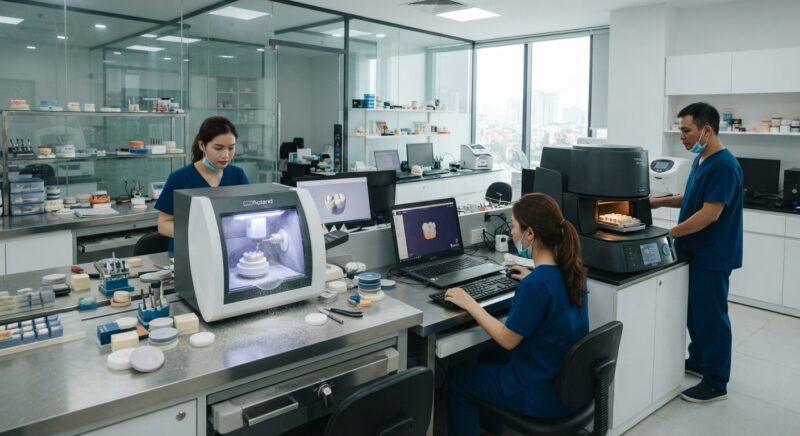
Outsourced CAD design services allow labs and clinics to run milling machines or 3D printers without hiring dedicated designers, optimizing workflow and controlling costs. Our expert design team ensures your restorations meet the minimum occlusal clearance for lithium disilicate and zirconia restorations 2026, reducing remakes and speeding delivery.
Step-by-Step Guide to Measuring and Verifying Occlusal Clearance in Clinical Practice
Accurate measurement of occlusal clearance is critical to the success of lithium disilicate and zirconia restorations. Misjudging this clearance can lead to failures such as fractures, poor fit, or patient discomfort. Below is a detailed, practical workflow dental practices and labs can follow to ensure precise occlusal clearance assessment and verification:
Step 1: Initial Clinical Examination and Diagnostic Records
- Perform a comprehensive occlusal analysis: Use articulating paper or digital occlusal analyzers to identify high spots and existing occlusal relationships.
- Take accurate impressions or digital scans: Ensure full arch impressions or intraoral scans capture the entire occlusal scheme and remaining tooth structure.
- Obtain bite registrations: Use materials such as polyvinyl siloxane to record the patient’s maximum intercuspation and any centric relation positions.
Step 2: Pre-Preparation Occlusal Clearance Measurement
- Use occlusal clearance gauges: These calibrated instruments help measure the vertical space between opposing teeth with precision.
- Check clearance at multiple points: Measure in the area of planned restoration and adjacent teeth to ensure uniform space and avoid interferences.
- Document measurements: Record values meticulously, noting differences in clearance at functional cusps and non-functional cusps.
Step 3: Tooth Preparation and Clearance Verification
- Perform tooth reduction based on material-specific guidelines: For lithium disilicate, typically 1.5–2.0 mm occlusal reduction; for zirconia, 1.0–1.5 mm may suffice.
- Re-measure clearance intraorally: Use silicone bite registration materials or occlusal gauges again to verify that minimum clearance is achieved.
- Adjust preparation as necessary: If clearance is insufficient, carefully remove additional tooth structure in targeted areas.
Step 4: Laboratory Verification and CAD/CAM Design Checks
- Request clear communication with the dental lab: Share detailed preparation specifications and photos or scans highlighting clearance zones.
- Utilize digital design software: Labs should simulate occlusal clearance in CAD software to confirm restoration thickness meets minimum requirements.
- Perform physical model checks: Where possible, use printed models or physical gauges to verify clearance before final milling.
Step 5: Final Clinical Adjustment and Patient Confirmation
- Try-in the restoration: Check occlusion with articulating paper and adjust minor interferences carefully.
- Confirm patient comfort and function: Ask patients to perform functional movements, ensuring no premature contacts or discomfort.
- Schedule follow-up visits: Monitor restoration performance over time, as occlusal changes may require further adjustment.
Common Mistakes in Managing Occlusal Clearance and How to Avoid Them
Even experienced clinicians and technicians can fall prey to errors related to occlusal clearance, risking restoration failures and patient dissatisfaction. Below are typical mistakes and practical advice to prevent them:
Underestimating Required Clearance for Material Strength
One frequent error is assuming that minimal clearance suffices regardless of material choice. For example, lithium disilicate demands more clearance than zirconia due to its relative brittleness. Ignoring this can cause fractures under occlusal load.
- Avoidance Tip: Always consult updated manufacturer guidelines and confirm minimum thickness with your lab before preparation.
Inadequate Communication Between Lab and Clinic
Lack of detailed instructions and unclear feedback often result in restorations with improper occlusal thickness or fit.
- Avoidance Tip: Establish standardized communication protocols including digital scans, photos, and written specifications. Use collaborative platforms when possible.
Failure to Verify Occlusal Clearance Post-Preparation
Clinicians sometimes neglect to re-check clearance after tooth reduction, assuming initial measurements suffice. This oversight can lead to insufficient material thickness.
- Avoidance Tip: Make it standard practice to re-measure clearance intraorally before sending impressions or scans to the lab.
Ignoring Functional Occlusal Dynamics
Static measurements alone don’t account for dynamic occlusion during chewing or parafunctional habits. Overlooking this can cause premature wear or restoration failure.
- Avoidance Tip: Use occlusal analysis tools that simulate functional movements and incorporate these findings into clearance planning.
Overly Aggressive Tooth Reduction Leading to Pulpal Damage
Attempting to create more clearance than necessary without careful planning can jeopardize tooth vitality.
- Avoidance Tip: Balance clearance needs with conservative preparation techniques and consider alternative materials if clearance is limited.
Cost and Quality Considerations When Selecting Materials Based on Occlusal Clearance
Deciding between lithium disilicate and zirconia often involves weighing cost implications alongside occlusal clearance and quality outcomes. Here are practical considerations in this decision-making process:
Material Cost Differences
- Lithium Disilicate: Generally more expensive due to esthetic qualities and additional processing steps such as staining and glazing.
- Zirconia: Often more cost-effective for posterior restorations where strength outweighs translucency needs.
Impact of Occlusal Clearance on Material Choice
- In cases with limited occlusal clearance (less than 1.5 mm), zirconia is preferred because it maintains strength at thinner dimensions, reducing the need for extensive tooth reduction.
- Where clearance exceeds 1.5–2 mm and esthetics are critical (e.g., anterior teeth), lithium disilicate offers superior translucency but requires more space.
Laboratory Processing and Finishing Costs
- Lithium disilicate demands additional staining, glazing, and sometimes pressable techniques, increasing lab time and costs.
- Zirconia restorations can be milled and sintered more efficiently, but require specialized sintering furnaces and equipment, which may affect lab overhead.
Quality Outcomes Relative to Clearance and Material
- Insufficient clearance with lithium disilicate compromises strength and esthetics, leading to higher remakes and warranty costs.
- Zirconia’s tolerance for thinner sections can reduce chair time and adjustment costs but may necessitate more occlusal adjustments due to its hardness.
Checklist for Material Selection Based on Occlusal Clearance and Cost
- Measure occlusal clearance accurately before material selection.
- Evaluate patient esthetic demands and functional requirements.
- Discuss budget and cost implications with the patient.
- Consult with your lab on turnaround times and processing costs.
- Consider long-term maintenance and warranty policies related to each material.
Market-Specific Occlusal Clearance Challenges and Solutions for Dental Labs and DSOs
Dental labs and dental service organizations (DSOs) operating across different markets face unique challenges in managing occlusal clearance for lithium disilicate and zirconia restorations. Understanding these nuances can help tailor protocols and improve outcomes.
High-Volume DSO Settings
DSOs often handle high patient volumes with standardized workflows, which can strain occlusal clearance verification processes.
- Challenge: Time constraints may lead to rushed tooth preparation and inadequate clearance checks.
- Solution: Implement digital occlusal clearance measurement tools and automated CAD/CAM design checks to streamline accuracy without slowing throughput.
Small Independent Labs Serving Diverse Practices
Smaller labs may encounter a wide range of preparation quality and occlusal clearance variability.
- Challenge: Inconsistent or incomplete case information from clinicians complicates design and fabrication.
- Solution: Develop standardized case submission forms requiring occlusal clearance data and encourage clinicians to submit digital scans with bite registrations.
Emerging Markets with Limited CAD/CAM Infrastructure
Some regions have limited access to advanced CAD/CAM equipment, affecting ability to precisely manage clearance.
- Challenge: Manual fabrication methods increase risk of inaccurate occlusal thickness and fit.
- Solution: Invest in training for traditional measurement techniques and consider partnering with centralized digital labs for design outsourcing.
Regulatory and Cultural Considerations
Different markets have varying regulations and patient expectations that influence restoration design and occlusal clearance practices.
- Challenge: Some countries may have stricter guidelines on material use or preparation standards.
- Solution: Stay informed about local dental regulations and adapt protocols accordingly; engage patients with clear explanations of restoration options and clearance needs.
Practical Market Adaptation Checklist for Labs and DSOs
- Assess local clinician preparation habits and common clearance issues.
- Tailor training programs for clinicians focusing on occlusal clearance importance.
- Invest in scalable digital workflow solutions suitable for your market size.
- Develop quality control checkpoints specific to market challenges.
- Maintain open communication channels with clinicians to provide feedback and improve case quality.
Contact us today to learn how our digital design outsourcing can enhance your lab’s productivity and quality.