Introduction to Managing Temporary Restorations in Digital Workflows 2026
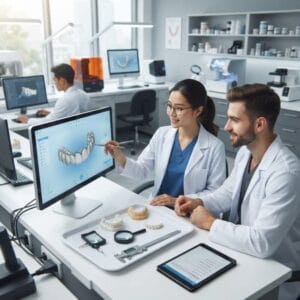
Managing temporary restorations in digital workflows 2026 is a critical process that dental labs and DSOs must master to deliver high-quality, timely restorative solutions. As digital technologies like CAD/CAM design and 3D printing become industry standards, integrating temporary restorations into these workflows streamlines production, improves patient outcomes, and reduces chair time.
Temporary restorations—such as crowns, bridges, surgical guides, night guards, and orthodontic aligners—serve essential functions during multi-stage dental treatments. The ability to digitally design, manufacture, and manage these restorations efficiently supports clinical success and lab profitability. This article provides an in-depth examination of how to manage temporary restorations in digital workflows 2026, including practical tips, software considerations, and collaboration strategies with dental practices.
What Are Temporary Restorations and Why Are They Important in Digital Workflows?
Temporary restorations are provisional dental prosthetics used to protect prepared teeth, maintain occlusion, esthetics, and function while the final restoration is fabricated.
In digital workflows, temporary restorations act as a bridge between clinical preparation and final prosthesis delivery, ensuring patient comfort and tissue health. Their management involves digital design, rapid prototyping, and precise fit verification—tasks increasingly automated by advanced CAD/CAM systems. By integrating temporary restorations seamlessly into digital workflows, labs can reduce errors and accelerate turnaround times.
Common types of temporary restorations include crowns, bridges, surgical guides, dentures, orthodontic aligners, and night guards. Each has unique design and material requirements that digital workflows must accommodate for optimal performance.
How Does CAD/CAM Technology Enhance Managing Temporary Restorations in Digital Workflows 2026?
CAD/CAM technology enhances managing temporary restorations in digital workflows 2026 by enabling precise digital design and automated manufacturing processes, reducing manual labor and errors.
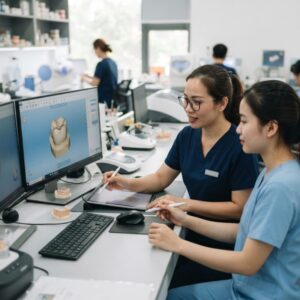
Dental labs leverage software tools such as 3Shape and exocad to create detailed 3D models of temporaries based on intraoral scans or STL files. These designs are then sent to CAM devices like milling machines or 3D printers, offering faster production compared to traditional methods.
The flexibility of CAD/CAM systems allows for quick adjustments if clinical feedback demands changes, and digital archives enable easy reproduction of temporary restorations. Furthermore, material advancements in resins and composites compatible with CAD/CAM manufacturing improve the durability and esthetics of temporaries, making them more functional during extended wear.
What Are the Key Challenges in Managing Temporary Restorations in Digital Workflows 2026?
The key challenges in managing temporary restorations in digital workflows 2026 include achieving accurate fit, balancing material properties, ensuring fast turnaround, and maintaining effective communication between dental labs and clinicians.
- Accuracy and Fit: Digital impressions and design must precisely replicate the prepared tooth geometry to avoid remakes or patient discomfort.
- Material Selection: Temporaries require materials that are easy to modify, biocompatible, and adequately durable despite being provisional.
- Workflow Integration: Seamless data transfer from practice to lab and back is critical, demanding compatible file formats and communication protocols.
- Turnaround Time: Temporaries are time-sensitive; delays can disrupt treatment schedules and patient satisfaction.
- Training and Expertise: Lab technicians and clinicians must be proficient with CAD/CAM tools and digital design principles to maximize efficiency.
Addressing these challenges requires a robust digital infrastructure and standardized protocols within labs and DSOs.
What Are Best Practices for Managing Temporary Restorations in Digital Workflows 2026?
Best practices for managing temporary restorations in digital workflows 2026 emphasize precision, communication, and technology optimization to ensure high-quality provisional prosthetics.
- Utilize High-Quality Digital Scans: Employ intraoral scanners such as those from iTero or Medit for accurate digital impressions that serve as the foundation for temporary designs.
- Standardize Design Protocols: Develop clear guidelines for temporary thickness, margin design, and occlusal clearance within CAD software to reduce adjustments.
- Leverage Automated Design Features: Use CAD software capabilities like automatic margin detection and pre-set templates to accelerate design time without compromising quality.
- Choose Compatible Materials: Select CAD/CAM materials optimized for temporary use, balancing esthetics, strength, and ease of modification.
- Implement Efficient Communication Channels: Utilize cloud-based platforms for real-time design approvals and feedback between the lab and dental practice.
- Maintain Digital Archives: Store temporary restoration designs digitally for quick reproduction if needed, supporting patient-specific customization.
Following these practices helps labs manage temporary restorations with consistency and agility in 2026’s evolving digital landscape.
How Can Outsourcing CAD/CAM Digital Design Improve Managing Temporary Restorations in Digital Workflows 2026?
Outsourcing CAD/CAM digital design can significantly improve managing temporary restorations in digital workflows 2026 by providing access to expert designers, advanced technology, and scalable production capacity.
Many dental labs and DSOs face bottlenecks in design resources or lack expertise in the latest CAD/CAM software updates. Partnering with specialized outsourcing companies allows for:
- Faster Turnaround: Dedicated design teams can quickly produce accurate temporary restoration models, reducing clinician wait times.
- Access to Expertise: Outsourcing firms often employ highly trained technicians familiar with the nuances of various temporary types and materials.
- Cost Efficiency: Labs can reduce internal overhead and capital investment in expensive equipment by leveraging outsourced services.
- Scalability: Outsourcing enables labs to manage fluctuating case volumes without compromising quality or deadlines.
Choosing a reliable outsourcing partner also helps labs stay current with software and material innovations, ultimately enhancing provisional restoration workflows. This approach complements other digital services such as implant surgical guide fabrication and orthodontic aligner design surgical guide design.
What Role Do 3D Printing and Milling Play in Managing Temporary Restorations in Digital Workflows 2026?
3D printing and milling are pivotal technologies in managing temporary restorations in digital workflows 2026, providing rapid, precise manufacturing options tailored to different clinical needs.
3D printing offers advantages in speed and complexity, capable of producing intricate temporary crowns, bridges, and surgical guides using biocompatible resins. Technologies from leaders like Formlabs and Asiga enable fine detail and smooth surface finishes, critical for patient comfort.
Milling, using materials such as PMMA blocks or composite resins, provides excellent mechanical strength and esthetics for temporaries expected to last longer. Milling systems from companies like Roland DG produce restorations with high dimensional accuracy and durability.
Labs often combine both manufacturing methods depending on case complexity and urgency. For example, quick 3D printed temporaries might be used during complex implant surgeries while milled temporaries serve long-span bridges. Selecting the right technology is vital for efficient managing temporary restorations in digital workflows 2026.
How Does Integration of Digital Workflow Software Improve Managing Temporary Restorations in Digital Workflows 2026?
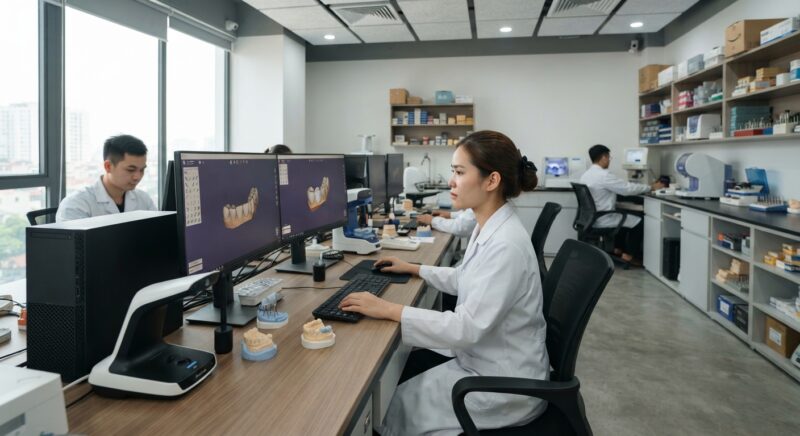
Integration of digital workflow software improves managing temporary restorations in digital workflows 2026 by enabling seamless communication, data consistency, and process automation across design, manufacturing, and clinical stages.
Modern CAD/CAM platforms often include modules for temporary restorations design, case management, and automated milling or printing instructions. Software suites from providers like Dentsply Sirona and Ivoclar offer integrated solutions that reduce manual data entry errors and enable traceability.
Additionally, cloud-based systems facilitate collaboration between labs and DSOs, allowing clinicians to review temporary restoration designs digitally and approve them before production. This integration minimizes remakes and aligns expectations.
Utilizing open file formats like STL and standardized communication protocols ensures compatibility between different hardware and software components, further enhancing workflow efficiency.
What Are the Material Considerations When Managing Temporary Restorations in Digital Workflows 2026?
Material selection is crucial when managing temporary restorations in digital workflows 2026, as temporaries must balance esthetics, mechanical strength, and ease of modification while being safe for intraoral use.
Common materials used include:
- PMMA (Polymethyl Methacrylate): Widely used in milling for its strength and polishability, suitable for longer-term temporaries.
- Resin-Based Composites: Used in 3D printing, offering excellent esthetics and flexibility for complex shapes like surgical guides or night guards.
- Bis-Acryl Composites: Often used chairside but increasingly integrated into digital fabrication for quick provisional coverage.
- Flexible Materials: For orthodontic aligners and night guards, requiring elasticity and patient comfort.
Labs must select materials compatible with their CAD/CAM equipment and the intended temporary restoration lifespan. Ensuring biocompatibility and ease of finishing is critical for clinical success.
How Can Labs Optimize Collaboration with DSOs When Managing Temporary Restorations in Digital Workflows 2026?
Labs can optimize collaboration with DSOs when managing temporary restorations in digital workflows 2026 by establishing clear communication protocols, shared digital platforms, and aligned expectations on turnaround and quality standards.
Regular digital case reviews using cloud portals allow DSOs to provide timely feedback on temporary restoration designs, reducing remakes. Educational initiatives to train clinical staff on digital impression taking and temporary restoration handling further improve outcomes.
Implementing standardized order forms specifying temporary restoration parameters—such as material choice, margin design, and occlusal requirements—helps ensure consistency. Labs can also offer modular design services that allow DSOs to customize temporaries based on individual patient needs.
Strong partnerships supported by transparency and mutual understanding enable efficient managing temporary restorations in digital workflows 2026, ultimately benefiting patient care and practice reputation digital denture fabrication.
Conclusion and Call to Action
Managing temporary restorations in digital workflows 2026 requires a blend of advanced technology, precise design, material knowledge, and effective collaboration between dental labs and DSOs. By adopting best practices, leveraging CAD/CAM and 3D printing technologies, and considering outsourcing options, dental professionals can enhance efficiency and patient satisfaction.
Step-by-Step Guide to Implementing Temporary Restorations in a Digital Workflow
For dental labs and practices transitioning to or optimizing digital workflows, having a clear, actionable process for managing temporary restorations is essential. Below is a detailed step-by-step guide that highlights practical implementation, ensuring accuracy, efficiency, and quality.
1. Initial Patient Assessment and Digital Impression
- Evaluate Treatment Plan: Confirm the need for temporary restorations based on the restorative timeline and patient-specific factors.
- Capture Digital Impressions: Use an intraoral scanner to obtain highly accurate 3D images of the patient’s dentition and soft tissues.
- Verify Scan Quality: Ensure scans are complete and free of artifacts to avoid errors in design.
2. Digital Design of Temporary Restoration
- Import Scans into CAD Software: Use compatible software to begin designing the temporary crown, bridge, or other restoration.
- Apply Design Parameters: Adjust occlusion, contact points, and margins digitally to replicate optimal fit and function.
- Simulate and Review: Use software tools to simulate the restoration’s fit and bite interaction before manufacturing.
3. Material Selection and Fabrication
- Select Appropriate Material: Choose from resin, PMMA, or composite materials based on durability, esthetics, and cost considerations.
- Manufacture Using 3D Printing or Milling: Depending on lab capabilities, fabricate the restoration with the chosen method.
- Post-Processing: Clean, cure, and finish the restoration, paying close attention to margin refinement and surface smoothness.
4. Delivery and Clinical Evaluation
- Fit Check: Try-in the temporary restoration to verify fit, occlusion, and patient comfort.
- Adjust if Necessary: Make minor adjustments chairside using appropriate burs or polishing tools.
- Patient Instructions: Educate the patient on care guidelines to maintain the temporary restoration until final placement.
5. Integration with Final Restoration Workflow
- Record Feedback: Document any adjustments or issues for refinement in the final restoration design.
- Data Transfer: Ensure digital files and patient notes are seamlessly transferred between lab and practice for the next treatment stage.
Common Mistakes and How to Avoid Them in Temporary Restoration Management
While digital workflows offer unprecedented precision, several pitfalls can undermine the quality and efficiency of temporary restorations. Recognizing and correcting these common mistakes can save costly rework and improve patient satisfaction.
Inadequate Scan Quality and Its Consequences
Low-quality digital impressions result in ill-fitting temporaries that cause discomfort or require multiple adjustments. To avoid this:
- Train staff thoroughly on intraoral scanning techniques.
- Verify scan completeness immediately after capture.
- Use software tools to detect and correct errors before design.
Neglecting Material Compatibility and Longevity
Choosing the wrong fabrication material can lead to temporary restorations that fracture easily or discolor rapidly. Labs and practices should:
- Assess clinical requirements such as load-bearing capacity and esthetic demands.
- Consult material data sheets and past case results.
- Consider patient-specific factors like parafunctional habits.
Skipping Communication Between Lab and Practice
Poor communication causes mismatched expectations and delays. To mitigate this:
- Use integrated digital platforms for real-time case updates.
- Establish standardized protocols for case submission and feedback.
- Hold regular meetings to discuss workflow improvements.
Overlooking Post-Processing Steps
Inadequate cleaning, curing, or polishing after manufacturing can compromise restoration fit and aesthetics. Best practices include:
- Following manufacturer-recommended protocols strictly.
- Investing in quality post-processing equipment.
- Implementing quality control checkpoints before delivery.
Cost Management and Quality Balance in Temporary Restoration Production
Balancing cost efficiency with high-quality outcomes is a critical challenge for dental labs and dental service organizations (DSOs). Temporary restorations, while short-term solutions, must meet rigorous standards without inflating budgets.
Cost Drivers in Digital Temporary Restoration Workflows
- Material Costs: Premium resin and composite materials increase expenses but enhance durability and esthetics.
- Equipment Investment: High-end 3D printers and milling machines require significant upfront capital but reduce labor and turnaround time.
- Software Licensing: CAD/CAM design software often involves recurring fees that must be budgeted.
- Labor: Skilled technicians and clinicians trained in digital workflow management contribute to operational costs.
Strategies to Optimize Cost Without Compromising Quality
- Bulk Purchasing: Negotiate with suppliers for volume discounts on materials.
- Workflow Automation: Use software automation to reduce manual design time and errors.
- Selective Outsourcing: Outsource complex or time-intensive design tasks to specialized providers to lower in-house labor costs.
- Material Selection Based on Case Complexity: Reserve premium materials for high-visibility or longer-term temporaries, and use cost-effective options for simpler cases.
Quality Assurance Practices to Maintain Standards
- Implement Checklists: Use stepwise checklists for scanning, design, fabrication, and finishing to catch errors early.
- Regular Training: Invest in continuous education for lab technicians and clinicians on new materials and technologies.
- Feedback Loops: Collect and analyze clinical feedback on temporary restoration performance to guide process improvements.
Market-Specific Considerations for Temporary Restorations in 2026
Understanding the unique demands of different dental markets is vital for labs and DSOs aiming to succeed with digital temporary restoration workflows. Factors such as regional regulations, patient demographics, and competitive landscapes shape workflow choices.
Regulatory Compliance and Certification
Different countries and regions impose varying requirements on dental materials, digital devices, and data security. Key considerations include:
- Certification of materials by recognized bodies such as FDA, CE, or equivalent.
- Compliance with data protection laws when handling digital impressions and patient records.
- Adherence to sterilization and infection control standards, especially in clinical settings.
Patient Demographics and Expectations
Regions with aging populations may demand more durable and comfortable temporaries, while markets with younger, esthetically conscious patients prioritize appearance and minimal chair time. Labs should:
- Adapt material choices and design approaches to meet these expectations.
- Offer customization options that align with local esthetic preferences.
- Educate clinicians on managing patient expectations during temporary phases.
Competitive Landscape and Collaboration Models
Some markets are dominated by large DSOs with centralized labs, while others have numerous small independent practices and labs. This affects:
- Collaboration: Centralized models benefit from standardized workflows and bulk manufacturing, while decentralized markets require flexible and rapid turnaround.
- Pricing: Competitive pricing pressures may favor outsourcing or automated production.
- Innovation Adoption: Markets with strong competition tend to adopt digital technologies faster, raising the baseline for quality and speed.
Contact us today to learn how our expert CAD/CAM digital design outsourcing services can simplify managing your temporary restorations and elevate your lab’s digital workflow performance.