Understanding the Dental Technician Shortage in France: Solutions for Dental Labs in 2026
The dental technician shortage in France: solutions for dental labs in 2026 is a pressing issue that requires innovative approaches to maintain the quality and timeliness of dental prosthetics production. France, like many European countries, is facing a decline in the number of qualified dental technicians due to demographic shifts, limited training programs, and rising demand for complex restorations. This shortage threatens the ability of dental labs and dental service organizations (DSOs) to meet clinical demands for crowns, bridges, implants, surgical guides, dentures, orthodontic aligners, and night guards.
Addressing this shortage involves adopting technological advancements, outsourcing digital design services, and optimizing workflows. This article will delve into the causes of the shortage, explore CAD/CAM digital design outsourcing as a viable solution, and provide actionable insights for dental labs in 2026 and beyond.
What is causing the dental technician shortage in France?
The dental technician shortage in France is primarily caused by an aging workforce, insufficient new entrants into the profession, and increased complexity in dental restorations requiring specialized skills.
Many experienced dental technicians are approaching retirement, but fewer young people are choosing this career path due to low awareness and perceived limited opportunities. Moreover, advanced prosthetic designs, such as implant-supported restorations and digital surgical guides, require technicians to master CAD/CAM software and digital workflows, narrowing the pool of qualified candidates. The COVID-19 pandemic also disrupted training programs and slowed recruitment, exacerbating the shortage.
Impact on dental labs and DSOs
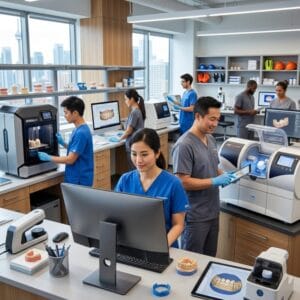
Dental labs and DSOs in France face longer turnaround times, increased labor costs, and potential quality compromises due to this shortage. Smaller labs may struggle to maintain service levels, risking customer satisfaction. Consequently, many labs seek alternative solutions, such as outsourcing digital design and manufacturing tasks to specialized providers who can deliver consistent, high-quality results.
How can CAD/CAM digital design outsourcing help alleviate the dental technician shortage in France?
CAD/CAM digital design outsourcing allows dental labs to delegate complex design tasks to expert technicians using advanced software, reducing in-house workload and dependency on scarce staff.
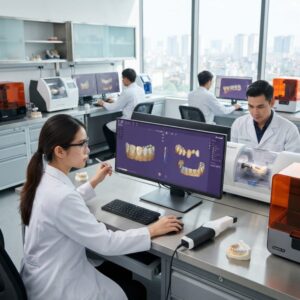
Outsourcing partners equipped with state-of-the-art CAD/CAM technology and experienced designers can produce digital models for crowns, bridges, implants, surgical guides, dentures, orthodontic aligners, and night guards with precision and speed. This enables dental labs to maintain high production volumes and meet clinical timelines despite technician shortages.
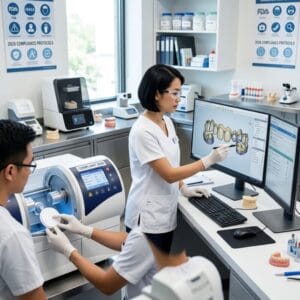
Moreover, outsourcing improves workflow efficiency by integrating seamlessly with in-house milling and 3D printing systems, ensuring compatibility of digital files and reducing errors. This approach also allows labs to scale operations flexibly, paying only for design services as needed without the overhead of hiring and training additional staff.
Benefits of outsourcing CAD/CAM design
- Access to specialized expertise: Outsourcing companies often employ highly skilled designers familiar with the latest software from leaders like 3Shape and exocad.
- Cost savings: Reduces expenses related to recruitment, salaries, and training of new technicians.
- Faster turnaround: Enables quicker delivery of digital designs, critical for patient satisfaction.
- High-quality output: Consistent production of precise, clinically validated prosthetic designs.
What are the key CAD/CAM digital design services dental labs should outsource?
Dental labs and DSOs should consider outsourcing a comprehensive suite of CAD/CAM design services to address the dental technician shortage in France: solutions for dental labs in 2026 effectively.
- Crown and Bridge Design: Digital modeling of crowns and bridges with highly accurate margins and occlusal anatomy.
- Implant Prosthetics Design: Customized implant abutments and restorations designed to fit patient-specific implant systems.
- Surgical Guide Design: Precise digital surgical guides to aid implant placement, enhancing clinical outcomes and reducing chair time.
- Denture Design: Digital workflows for complete and partial dentures, improving fit and esthetics.
- Orthodontic Aligners: Digital setup and staging for clear aligner therapy, integrating with 3D printing production.
- Night Guards and Occlusal Splints: Customized designs to protect patients from bruxism and TMJ disorders.
Each of these services requires detailed knowledge of dental anatomy, materials, and software capabilities, making outsourcing an effective strategy to fill skill gaps caused by the technician shortage.
How do dental labs integrate outsourced CAD/CAM design into their workflows?
Integrating outsourced CAD/CAM design into existing workflows involves clear communication, compatible digital systems, and quality control protocols.
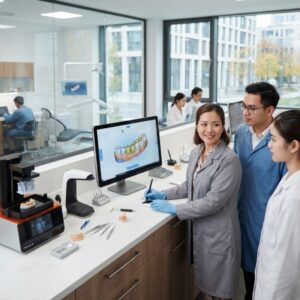
Labs typically start by scanning physical impressions or intraoral scans, then securely sending digital files to the outsourcing partner. The partner uses specialized CAD software to design the prosthetic, then returns the finalized digital design for local manufacturing or direct digital fabrication.
To ensure seamless integration, labs must confirm that file formats (e.g., STL, PLY) and design parameters align with their milling machines or 3D printers. Regular feedback loops between lab technicians and the design team help refine designs and maintain quality standards.
Many labs use cloud-based platforms for real-time collaboration and file sharing, enhancing transparency and speeding revisions. This digital ecosystem supports the overarching goal of mitigating the dental technician shortage in France: solutions for dental labs in 2026 by leveraging technology and expert partnerships.
What challenges might arise when outsourcing CAD/CAM design, and how can they be overcome?
Outsourcing CAD/CAM design is not without challenges, including concerns about data security, loss of control over design quality, and potential delays in communication.
- Data security: Labs must ensure their outsourcing partner complies with GDPR and uses secure file transfer protocols.
- Design consistency: Regular quality audits and standardized design protocols help maintain uniformity.
- Communication barriers: Establishing dedicated points of contact and using collaborative platforms can reduce misunderstandings.
Choosing a reputable outsourcing provider with proven experience in dental CAD/CAM design services and strong client references is critical. Additionally, a phased onboarding process with trial runs can help labs adapt their workflow and build trust.
What role does digital education and training play in addressing the dental technician shortage in France?
Digital education and training are essential to equip the next generation of technicians with skills in CAD/CAM software and digital dental workflows, directly addressing the dental technician shortage in France: solutions for dental labs in 2026.
Institutes and professional organizations are increasingly offering courses on digital design platforms such as Medit scanners and software from industry leaders. Hands-on training combined with virtual simulation allows technicians to build proficiency remotely, accelerating skill acquisition.
Labs can collaborate with educational programs or sponsor apprenticeships focused on digital dentistry, creating a sustainable talent pipeline. This investment in human capital complements outsourcing and technology adoption strategies to combat workforce gaps.
How can dental labs future-proof themselves beyond 2026?
To future-proof operations beyond 2026, dental labs must embrace a hybrid model combining in-house expertise, strategic outsourcing, and continuous digital innovation.
- Investing in automation: Automated scanning, design validation, and manufacturing reduce human error and increase throughput.
- Expanding digital partnerships: Collaborating with vendors specializing in implant prosthetics and surgical guides ensures access to cutting-edge solutions.
- Enhancing staff skills: Ongoing training in new CAD/CAM tools prepares technicians for evolving demands.
- Adopting cloud-based workflows: Enables remote collaboration and scalability.
By implementing these strategies, labs can mitigate the impact of the dental technician shortage in France: solutions for dental labs in 2026 while maintaining competitiveness in a fast-changing market.

The strategic advantage of outsourcing implant surgical guide design
Implant surgical guide design requires precision and a deep understanding of both surgical protocols and digital technology, making it a prime candidate for outsourcing amidst the dental technician shortage in France: solutions for dental labs in 2026.
Outsourcing this service ensures guides are designed to exact specifications, improving implant placement accuracy and patient outcomes. Many labs partner with companies offering validated workflows that integrate with implant systems from manufacturers like Straumann and Nobel Biocare.
This collaboration also helps labs optimize resource allocation, dedicating in-house technicians to other complex cases while relying on expert designers for surgical guides. The result is a balanced workload and enhanced overall productivity.
What is dental lab outsourcing and why is it relevant today?
Dental lab outsourcing is the practice of delegating specific laboratory tasks to external service providers, often leveraging digital technologies to enhance efficiency and quality.
It is highly relevant today due to personnel shortages, rising costs, and the growing complexity of dental prosthetics. By outsourcing CAD/CAM digital design, labs access specialized skills and technology without the burden of maintaining a large, costly in-house team. This approach aligns perfectly with solutions addressing the dental technician shortage in France: solutions for dental labs in 2026.
How does digital crown design work in an outsourced setup?
Digital crown design in an outsourced setup involves the external design team receiving digital impressions or scan data, creating a virtual crown model using CAD software, and returning the file to the dental lab for production.
The process ensures precise fit, occlusion, and esthetics, benefiting from the expertise of specialized designers. Outsourced providers use advanced software platforms that allow them to customize margins, contacts, and morphology based on clinical requirements. This ensures that despite the technician shortage, labs can deliver high-quality crowns reliably and efficiently.
Conclusion
The dental technician shortage in France: solutions for dental labs in 2026 demands a multi-faceted response combining technology, outsourcing, and workforce development. CAD/CAM digital design outsourcing emerges as a key strategy enabling labs and DSOs to maintain service excellence, reduce costs, and adapt to evolving clinical needs.
By integrating outsourced design services for crowns, bridges, implants, surgical guides, dentures, orthodontic aligners, and night guards, dental labs can overcome staffing challenges while future-proofing their operations. Investing in digital education and forging strong partnerships with outsourcing providers ensures sustainable growth in a competitive market.
For more detailed guidance on navigating these changes, labs should explore resources offered by the American Dental Association and industry leaders in CAD/CAM technology.
Embracing these solutions will help dental labs thrive despite the technician shortage, delivering superior patient care and business success.
If you’re ready to tackle the dental technician shortage in France with expert CAD/CAM digital design outsourcing, contact us today to learn how we can support your lab’s growth and efficiency.