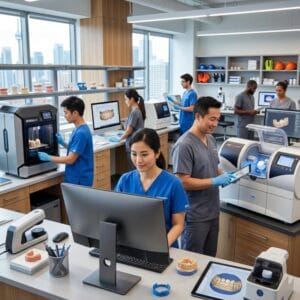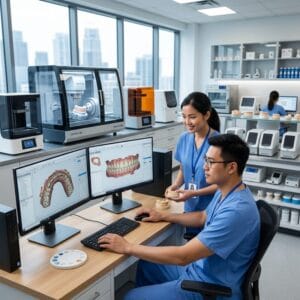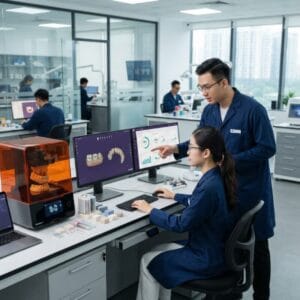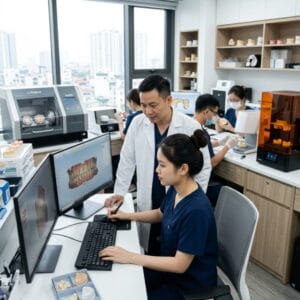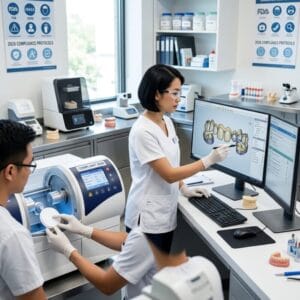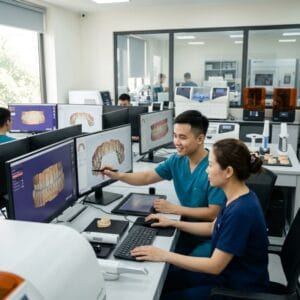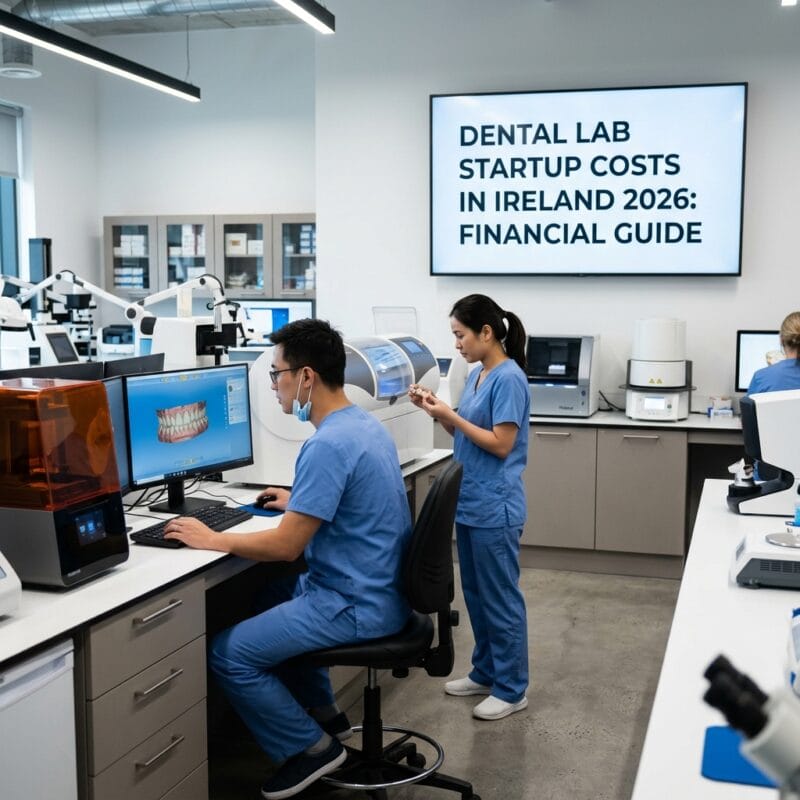
Evaluating dental lab startup costs in Ireland 2026 requires a clear-eyed examination of the modern digital landscape. The Irish dental sector has undergone a massive technological shift, moving away from conventional plaster models, lost-wax casting, and manual porcelain layering toward fully integrated digital workflows. For entrepreneurs, master technicians, and expanding Dental Support Organizations (DSOs), understanding the realistic baseline dental lab startup costs in Ireland 2026 is the critical first step toward building a sustainable and profitable laboratory enterprise.
Launching a new commercial facility in Dublin, Cork, Galway, or regional hubs presents both distinct economic opportunities and notable financial hurdles. Inflationary pressure on commercial real estate, high skilled-labor costs, and rapid advancements in computer-aided design and computer-aided manufacturing (CAD/CAM) equipment mean that historical launch budgets are no longer accurate. Accurately projecting dental lab startup costs in Ireland 2026 ensures that founders secure adequate financing, optimize capital distribution, and avoid the crippling cash-flow squeezes that frequently impact early-stage dental enterprises.
Whether you intend to establish a boutique aesthetic studio specializing in complex anterior crown and bridge work, or a high-volume production facility serving multiple clinical practices across Munster and Leinster, budgeting for dental lab startup costs in Ireland 2026 is critical. This comprehensive guide breaks down essential capital expenditures, recurring operational overhead, regulatory compliance obligations, and actionable strategic models—such as CAD design outsourcing—that allow new laboratory owners to minimize financial exposure while accelerating time-to-market.
Key Capital Expenditures Shaping Dental Lab Startup Costs in Ireland 2026
Capital expenditures (CapEx) represent the largest initial barrier to entry when establishing a modern dental laboratory. Carefully analyzing dental lab startup costs in Ireland 2026 reveals that hardware and physical technology account for the vast majority of upfront funding requirements. Unlike historical lab setups that relied heavily on bench tools, gas torches, and basic casting machines, contemporary facilities require high-precision digital capture, milling, and additive manufacturing hardware.
How much do dental lab startup costs in Ireland 2026 typically amount to?
Overall dental lab startup costs in Ireland 2026 typically range from €80,000 for a minimalist digital design hub to over €350,000 for a fully established, high-capacity production facility.
To contextualize these figures, founders must evaluate where their operational model falls along the technological spectrum. Calculating overall dental lab startup costs in Ireland 2026 requires categorizing essential physical machinery into core functional groups:
- High-Precision Desktop Laboratory Scanners: High-resolution optical or blue-light desktop scanners (such as those manufactured by Medit or 3Shape) are necessary to digitize physical impressions and master models. Expect to allocate between €6,000 and €18,000 per unit depending on accuracy specs and scanning speeds.
- 5-Axis Dry Dental Milling Machines: Machining zirconia, PMMA, and wax discs requires robust dry milling units. Industrial-grade desktop or standalone dry mills range between €25,000 and €55,000.
- Wet Milling Units for Glass Ceramics and Titanium: If your laboratory intends to mill lithium disilicate blocks or custom titanium implant abutments in-house, a wet milling machine is mandatory, adding €20,000 to €45,000 to your total capital requirement.
- High-Temperature Zirconia Sintering Furnaces: Fast-sintering and standard high-temperature furnaces operating up to 1600°C are mandatory for processing monolithic restorations. Quality units cost between €8,000 and €18,000.
- 3D Printers and Post-Curing Stations: Additive manufacturing technology is essential for producing working models, surgical guides, night guards, and try-in dentures. A professional DLP or SLA printing ecosystem, complete with wash and cure units, typically demands an investment of €5,000 to €20,000.
Acquiring this suite of production machinery represents a major portion of overall dental lab startup costs in Ireland 2026. Furthermore, shipping, import tariffs, professional calibration, and initial material inventory (zirconia discs, resin vats, ceramic powders, milling burs) routinely add an extra €10,000 to €25,000 to early setup budgets.
Software Licensing and IT Infrastructure Budgeting
In the current digital environment, physical machinery is useless without robust CAD software modules and underlying IT infrastructure. Managing dental lab startup costs in Ireland 2026 requires careful accounting for both perpetual software licenses and recurring annual subscription models. Modern laboratories depend on software systems like exocad DentalCAD and 3Shape Dental System to transform intraoral optical scans into production-ready 3D models.
Core software platforms typically feature a modular pricing structure. While a basic core CAD license may carry an upfront fee of €4,000 to €8,000, adding specialized add-on modules quickly drives up expenses. Founders who plan to offer specialized services must budget for add-ons covering custom implant abutment design, implant bridge frameworks, clear aligner staging, bite splint construction, and digital denture design. Each specialized software module adds between €1,500 and €4,000 in initial licensing fees, inflating dental lab startup costs in Ireland 2026 rapidly if all capability modules are purchased on day one.
In addition to dental CAD/CAM licenses, high-performance IT equipment is non-negotiable. Modern dental design engines demand heavy GPU computing power, extensive RAM (minimum 32GB to 64GB), and ultra-fast SSD storage arrays to manipulate dense point-cloud files smoothly. Dedicated workstation PCs, high-color-accuracy dual monitors, automated offsite cloud backup systems, and secure local network-attached storage (NAS) units for long-term patient data archiving add approximately €3,500 to €7,500 per design bench to total dental lab startup costs in Ireland 2026.
Facility Leases, Infrastructure, and Regulatory Compliance in Ireland
Securing a physical location and tailoring it to meet medical manufacturing standards forms another substantial pillar of dental lab startup costs in Ireland 2026. Commercial rental rates vary dramatically by geography. Lease costs in prime commercial zones in Dublin (such as Sandyford, Park West, or Dublin Northside business parks) can range from €18 to €28 per square foot, whereas facilities in Galway, Limerick, or Waterford offer more accessible rates between €10 and €16 per square foot.
However, securing the physical lease is merely the starting line. Converting a standard commercial or industrial unit into an operational dental laboratory incurs significant fit-out expenses, which strongly impact initial dental lab startup costs in Ireland 2026:
- Pneumatic and Electrical Upgrades: High-precision milling units require clean, dry, pressurized air provided by heavy-duty, quiet, oil-free air compressors equipped with air dryers. Additionally, heavy ceramic furnaces and multiple milling units often require three-phase electrical connections and dedicated circuits, costing between €5,000 and €15,000 for utility installation.
- Dust Extraction and HVAC Systems: Milling zirconia and adjusting ceramics produce airborne particulates that require specialized, medical-grade dust collection systems and air filtration to maintain compliance with safety standards. Adequate ventilation retrofits add €4,000 to €12,000.
- Ergonomic Lab Furniture: Professional technician benches equipped with integrated suction, lighting, compressed air nozzles, and gas hookups cost between €1,500 and €3,500 per workplace.
Regulatory compliance and quality management represent an additional mandatory line item when planning dental lab startup costs in Ireland 2026. In Ireland, custom-made medical devices—which include crowns, bridges, dentures, and orthodontic appliances—are regulated by the Health Products Regulatory Authority (HPRA). Dental laboratories must register with the HPRA as manufacturers of custom-made medical devices, establish robust Quality Management Systems (QMS) compliant with ISO 13485 standards, and maintain full material traceability for every restoration produced.
Consulting fees for setting up standard operating procedures (SOPs), establishing HPRA compliance protocols, purchasing product liability insurance, and securing commercial property coverage collectively add between €6,000 and €14,000 to early operational overhead. Neglecting these regulatory costs during initial capital planning can result in severe legal and financial complications later on.
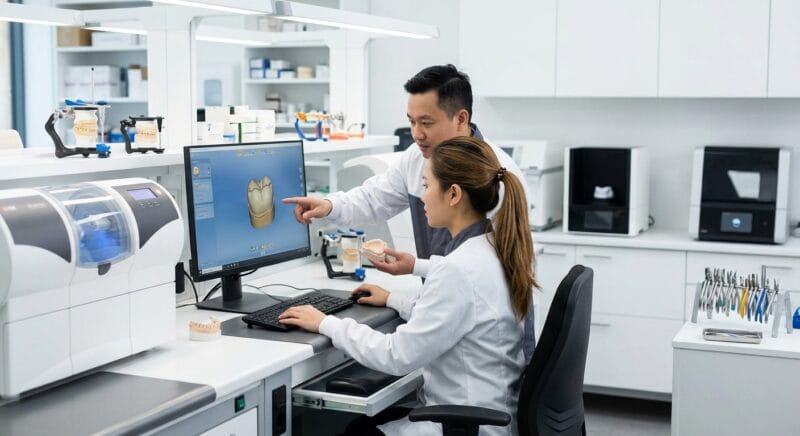
What are the primary factors driving up dental lab startup costs in Ireland 2026?
The primary factors driving up dental lab startup costs in Ireland 2026 are specialized technician payroll, advanced multi-axis milling equipment, expensive annual CAD software maintenance fees, and commercial property leases.
Labor dynamics in Ireland play an enormous role in inflating ongoing operational expenses and initial dental lab startup costs in Ireland 2026. Ireland faces a well-documented shortage of experienced dental technicians and skilled CAD/CAM designers. High demand for trained technicians means competitive salary expectations. A senior CAD/CAM technician or certified master lab technician in Ireland commands an annual base salary ranging from €45,000 to €65,000+, excluding Employer Employer PRSI contributions, pension plans, holiday pay, and training allowances.
When starting a new laboratory, hiring full-time, in-house CAD design staff introduces immediate, high fixed overhead before client volume is fully established. If a newly launched lab hires two full-time designers to cover crown & bridge, implant work, and removable prosthetics, the annual payroll obligation easily surpasses €100,000. This massive fixed commitment dramatically increases total dental lab startup costs in Ireland 2026 and raises the lab’s monthly break-even point.
Furthermore, technical recruitment in Ireland often involves extended headhunting periods or expensive training investments to bring junior staff up to speed on complex restorative software like exocad or 3Shape. Small labs face the constant threat of losing trained personnel to larger DSO laboratories or clinical chains after spending substantial resources on their training. Mitigating these labor-related financial pressures requires a fundamental shift in how new laboratory owners structure their initial operating models.
Strategic Models: How CAD/CAM Design Outsourcing Mitigates Startup Expenses
Given the heavy capital outlays detailed above, forward-thinking laboratory founders are increasingly abandoning the traditional “everything in-house” operational model. Instead, they leverage a hybrid operational framework centered on remote CAD design outsourcing. By partnering with a specialized, high-volume dental design outsourcing service, new laboratory owners can radically suppress their initial dental lab startup costs in Ireland 2026.
Outsourcing the digital design phase eliminates the immediate need to hire full-time, high-salaried CAD technicians during the fragile early months of business. Instead of absorbing fixed monthly payroll overhead, the laboratory converts design costs into a flexible, pay-per-case operating expense. When case volume is low, design costs drop automatically, protecting precious cash reserves.
This lean approach impacts multiple facets of initial dental lab startup costs in Ireland 2026:
- Reduced Software Capital Outlays: Rather than purchasing every expensive software module (implants, aligners, partials, surgical guides) and paying multiple annual dongle update fees, labs can rely on their outsourcing partner’s complete software stack.
- Lower Hardware Investments: By receiving validated, production-ready STL design files, new lab owners can focus their capital spending exclusively on high-efficiency production equipment (such as 3D printers or targeted milling units) rather than multi-station CAD workstation hardware.
- Reduced Facility Footprint: Fewer in-house design benches mean smaller commercial floor space requirement, directly cutting monthly commercial rental expenses and utility bills.
- Instant Operational Scalability: An outsourcing model allows a new laboratory to accept complex, high-margin cases from day one—including full-arch implant restorations, custom abutments, and complex removable prosthetics—without needing years of specialized in-house technician training.
By leveraging expert design partners for complex cases like 3D printed surgical guide design and intricate crown restorations, new lab owners effectively eliminate the steep learning curve and expensive re-work costs associated with junior in-house designers.
Detailed Breakdown of Dental Lab Workflows and Financial Savings
To understand the full financial impact of design outsourcing on dental lab startup costs in Ireland 2026, it is helpful to analyze core dental restoration categories individually. Every product line carries specific equipment and software design requirements that dictate capital outlay.
Crown & Bridge (C&B) Restorations
Monolithic zirconia crowns, layered porcelain-to-zirconia, and lithium disilicate restorations constitute the core revenue stream for most Irish dental laboratories. Designing anatomical crowns requires fine structural understanding of occlusal contact points, minimum material thickness thresholds, and margin line placement. Outsourcing C&B design allows new labs to receive precise STL files tailored to their specific milling machine parameters and zirconia disc shrinkage factors. This eliminates design errors that lead to costly milling remakes, preserved tool life, and reduced material waste, ultimately curbing total dental lab startup costs in Ireland 2026.
Implant Prosthetics and Custom Abutments
Implant restoration design demands rigorous precision, accurate scan body matching, and strict adherence to implant manufacturer library tolerances. Purchasing comprehensive implant design libraries and specialized software modules adds thousands of Euros to initial software setups. Furthermore, improper screw channel positioning or incorrect emergency profile contours can result in catastrophic clinical failures. Relying on specialized outsourcing teams for custom implant abutments, screw-retained bridges, and full-arch bar designs allows new Irish labs to offer top-tier implant solutions while drastically lowering initial dental lab startup costs in Ireland 2026.
Guided Surgery and Surgical Guides
Surgical guide fabrication represents one of the fastest-growing sectors in digital dentistry. However, designing accurate drill guides requires merging intraoral optical scans with CBCT DICOM files, identifying nerve pathways, and selecting exact sleeve dimensions. Medical software for surgical planning involves significant licensing fees and mandatory training hours. Outsourcing surgical guide design enables a startup laboratory to deliver precision surgical templates to local clinicians using a low-cost desktop 3D printer, completely bypassing heavy software investments and streamlining overall dental lab startup costs in Ireland 2026.
Removable Prosthetics: Dentures and Night Guards
Digital dentures and occlusal splints (night guards) are rapidly shifting from manual wax-ups and acrylic pressing to 3D printing and CAD design. Designing functional occlusal splints with custom canine guidance and balanced contacts requires sophisticated digital articulation. Outsourcing night guard and digital denture design gives new laboratories instant access to master-level prosthodontic design protocols without forcing them to invest heavily in specialized removable design software modules, further suppressing baseline dental lab startup costs in Ireland 2026.
Orthodontic Clear Aligners
Offering in-office or lab-fabricated clear aligners requires complex tooth movement staging software, collision detection algorithms, and attachment placement tools. The software required for clear aligner setup often carries heavy monthly usage fees or high upfront purchasing costs. Partnering with a dedicated design service for aligner staging allows Irish labs to print attachment models and thermoform aligners locally for a fraction of the cost, keeping overall dental lab startup costs in Ireland 2026 under tight control.
How can new labs reduce initial dental lab startup costs in Ireland 2026?
New dental laboratories can significantly lower their dental lab startup costs in Ireland 2026 by adopting a lean workflow that relies on remote CAD/CAM design outsourcing instead of hiring full-time in-house design staff.
Adopting a lean workflow requires a structured, phased implementation roadmap. Rather than attempting to launch a full-scale, fully staffed production factory from day one, entrepreneurs can follow a proven, cost-effective startup matrix designed to minimize initial dental lab startup costs in Ireland 2026:
- Phase 1: Lean Digital Studio Setup: Focus capital expenditure strictly on essential physical output hardware—such as one high-grade desktop model scanner, a reliable 5-axis dry mill, a professional 3D printer, and a high-temperature sintering furnace. Avoid purchasing expensive full-suite CAD software licenses or multi-station computer hardware.
- Phase 2: Integrate Professional Design Outsourcing: Connect your laboratory directly with an established CAD design partner. Establish standardized design preferences (e.g., occlusal clearance tolerances, contact tightness, cement space settings, margin line styles) to ensure consistent quality across all anatomical design files returned to your lab.
- Phase 3: Focus Internal Resources on Finishing and Client Relationships: Utilize internal technical staff primarily for high-value manual finishing tasks—such as ceramic staining, glazing, composite layering, and fit verification on 3D printed models—while spending ample time building strong relationships with local Irish dental practices and DSOs.
- Phase 4: Scalable Internal Expansion: As daily case volume grows and monthly cash flow stabilizes, selectively bring specific high-volume design tasks in-house if financially justified, while keeping specialized or complex cases outsourced to maintain lean operational efficiency.
This phased operational approach fundamentally changes the financial profile of a start-up lab. By converting fixed software and payroll commitments into variable, revenue-linked operational costs, entrepreneurs effectively de-risk their investment, control dental lab startup costs in Ireland 2026, and accelerate their path to profitability.
Financial Comparison: Traditional Setup vs. Lean Outsourced Model
To illustrate the dramatic contrast in financial commitments, consider the following comparative budget analysis evaluating traditional in-house setup versus a modern lean outsourced startup framework in Ireland for 2026:
Under a traditional startup framework, establishing a full-service lab capable of producing C&B, implants, surgical guides, and removable prosthetics typically requires a capital expenditure of €180,000 to €280,000 in hardware and software licenses, alongside a fixed monthly operating commitment of €12,000 to €18,000 for salaries, lease rates, and maintenance fees. Under this heavy burden, total dental lab startup costs in Ireland 2026 can severely strain working capital during the first 12 to 18 months of operation.
In contrast, a lean, outsourcing-centric model slashes initial capital expenditures down to approximately €65,000 to €110,000 by eliminating dedicated CAD workstations and redundant software module licenses. Furthermore, fixed monthly overhead drops to €4,000 to €7,000 per month, because design expenses are tied directly to active case production. This stark difference highlights why smart financial planning around dental lab startup costs in Ireland 2026 increasingly favors a digital outsourcing strategy.
Navigating Supply Chains, Materials, and Hardware Leasing in Ireland
Managing equipment acquisition strategies is another highly effective lever for controlling dental lab startup costs in Ireland 2026. Cash preservation during the early months of operation is vital. Rather than purchasing heavy machinery outright using liquid cash reserves, new laboratory owners should explore asset financing and equipment leasing structures available through Irish commercial financial institutions and specialized dental equipment vendors.
Leasing a 5-axis milling machine or a high-end sintering furnace allows labs to spread capital equipment costs over a 36-to-60-month term. While leasing introduces monthly interest payments, it preserves critical liquidity required for operational cash flow, local marketing, and emergency reserves. When evaluating asset financing as part of your overall dental lab startup costs in Ireland 2026, consider the tax implications: lease payments are typically deductible as operational expenses, providing valuable tax efficiencies for early-stage Irish businesses.
Additionally, establishing direct distributor relationships for consumable materials (zirconia discs, milling burs, 3D printing resins, glazing stains) is essential. Bulk purchasing agreements or scheduled recurring delivery contracts with reputable dental supply companies across Ireland and Europe can secure discounts of 15% to 30% on raw materials, directly reducing per-unit manufacturing costs and easing the pressure on your initial dental lab startup costs in Ireland 2026.
Marketing, Client Acquisition, and DSO Partnerships
A perfectly equipped dental laboratory cannot succeed without a steady flow of clinical cases. Allocating a portion of your launch budget toward targeted marketing and clinical outreach is vital when calculating dental lab startup costs in Ireland 2026. Modern Irish dental practices are rapidly adopting intraoral scanners (IOS) from manufacturers like Medit, 3Shape, and Dentsply Sirona. Position your new laboratory as a digital-first partner capable of accepting seamless cloud-based STL scan transfers directly from local clinics.
Targeted marketing budgets for 2026 startups should include:
- Digital Presence and Web Infrastructure: A professional website featuring secure, GDPR-compliant online case submission portals where dentists can upload intraoral STL scans and clinical photos effortlessly. Budget: €2,500 to €6,000.
- Local Clinical Outreach and Education: Organizing educational lunch-and-learn sessions or digital workflow workshops for local dental practices, demonstrating how your lab assists with complex digital cases. Budget: €1,000 to €3,000.
- DSO and Practice Group Pitching: DSOs operating in Ireland seek reliable, high-capacity laboratory partners capable of delivering quick turnaround times and flawless fit accuracy across multiple practice locations. Demonstrating that your lab utilizes rigorous, expert CAD design workflows gives clinical directors confidence in your production standards.
By protecting your startup capital through intelligent design outsourcing, you retain the liquid funds needed to market your services aggressively, onboard new clinical accounts, and establish a dominant market presence across Ireland, ensuring your initial dental lab startup costs in Ireland 2026 yield a strong return on investment.
Long-Term Financial Outlook and Scalability for Irish Labs in 2026
The long-term financial outlook for dental laboratories in Ireland remains exceptionally strong for operators who maintain disciplined overhead control. As population growth, digital clinical adoption, and demand for high-end aesthetic restorations continue to rise, laboratories that manage their operational burn rate effectively will capture substantial market share. Mastering dental lab startup costs in Ireland 2026 is not merely about minimizing expenditure—it is about strategic resource allocation that maximizes agility and long-term gross profit margins.
Leveraging remote CAD design services grants your business instant elasticity. During seasonal demand peaks, your lab can scale design volume seamlessly without facing labor bottlenecks or forcing staff into costly overtime hours. Conversely, during slower clinical periods, your overhead drops automatically, protecting your baseline profitability.