Introduction to Starting a 3D Dental Lab Business: Costs and Requirements 2026
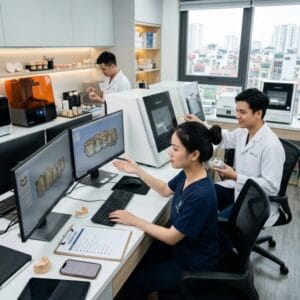
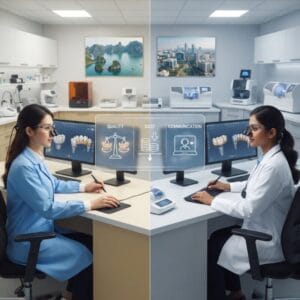
Starting a 3D dental lab business: costs and requirements 2026 involves understanding the evolving landscape of digital dental technologies, capital investments, and compliance standards. The shift to CAD/CAM digital design and 3D printing in dental labs has transformed how crowns, bridges, implants, dentures, orthodontic aligners, and night guards are produced. For dental labs and DSOs (Dental Service Organizations), embracing these innovations through outsourcing or building in-house capabilities requires a clear grasp of initial costs, technical skillsets, and regulatory demands.
What are the essential technology components for a 3D dental lab?
The essential technology components for a 3D dental lab include CAD/CAM software, 3D scanners, milling machines, and 3D printers, which together create precise dental prosthetics digitally.
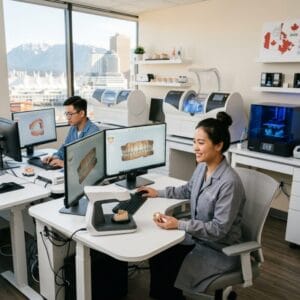
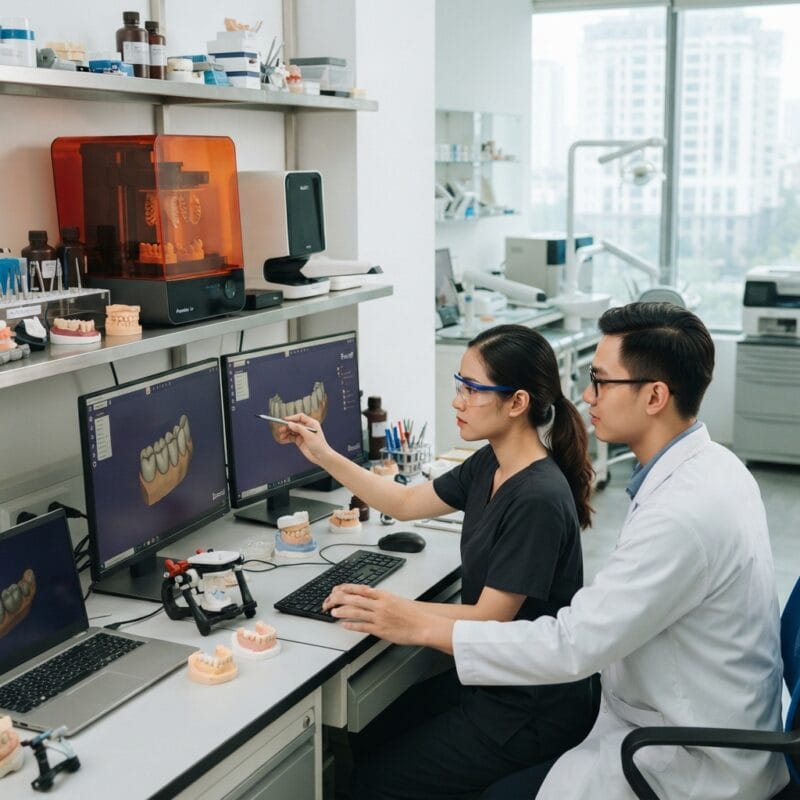
Implementing CAD/CAM digital design software such as those from exocad or 3Shape is critical. These platforms allow dental technicians to design crowns, bridges, surgical guides, dentures, orthodontic aligners, and night guards with high accuracy. Additionally, intraoral and lab scanners capture detailed impressions, reducing manual errors.
Milling machines and 3D printers are the physical manufacturing pillars. Milling units carve restorations from ceramic or zirconia blocks, while 3D printers fabricate complex structures like surgical guides or denture bases using biocompatible resins. Together, they form the backbone of the digital dental lab workflow, replacing traditional analog methods and speeding up turnaround times.
Why is understanding costs crucial when starting a 3D dental lab business: costs and requirements 2026?
Understanding costs is crucial because starting a 3D dental lab requires significant upfront investment in technology, training, and regulatory compliance.
Initial capital expenditures include CAD/CAM software licenses, scanner and printer hardware, milling machines, and secure IT infrastructure. For example, a professional-grade 3D printer suitable for dental appliances can range from $15,000 to over $100,000, depending on precision and throughput. Similarly, CAD software licenses may have annual fees between $10,000 and $50,000, variable by features and user counts.
Additional costs involve staff training, workspace setup compliant with health and safety standards, and consumables such as resin, milling burs, and ceramics. Operational expenses like maintenance contracts and software updates must also be accounted for in the business plan. These cost factors collectively influence pricing strategies and ROI timelines for new 3D dental labs.
What are the regulatory and certification requirements for a 3D dental lab?
Regulatory and certification requirements mandate compliance with medical device standards and quality management systems to ensure patient safety and product reliability.
Dental labs producing crowns, bridges, implants, and surgical guides must adhere to ISO 13485 standards for medical devices and may require FDA registration or clearance in the United States. This involves establishing a quality management system (QMS), documenting processes, and validating equipment performance regularly.
Compliance extends to biocompatibility testing of materials and traceability for all manufactured devices. It is also essential to stay updated with guidelines from professional bodies like the American Dental Association and local regulatory agencies. These requirements are critical to operate legally and maintain trust with dental practitioners and patients.
Detailed Cost Breakdown for Starting a 3D Dental Lab Business: Costs and Requirements 2026
Breaking down the costs provides clarity for budgeting and financing decisions. Key cost categories include:
- CAD/CAM Software: Licenses from providers like Exocad or 3Shape, typically $10,000–$50,000 annually.
- 3D Scanners: Intraoral or lab scanners priced between $15,000 and $60,000 depending on brand and resolution.
- 3D Printers and Milling Machines: Industrial-grade printers range from $15,000 to $100,000+; milling machines from $50,000 upwards.
- Lab Setup Costs: Including clean rooms, ventilation, and workspace renovation, which can cost $20,000–$100,000.
- Consumables and Maintenance: Ongoing resin, ceramic blocks, burs, and service plans typically require $5,000–$15,000 annually.
- Staff Training and Salaries: Skilled technicians with CAD/CAM expertise command premium salaries; training costs vary by complexity.
- Regulatory Compliance: Certification costs, audits, and documentation processes can add $10,000+ initially.
These expenditures collectively define the financial framework for starting a 3D dental lab business: costs and requirements 2026 and must be weighed against projected revenue streams and outsourcing alternatives.
How does outsourcing digital dental lab services impact startup costs?
Outsourcing digital dental lab services significantly reduces startup costs by eliminating the need for upfront equipment investment and regulatory overhead.
Many dental labs and DSOs opt to outsource CAD/CAM digital design and manufacturing to specialized providers who have already invested in state-of-the-art technology and compliance systems. This approach allows clients to access high-quality crowns, bridges, implants, surgical guides, dentures, orthodontic aligners, and night guards without purchasing costly 3D printers, scanners, or software licenses.
Outsourcing partners often offer scalability, faster turnaround times, and technical support, enabling smaller labs or new entrants to compete effectively. However, it is important to evaluate vendor expertise, turnaround reliability, and data security protocols before committing. Outsourcing is a viable strategy to mitigate the financial and operational barriers commonly encountered when starting a 3D dental lab business: costs and requirements 2026 are often prohibitive for many startups.
Key Skills and Personnel Needed for a 3D Dental Lab
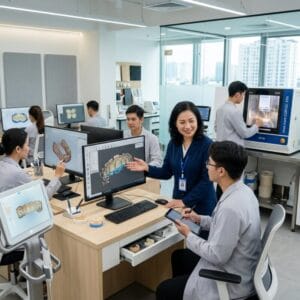
To successfully run a 3D dental lab, specialized skills in digital design, materials science, and quality control are essential.
- Digital Dental Technicians: Experts proficient in CAD software to design restorations and appliances.
- 3D Printing and Milling Specialists: Skilled operators who manage and maintain manufacturing equipment.
- Quality Assurance Personnel: Staff responsible for regulatory compliance, material testing, and documentation.
- IT and Data Security Experts: Professionals ensuring safe handling of patient data and integrating lab workflows with dental practices.
Investment in ongoing training is critical due to the rapid evolution of dental digital technologies. This ensures that the team remains adept at using the latest CAD/CAM tools and manufacturing protocols, which is a major consideration in starting a 3D dental lab business: costs and requirements 2026.
Which materials are commonly used in 3D dental lab manufacturing?
The materials commonly used in 3D dental lab manufacturing include zirconia, lithium disilicate, biocompatible resins, and PMMA for various dental restorations and appliances.
Zirconia is favored for its strength and aesthetics in crowns and bridges, while lithium disilicate offers excellent translucency for anterior restorations. Resins used in 3D printing must meet biocompatibility standards and are typically employed for surgical guides, denture bases, and night guards. PMMA is often used for temporary prosthetics and orthodontic appliances.
Material selection impacts not only clinical outcomes but also production costs and post-processing requirements. Labs must establish reliable supply chains for these materials as part of their startup planning.
How to ensure workflow efficiency in a 3D dental lab?
Workflow efficiency in a 3D dental lab is ensured by integrating digital design, manufacturing, and quality control processes into a seamless, automated system.
Utilizing software platforms that connect scanners, CAD design, and CAM manufacturing reduces manual data transfer errors and speeds production. Implementing standardized operating procedures and lean manufacturing principles minimizes waste and optimizes turnaround times.
Regular maintenance of equipment and continuous staff training further support efficiency. Integration with dental practices’ digital impressions and patient management systems is also critical, facilitating smooth communication and faster order fulfillment. These factors are vital when considering starting a 3D dental lab business: costs and requirements 2026 must include plans for scalable workflow management to remain competitive.
Market Trends Influencing Starting a 3D Dental Lab Business: Costs and Requirements 2026
Emerging market trends such as the growth of teledentistry, the increasing demand for personalized dental appliances, and advances in AI-assisted design are shaping the costs and requirements of new 3D dental labs.
Teledentistry expands access to digital impressions and remote consultations, increasing demand for rapid, high-quality prosthetic manufacturing. Personalized appliances tailored through AI-driven design tools improve fit and patient outcomes, but require investment in advanced software and skilled personnel.
Additionally, environmental concerns are encouraging the adoption of sustainable materials and energy-efficient equipment, which may have higher upfront costs but offer long-term savings. Labs that anticipate these trends will position themselves advantageously in 2026 and beyond.
Financing Options for Starting a 3D Dental Lab Business
Financing options include bank loans, equipment leasing, government grants, and partnerships with dental service organizations.
Equipment leasing can reduce upfront capital requirements by spreading costs over time, while government programs may offer grants or tax incentives for technology adoption. Strategic partnerships with DSOs can provide steady workflow and financial backing, lowering risk.
Careful financial modeling that incorporates all costs and ROI projections is essential for securing funding and achieving sustainable growth when starting a 3D dental lab business: costs and requirements 2026 must be realistically accounted for.
How to Choose the Right CAD/CAM Software for Your Dental Lab?
Choosing the right CAD/CAM software depends on functionality, compatibility, ease of use, and vendor support.
Labs should evaluate software options like Medit, Exocad, and 3Shape by testing trial versions, assessing integration with existing scanners and printers, and considering the learning curve for staff. Vendor support, software updates, and customization capabilities are also critical factors.
An optimal software choice improves design accuracy, reduces production time, and enhances collaboration with dental practices, all key considerations in starting a 3D dental lab business: costs and requirements 2026.
Common Challenges When Starting a 3D Dental Lab Business
Common challenges include high initial capital investment, technology adoption barriers, regulatory compliance complexity, and recruiting skilled personnel.
New labs must navigate a steep learning curve for digital design and manufacturing while ensuring consistent quality to build client trust. Furthermore, integrating new technology into existing workflows and managing data security demands careful planning.
Addressing these challenges head-on with expert consultation, phased investments, and outsourcing options can smooth the startup process and improve chances for long-term success.
Summary: Key Takeaways on Starting a 3D Dental Lab Business: Costs and Requirements 2026
Starting a 3D dental lab business: costs and requirements 2026 requires strategic investment in CAD/CAM software, scanning and manufacturing equipment, skilled personnel, and regulatory compliance. Outsourcing remains a cost-effective alternative for many labs, but in-house capabilities offer greater control and branding potential.
Understanding the detailed cost breakdown, market trends, and operational best practices is crucial. Labs that embrace the latest digital technologies, maintain robust quality systems, and prioritize workflow efficiency will thrive in the competitive dental prosthetics market.
For more on integrating surgical guide production, see surgical guide design, and to explore advances in orthodontic aligner manufacturing, visit orthodontic aligner technology.
Contact Us
Ready to start your 3D dental lab business with expert digital design outsourcing? Contact us today to discuss tailored solutions that meet your costs and requirements for 2026 and beyond.