Navigating the Digital Frontier: Identifying Red Flags When Choosing a Dental Outsourcing Partner in 2026
The dental industry is in a constant state of evolution, with digital workflows becoming the cornerstone of modern practice and lab operations. For dental labs and DSOs, leveraging outsourced digital design services for CAD/CAM has transformed efficiency, expanded capabilities, and optimized costs. However, the proliferation of service providers also presents a challenge: how do you discern a truly reliable partner from one that might compromise your quality, reputation, and bottom line? Understanding the critical red flags when choosing a dental outsourcing partner in 2026 is not just beneficial; it’s essential for sustainable success.
As we advance deeper into 2026, the landscape of dental outsourcing is more competitive and nuanced than ever. Labs and DSOs are increasingly reliant on external expertise for everything from routine crown and bridge designs to complex implant prosthetics, surgical guides, full arch dentures, orthodontic aligners, and night guards. This reliance underscores the importance of stringent due diligence. Overlooking key indicators of potential issues can lead to costly remakes, missed deadlines, frustrated clinicians, and ultimately, a damaged reputation. This comprehensive guide will illuminate the most significant red flags when choosing a dental outsourcing partner in 2026, offering actionable insights to help you forge successful, enduring collaborations.
The Evolving Landscape of Dental Outsourcing in 2026
The year 2026 marks a period where digital dentistry is no longer a niche but the industry standard. Advances in intraoral scanning, CBCT imaging, AI-driven design tools, and sophisticated CAD/CAM software have made digital design outsourcing a strategic imperative. Labs can offload design tasks, freeing up their in-house technicians for fabrication, quality control, and client management. DSOs benefit from standardized, high-quality designs across multiple locations, ensuring consistency and efficiency. However, with this growth comes the need for heightened vigilance. Identifying red flags when choosing a dental outsourcing partner in 2026 means staying ahead of potential disruptions in a fast-paced environment.
Why Outsourcing Digital Design is Crucial for Modern Labs and DSOs
Outsourcing digital design offers a multitude of advantages. It provides access to specialized expertise without the overhead of hiring and training in-house staff. It allows for scalability, enabling labs to manage fluctuating case volumes without compromising turnaround times. Cost efficiency is another major draw, as outsourcing can reduce software licensing fees, equipment maintenance, and labor costs. Furthermore, it often translates to faster turnaround times, which is critical in a competitive market. Yet, these benefits can quickly turn into liabilities if you fail to recognize the red flags when choosing a dental outsourcing partner in 2026.
What are the key benefits of outsourcing dental CAD/CAM design?
Outsourcing dental CAD/CAM design offers significant benefits, including enhanced efficiency, access to specialized expertise, reduced operational costs, and improved scalability for dental labs and DSOs. By delegating the intricate and time-consuming design phase to external specialists, in-house teams can focus on core competencies like manufacturing and quality control, thereby streamlining workflows and accelerating case completion. This strategic approach allows labs to leverage cutting-edge technology and highly skilled designers without the substantial investment in software licenses, hardware, and ongoing training, leading to a more agile and cost-effective operation. For DSOs, it ensures consistency in design quality across multiple locations, facilitating standardized patient care and predictable outcomes.
Critical Red Flags When Choosing a Dental Outsourcing Partner in 2026
1. Lack of Transparency and Communication
One of the most immediate red flags when choosing a dental outsourcing partner in 2026 is a lack of clear and consistent communication. A reliable partner should be transparent about their processes, timelines, and any potential challenges. If you find it difficult to get direct answers, if communication is slow, or if there’s a language barrier that imped’s effective collaboration, these are serious warning signs. You need a partner who is proactive in providing updates and responsive to your queries, understanding that timely communication directly impacts patient care. Ambiguous service level agreements (SLAs) or a reluctance to detail their internal quality control steps are also significant red flags when choosing a dental outsourcing partner in 2026.
2. Inconsistent Quality and Accuracy
The ultimate goal of any dental restoration is precision and patient satisfaction. Inconsistent quality in outsourced designs is arguably the most damaging of all red flags when choosing a dental outsourcing partner in 2026. This can manifest as poor margin integrity, incorrect occlusal contacts, improper emergence profiles for implants, or designs that simply don’t fit the prepared anatomy or scan data. A partner that frequently delivers designs requiring extensive adjustments or remakes indicates a fundamental flaw in their process or expertise. Demand to see case studies, before-and-after examples, and inquire about their specific quality assurance protocols to mitigate this risk. Repeated errors, even minor ones, signal a lack of attention to detail that can severely impact your lab’s reputation.
3. Outdated Technology and Software
The digital dental landscape is dynamic. Relying on a partner using outdated software versions or antiquated design methodologies is a major red flag when choosing a dental outsourcing partner in 2026. Modern dental design requires proficiency with industry-leading platforms such as exocad, 3Shape Dental System, and Medit Link. A partner who cannot demonstrate mastery of these tools, or who is not continually investing in software upgrades and technician training, will struggle to meet the demands of complex cases and evolving clinical standards. Ask about their software ecosystem, their update schedule, and how they ensure compatibility with your lab’s existing digital infrastructure.
4. Poor Turnaround Times and Reliability
In dentistry, time is often of the essence. Delays in design delivery can cascade into missed patient appointments, rescheduling nightmares, and ultimately, dissatisfaction for both the clinician and the patient. If a prospective partner consistently misses deadlines during a trial phase, or if their promised turnaround times seem unrealistic, these are undeniable red flags when choosing a dental outsourcing partner in 2026. A reliable partner will have robust systems in place to ensure timely delivery, even under pressure, and should be transparent about their capacity and ability to scale. Unexplained delays or a lack of accountability for missed deadlines are clear indicators of potential future problems.
5. Insufficient Expertise Across Diverse Modalities
A true outsourcing partner should be a specialist across the full spectrum of digital dental design. If a partner claims to offer all services but shows weakness or limited experience in specific areas like complex implant planning, full arch prosthetics, or orthodontic aligner staging, this is a significant red flag when choosing a dental outsourcing partner in 2026. Your lab or DSO likely handles a diverse range of cases, and your outsourcing partner should be able to match that versatility with specialized expertise in crown & bridge, implants, surgical guides, dentures, orthodontic aligners, and night guards. Inquire about their designers’ specific certifications and portfolios for each modality. For example, ensuring they understand the nuances of surgical guide design is crucial for implant cases.
6. Data Security and Compliance Concerns
Patient data is sensitive and highly regulated. Any outsourcing partner must demonstrate an unwavering commitment to data security and compliance with relevant regulations like HIPAA in the US, GDPR in Europe, and other local privacy laws. Vague answers about their data handling protocols, lack of secure file transfer methods, or an absence of clear data encryption policies are critical red flags when choosing a dental outsourcing partner in 2026. Ask about their data storage, access controls, disaster recovery plans, and how they ensure the confidentiality and integrity of all patient-related information. A data breach can have catastrophic consequences for your lab and your clients.
7. Pricing Structures That Lack Clarity or Are Too Low
While cost-effectiveness is a driver for outsourcing, abnormally low pricing can be a major red flag when choosing a dental outsourcing partner in 2026. Extremely cheap services often come at the expense of quality, security, or reliability. Be wary of partners who offer prices significantly below market rates without a clear justification. Equally problematic are pricing structures that are opaque, with hidden fees for revisions, expedited services, or specific design complexities. A reputable partner will provide a clear, itemized pricing model upfront, ensuring there are no surprises. Understand what’s included and what might incur additional charges.
8. Limited Scalability and Support
Your lab’s needs can fluctuate, and a good outsourcing partner should be able to scale their services up or down to match your demands. If a partner struggles to handle increased case volumes or seems overwhelmed by your current requirements, this is a red flag when choosing a dental outsourcing partner in 2026. Furthermore, assess their level of customer support. Do they offer dedicated account managers? Are they available during your operating hours? A lack of responsive support can lead to frustrating delays and miscommunications, especially when urgent issues arise. A partner who can’t grow with you will eventually become a bottleneck.
9. Lack of a Robust Quality Assurance Process
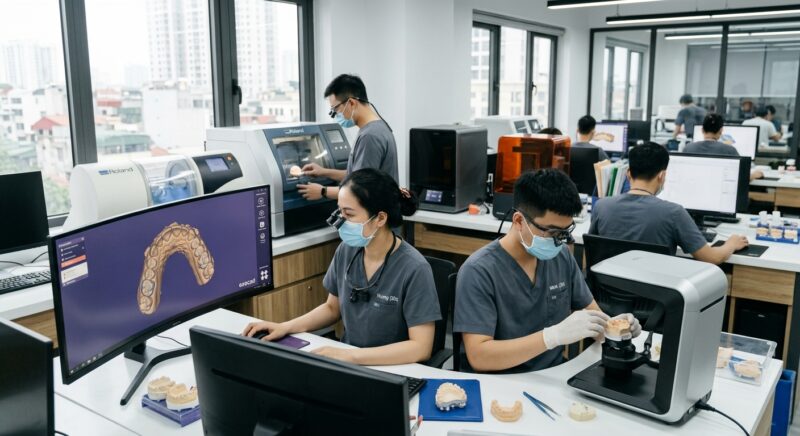
Every reputable digital design service should have a multi-layered quality assurance (QA) process in place. If a potential partner cannot clearly articulate their QA steps—who reviews designs, what checklists they use, how they handle feedback and revisions—this is a significant red flag when choosing a dental outsourcing partner in 2026. A strong QA process acts as the final gatekeeper, ensuring that designs meet your specifications and clinical requirements before delivery. Ask for details on their internal review stages, how they track design accuracy, and their process for addressing and correcting errors.
10. Poor Integration with Your Existing Workflow
The beauty of digital dentistry lies in seamless integration. If an outsourcing partner’s workflow doesn’t easily integrate with your lab’s existing scanners (e.g., Medit, 3Shape, iTero) and lab management software, it can create inefficiencies rather than solve them. Compatibility issues, complex file transfer protocols, or a lack of understanding of your preferred digital ecosystem are red flags when choosing a dental outsourcing partner in 2026. A good partner will be flexible and adaptable, working to ensure a smooth, efficient transfer of data and feedback, minimizing friction in your operational workflow. They should be proficient in handling various file formats (STL, OBJ, PLY) and understand how to work within your established digital ecosystem.
How to Proactively Vet Potential Partners (Avoiding Red Flags)
Now that we’ve identified the red flags, let’s explore proactive strategies to avoid them. Diligent vetting is your best defense against a problematic partnership:
- Request Portfolios and References: Always ask for examples of their work, ideally covering various modalities. Speak directly with their existing clients to gauge satisfaction, reliability, and communication effectiveness.
- Trial Cases and Pilot Projects: Before committing to a long-term contract, send a few diverse cases as a trial. This allows you to evaluate their quality, turnaround times, communication, and overall workflow integration firsthand.
- Detailed Service Level Agreements (SLAs): Insist on a comprehensive SLA that clearly outlines expectations for quality, turnaround times, revision policies, communication protocols, and data security measures. This document is your safeguard.
- Evaluate Communication Channels: Test their responsiveness during the vetting process. Do they offer multiple channels (email, phone, dedicated portal)? Is there a dedicated point of contact?
- Assess Technical Infrastructure: Inquire about their software licenses, hardware capabilities, and internet redundancy. A robust technical backbone is crucial for consistent service delivery.
- Understand Their QA Protocols: Get a clear, step-by-step explanation of their internal quality control process. Who reviews designs? What are their checkpoints?
- Discuss Data Security Measures: Ask for their data security policy, including encryption methods, access controls, and compliance certifications. Ensure they align with your regulatory obligations.
Navigating Specific Design Modalities: What to Look For
The expertise required varies significantly across different types of dental prosthetics. When assessing a partner, consider their specific proficiency in the areas most relevant to your lab:
- Crown & Bridge: Look for precision in margin line detection, accurate occlusal anatomy, proper contact points, and ideal emergence profiles. They should demonstrate a keen understanding of material properties and preparation guidelines. The ability to execute flawless digital crown design is fundamental.
- Implants: This requires advanced knowledge of implant systems, abutment design, screw-retained vs. cement-retained restorations, and an understanding of biomechanics. Expertise in designing custom abutments and frameworks is paramount.
- Surgical Guides: Accuracy is non-negotiable here. The partner must be adept at integrating CBCT data with intraoral scans, planning implant positions precisely, and designing guides that facilitate safe and predictable surgery.
- Dentures: Focus on aesthetic considerations, phonetics, and optimal fit. The partner should understand the principles of complete and partial denture design, including setting teeth for proper occlusion and facial support.
- Orthodontic Aligners: This specialty demands expertise in biomechanics, staging tooth movements, and creating a series of aligners that achieve the desired orthodontic outcome efficiently and predictably.
- Night Guards: Designs should prioritize patient comfort, retention, and effective protection against bruxism or TMD. Understanding different occlusal schemes and material considerations is important.
How can dental labs ensure data security with an outsourcing partner?
Dental labs can ensure data security with an outsourcing partner by demanding strict adherence to data privacy regulations, implementing secure file transfer protocols, and reviewing the partner’s comprehensive data security policies. It is crucial to verify that the partner uses robust encryption for all transmitted and stored data, maintains secure servers with stringent access controls, and has established disaster recovery and business continuity plans. Labs should also require a clear understanding of the partner’s compliance with relevant industry standards such as HIPAA or GDPR, including their auditing processes and employee training on data protection. A well-defined Service Level Agreement (SLA) that explicitly outlines data handling procedures, breach notification protocols, and liability is an essential legal safeguard.
The Cost of Ignoring Red Flags
Ignoring the red flags when choosing a dental outsourcing partner in 2026 can be incredibly detrimental. The financial costs can include wasted time on remakes, expedited shipping fees, and potential loss of revenue from dissatisfied clinicians. Beyond the monetary aspects, there’s the invaluable cost to your lab’s reputation, the increased stress on your in-house team, and the potential for legal repercussions if patient data is compromised. A poor outsourcing choice can erode trust, damage relationships with your clients, and ultimately undermine your lab’s long-term viability. Investing time in thorough vetting upfront is a small price to pay to avoid these significant consequences.
Forge Strong Partnerships for Future Success
Choosing a dental outsourcing partner is a strategic decision that can significantly impact your lab’s efficiency, quality, and profitability. By being vigilant and recognizing the red flags when choosing a dental outsourcing partner in 2026, you can navigate the complexities of the digital landscape with confidence. A truly valuable partner acts as an extension of your team, sharing your commitment to excellence and patient care. Prioritize transparency, proven quality, technological prowess, and robust security measures to build a partnership that fosters growth and innovation for years to come.
Ready to ensure your digital designs are in expert hands? Contact us today to discuss how our specialized CAD/CAM design outsourcing services can elevate your lab’s capabilities and eliminate common outsourcing concerns.