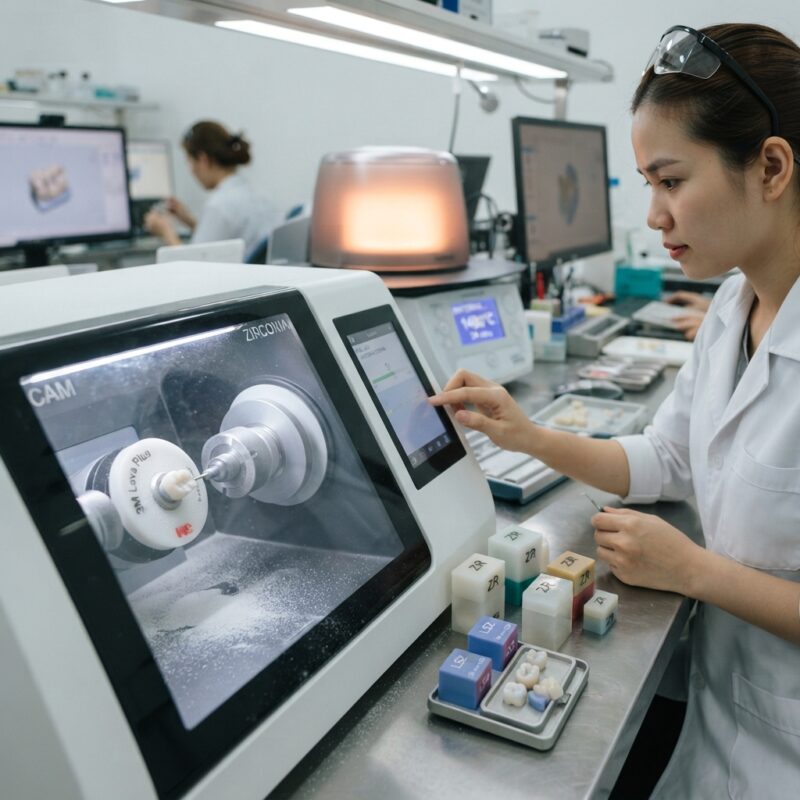
Introduction to Materials: What is the evidence summary: lithium disilicate versus zirconia for single crowns 2026?
The evidence summary: lithium disilicate versus zirconia for single crowns 2026 provides a comprehensive comparison of two leading all-ceramic materials used in single crown restorations, emphasizing their clinical performance, esthetics, and suitability for various dental lab workflows. Lithium disilicate and zirconia crowns are prominent in digital dentistry due to their strength, biocompatibility, and esthetic qualities, but selecting the optimal material depends on detailed understanding of their properties and clinical indications.
As dental labs and Dental Service Organizations (DSOs) increasingly adopt CAD/CAM digital design outsourcing services, understanding the nuances of these materials helps optimize crown fabrication, enhance patient outcomes, and streamline production. This article breaks down the latest research, practical considerations, and cost and workflow impacts of lithium disilicate versus zirconia single crowns, updated for 2026.
What are the key differences between lithium disilicate and zirconia crowns?
Lithium disilicate and zirconia crowns differ primarily in their material composition, strength, translucency, and clinical applications.
- Lithium disilicate: A glass-ceramic material known for excellent esthetics due to its high translucency and natural tooth-like appearance. It offers moderate strength suitable for anterior and some posterior crowns.
- Zirconia: A polycrystalline ceramic with superior flexural strength and fracture toughness, making it highly durable and resistant to chipping, ideal for posterior crowns and high-stress occlusal areas.
These differences translate into workflow choices and indication-specific preferences. For example, lithium disilicate is often favored for anterior crowns where esthetics are paramount, while zirconia is preferred for posterior crowns requiring enhanced strength. However, recent innovations in translucent zirconia formulations have blurred these lines.
How does the evidence summary: lithium disilicate versus zirconia for single crowns 2026 impact clinical decision-making?
The evidence summary: lithium disilicate versus zirconia for single crowns 2026 guides clinicians and labs by consolidating clinical trial data, systematic reviews, and meta-analyses to outline success rates, complications, and patient satisfaction associated with each material.
Studies show that both materials exhibit high survival rates (above 90% at 5 years), but failure modes differ. Lithium disilicate crowns tend to fail due to fracture in high load zones, whereas zirconia crowns are more prone to chipping or veneer delamination when layered with porcelain. Monolithic zirconia crowns reduce chipping risk but may compromise esthetics.
Understanding these clinical nuances helps practitioners match material choice to patient-specific factors such as occlusion, esthetic demands, and parafunctional habits. Dental labs benefit by aligning fabrication protocols accordingly, especially when utilizing CAD/CAM design outsourcing services to maintain quality and consistency.
What are the workflow implications for dental labs and DSOs when choosing between lithium disilicate and zirconia?
Workflow implications are significant when evaluating the evidence summary: lithium disilicate versus zirconia for single crowns 2026, particularly in the context of digital design and manufacturing.
Lithium disilicate crowns require precise milling and often a post-milling crystallization firing step to achieve optimal strength and esthetics. This adds time and process complexity, which labs must account for in scheduling and throughput.
Zirconia crowns, especially monolithic varieties, allow for faster milling without additional firing, enabling quicker turnaround times. However, advanced sintering furnaces are needed, which may require higher capital investment. Some DSOs with high volume prefer zirconia for this reason, while small labs might lean toward lithium disilicate for esthetic cases.
Outsourcing CAD/CAM digital design services can help labs and DSOs optimize these workflows by providing expert design files ready for milling or 3D printing, reducing errors and improving efficiency. This is especially valuable for labs managing mixed material portfolios and complex cases.
What are the cost considerations in the evidence summary: lithium disilicate versus zirconia for single crowns 2026?
Cost is a multifaceted factor in the choice between lithium disilicate and zirconia crowns, affecting material expenses, equipment investment, and labor.
- Material costs: Lithium disilicate blocks are generally less expensive than high-translucency zirconia blocks, but prices vary widely by supplier and region.
- Equipment costs: Zirconia processing requires sintering furnaces, which can be a significant upfront investment, whereas lithium disilicate crystallization ovens are less costly.
- Labor and time: Lithium disilicate involves additional firing steps, increasing technician time, while zirconia crowns often streamline production by eliminating this phase.
Dental labs and DSOs must balance these factors against clinical outcomes and patient expectations. Outsourcing CAD design can reduce in-house staffing costs and training, allowing practices to focus capital on milling and finishing equipment.
Comparison Table: Key Criteria for Lithium Disilicate vs Zirconia Crowns
| Criteria | Lithium Disilicate | Zirconia (Monolithic) | Zirconia (Layered) |
|---|---|---|---|
| Flexural Strength | 350-450 MPa | 900-1200 MPa | 900-1200 MPa |
| Esthetics | High translucency, natural appearance | Moderate translucency, less esthetic | High esthetics with veneering porcelain |
| Processing Steps | Milling + crystallization firing | Milling + sintering firing | Milling + sintering + porcelain layering |
| Typical Indications | Anterior & premolars | Posterior crowns, bruxism cases | Anterior and posterior crowns needing esthetics |
| Cost Considerations | Lower material cost; longer processing time | Higher equipment cost; faster production | Higher labor cost; complex workflow |
Who benefits most from lithium disilicate or zirconia in dental lab outsourcing?
Dental labs and DSOs must evaluate which material aligns best with their case mix, volume, and patient expectations when considering the evidence summary: lithium disilicate versus zirconia for single crowns 2026.
- Small labs and boutique practices: Benefit from lithium disilicate’s esthetic superiority and lower equipment investment, suitable for anterior crowns and moderate volume.
- High-volume labs and DSOs: Prefer zirconia for its durability and faster production cycle, especially for posterior crowns and cases needing strength under heavy occlusion.
- Hybrid labs: Often maintain both materials in-house or via outsourcing to cover a full range of clinical indications, leveraging digital design outsourcing to manage complexity.
How do advancements in CAD/CAM technology influence material choice for single crowns?
Advancements in CAD/CAM technology greatly impact the evidence summary: lithium disilicate versus zirconia for single crowns 2026 by improving design precision, reducing fabrication errors, and enabling complex anatomies.
Modern milling machines and sintering furnaces from manufacturers like Roland DG and Amann Girrbach offer faster cycle times and better surface finishes, supporting efficient production of both lithium disilicate and zirconia crowns. Additionally, software platforms such as 3Shape and exocad enhance design workflows to optimize crown fit and occlusion.
These improvements encourage labs to adopt dual-material strategies and outsource complex designs, facilitating higher quality outcomes and patient satisfaction. Digital design outsourcing also integrates well with these CAD/CAM solutions, enabling labs to scale without excessive staffing.
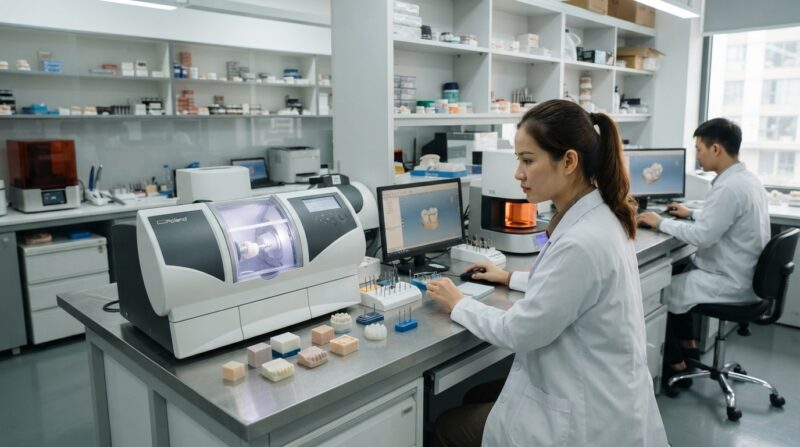
What are the esthetic considerations in the evidence summary: lithium disilicate versus zirconia for single crowns 2026?
Esthetics remain a critical factor influencing the choice between lithium disilicate and zirconia for single crowns.
- Lithium disilicate: Offers translucency and light transmission very close to natural enamel, with excellent color matching and polishability. It is highly suited for anterior crowns where esthetics are paramount.
- Zirconia: Traditionally more opaque, limiting its natural look, but recent generation translucent zirconia (e.g., 5Y-TZP) narrows this gap. Layered zirconia crowns with porcelain veneer provide excellent esthetics but require careful handling to avoid chipping.
Labs and DSOs must consider the patient’s smile line, adjacent teeth, and esthetic demands when selecting the material. Outsourced CAD design services can create highly detailed digital crowns that maximize esthetic outcomes regardless of material, particularly when combined with advanced staining and glazing techniques.
What is the durability and longevity outlook from the evidence summary: lithium disilicate versus zirconia for single crowns 2026?
Durability and longevity are key clinical outcomes discussed extensively in the evidence summary: lithium disilicate versus zirconia for single crowns 2026.
Long-term clinical studies indicate that zirconia crowns generally outperform lithium disilicate crowns in terms of fracture resistance and wear resistance, particularly in posterior regions subjected to high masticatory forces. Zirconia’s flexural strength exceeds 900 MPa, making it less prone to catastrophic failure.
Lithium disilicate crowns, while strong, have a lower flexural strength (350-450 MPa) and are more susceptible to chipping under heavy loads. However, they perform well in anterior and premolar regions with proper case selection.
Both materials show survival rates exceeding 90% at 5 years, but maintenance requirements and complication types differ. Monolithic zirconia crowns have fewer complications related to veneer chipping, contributing to longer clinical success.
How do you decide between lithium disilicate and zirconia crowns in a digital design outsourcing context?
Deciding between lithium disilicate and zirconia crowns when utilizing digital design outsourcing depends on case complexity, esthetic demands, and production capacity.
Outsourced CAD design providers can tailor digital files to optimize crown morphology, occlusion, and material-specific parameters, ensuring seamless integration with milling or 3D printing workflows. This is particularly advantageous when managing a diverse prosthetic portfolio encompassing crowns, implants, surgical guides, and orthodontic appliances.
Labs and DSOs should communicate clinical requirements clearly to their design partners, providing information on patient esthetics, occlusal forces, and material preferences. This collaborative approach maximizes the benefits outlined in the evidence summary: lithium disilicate versus zirconia for single crowns 2026 and supports consistent high-quality restorations.
Do you need design capacity for your new equipment?
Outsourcing CAD design services allows your lab or clinic to operate milling and printing equipment without hiring in-house designers, reducing overhead and training time. Our expert team delivers precise digital crown designs tailored for both lithium disilicate and zirconia workflows.
Contact us today to enhance your production efficiency and clinical outcomes with our dental lab CAD/CAM digital design outsourcing.
For further reading on materials science and clinical guidelines, visit the American Dental Association and explore material details at Ivoclar Vivadent.
Step-by-Step Guide to Integrating Material Choice into Clinical Workflow
Choosing between lithium disilicate and zirconia crowns is not merely a material decision—it also impacts the entire clinical and laboratory workflow. Below is a detailed step-by-step guide to help dental practices and labs seamlessly integrate these materials into their restorative processes, ensuring optimal outcomes and efficiency.
Step 1: Case Assessment and Material Selection
- Evaluate patient-specific factors: occlusion, esthetic demands, parafunctional habits, and abutment tooth condition.
- Assess crown location: lithium disilicate is often preferred for anterior crowns due to superior translucency, while zirconia excels in posterior regions where strength is paramount.
- Consider preparation design: lithium disilicate requires more conservative tooth reduction compared to zirconia, which can be beneficial for preserving tooth structure.
- Decide on cementation technique: lithium disilicate crowns typically use adhesive bonding, whereas zirconia crowns may be cemented conventionally or adhesively depending on surface treatment.
Step 2: Digital Scanning and Design
- Use intraoral scanners: capture high-resolution digital impressions to maximize fit and margin accuracy for both materials.
- Design considerations: tailor crown thickness based on material—zirconia crowns can be designed thinner due to higher strength; lithium disilicate requires careful thickness for esthetics and durability.
- Shade matching: integrate shade guide data into CAD software for realistic color simulation, especially important with lithium disilicate.
Step 3: Milling and Sintering/Crystallization
- Choose appropriate milling parameters: zirconia requires dry milling and sintering cycles, whereas lithium disilicate demands wet milling followed by crystallization firing.
- Post-processing: lithium disilicate crowns need careful crystallization to achieve final strength and esthetics; zirconia crowns must be sintered at high temperatures to reach full density.
Step 4: Finishing and Characterization
- Polishing: lithium disilicate crowns benefit from polishing kits to enhance translucency and surface smoothness; zirconia crowns require careful adjustments to avoid microcracks.
- Staining and glazing: both materials can be customized with stains and glazes to match adjacent dentition, but lithium disilicate offers more nuanced esthetic characterization.
Step 5: Delivery and Cementation
- Try-in process: verify fit and occlusion; lithium disilicate crowns may require etching with hydrofluoric acid before adhesive cementation.
- Final cementation: ensure isolation and proper bonding protocol for lithium disilicate; with zirconia, choose resin-modified glass ionomer or adhesive resin cements depending on clinical scenario.
- Post-cementation care: inform patients about maintenance and potential wear factors linked to each material.
Common Pitfalls and How to Avoid Them in Using Lithium Disilicate and Zirconia
Even with the latest evidence and advanced materials, mistakes can undermine clinical success. Identifying common pitfalls and strategies to avoid them is critical for both dental labs and practices.
1. Inadequate Preparation Design
Problem: Overly aggressive or insufficient tooth reduction can compromise crown fit and strength.
- Solution: Follow manufacturer guidelines for minimum thickness—1.5 mm occlusal reduction for lithium disilicate and 1.0 to 1.2 mm for zirconia. Avoid sharp angles to reduce stress concentrations.
2. Improper Surface Treatment Before Cementation
Problem: Failure to properly prepare the intaglio surface can lead to debonding or poor retention.
- Solution: For lithium disilicate, etch with hydrofluoric acid and apply silane coupling agents. For zirconia, perform air abrasion with aluminum oxide and use primers containing MDP monomers to enhance bonding.
3. Inaccurate Shade Selection
Problem: Mismatched shades can result in unsatisfactory esthetics, especially in the anterior zone.
- Solution: Use digital shade matching tools and communicate detailed shade information to the lab. Consider translucency levels and underlying tooth color when selecting materials.
4. Incomplete Sintering or Crystallization
Problem: Insufficient firing leads to weak or discolored restorations.
- Solution: Follow precise time and temperature protocols for zirconia sintering and lithium disilicate crystallization. Use calibrated furnaces and maintain consistent workflows.
5. Neglecting Occlusal Adjustments
Problem: Poor occlusal contacts cause premature wear or fractures.
- Solution: Perform thorough occlusal analysis and adjustment during try-in. Use articulating paper and ensure even contact distribution.
Cost and Quality Considerations: Balancing Investment and Outcomes
Budget constraints and quality expectations are constant balancing acts for dental labs and practices. Understanding the nuanced cost factors and quality implications for lithium disilicate and zirconia can guide smarter purchasing and production decisions.
Material and Production Costs
- Lithium Disilicate: Generally higher raw material cost due to premium ingots and specialized crystallization furnaces. Milling times are longer due to wet milling and careful handling requirements.
- Zirconia: Lower material cost per unit volume, but upfront investment in sintering furnaces and air abrasion equipment can be significant. Milling zirconia can be faster, but sintering adds several hours to production time.
Labor and Expertise
- Lithium Disilicate: Requires skilled technicians for precise crystallization, staining, and glazing to achieve optimal esthetics. Mistakes in firing can cause costly remakes.
- Zirconia: Demands expertise in sintering protocols and surface treatments. Adjusting zirconia crowns carries risk of microfractures if not done correctly, necessitating technician training.
Equipment Investment and Maintenance
- Ceramic Furnaces: Separate furnaces are needed for lithium disilicate crystallization and zirconia sintering, increasing capital costs.
- Milling Machines: Equipment must be compatible with both wet and dry milling to accommodate both materials efficiently.
- Regular Calibration: Maintaining equipment precision reduces remakes and material waste.
Quality Control Measures
- Implement standardized protocols for margin verification, internal fit analysis, and occlusal mapping.
- Use digital tools such as micro-CT scans or 3D fit analyses to detect discrepancies early.
- Maintain documentation of batch performance to identify trends in material defects or processing errors.
Market-Specific Insights: Tailoring Material Choice to Regional and Practice Trends
The choice between lithium disilicate and zirconia crowns is often influenced by regional market demands, patient demographics, and practice specialties. Understanding these market-specific factors can improve material selection and patient satisfaction.
Regional Preferences and Availability
- North America: High demand for esthetic restorations in anterior zones increases lithium disilicate use. However, zirconia is growing in popularity due to improved translucency variants.
- Europe: Preference for durable restorations in posterior regions favors zirconia, with many labs adopting multilayer zirconia for improved esthetics.
- Asia-Pacific: Rapid adoption of digital workflows and cost-sensitive markets often prefer zirconia for its strength and cost-effectiveness.
Practice Type and Patient Demographics
- Specialty Practices (Prosthodontics/Esthetics): Emphasize lithium disilicate for anterior crowns requiring high translucency and lifelike appearance.
- General Practices: Balance strength and esthetics by using zirconia for molars and lithium disilicate for premolars and anterior teeth.
- DSOs and High-Volume Clinics: Favor materials that support rapid turnaround and lower remakes, often leaning towards zirconia due to durability and simplified cementation.
Trends in Patient Expectations
- Growing patient awareness of esthetics drives demand for natural-looking restorations, pushing labs to refine lithium disilicate processing techniques.
- Patients with bruxism or high occlusal forces require stronger materials like zirconia to reduce failure rates.
- Environmental considerations are emerging, with some labs exploring sustainable material sourcing and waste reduction in milling processes.
Our CAD design services also work well alongside surgical guide design services and integrate seamlessly with digital crown design workflows.