Introduction to Choosing the Right Material for Posterior Crowns: Evidence-Based Guide 2026
Choosing the right material for posterior crowns: evidence-based guide 2026 addresses one of the most critical decisions dental labs and DSOs face when designing durable and esthetic restorations. Posterior crowns must withstand high occlusal forces and provide long-term functionality while also meeting patient expectations for comfort and appearance. This guide synthesizes the latest clinical studies, material science advancements, and CAD/CAM digital design innovations to empower dental professionals with data-driven insights for material selection in 2026.
With the increasing prevalence of digital workflows and outsourcing models, understanding material properties alongside manufacturing capabilities is essential. Dental labs leveraging CAD/CAM digital design outsourcing can achieve superior precision and efficiency when selecting the optimal crown material, especially for complex posterior cases involving crowns, implants, surgical guides, dentures, orthodontic aligners, and night guards.
What Are the Primary Material Options for Posterior Crowns in 2026?
The primary material options for posterior crowns in 2026 include monolithic zirconia, lithium disilicate, layered zirconia, and metal-ceramic restorations. Monolithic zirconia is favored for its exceptional strength and fracture resistance, making it ideal for molars subjected to heavy occlusal loads. Lithium disilicate offers superior esthetics with translucency closer to natural enamel but is generally recommended for premolars or cases with less occlusal stress.
Layered zirconia combines a high-strength zirconia core with a veneering ceramic to enhance esthetics, although it carries a risk of chipping. Metal-ceramic crowns remain an option, particularly in cases demanding high durability and where esthetics are secondary. Each material presents different processing requirements compatible with CAD/CAM systems, impacting turnaround time and outsourcing strategies.
How Does Material Choice Impact the Longevity and Performance of Posterior Crowns?
Material choice directly influences the longevity and performance of posterior crowns by determining factors such as fracture resistance, wear behavior, and marginal fit. For example, monolithic zirconia crowns demonstrate fracture toughness values exceeding 1000 MPa, significantly reducing the risk of catastrophic failure compared to lithium disilicate, which typically ranges between 360-400 MPa.
However, zirconia’s hardness can cause increased wear on opposing dentition, a consideration in patient-specific treatment planning. Conversely, lithium disilicate offers a more enamel-like wear pattern but is more susceptible to chipping under high occlusal forces. Marginal fit, critical for preventing microleakage and secondary caries, is also influenced by the milling accuracy associated with the material’s machinability.
Understanding these performance parameters helps dental technicians and clinicians align material selection with patient risk profiles, occlusal schemes, and esthetic demands, which is crucial when utilizing CAD/CAM digital design outsourcing services.
What Are the Biomechanical Considerations When Choosing Materials for Posterior Crowns?
Biomechanical considerations when choosing materials for posterior crowns include the occlusal load distribution, tooth preparation design, antagonist dentition, and parafunctional habits like bruxism. Posterior crowns must withstand masticatory forces that can exceed 700 N during normal chewing and even higher during parafunctional activity.
Materials like monolithic zirconia are preferred for patients with heavy occlusion or bruxism due to their high flexural strength and resistance to crack propagation. In contrast, lithium disilicate may require more conservative occlusal adjustments and careful case selection to avoid premature failure. Additionally, the thickness of the restoration and the preparation taper influence the material’s ability to resist fracture under load.
Dental labs providing CAD/CAM design outsourcing must ensure that the digital design compensates for these biomechanical factors, tailoring material thickness and margin design accordingly to optimize crown durability and patient comfort.
How Does CAD/CAM Technology Influence Material Selection for Posterior Crowns?
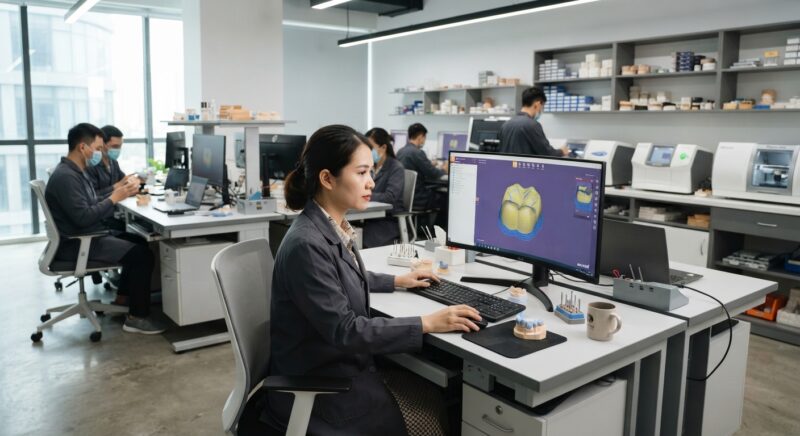
CAD/CAM technology significantly influences material selection for posterior crowns by enabling precise digital design, consistent milling, and streamlined workflow integration. The digital design software allows dental labs to simulate occlusal contacts, evaluate material thickness, and customize crown morphology optimized for specific materials’ properties.
Materials such as zirconia and lithium disilicate have distinct milling requirements; zirconia blocks require sintering ovens post-milling, while lithium disilicate can be crystallized in shorter furnace cycles. CAD/CAM systems from providers like 3Shape and exocad integrate material-specific libraries to facilitate accurate restoration design that meets clinical and mechanical criteria.
Outsourcing CAD/CAM digital design services allows dental labs and DSOs to leverage specialized expertise in material science and digital workflows, enhancing the quality and predictability of posterior crown restorations.
What Does Current Evidence Say About Esthetics Versus Strength Trade-offs?
Current evidence acknowledges a trade-off between esthetics and strength when choosing materials for posterior crowns. While zirconia crowns deliver superior strength and durability, their opacity and limited translucency can compromise esthetic outcomes, particularly in the premolar region. Advances in translucent zirconia formulations have narrowed this gap but not eliminated it entirely.
Lithium disilicate remains the gold standard for esthetics due to its glass-ceramic composition that mimics enamel translucency and fluorescence. However, its lower fracture toughness requires careful case selection. Layered zirconia crowns attempt to balance these attributes but carry risks of veneer chipping documented in multiple clinical studies.
Clinicians and dental technicians must weigh these factors alongside patient expectations, anatomical considerations, and clinical indications when choosing the right material for posterior crowns: evidence-based guide 2026 highlights this nuanced decision-making process.
What Are the Cost and Workflow Implications in Material Selection?
Cost and workflow implications are critical when choosing the right material for posterior crowns: evidence-based guide 2026 emphasizes cost-effectiveness without compromising quality. Monolithic zirconia typically offers lower material cost per unit and faster fabrication times due to fewer processing steps compared to layered ceramics.
Lithium disilicate crowns involve additional crystallization steps and often require more intricate finishing, potentially increasing lab time and expenses. Metal-ceramic crowns, while still widely used, demand casting and porcelain layering, which can lengthen production cycles.
Outsourcing CAD/CAM digital design services can optimize these workflows by integrating advanced design and milling strategies, reducing chair time and remakes. Dental labs benefit from economies of scale and access to cutting-edge technologies, making high-quality posterior crowns more accessible to DSOs and dental practices.
How Are Implant-Supported Posterior Crowns Different in Material Requirements?
Implant-supported posterior crowns present unique material requirements due to the absence of periodontal ligament cushioning, which alters force distribution. Materials must provide excellent fracture resistance and wear properties to withstand direct occlusal load transmission to the implant and surrounding bone.
Monolithic zirconia is increasingly favored for implant crowns because of its high strength and low chipping risk. Additionally, titanium or zirconia abutments paired with compatible crown materials help optimize biomechanical stability. Lithium disilicate may be used in esthetically demanding anterior implant cases but is less common in posterior implant restorations due to strength concerns.
Dental labs providing implant prosthetic design outsourcing must consider these factors in the CAD/CAM digital design process, ensuring precise fit, adequate material thickness, and proper occlusal scheme to maximize implant crown longevity.
What Are the Latest Innovations and Future Trends in Posterior Crown Materials?
The latest innovations and future trends in posterior crown materials focus on improving the balance between strength, esthetics, and biocompatibility. Developments in translucent and ultra-translucent zirconia formulations are expanding indications for monolithic crowns in the esthetic zone without sacrificing durability.
Hybrid ceramics and resin nanoceramics, combining ceramic and polymer properties, offer promising shock-absorbing features and easier intraoral adjustments, though long-term clinical data are still emerging. Advances in 3D printing technologies and materials from companies like Formlabs and Asiga are enabling novel crown fabrication methods, potentially reducing waste and turnaround times.
Integrating these innovations with CAD/CAM digital design outsourcing services will allow dental labs and DSOs to stay ahead in providing cutting-edge, customized posterior crown solutions aligned with evidence-based practice.
Conclusion and How to Implement This Guide in Your Dental Lab or DSO
In conclusion, choosing the right material for posterior crowns: evidence-based guide 2026 provides a robust framework for dental labs and DSOs to make informed material selections tailored to biomechanical demands, esthetic goals, and workflow efficiencies. Leveraging CAD/CAM digital design outsourcing enhances precision, reduces errors, and optimizes material-specific processing.
By integrating current clinical evidence, biomechanical principles, and technological advancements, your practice can deliver durable, esthetic, and patient-specific posterior crown restorations. This guide also works well alongside surgical guide design services to provide comprehensive restorative solutions.
Step-by-Step Workflow for Optimizing Material Selection in Dental Labs
Choosing the right material for posterior crowns is a multifaceted process that extends beyond just the clinical indication. Dental labs aiming to optimize outcomes and streamline production should adopt a systematic workflow. Below is a detailed step-by-step guide to help labs integrate material selection into their daily operations efficiently.
1. Initial Case Assessment and Communication
- Receive Comprehensive Patient Data: Ensure that the lab receives detailed patient information from the dental practice, including occlusal scheme, parafunctional habits, esthetic demands, and any allergies or sensitivities.
- Clarify Expectations: Engage in direct communication with the dentist or DSO coordinator to confirm the clinical goals, preferred materials, and any specific requests regarding crown translucency, margin design, or cementation protocols.
2. Material Suitability Analysis Based on Clinical Factors
- Evaluate Occlusal Load: For patients exhibiting bruxism or heavy occlusion, recommend high-strength zirconia or reinforced lithium disilicate options.
- Assess Esthetic Requirements: For patients prioritizing esthetics in the posterior area, consider newer multi-layered zirconia or translucent lithium disilicate materials to achieve natural appearance without compromising durability.
- Consider Cementation Technique: Materials like lithium disilicate require adhesive bonding for optimal performance, which influences lab preparation and delivery instructions.
3. CAD/CAM Design Parameters Tailored to Material Properties
- Adjust Thickness and Margins: Modify crown thickness based on the minimum requirements of the chosen material; for example, monolithic zirconia crowns can be designed thinner compared to layered porcelain crowns.
- Design for Strength: Incorporate occlusal anatomy and connector dimensions that reduce stress concentration, especially for materials with lower fracture toughness.
- Prepare for Sintering and Finishing: Plan for sintering shrinkage in zirconia and polishing protocols to maximize strength and esthetics.
4. Quality Control and Verification
- Material Validation: Check batch numbers and certificates of analysis for material consistency and compliance with ISO standards.
- Fit and Margins: Use digital scanning and try-in models to verify crown fit before final processing.
- Esthetic Assessment: Conduct shade matching under standardized lighting conditions and verify translucency layers if applicable.
5. Documentation and Feedback Loop
- Record Material Choices and Outcomes: Maintain a database of material selections linked to clinical outcomes, patient feedback, and adjustments.
- Continuous Improvement: Use feedback from dentists and patients to refine material recommendations and design parameters in subsequent cases.
Common Mistakes and How to Avoid Them in Posterior Crown Material Selection
Despite advances in dental materials and digital workflows, errors in material selection for posterior crowns remain common and can compromise restoration success. Understanding these pitfalls and implementing preventive strategies is essential for both dental labs and practices.
1. Overlooking Patient-Specific Factors
Mistake: Selecting materials based solely on cost or ease of use without considering individual occlusal forces, parafunctional habits, or esthetic needs.
Prevention: Incorporate comprehensive patient assessments into the decision-making process, including bite analysis and esthetic evaluation, to tailor material choice accordingly.
2. Ignoring Manufacturer’s Minimum Thickness Guidelines
Mistake: Designing crowns thinner than recommended, especially for materials like lithium disilicate, leading to premature fractures.
Prevention: Strictly adhere to material thickness requirements during CAD design and communicate these to the clinical team to ensure proper tooth preparation.
3. Neglecting Cementation Protocols
Mistake: Using self-adhesive cements for materials that require adhesive bonding, reducing retention and increasing risk of debonding.
Prevention: Provide clear cementation instructions with each case and educate the dental team about the importance of following manufacturer recommendations.
4. Skipping Fit Verification Before Final Processing
Mistake: Finalizing crowns without try-in or digital fit verification, leading to poor marginal adaptation and clinical remakes.
Prevention: Implement standardized fit-check protocols using digital scans or physical models and adjust design files as needed before final sintering or glazing.
5. Underestimating the Impact of Occlusal Adjustments
Mistake: Excessive occlusal grinding post-sintering that weakens the restoration, especially in zirconia crowns.
Prevention: Design occlusal anatomy precisely in CAD software to minimize intraoral adjustments and educate clinicians on conservative occlusal refinements.
Cost-Benefit Analysis: Balancing Quality and Budget Constraints
For dental labs and DSOs, selecting materials is often a balancing act between delivering high-quality restorations and managing cost efficiency. Understanding the financial and clinical trade-offs involved with various posterior crown materials can help optimize both patient outcomes and business sustainability.
Material Cost Breakdown
- Monolithic Zirconia: Typically more expensive upfront due to material cost and sintering equipment, but offers high durability and fewer remakes.
- Lithium Disilicate: Moderate material cost with higher esthetic appeal; however, requires adhesive cementation and can be prone to chipping, potentially increasing remakes.
- Metal-Ceramic Crowns: Lower material costs for base metals, but higher labor costs due to layering porcelain, which extends production time.
- Hybrid Materials and Newer Ceramics: Often command premium pricing due to innovation but may reduce chair time and improve patient satisfaction, offsetting costs.
Labor and Workflow Considerations
Materials that integrate seamlessly with CAD/CAM workflows reduce labor time and minimize errors. For example, monolithic crowns require fewer finishing steps compared to layered ceramics, which translates into lower labor costs. Conversely, materials that demand complex layering or multiple firing cycles increase production time and cost.
Long-Term Cost Implications
While some materials may be cheaper initially, their longevity and resistance to fracture or wear significantly impact long-term costs. For instance, a zirconia crown’s higher upfront cost can be justified by its reduced likelihood of failure or remakes over 10 years, whereas less durable materials may require replacements, increasing cumulative costs.
Checklist for Cost-Quality Decision-Making
- Assess patient-specific risk factors that influence restoration lifespan.
- Calculate total cost of materials, labor, and potential remakes.
- Evaluate esthetic demands and how they affect material choice.
- Consider integration with existing CAD/CAM and lab workflows.
- Review supplier reliability and material consistency.
- Factor in patient satisfaction and referral potential based on restoration quality.
Market-Specific Considerations for Dental Labs and DSOs in 2026
The global dental market varies greatly by region, influencing material availability, regulation, and patient expectations. Dental labs and DSOs must navigate these market specifics to ensure successful posterior crown outcomes.
Regulatory and Certification Requirements
Different countries impose various certifications and standards for dental materials. For example, the FDA in the United States requires rigorous testing for biocompatibility and clinical performance, while the European Union follows the Medical Device Regulation (MDR). Labs must ensure all materials comply with local regulations to avoid legal and clinical complications.
Supply Chain and Material Availability
Global supply chain disruptions can affect access to certain materials. In some markets, labs may face delays or higher costs for premium ceramics due to import restrictions or tariffs, influencing material selection. Maintaining relationships with multiple suppliers and diversifying inventory can mitigate these risks.
Patient Demographics and Preferences
- Age Groups: Younger patients may prioritize esthetics more, pushing labs to recommend highly translucent materials.
- Economic Factors: In cost-sensitive markets, durable but less esthetic options like monolithic zirconia may be preferred.
- Cultural Preferences: Some populations may favor specific shades or crown shapes, requiring customization in material layering and staining.
DSO Network Integration
For DSOs managing multiple practices, standardizing material protocols across locations enhances consistency and cost control. Centralized labs serving DSOs can leverage bulk purchasing and streamlined workflows to reduce costs while maintaining quality. However, flexibility remains crucial to accommodate individual patient needs within the network.
Competitive Differentiation Through Material Innovation
In highly competitive markets, labs that adopt cutting-edge materials and demonstrate superior clinical outcomes can differentiate themselves. Offering educational support for dentists on material benefits and providing case studies showcasing success stories helps build trust and drive preference.
Contact our expert team today to learn how our dental lab CAD/CAM digital design outsourcing service can help you implement these evidence-based material choices seamlessly and efficiently.