Understanding the Australian GST treatment of dental prosthetics and offshore design services in 2026
The Australian GST treatment of dental prosthetics and offshore design services in 2026 is a critical consideration for dental labs and Dental Service Organizations (DSOs) engaging in cross-border outsourcing of CAD/CAM digital design services. In this evolving regulatory landscape, understanding how GST applies to both the supply of dental prosthetic goods and digital design services provided offshore can significantly impact compliance and profitability.
Dental prosthetics, including crowns, bridges, implants, dentures, orthodontic aligners, and night guards, are subject to specific GST rules under Australian tax law. Similarly, outsourced CAD/CAM design services performed offshore introduce complexities regarding input tax credits, reverse charge mechanisms, and taxable supplies. This article provides an in-depth analysis of the 2026 GST treatment framework, helping dental labs and DSOs navigate these nuances effectively.
What is the scope of GST on dental prosthetics in Australia?
GST applies to the supply of dental prosthetics in Australia, but with certain exemptions and specific rules. Dental prosthetics such as crowns, bridges, and dentures are generally considered taxable supplies and attract the standard 10% GST rate. However, some supplies related to dental health care may be GST-free if they meet the criteria set by the Australian Taxation Office (ATO).
In 2026, the GST treatment continues to differentiate between goods classified as medical aids and cosmetic products. For instance, medically necessary implants and surgical guides supplied directly to patients or dental providers are subject to GST, but some components may be GST-free if prescribed as aids or appliances. The exact classification affects how GST input credits can be claimed by dental labs and DSOs.
Understanding the scope of GST on dental prosthetics is essential for accurate invoicing and tax reporting. Dental labs must ensure their billing reflects the correct GST treatment, especially when integrating outsourced design services that may be treated differently under GST law.
How does the Australian GST treatment of offshore design services impact dental labs?
The Australian GST treatment of dental prosthetics and offshore design services in 2026 includes special rules for services imported from overseas providers. When dental labs outsource their CAD/CAM digital design services to offshore companies, the supply is considered an imported service and may attract a reverse charge under Australian GST law.
This means that the Australian dental lab receiving the offshore design service must self-assess and remit GST on the value of the imported service, even though the service provider is not registered for GST in Australia. This mechanism ensures that GST is collected on offshore supplies that are consumed in Australia.
The practical impact for dental labs is that they must account for GST on the offshore design services in their Business Activity Statements (BAS), declaring both an output tax and an input tax credit if the service is used in making taxable supplies. Failure to comply can lead to penalties and interest charges.
Additionally, dental labs must maintain detailed records of outsourced design services for audit purposes and ensure their contracts with offshore providers clearly define the scope and value of services to support GST reporting.
What are the GST compliance requirements for DSOs using offshore CAD/CAM services?
Dental Service Organizations (DSOs) that utilize offshore CAD/CAM digital design services must adhere to stringent GST compliance requirements under the 2026 framework. The Australian GST treatment of dental prosthetics and offshore design services in 2026 requires DSOs to carefully monitor the nature of services imported and their GST obligations.
DSOs must ensure that all imported services are correctly classified and reported in their BAS. This includes registering for GST if turnover thresholds are met, self-assessing GST on imported services, and claiming input tax credits appropriately. It is crucial for DSOs to implement internal controls and accounting systems that can accurately track these transactions.
Moreover, DSOs should be aware of potential differences in GST treatment depending on whether the offshore service provider is located in a country with a double taxation agreement with Australia, as this may affect tax credits and withholding requirements.
Engaging with tax professionals familiar with the dental industry and cross-border GST issues is advisable to mitigate risks and optimize tax positions.
How do GST rules affect pricing strategies for dental labs outsourcing CAD/CAM design?
The Australian GST treatment of dental prosthetics and offshore design services in 2026 has direct implications on pricing strategies adopted by dental labs outsourcing CAD/CAM design. Labs must consider the added GST costs associated with imported design services when setting service fees and negotiating contracts with dental practices or DSOs.
Since offshore design services attract reverse charge GST, the effective cost to the lab includes GST on top of the base service fee, although this may be offset by input tax credits if the service is used in taxable supplies. Labs should incorporate these GST considerations into their pricing models to maintain margins without unexpected tax liabilities.
Furthermore, transparent communication with clients about GST treatment on outsourced design services can prevent disputes and improve billing clarity. Dental labs can also explore bundled service offerings that integrate prosthetic fabrication with design services while optimizing GST compliance.
Strategic tax planning involving the timing of service delivery, invoicing, and payment can further enhance cash flow management related to GST obligations.
What documentation is required for GST compliance on offshore dental design services?
Accurate and comprehensive documentation is vital for compliance with the Australian GST treatment of dental prosthetics and offshore design services in 2026. Dental labs and DSOs must retain detailed records of all transactions involving imported digital design services to substantiate GST reporting.
Required documentation includes invoices from offshore providers showing service descriptions, values, and dates, as well as contracts outlining the service scope. Since offshore suppliers are not registered for GST in Australia, labs must create self-assessment records and document the GST remitted via the reverse charge mechanism.
It is also recommended to maintain correspondence and evidence of service delivery, such as digital design files, project milestones, and acceptance confirmations. These records support input tax credit claims and defend against any ATO audits or reviews.
Digital record-keeping systems capable of integrating offshore service data streamline compliance and reduce errors.
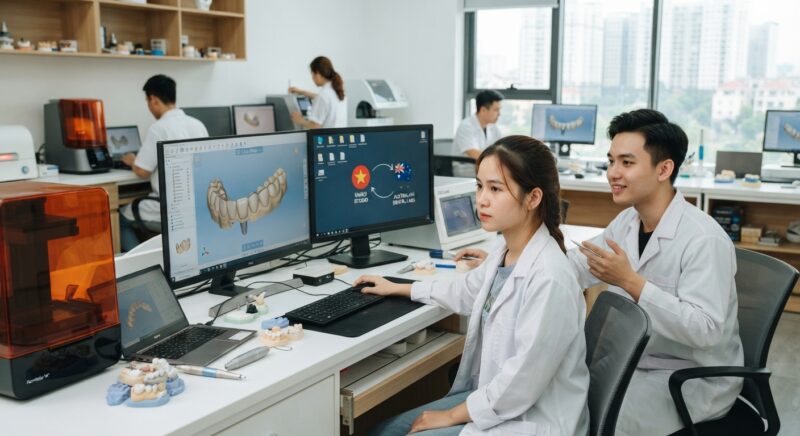
How is the Australian GST treatment of dental prosthetics and offshore design services in 2026 evolving?
The Australian GST treatment of dental prosthetics and offshore design services in 2026 continues to evolve in response to technological advancements and increasing globalization of dental lab operations. The ATO periodically updates guidelines to clarify the tax treatment of emerging digital services and cross-border transactions.
Recent developments emphasize stricter enforcement of reverse charge GST on imported services and enhanced reporting requirements. For dental labs outsourcing CAD/CAM design offshore, this means greater scrutiny and the need for proactive compliance measures.
Innovations in dental CAD software platforms, such as those from exocad and 3Shape, have facilitated seamless design collaboration across borders but also raise new GST compliance questions regarding the place of supply and service classification.
Dental labs and DSOs must stay informed about legislative changes and leverage industry resources to adapt their tax strategies accordingly, ensuring they capitalize on GST benefits while avoiding pitfalls.
What are best practices for managing GST when outsourcing dental prosthetic design offshore?
Implementing best practices for managing GST when outsourcing dental prosthetic design offshore is essential to comply with the Australian GST treatment of dental prosthetics and offshore design services in 2026 and optimize operational efficiency.
- Engage expert tax advisors: Consult specialists in Australian GST law and cross-border services to interpret complex rules and tailor compliance strategies.
- Use clear contracts: Define service scope, pricing, and GST responsibilities explicitly with offshore providers to avoid ambiguity.
- Maintain robust records: Document all invoices, contracts, and service evidence to support GST self-assessments and input tax claims.
- Automate accounting processes: Implement software solutions that track GST on imported services and integrate with BAS reporting.
- Train finance teams: Ensure staff understand GST obligations related to offshore design services and can identify taxable supplies correctly.
- Review periodically: Regularly audit GST treatment of outsourced services to identify errors and adjust practices accordingly.
These practices reduce the risk of non-compliance and help dental labs and DSOs maintain competitive pricing while meeting all tax requirements.
Outsourcing also works well alongside surgical guide design services, creating comprehensive digital workflows that comply with GST rules.
How can dental labs leverage offshore CAD/CAM services while managing GST risks?
Dental labs can leverage offshore CAD/CAM services to access cost-effective, high-quality digital design resources while managing GST risks by adopting a structured approach aligned with the Australian GST treatment of dental prosthetics and offshore design services in 2026.
First, labs should perform a thorough cost-benefit analysis incorporating GST implications, including reverse charge liabilities and input tax credit eligibility. Selecting reputable offshore providers with transparent pricing and clear documentation is key.
Second, labs should integrate GST tracking tools within their accounting systems to automate the identification and reporting of imported services. Training procurement and finance teams on GST requirements ensures that GST risks are minimized.
Third, labs can negotiate contracts that explicitly address GST treatment, payment terms, and dispute resolution mechanisms related to tax matters. This reduces the likelihood of unforeseen GST costs or compliance issues.
Finally, staying informed through authoritative sources like the Australian Dental Association and industry tax bulletins helps labs anticipate regulatory changes and adjust their outsourcing strategies proactively.
Partnering with an experienced digital design outsourcing company familiar with GST regulations can streamline operations and enhance compliance.
Integrating these approaches also complements digital crown design services, creating a seamless end-to-end digital prosthetic workflow.
Conclusion and call to action
Understanding the Australian GST treatment of dental prosthetics and offshore design services in 2026 is essential for dental labs and DSOs to maintain compliance, optimize costs, and leverage offshore CAD/CAM design effectively. Staying ahead of regulatory changes, implementing best practices, and engaging expert advisors will safeguard your operations and enhance profitability.
Step-by-Step Checklist for GST Compliance When Outsourcing Offshore Dental Design
Ensuring GST compliance when outsourcing CAD/CAM dental design services offshore requires a detailed and methodical approach. Below is a practical checklist dental labs and DSOs can use to streamline compliance and minimize risk:
- Identify the nature of the service: Confirm that the service qualifies as a digital design service and determine if it is supplied by an offshore entity.
- Verify supplier status: Ascertain whether the offshore provider is registered for GST in Australia or qualifies as a foreign supplier under Australian GST law.
- Determine GST applicability: Assess whether the supply of design services is considered a taxable import of services subject to reverse charge GST.
- Document invoices accurately: Ensure invoices include all necessary details such as supplier information, service description, and amounts, including any GST if applicable.
- Calculate and remit GST: If reverse charge applies, calculate the GST on the imported service and remit it through BAS (Business Activity Statement).
- Maintain records: Keep detailed records of transactions, correspondence, and GST payments for audit and reporting purposes.
- Review contracts: Include clear GST clauses in contracts with offshore providers to delineate responsibilities and compliance expectations.
- Regularly update compliance: Monitor changes in GST legislation annually to adjust processes accordingly.
Common Mistakes Dental Labs Make in Managing GST on Offshore Services
Despite best intentions, many dental labs and DSOs encounter pitfalls in GST management with offshore design services, which can lead to penalties or overpayments. Recognising these common errors can help avoid costly mistakes:
- Failing to apply reverse charge GST: Some labs overlook the requirement to self-assess and remit GST on imported digital services, resulting in unpaid GST liabilities.
- Incorrect supplier classification: Misidentifying whether an offshore supplier is carrying on an enterprise can lead to wrongly charging or not charging GST.
- Incomplete or inaccurate invoicing: Invoices lacking required information can complicate GST claims and audits.
- Ignoring exchange rate fluctuations: Not converting offshore service costs correctly to AUD for GST calculations can cause reporting errors.
- Neglecting to keep thorough documentation: Poor record-keeping undermines compliance verification and increases audit risk.
- Mixing personal and business expenses: This confuses GST treatment and may trigger compliance issues.
Balancing Cost and Quality: Evaluating Offshore CAD/CAM Design Providers
Cost savings are often a major driver for outsourcing offshore CAD/CAM dental design services, but labs must balance this against quality and compliance risks. Here are practical considerations when evaluating offshore providers:
- Quality assurance processes: Confirm that the provider follows strict quality control standards, uses validated software, and has experience with Australian dental prosthetic specifications.
- Turnaround times: Evaluate the provider’s ability to meet deadlines consistently, as delays can disrupt lab workflows and client satisfaction.
- Communication and support: Ensure effective channels for collaboration, including clear responses to design revisions and queries.
- Cost transparency: Understand all fees upfront, including any hidden costs related to GST compliance or currency conversion.
- Compliance knowledge: Choose providers familiar with Australian GST requirements to reduce compliance risks.
- Trial projects: Conduct pilot runs to assess service quality before committing to long-term contracts.
Market-Specific Considerations for Australian Dental Labs Using Offshore Services
The Australian dental market has unique characteristics that affect the GST treatment and operational strategies for labs outsourcing offshore design services:
- Regulatory environment: Strict Australian dental device regulations and standards require offshore providers to be well-informed and compliant with local specifications.
- GST law interpretations: The Australian Taxation Office’s evolving guidance on digital and imported services necessitates ongoing vigilance by labs.
- Currency volatility: Fluctuations in AUD exchange rates can impact budgeting and GST calculations for offshore services.
- Competitive pressures: Domestic labs face competition from international providers offering lower-cost design services but must weigh GST risks and quality assurance.
- Supply chain integration: Effective coordination between offshore design, local manufacturing, and clinical delivery is key to maintaining timely prosthetic production.
- Technological adoption: The pace of digital technology uptake in Australia influences the complexity and scope of offshore design engagements.
Contact us today to learn how our specialized CAD/CAM digital design outsourcing services can help you navigate GST complexities while delivering exceptional dental prosthetic solutions.