Understanding the Dental Technician Shortage in Switzerland and Austria: Solutions for Dental Labs in 2026
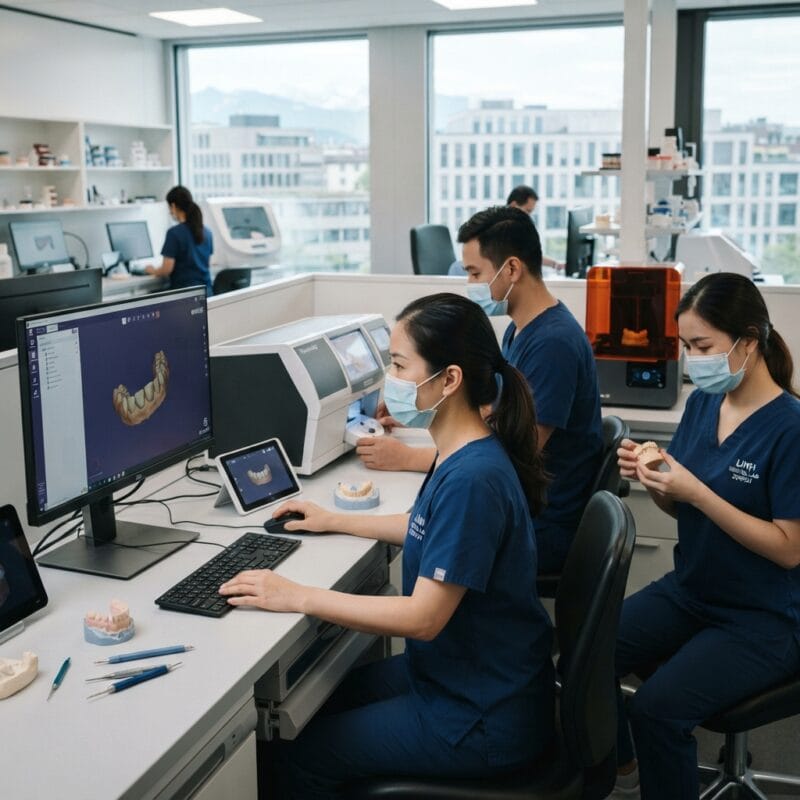
The dental technician shortage in Switzerland and Austria: solutions for dental labs in 2026 have become a critical focus as the demand for prosthetic and restorative dental devices continues to rise. Both countries face demographic shifts, increased clinical complexity, and a declining number of skilled dental technicians entering the workforce. This shortage impacts the turnaround time, quality, and scalability of dental lab operations, creating a pressing need for innovative approaches.
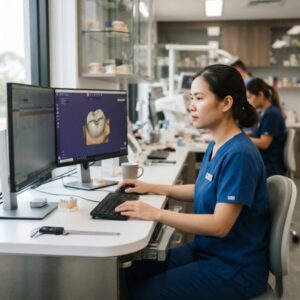
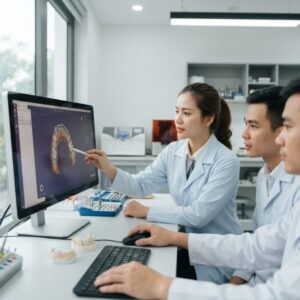
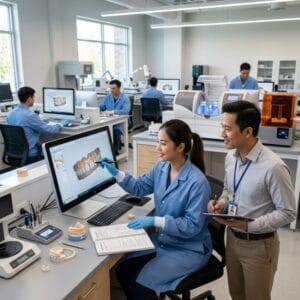
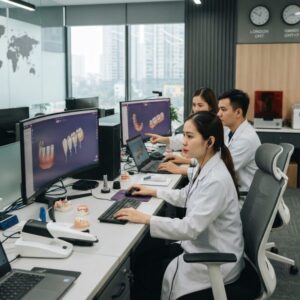
Dental labs and Dental Service Organizations (DSOs) in these regions must explore new workflows and technologies to maintain service levels and meet patient expectations. Outsourcing CAD/CAM digital design services is emerging as a leading solution to mitigate the effects of this shortage, enabling labs to access expert digital designers who specialize in crowns and bridges, implants, surgical guides, dentures, orthodontic aligners, and night guards.
What is causing the dental technician shortage in Switzerland and Austria?
The dental technician shortage in Switzerland and Austria stems from an aging workforce, limited new entrants into technical training programs, and increased complexity in dental device fabrication requiring advanced digital skills. Additionally, economic pressures and high labor costs reduce the attractiveness of traditional lab roles, pushing some technicians toward other industries or countries.
Furthermore, the growing adoption of digital dentistry demands technicians who are proficient with CAD/CAM software and 3D printing technologies. However, the training infrastructure has not fully adapted to these new requirements, leading to a skills gap that exacerbates the shortage. This shortage affects not only small independent labs but also larger DSOs that need to scale production and maintain quality standards.
How can dental labs use CAD/CAM outsourcing to address the shortage?
Dental labs can leverage CAD/CAM outsourcing to compensate for the dental technician shortage in Switzerland and Austria: solutions for dental labs in 2026 by partnering with specialized digital design service providers. These providers offer expert design teams skilled in the latest software platforms such as exocad and 3Shape, delivering accurate and efficient digital workflows remotely.
- Access to specialized expertise: Outsourcing connects labs with designers experienced in complex cases, including implant-supported restorations and orthodontic aligners.
- Scalability: Labs can increase production capacity without investing heavily in training or hiring new staff.
- Cost efficiency: Reduces overhead costs related to recruiting and maintaining large in-house teams.
- Faster turnaround times: Digital workflows streamline communication between clinics and labs, accelerating case completion.
Many labs find that outsourcing CAD/CAM design also works well alongside surgical guide design services, enabling comprehensive digital solutions for implant and surgical planning.
What digital workflows are typically outsourced in dental labs?
The most commonly outsourced digital workflows in dental labs include crown and bridge design, implant restorations, surgical guide planning, denture setups, orthodontic aligner designs, and night guard fabrication. Each workflow requires specific CAD/CAM expertise and software tools.
For example, implant and surgical guide design demand precise anatomical modeling using CBCT data, while denture design involves functional occlusion and esthetic considerations. Orthodontic aligner design requires accurate digital impressions and staging software. Outsourcing firms employ experts trained in these specialized areas, ensuring high-quality outputs aligned with clinical needs.
What are the benefits of adopting digital design outsourcing for dental labs in Switzerland and Austria?
Adopting digital design outsourcing offers multiple benefits that directly address the dental technician shortage in Switzerland and Austria: solutions for dental labs in 2026. These include improved case accuracy, reduced labor bottlenecks, enhanced flexibility in production, and the ability to implement cutting-edge technologies without major capital investment.
- Improved quality control: Digital designs allow for easier revisions and standardized production protocols.
- Resource optimization: In-house technicians can focus on hands-on fabrication and finishing rather than time-consuming digital tasks.
- Enhanced collaboration: Cloud-based platforms enable real-time communication between labs, clinics, and outsourcing partners.
- Future-proofing: Outsourcing partners often stay ahead with software updates and training, providing labs with access to the latest advances.
How do Swiss and Austrian dental labs integrate outsourced CAD/CAM designs into their workflows?
Swiss and Austrian dental labs integrate outsourced CAD/CAM designs by establishing secure digital communication channels for receiving design files, reviewing virtual models, and sending feedback. They typically use industry-standard software compatible with their milling machines or 3D printers.
Once the outsourced design is approved, labs either produce the prosthetic in-house or send the files to trusted production partners. This hybrid model maximizes efficiency and quality, allowing labs to maintain control over final fabrication while leveraging external design expertise. Integration is supported by digital impression scanners and intraoral cameras that provide accurate data inputs, facilitating seamless communication between clinicians and labs.
What challenges remain despite outsourcing CAD/CAM design solutions?
While outsourcing CAD/CAM design helps mitigate the dental technician shortage in Switzerland and Austria: solutions for dental labs in 2026, challenges remain. These include ensuring data security, maintaining consistent quality standards, and managing turnaround times across borders.
Cultural and language differences may pose communication barriers, requiring clear protocols and experienced project managers. Additionally, some labs hesitate due to concerns about losing in-house expertise or control over design nuances. However, these challenges can be overcome by selecting reputable outsourcing partners with proven track records and certifications.
Why is investing in technician training still important?
Investing in technician training remains crucial despite outsourcing because the dental technician shortage in Switzerland and Austria: solutions for dental labs in 2026 cannot be fully resolved without growing the skilled workforce. Continuous education ensures technicians keep pace with evolving digital technologies and complex clinical requirements.
Training programs focusing on CAD/CAM software skills, digital manufacturing, and quality assurance empower technicians to add value beyond routine production. Moreover, a well-trained in-house team can better collaborate with outsourcing partners, enhancing overall lab performance and patient outcomes.
How do leading dental labs and DSOs leverage outsourcing in 2026?
Leading dental labs and DSOs in Switzerland and Austria regularly leverage CAD/CAM outsourcing to overcome the dental technician shortage in Switzerland and Austria: solutions for dental labs in 2026, integrating it as a core part of their digital transformation strategies. They partner with service providers that offer end-to-end digital design capabilities, including complex implant cases and full-arch dentures.
These organizations prioritize partnerships that provide fast turnaround, flexible volume scaling, and data security compliance. They also invest in robust digital infrastructures to facilitate smooth file transfer and case tracking. Outsourcing complements their own in-house capabilities, enabling them to deliver high-quality restorations efficiently to dental practices and patients.
What role do software platforms like exocad and 3Shape play in outsourcing?
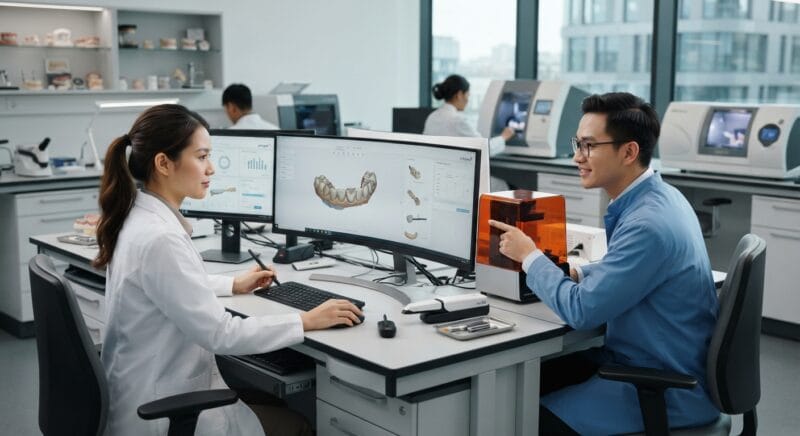
Software platforms like exocad and 3Shape are pivotal in enabling the dental technician shortage in Switzerland and Austria: solutions for dental labs in 2026 through outsourcing by providing advanced, user-friendly CAD tools that support remote digital design collaboration. These platforms offer extensive libraries, customization options, and seamless integration with production hardware.
Outsourcing partners skilled in these software solutions can quickly adapt to lab-specific requirements, ensuring that digital designs meet clinical specifications and are ready for manufacturing. Their compatibility with various scanners and printers simplifies data handling, reducing errors and improving turnaround times.
How do outsourcing services support complex dental prosthetics like implants and surgical guides?
Outsourcing services support complex dental prosthetics by employing specialized designers who understand implantology and surgical planning, using advanced CAD tools and CBCT imaging data to create precise implant restorations and surgical guides. This expertise is essential to address the dental technician shortage in Switzerland and Austria: solutions for dental labs in 2026, where in-house capabilities may be limited.
These outsourced designs help clinicians plan implant placement accurately, reduce surgical risks, and improve patient outcomes. Moreover, surgical guides designed digitally can be 3D printed with high precision, streamlining the workflow from planning to surgery. This service is often integrated with implant systems from leading manufacturers like Straumann or Nobel Biocare, ensuring compatibility and quality.
What are the environmental and economic impacts of digital outsourcing in dental labs?
The environmental and economic impacts of digital outsourcing help dental labs address the dental technician shortage in Switzerland and Austria: solutions for dental labs in 2026 by reducing material waste, lowering energy consumption, and optimizing labor costs. Digital workflows minimize physical model production and shipping, cutting down carbon footprints.
Economically, outsourcing reduces the need for expensive in-house equipment and training, allowing labs to allocate resources more strategically. This leads to competitive pricing for dental practices and greater market agility. Sustainable practices also improve brand reputation and align with growing regulatory requirements.
Where can dental labs find reliable CAD/CAM outsourcing partners?
Dental labs can find reliable CAD/CAM outsourcing partners by evaluating companies with proven expertise in dental prosthetics design, strong client references, compliance with data protection laws, and up-to-date software capabilities. Partner credentials should include certification in software platforms like exocad and 3Shape, and experience with complex cases such as implants and orthodontics.
Reputable outsourcing providers often publish case studies and whitepapers demonstrating their impact on overcoming the dental technician shortage in Switzerland and Austria: solutions for dental labs in 2026. Labs are encouraged to attend industry events and consult authoritative sources such as the American Dental Association for best practices in digital dentistry adoption.
How can labs ensure quality and confidentiality when outsourcing?
Labs can ensure quality and confidentiality by establishing clear contracts, data handling protocols, and quality control checkpoints when outsourcing CAD/CAM design services. Regular audits, secure file transfer methods, and compliance with GDPR and other local regulations are essential to protect patient information.
Quality assurance includes reviewing digital designs before production, maintaining open communication channels with the outsourcing partner, and using standardized feedback tools. This diligence helps labs maintain their reputation and patient trust while benefiting from expanded digital capabilities.
Future outlook: How will outsourcing evolve to solve the dental technician shortage?
The future outlook anticipates that the dental technician shortage in Switzerland and Austria: solutions for dental labs in 2026 will increasingly rely on fully integrated digital platforms combining AI-powered design, cloud collaboration, and automated manufacturing. Outsourcing providers will become strategic partners offering not just design but end-to-end digital dental solutions.
Technological advances such as machine learning for margin detection, virtual articulators, and augmented reality case planning will enhance the quality and speed of outsourced workflows. These innovations promise to transform how labs manage workload fluctuations and skill shortages, making digital outsourcing indispensable.
In conclusion, the dental technician shortage in Switzerland and Austria: solutions for dental labs in 2026 can be effectively addressed by embracing CAD/CAM digital design outsourcing services. These solutions provide access to specialized expertise, scalable workflows, and cutting-edge technology that help labs maintain quality and efficiency in a challenging labor market.
For dental labs and DSOs seeking to navigate this shortage, partnering with a trusted CAD/CAM outsourcing provider is a strategic move. It enables continued growth and competitiveness in the evolving dental industry landscape.
Contact us today to learn how our digital design outsourcing services can help your lab overcome technician shortages and streamline your workflow with precision and speed.