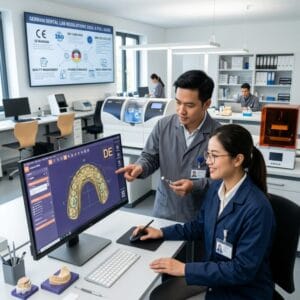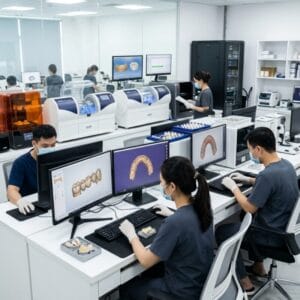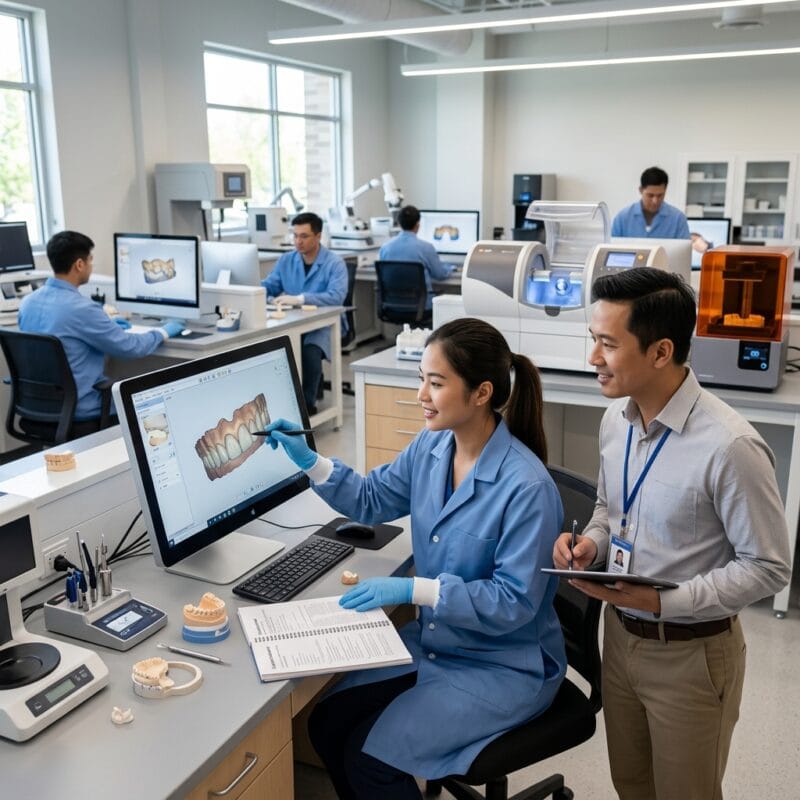
The dental technology landscape is undergoing its most profound regulatory shift in decades. As we navigate the evolving sector, understanding dental lab licensing requirements in the USA 2026 has become a core operational imperative for laboratory owners, Dental Support Organizations (DSOs), and clinical directors. What was once a loosely regulated industry characterized by localized, manual craftsmanship has transformed into a highly digitized, automated, and scrutinised medical device manufacturing sector. With state dental boards expanding oversight and federal agencies tightening rules on digital workflows, keeping pace with dental lab licensing requirements in the USA 2026 is essential for legal compliance and long-term business viability.
Historically, dental laboratories operated in a regulatory grey zone in many states, functioning as custom service providers under the general prescription of a licensed dentist. However, the rise of digital dentistry, modern CAD/CAM software, additive manufacturing (3D printing), and international design outsourcing has fundamentally changed how restorative devices are designed and fabricated. Today, regulatory bodies view dental prosthetics, surgical guides, night guards, and clear aligners through the lens of patient safety, material traceability, and quality control. Consequently, navigating dental lab licensing requirements in the USA 2026 requires a granular understanding of both state-level mandates and federal medical device oversight.
For commercial dental labs and rapidly expanding DSOs, maintaining compliance is not merely about avoiding fines or administrative penalties; it is about establishing operational resilience. Whether your facility produces full-arch zirconia restorations, custom titanium implant abutments, or clear orthodontic aligners, every step of your digital workflow—from intraoral scan ingestion to outsource design—must align with modern regulatory frameworks. In this comprehensive guide, we unpack the state and federal mandates, digital software compliance considerations, and strategic outsourcing practices needed to meet dental lab licensing requirements in the USA 2026.
Understanding Dental Lab Licensing Requirements in the USA 2026 Across Key Jurisdictions
One of the primary challenges facing commercial dental laboratories is the absence of a single, unified national license. Instead, dental lab licensing requirements in the USA 2026 represent a patchwork of state-level statutes governed by individual state boards of dentistry. While some states require formal registration and mandatory continuing education for technicians, others operate with minimal direct laboratory oversight. Understanding how these jurisdictional variances intersect with modern CAD/CAM practices is critical for labs operating across state lines or using remote digital design partners.
States such as Florida, Texas, California, Kentucky, South Carolina, and Ohio have established robust statutory frameworks governing commercial dental laboratories. Under the current dental lab licensing requirements in the USA 2026, registered laboratories in these jurisdictions must renew their operational certificates annually or biennially, maintain designated certified dental technicians (CDTs) on staff, and disclose all patient-contact materials used in fabrication. Furthermore, many state boards now require explicit point-of-origin disclosure, requiring laboratories to inform prescribing dentists if any portion of the design or manufacturing process was completed off-site or by a third-party CAD design provider.
The momentum toward stricter state regulation continues to build. Industry advocacy groups, including the National Association of Dental Laboratories (NADL), have consistently championed legislative efforts to enhance accountability. As a result, states evaluating updates to their dental lab licensing requirements in the USA 2026 are increasingly incorporating digital workflow standards into their statutory definitions. This means that even virtual design operations—facilities that only handle digital CAD file generation without physical manufacturing—are coming under state board scrutiny.
What are the state-level dental lab licensing requirements in the USA 2026?
State-level dental lab licensing requirements in the USA 2026 mandate that dental laboratories register with state dental boards, maintain certified dental technicians (CDTs) on staff, and submit annual material disclosure reports depending on individual jurisdiction.
While specific rules vary by state, the fundamental structure of state-level oversight centers on transparency, technical competency, and infection control. In states with mandatory laboratory registration, commercial dental labs must display their active registration certificate and operate under the technical supervision of at least one CDT certified by the National Board for Certification in Dental Laboratory Technology (NBC). Compliance with dental lab licensing requirements in the USA 2026 at the state level generally requires labs to maintain the following core components:
- State Board Registration: Formal registration of the laboratory entity with the state board of dentistry, accompanied by annual fees and verification of physical facility address.
- Certified Personnel Mandates: Requirement for at least one full-time Certified Dental Technician (CDT) specializing in relevant disciplines such as Crown & Bridge, Dentures, or Implants.
- Material Disclosure Statements: Documentation provided to the prescribing clinician detailing the specific alloy composition, ceramic batch, or resin material used in the restoration.
- Point-of-Origin Labeling: Clear identification of where the restoration was designed and manufactured, including disclosures if digital CAD design was outsourced to a specialized service provider.
- Infection Control & OSHA Compliance: Adherence to bloodborne pathogen standards and disinfection protocols for physical impressions, bite registrations, and try-in restorations.
Failing to satisfy state-specific dental lab licensing requirements in the USA 2026 can result in severe repercussions, including cease-and-desist orders, monetary fines, and loss of operating licenses. For DSOs operating centralized digital hubs that distribute work to regional satellite facilities, ensuring that every connected node complies with local state rules is a vital component of risk management.
FDA Oversight and Federal Medical Device Compliance
Beyond state dental boards, the United States Food and Drug Administration (FDA) exercises federal authority over dental prosthetics, devices, and software. Under federal law, dental prosthetics are classified as medical devices, placing commercial labs within the purview of the Center for Devices and Radiological Health (CDRH). Navigating federal regulations alongside dental lab licensing requirements in the USA 2026 requires a clear understanding of device classification, manufacturing registration, and quality management systems.
Generally, custom prosthetics—such as single crowns, bridges, and custom night guards fabricated upon a licensed clinician’s prescription—are exempt from premarket notification [510(k)] requirements. However, this exemption does not make laboratories immune to federal oversight. Under federal guidelines that support dental lab licensing requirements in the USA 2026, laboratories engaged in CAD/CAM design and fabrication must adhere to the FDA’s Quality Management System Regulation (QMSR), which harmonizes traditional 21 CFR Part 820 rules with international standard ISO 13485.
The regulatory landscape becomes even stricter when producing medical devices that fall outside the traditional custom device exemption. Devices such as 3D-printed surgical guides, clear orthodontic aligners, and sleep apnea appliances require formal FDA 510(k) clearance or cleared master files for the software and resin systems used. Clinicians and laboratories seeking comprehensive guidance on device safety standards frequently reference resources provided by the American Dental Association to ensure clinical compliance across physical and digital workflows.
How do FDA regulations impact digital CAD/CAM dental labs in 2026?
FDA regulations for digital CAD/CAM dental labs in 2026 classify custom prosthetics and surgical guides under medical device frameworks, requiring compliant design software, traceable material logs, and adherence to Quality System Regulations.
The integration of CAD/CAM technology has transformed dental laboratories from manual craft shops into digital advanced manufacturing centers. Under current FDA oversight, the software used to design prosthetics and surgical guides is evaluated as Software as a Medical Device (SaMD) or as an integral component of a medical device system. Consequently, meeting dental lab licensing requirements in the USA 2026 requires digital labs to ensure that their entire software stack—from scanning software to CAD design engines and nesting modules—is fully validated and cleared for its intended clinical indication.
Key regulatory expectations for digital CAD/CAM dental laboratories under federal guidelines include:
- Software Validation: Verification that all CAD design software engines operate within defined parameters and produce anatomically accurate design files (.STL, .OBJ, .PLY) without uncalibrated geometric distortion.
- Raw Material Traceability: Complete lot-number tracking connecting raw materials (zirconia discs, titanium blanks, PMMA blocks, 3D printing resins) to specific patient prescriptions and CAD design files.
- Quality System Regulation (QMSR): Implementation of written standard operating procedures (SOPs) governing file handling, design verification, technician training, and corrective/preventive action (CAPA) protocols.
- Device Registration: Mandatory FDA registration and listing for laboratories that manufacture cleared devices, such as proprietary clear aligner systems or surgical implant guides.
When laboratories integrate digital design workflows, maintaining complete compliance with dental lab licensing requirements in the USA 2026 demands that every digital step be documented and auditable. If a digital design file is modified after clinical approval, the CAD system must log that modification to ensure total accountability across the design chain.
Digital CAD/CAM Workflows and Software Compliance in 2026
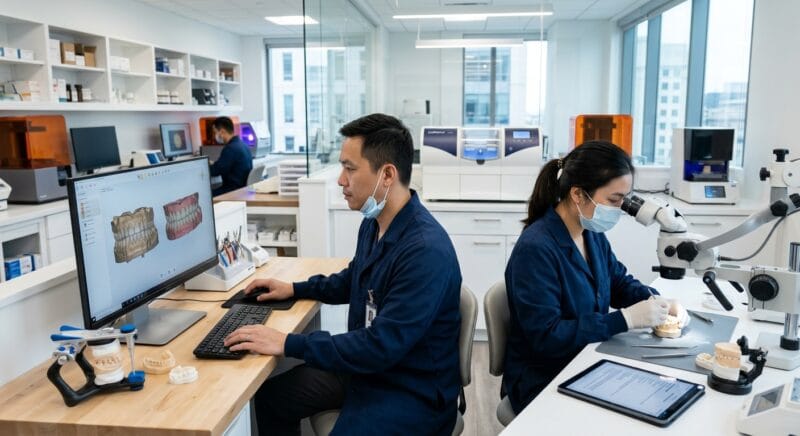
As laboratories transition away from physical elastomeric impressions toward intraoral optical scans, digital workflow integrity is central to meeting dental lab licensing requirements in the USA 2026. Modern digital dentistry relies on open and closed CAD systems that process complex 3D surface meshes. However, handling patient digital diagnostic data introduces dual regulatory obligations: ensuring CAD technical accuracy and protecting Patient Health Information (PHI) under HIPAA regulations.
When an intraoral scan is captured at the dental practice and transmitted to a laboratory or remote design center, the transfer mechanism must utilize encrypted data channels. Secure cloud networks, dedicated portal integrations, and compliant file transfer systems are necessary to meet federal data privacy standards that complement dental lab licensing requirements in the USA 2026. Design software suites, such as those provided by exocad software solutions, offer robust parameter controls and validation tools that ensure CAD outputs meet strict structural and geometric standards for medical devices.
Software Validation and Dental Lab Licensing Requirements in the USA 2026
Software validation is a cornerstone of digital compliance. In a compliant CAD/CAM laboratory, technicians cannot simply run unverified design software or modify system parameters without validation. To remain aligned with dental lab licensing requirements in the USA 2026, design parameters such as minimum wall thickness, cement gap distances, contact strength values, and connector cross-sectional areas must be locked to pre-validated presets established by material manufacturers.
For example, designing a full-contour monolithic zirconia crown requires setting minimum occlusal wall thickness according to the material manufacturer’s instructions for use (IFU). If a CAD technician overrides these settings, resulting in a wall thickness below the cleared material safety limit, the laboratory risks producing a non-compliant device that is prone to intraoral fracture. Compliance protocols for dental lab licensing requirements in the USA 2026 require design validation routines to prevent such structural failures before the digital file moves to the milling machine or 3D printer.
Furthermore, CAD design software used for complex restorations—such as full-arch implant design outsourcing workflows—must maintain high precision for multivariant screw-retained bridges and custom titanium bar frameworks. Accurate alignment between intraoral scan bodies, CAD library geometry, and implant platform connections is critical to prevent passive fit errors that could cause implant failure or marginal bone loss.
Outsourcing CAD/CAM Digital Designs While Staying Compliant
To cope with rising labor costs, shortage of skilled dental technicians, and surging production volumes, many US dental laboratories and DSOs actively partner with specialized digital design service providers. Design outsourcing allows laboratories to scale their CAD capacity rapidly across crowns, bridges, custom abutments, removable dentures, clear aligners, and night guards. However, outsourcing CAD design does not relieve the primary laboratory of its legal responsibility to satisfy dental lab licensing requirements in the USA 2026.
Under US regulatory frameworks, outsourcing the digital CAD design phase is recognized as subcontracting a manufacturing step. The primary dental laboratory remains responsible for ensuring that its outsourced design partners adhere to rigorous quality standards, data privacy protocols, and technical design rules. When structuring outsourcing relationships, dental laboratories must verify that their digital design providers maintain operational standards that align seamlessly with dental lab licensing requirements in the USA 2026.
To maintain absolute compliance while leveraging CAD design services, US laboratories and DSOs should execute a structured vendor management program that includes:
- Formal Quality Agreements: Legally binding quality contracts defining design specifications, verification responsibility, Turnaround Time (TAT) metrics, and error-correction protocols.
- HIPAA Business Associate Agreements (BAA): Executed BAAs ensuring that any third-party design provider handling patient scan data complies with US data privacy laws.
- Design Parameter Standard Operating Procedures (SOPs): Standardized design rule profiles matching the primary laboratory’s specific milling machinery, 3D printers, and material IFUs.
- Traceable Design Logs: Audit trails linking every completed CAD design file (.STL) back to the individual certified designer and the original clinical prescription.
- Clinician Review and Approval Portals: Digital approval systems allowing the prescribing clinician to review and sign off on complex digital designs—such as 3D printed surgical guide workflows—prior to physical manufacturing.
Why should DSOs and dental labs partner with licensed design outsourcing providers?
Partnering with compliant design outsourcing providers enables dental labs and DSOs to scale production without taking on additional regulatory liability or overhead expenses associated with internal certification.
Scaling a modern dental laboratory or multi-site DSO requires balancing production volume with operational compliance. Building an in-house digital design team involves continuous capital investment in CAD software licenses, high-performance hardware workstations, ongoing technician training, and quality management infrastructure. By partnering with a regulatory-compliant digital design provider, laboratories can offload peak design volume while keeping their business aligned with dental lab licensing requirements in the USA 2026.
A specialized digital design partner operates as an seamless extension of your internal workflow. Utilizing standardized CAD parameters tailored to your exact manufacturing equipment, remote design centers deliver consistent, anatomically precise restorative designs ready for immediate CAM production. This eliminates digital backlogs, shortens turnaround times for prescribing clinicians, and preserves operating margin—all while ensuring that every file produced meets the material safety and structural guidelines required under dental lab licensing requirements in the USA 2026.
2026 Regulatory Compliance Checklist for Dental Lab Owners and DSOs
To assist laboratory owners, DSOs, and technical directors in evaluating their operational readiness, the following compliance checklist outlines the mandatory operational requirements needed to satisfy dental lab licensing requirements in the USA 2026 across state and federal jurisdictions.
1. State Registration and CDT Staffing Verification
Verify that your laboratory entity maintains an active registration with the dental board in every state where you conduct business or deliver prosthetics. Ensure that designated Certified Dental Technicians (CDTs) hold active certifications and that required continuing education hours are fully documented to comply with dental lab licensing requirements in the USA 2026.
2. Quality Management System (QMSR / ISO 13485) Implementation
Establish written Standard Operating Procedures (SOPs) governing file ingestion, CAD parameter verification, CAM production, material lot tracking, and final inspection. Conduct internal audits annually to ensure full alignment with federal quality management rules and dental lab licensing requirements in the USA 2026.
3. Software Validation and Cyber-Security Protocols
Audit all CAD/CAM software platforms to verify that design engines, implant libraries, and surgical guide modules are cleared for clinical use. Implement end-to-end encryption for incoming intraoral scans and outgoing CAD design files to maintain strict HIPAA compliance alongside dental lab licensing requirements in the USA 2026.
4. Material Safety and Disclosure Documentation
Ensure that all physical materials—zirconia, lithium disilicate, PMMA, cobalt-chromium, titanium, and 3D printing resins—are sourced from FDA-cleared suppliers. Maintain accessible material disclosure sheets and point-of-origin documentation for every case delivered to a dental practitioner, satisfying core dental lab licensing requirements in the USA 2026.
5. Outsourced Design Vendor Audit and Quality Verification
Audit external CAD design providers to confirm that they operate under strict design parameter protocols, execute valid Business Associate Agreements, and provide full audit logging for digital design files. Ensuring third-party design vendors operate at full quality capacity is a vital strategy for long-term adherence to dental lab licensing requirements in the USA 2026.
Future Outlook: Navigating Dental Lab Regulations Beyond 2026
Looking beyond 2026, regulatory oversight in the dental laboratory sector will continue to increase. As Artificial Intelligence (AI) and automated CAD design algorithms become common in restorative dentistry, state boards and federal regulators are developing frameworks to address AI-assisted medical device creation. Algorithmic design engines will need rigorous validation to ensure that AI-generated tooth morphing and crown proposals comply with structural integrity requirements equal to traditional human design methods.
Furthermore, environmental standards, chemical handling rules for additive manufacturing resins, and international supply chain traceability mandates will shape future updates to dental lab licensing requirements in the USA 2026 and beyond. Laboratories that proactively adopt robust digital quality systems, build strong technical compliance teams, and partner with established design services will lead the industry in efficiency, quality, and clinical trust.
By understanding state registration nuances, enforcing strict FDA material traceability, validating CAD software workflows, and managing digital design partners, your facility can turn regulatory compliance from a burden into a distinct competitive advantage. Adhering to dental lab licensing requirements in the USA 2026 protects your enterprise and elevates the standard of care for the patients you ultimately serve.
Ready to scale your lab’s digital workflow while maintaining full regulatory compliance? Contact our expert CAD design team today to streamline your crown, bridge, and implant design operations.