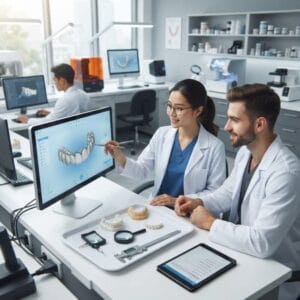
Introduction to Cost-saving Strategies for Dental Labs Using CAD CAM Design Services 2026
The dental industry is rapidly evolving with digital technologies becoming central to laboratory workflows. For dental labs and Dental Service Organizations (DSOs), adopting cost-saving strategies for dental labs using CAD CAM design services 2026 is vital for maintaining competitiveness and profitability. This article explores practical and actionable approaches to leveraging CAD CAM digital design outsourcing to reduce costs while enhancing quality and throughput.
What are the primary benefits of CAD CAM design outsourcing for dental labs?
CAD CAM design outsourcing provides dental labs with access to expert digital design resources without investing in full-time staff or expensive software licenses. By outsourcing, labs can streamline their workflows, reduce labor costs, and scale design capacity flexibly.
Outsourcing allows labs to tap into specialized skills for complex cases like implant-supported restorations or surgical guides, improving turnaround times and reducing internal errors. It also reduces upfront investments in CAD software and hardware, which can be costly and require ongoing maintenance. Leading CAD software providers such as exocad and 3Shape offer platforms that integrate well with outsourcing services.
How do cost-saving strategies for dental labs using CAD CAM design services 2026 impact workflow efficiency?
Implementing cost-saving strategies for dental labs using CAD CAM design services 2026 significantly optimizes workflow efficiency by eliminating bottlenecks in digital design and production. Outsourced CAD design frees up in-house staff to focus on milling, printing, and finishing processes rather than spending time on complex design tasks.
This division of labor reduces lead times and allows labs to handle higher case volumes without proportionally increasing overhead costs. Automated file transfer protocols between labs and design partners also reduce errors and repeat work, further enhancing efficiency.
What types of dental cases benefit most from CAD CAM digital design outsourcing?
Outsourcing CAD CAM design services is particularly beneficial for complex and customized cases such as crown and bridge restorations, implant prosthetics, surgical guides, dentures, orthodontic aligners, and night guards. These cases often require precision and expertise that may exceed the in-house capabilities of smaller labs.
- Crown & bridge: Precision margin design and occlusal adjustments improve fit and reduce remakes.
- Implants: Accurate digital planning and abutment design ensure better clinical outcomes.
- Surgical guides: Complex 3D planning requires specialized software and expertise.
- Dentures & aligners: Digital design accelerates fabrication and customization.
- Night guards: Precise fits reduce patient discomfort and returns.
Key cost factors dental labs should evaluate when using CAD CAM design services
When considering cost-saving strategies for dental labs using CAD CAM design services 2026, understanding total cost of ownership (TCO) is crucial. Key cost factors include:
- Software licensing: Subscription fees vs. outsourced design fees
- Hardware investment: CAD workstations, scanners, and associated maintenance
- Labor costs: Hiring and training in-house designers vs. outsourcing
- Turnaround times: Faster design cycles reduce inventory and increase throughput
- Quality control: Outsourced designs must meet lab standards to avoid remakes
Outsourcing can shift many of these costs from fixed to variable, allowing better cash flow management.
Comparison of CAD CAM design options for dental labs and DSOs
| Option | Best For | Strengths | Limitations | Typical Cost Range |
|---|---|---|---|---|
| In-House Design Team | Large labs, DSOs with high volume | Full control, instant communication, customization | High upfront cost, training, software maintenance | $50,000 – $150,000+ annually |
| CAD CAM Design Outsourcing | Small to medium labs, labs with fluctuating volume | Flexible capacity, reduced capital expenditure, expert designers | Dependence on external service, potential turnaround delays | Pay-per-case or subscription-based pricing |
| Hybrid Model | Labs scaling up, DSOs balancing workload | Optimizes costs and capacity, balances control and flexibility | Requires workflow integration, management overhead | Combination of the above |
How to choose the right CAD CAM design outsourcing partner?
Choosing the ideal CAD CAM design outsourcing partner hinges on quality, turnaround time, compatibility, and cost-effectiveness. The partner should have expertise across multiple restoration types, including crowns, bridges, implants, and surgical guides.
Verify that their digital design files are compatible with your milling or 3D printing equipment, such as those by Dentsply Sirona or Straumann. Reliable communication channels and clear service level agreements (SLAs) ensure predictable delivery times and minimum errors.
Finally, evaluate their pricing models to confirm they align with your lab’s volume and budget constraints, enabling sustainable cost savings.
What role does technology integration play in cost-saving strategies for dental labs using CAD CAM design services 2026?
Technology integration is pivotal to maximizing the benefits of cost-saving strategies for dental labs using CAD CAM design services 2026. Seamless integration between intraoral scanners, CAD software, and production hardware reduces manual data handling and errors.
Implementing cloud-based platforms facilitates real-time collaboration with outsourcing partners, enabling faster feedback and design revisions. Integrating design services with digital impression systems such as the iTero scanner can shorten production cycles and reduce remakes.
Labs investing in open-architecture systems benefit from greater flexibility in choosing designers and production equipment, which supports long-term cost efficiency and adaptability.
Benefits of outsourcing surgical guide design for DSOs and labs
Surgical guides require precise 3D planning and fabrication, making their design labor-intensive and technically demanding. Outsourcing surgical guide design allows labs and DSOs to leverage specialized expertise, reducing the risk of clinical errors and improving patient outcomes.
This strategy also reduces training costs and software investments since surgical guide design often demands advanced planning software and experience with implant systems from companies like Nobel Biocare or Straumann.
By outsourcing, DSOs can standardize surgical guide production across multiple clinics, achieving economies of scale and consistent quality, a key cost-saving strategy for dental labs using CAD CAM design services 2026.
How do CAD CAM design services support cost efficiency in night guard and orthodontic aligner production?
Night guards and orthodontic aligners benefit from streamlined digital workflows that reduce manual labor and material waste. Outsourced CAD CAM design services provide precise customization based on digital impressions, which enhances fit and patient satisfaction.
This approach shortens turnaround times and lowers remakes, which are costly in these high-volume, lower-margin product lines. Labs and DSOs can rely on design partners to maintain quality while controlling labor costs, key components of cost-saving strategies for dental labs using CAD CAM design services 2026.
Financial impact of switching to outsourced CAD CAM design services
Switching to outsourced CAD CAM design services can transform the financial profile of a dental lab by converting fixed costs into variable expenses. Instead of investing tens of thousands annually in software licenses, hardware upgrades, and salaries, labs pay per case or monthly subscriptions based on demand.
This flexibility is especially beneficial in uncertain markets or for labs with seasonal fluctuations. Furthermore, reducing the need for in-house designers decreases overhead costs related to recruitment, training, and benefits, improving the lab’s bottom line.
Strategic outsourcing also enables labs to invest more capital into production equipment, thus enhancing overall manufacturing capacity and quality control.
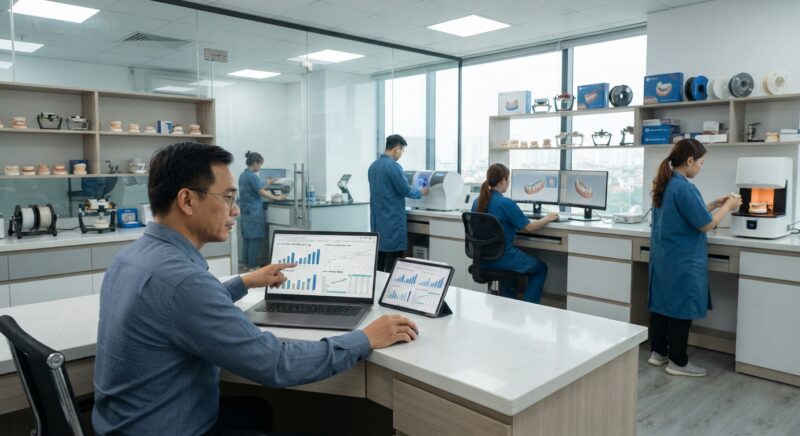
How does digital crown design work in outsourced CAD CAM workflows?
Digital crown design in outsourced CAD CAM workflows begins with the lab or clinic submitting digital impressions or STL files to the design partner. The outsourced CAD designer uses advanced software to create anatomically accurate crowns with proper occlusion, contacts, and margins.
Design files are then reviewed by the lab’s quality team before being sent to the milling or 3D printing equipment. This division of labor allows labs to focus on production while leveraging external expertise for design, ensuring precision and reducing remakes.
Many outsourcing partners utilize software platforms from Medit or Formlabs to ensure compatibility and high-quality design outputs.
What are the best practices for integrating outsourced CAD CAM design with in-house production?
Best practices include establishing standardized file formats and communication protocols, such as using universally accepted STL or PLY files. Labs should define clear turnaround expectations and quality checkpoints to minimize revisions.
Implementing a digital platform or portal where design files, notes, and approvals are centralized can improve transparency and reduce errors. Labs also benefit from training their production staff on the nuances of outsourced designs, such as margin clarity and connector dimensions, to ensure smooth processing.
Combining outsourced design with in-house milling or printing optimizes resource use and reinforces cost-saving strategies for dental labs using CAD CAM design services 2026.
Who benefits most from cost-saving strategies for dental labs using CAD CAM design services 2026?
Small to medium dental labs and DSOs with multiple clinics benefit the most from these cost-saving strategies. Labs with fluctuating case volumes avoid the financial burden of maintaining a full-time design team, while DSOs benefit from centralized outsourcing that standardizes quality across locations.
- Best for: Labs without dedicated CAD designers, growing DSOs, labs expanding digital offerings
- Strengths: Scalable design capacity, cost flexibility, access to expert designers
- Limitations: Dependency on third-party schedules, potential communication lags
Do you need design capacity for your new equipment?
Outsourced CAD CAM design services allow your lab or clinic to run milling machines or 3D printers at full capacity without hiring additional designers. This approach maximizes equipment utilization and reduces staffing complexity.
By partnering with a specialized design provider, you benefit from expert digital workflows tailored to your production needs. Contact us today to learn how our dental lab CAD CAM digital design outsourcing can help you implement effective cost-saving strategies for dental labs using CAD CAM design services 2026 and enhance your lab’s profitability.
Step-by-Step Guide to Implementing CAD CAM Design Outsourcing in Dental Labs
Successfully integrating CAD CAM design outsourcing into your dental lab’s workflow requires careful planning and execution. This step-by-step guide provides practical actions to follow, ensuring a smooth transition and maximizing cost savings while maintaining quality standards.
1. Conduct a Workflow Audit
- Map Existing Processes: Document every stage of your current design and production workflow, noting time and resource allocation.
- Identify Bottlenecks: Pinpoint areas where design capacity is limited or turnaround times are extended.
- Assess Technology and Skill Gaps: Evaluate your current CAD CAM equipment and staff expertise to understand outsourcing needs.
2. Define Clear Objectives
- Cost Reduction Targets: Set realistic savings goals based on current design costs and expected outsourcing fees.
- Quality and Turnaround Metrics: Identify minimum acceptable standards for outsourced designs and delivery times.
- Volume Expectations: Estimate the number of cases to outsource initially and over time, allowing scalability.
3. Select Appropriate Cases for Outsourcing
- Start with Complex or Time-Consuming Cases: Crowns, bridges, and implant surgical guides often benefit most.
- Consider Seasonal or Peak Demand: Outsource during periods of high workload to avoid delays without permanent hiring.
- Evaluate Case Complexity and Quality Requirements: High-precision designs may warrant outsourcing to specialist providers.
4. Choose and Onboard the Right CAD CAM Design Partner
- Request Samples and References: Verify quality and communication responsiveness.
- Negotiate Clear Service Level Agreements (SLAs): Define turnaround times, revision policies, and confidentiality terms.
- Integrate Technology Platforms: Ensure compatibility with your lab’s file formats and production software.
- Train In-House Staff: Educate your team on file submission protocols and quality control checkpoints.
5. Implement a Pilot Phase
- Start Small: Outsource a limited number of cases to test workflows and communication.
- Monitor Performance: Track design accuracy, delivery times, and overall satisfaction.
- Gather Feedback: Involve technicians and clinicians in evaluating outsourced designs.
6. Scale and Optimize
- Expand Outsourcing Volume: Based on pilot success, increase the number and types of cases.
- Refine Processes: Adjust submission templates, quality checks, and turnaround expectations as needed.
- Review Cost Savings Regularly: Compare actual expenses against targets and adjust strategies accordingly.
Common Mistakes to Avoid When Outsourcing CAD CAM Design Services
Outsourcing CAD CAM design services can yield significant benefits, but common pitfalls can undermine success. Understanding these mistakes helps dental labs and DSOs avoid costly errors.
1. Inadequate Quality Control
Relying solely on outsourced providers without implementing your own robust quality checks can lead to remakes, delays, and dissatisfied clients. Always establish a standardized internal review process to verify designs before production.
2. Poor Communication and Misaligned Expectations
Failing to clearly communicate case requirements, design preferences, or deadlines often results in revisions and inefficiencies. Use detailed submission forms and maintain open, consistent dialogue with your design partner.
3. Ignoring Data Security and Confidentiality
Dental labs handle sensitive patient data, so outsourcing partners must comply with privacy regulations and protect digital files. Neglecting data security can lead to breaches and legal issues.
4. Overlooking Compatibility of Software and Hardware
Sending files in incompatible formats or using design platforms that don’t integrate with your production equipment can cause delays and errors. Confirm technical compatibility before finalizing partnerships.
5. Underestimating Hidden Costs
Beyond fee per design, consider costs for file conversions, additional revisions, shipping physical models, or rework. Calculate total cost of ownership to ensure genuine savings.
6. Rushing the Transition Process
Skipping pilot phases or rushing to fully outsource without testing can disrupt your lab’s workflow and damage client relationships. Take measured steps to validate processes and build trust.
Cost and Quality Considerations When Choosing CAD CAM Design Services
Balancing cost and quality is critical when outsourcing CAD CAM design. Here are factors to weigh for informed decision-making.
Pricing Models and Their Impacts
- Per-Case Pricing: Common for labs with variable volumes; allows flexibility but may be more expensive at scale.
- Subscription or Retainer Models: Ideal for high-volume labs; typically offer discounted rates but require commitment.
- Tiered Pricing: Discounts for bulk or complex cases; labs should evaluate projected case mix to negotiate effectively.
Quality Assurance Standards
- Accuracy and Fit: Critical for patient comfort and clinical outcomes; request proof of precision metrics from providers.
- Consistent Material Compatibility: Ensure designs conform to the materials and milling processes your lab uses.
- Revision Policies: Clear terms for corrections without extra charges protect you from unexpected costs.
Turnaround Time vs. Cost Trade-offs
Faster turnaround usually commands higher fees. Labs should analyze case urgency and client expectations to decide when expedited services justify additional costs.
Geographical and Market-Specific Factors
- Local vs. Offshore Providers: Local partners may offer better communication and quicker iterations but at higher prices; offshore options can be cost-effective but risk longer lead times.
- Regulatory Compliance: Providers must adhere to regional dental device regulations and patient data protection laws.
- Language and Time Zone Differences: Can affect collaboration efficiency and should be factored into partner selection.
Checklist for Integrating Outsourced CAD CAM Design into Dental Lab Production
This comprehensive checklist guides dental labs through key steps to ensure seamless integration of outsourced CAD CAM design services.
- Define Case Selection Criteria: Identify which case types will be outsourced initially.
- Establish Communication Protocols: Set points of contact, response time expectations, and reporting formats.
- Verify File Format Compatibility: Confirm supported design file types (e.g., STL, OBJ, PLY) and production software compatibility.
- Set Up Secure File Transfer Methods: Use encrypted platforms to protect sensitive data.
- Develop Quality Control Checkpoints: Create standardized review forms and designate responsible staff.
- Train Staff on New Workflow: Ensure technicians and designers understand submission procedures and revision handling.
- Monitor Turnaround Times and Design Accuracy: Track metrics continuously to identify issues early.
- Solicit Feedback from Clinicians: Gather input on fit and aesthetics to assess outsourced design effectiveness.
- Document Cost Savings and ROI: Regularly compare outsourced design costs to in-house expenses.
- Review and Adjust SLAs Periodically: Maintain alignment with lab capacity and market demands.