What is dental CAD CAM outsourcing and why does it matter?
Dental CAD CAM outsourcing is the practice of subcontracting the digital design of dental restorations to specialized external providers. This approach allows crown and bridge labs and dental service organizations (DSOs) to leverage expert CAD/CAM design talent without the need to maintain in-house designers. Outsourcing dental CAD CAM design services includes crown and bridge frameworks, implants, surgical guides, dentures, orthodontic aligners, and night guards.
By focusing on the digital design aspect, labs can streamline their workflow, reduce upfront technology investments, and improve turnaround times. With the rapid advances in 3D scanning and design software from leading providers such as 3Shape and exocad, outsourcing has become a viable and attractive solution for many dental labs and DSOs. The top benefits of dental CAD CAM outsourcing for crown and bridge labs 2026 include access to cutting-edge software, skilled design technicians, and scalable capacity to meet fluctuating demand.
How does digital crown design work in outsourced CAD CAM services?
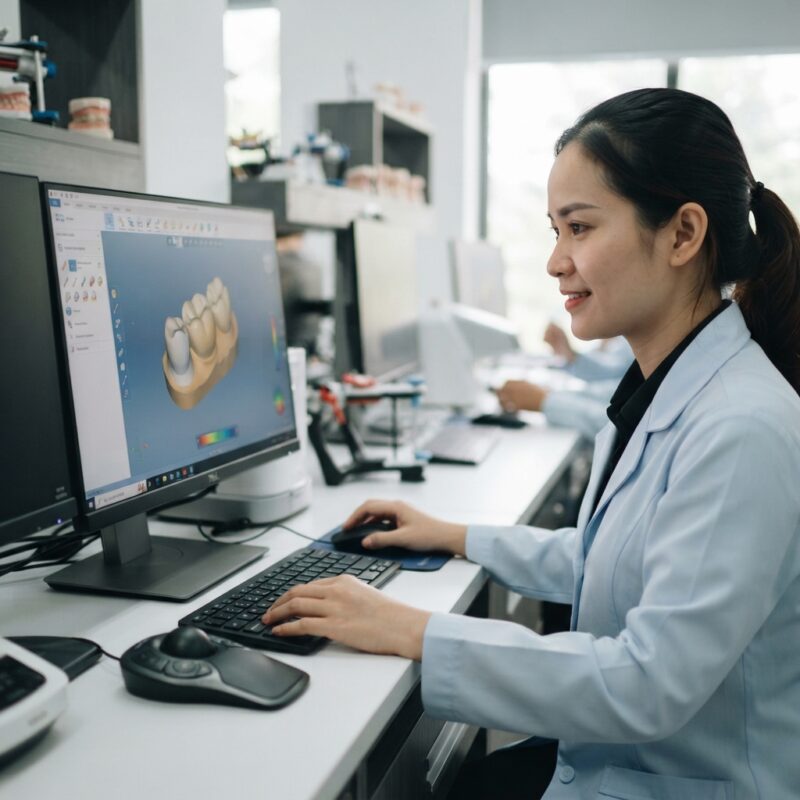
Outsourced digital crown design involves receiving scanned patient data, designing restorations using CAD software, and returning design files ready for fabrication. Typically, the dental lab or DSO scans the patient’s preparation or impression using an intraoral or desktop scanner, generating STL or proprietary files. These files are securely transmitted to the outsourced CAD CAM design provider, who uses advanced software like exocad or 3Shape Dental System to create precise crown and bridge frameworks, implant abutments, or other prosthetics.
The design files are then sent back for milling or 3D printing. Outsourcing partners often provide fast turnaround times, sometimes within 24 to 48 hours, helping labs maintain quick delivery schedules. This division of labor lets the lab focus on production and finishing without the complexity and cost of maintaining a full design team.
What are the key top benefits of dental CAD CAM outsourcing for crown and bridge labs 2026?
The main advantages include cost savings, improved design quality, scalability, access to expert designers, and enhanced workflow efficiency. Outsourcing eliminates the need for expensive CAD software licenses and recruitment of specialized staff, which can be particularly beneficial for smaller labs or DSOs expanding their digital capabilities.
- Cost Efficiency: Avoid large upfront investments in CAD software and training.
- Expertise: Gain access to certified CAD technicians skilled in the latest design protocols and dental materials.
- Faster Turnaround: Outsourcing providers often have dedicated teams ensuring rapid and reliable delivery.
- Scalability: Easily handle volume fluctuations without overstaffing or underutilized resources.
- Quality Consistency: Standardized digital design reduces errors and remakes in crown and bridge cases.
These benefits collectively enhance the lab’s competitiveness and ability to meet the increasing demands of modern dental practices and DSOs.
Which dental labs and DSOs benefit most from outsourcing CAD CAM digital design?
Outsourced dental CAD CAM design services are ideal for labs and DSOs seeking to expand digital workflows without significant capital or personnel investment. High-volume crown and bridge labs can offload peaks in workload, while smaller labs gain access to expertise that would be cost-prohibitive to hire in-house. DSOs with multiple locations benefit from centralized design consistency and faster, standardized case handling.
For example, a mid-sized lab processing 100+ cases weekly may subcontract design to reduce bottlenecks, while a single-dentist practice with on-site milling can outsource design to avoid hiring a dedicated CAD technician. Outsourcing also works well alongside surgical guide design services, providing comprehensive digital solutions for implant cases.
- Best for: High-volume labs, midsize DSOs, small labs expanding digital capabilities, clinics with milling but no design staff.
- Strengths: Flexibility, cost control, access to latest software updates, rapid scalability.
- Limitations: Dependence on external timelines, potential data security concerns (mitigated by secure transfer protocols).
What are the total cost of ownership implications for dental CAD CAM outsourcing?
Outsourcing CAD CAM design significantly reduces upfront capital expenditure and ongoing costs related to software maintenance, staff salaries, and training. Traditional in-house CAD design requires investment in industry-leading software licenses, hardware capable of handling 3D design, and hiring technicians skilled in design and material science. These costs vary by region and vendor but can easily exceed tens of thousands of dollars annually.
With outsourcing, labs pay on a per-case or subscription basis, converting fixed costs into variable expenses aligned with workload. This model improves cash flow and reduces financial risk. Additionally, labs avoid obsolescence costs since the provider manages software upgrades and training. However, outsourcing fees must be carefully benchmarked against in-house operational costs to ensure optimal ROI.
| Cost Factor | In-House CAD Design | Outsourced CAD CAM Design | Notes |
|---|---|---|---|
| Initial Software & Hardware Investment | High (CAD licenses, powerful workstations) | None | Outsourcing eliminates need for upfront purchases |
| Staffing Costs | Full-time CAD technicians | Included in service fees | Outsourcing converts fixed to variable costs |
| Training & Updates | Ongoing and costly | Managed by provider | Ensures access to latest software versions |
| Turnaround Time Impact | Dependent on staff availability | Often faster due to dedicated teams | Improved workflow efficiency |
| Data Security | Lab-controlled | Requires secure transfer protocols | Choose vendors with strong data protection |
How does outsourcing improve workflow efficiency in crown and bridge labs?
Outsourcing dental CAD CAM design streamlines the digital workflow by allowing labs to focus on fabrication and finishing while expert designers handle the complex design phase. This division of labor reduces bottlenecks, especially during periods of high case volume or staff turnover. Labs can better manage scheduling, reduce errors, and accelerate case completion.
Moreover, many outsourcing providers integrate quality control checks and use advanced software features such as automated margin detection and implant library management. This reduces manual intervention and the risk of human error. Labs also benefit from optimized file formats and design files ready for immediate milling or 3D printing, eliminating time-consuming adjustments.
When combined with leading scanning technologies from manufacturers like Medit or iTero, outsourcing fits seamlessly into modern digital dental workflows, enhancing overall productivity and patient satisfaction.
What are the security and compliance considerations when outsourcing dental CAD CAM design?
Data security and regulatory compliance are critical when outsourcing dental CAD CAM design services. Patient data must be handled in accordance with HIPAA regulations in the US or equivalent data privacy laws globally. Leading outsourcing providers employ encrypted data transfer protocols, secure servers, and strict access controls to protect sensitive information.
Labs should verify that their outsourcing partner complies with relevant standards and maintains confidentiality agreements. Additionally, it is important to establish clear protocols for data backup, disaster recovery, and audit trails. Choosing vendors with a strong reputation and certifications provides reassurance and legal protection.
Security concerns should not deter dental labs and DSOs from outsourcing, but rather encourage due diligence and contract clarity to mitigate risks effectively.
What software platforms and technologies are commonly used by dental CAD CAM outsourcing providers?
Most dental CAD CAM outsourcing providers utilize industry-leading software platforms such as exocad, 3Shape Dental System, and proprietary design tools optimized for crown and bridge work. These platforms support a wide range of restoration types, from single crowns to multi-unit bridges and implant abutments.
Providers also integrate with major scanning systems and manufacturing equipment, enabling smooth interoperability. Software features include automatic margin line detection, virtual articulation, and custom abutment libraries. Many outsourcing services keep pace with evolving dental materials and production methods, including zirconia, lithium disilicate, and hybrid ceramics.
Some providers offer cloud-based design platforms that allow labs to review and approve cases remotely, accelerating communication. Staying current with software and hardware advances is a key top benefit of dental CAD CAM outsourcing for crown and bridge labs 2026, ensuring clients receive high-quality designs aligned with best practices.
How do you decide between in-house CAD CAM design and outsourcing for your lab or DSO?
Choosing between in-house CAD CAM design and outsourcing depends on volume, budget, expertise, and growth plans. Labs with high case volumes and sufficient capital may benefit from investing in in-house design teams to maintain full control. However, this requires ongoing costs for software, hardware, training, and staff management.
In contrast, outsourcing is attractive for labs and DSOs wanting to scale flexibly, reduce overhead, or quickly implement digital workflows without delays. Outsourcing also reduces risk related to staff turnover and software obsolescence.
Consider these factors in your decision:
- Volume: High steady volume favors in-house; variable volume favors outsourcing.
- Budget: Outsourcing lowers upfront costs and financial risk.
- Expertise: Outsourcing provides access to experienced designers.
- Speed: Outsourcing often delivers faster turnaround during peak demand.
- Control: In-house offers maximum control over design nuances.
Labs may also adopt hybrid models, designing complex cases in-house and outsourcing routine or overflow work. This flexibility is a key top benefit of dental CAD CAM outsourcing for crown and bridge labs 2026.
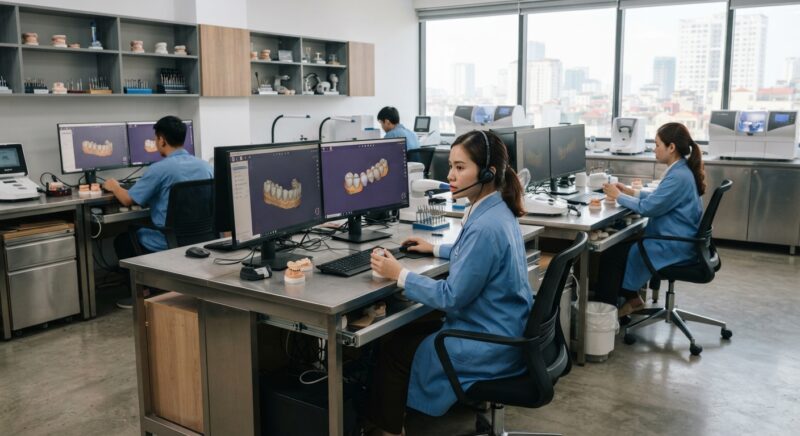
Do you need design capacity for your new equipment?
If you’ve invested in milling or 3D printing equipment but lack in-house CAD design expertise, outsourcing your digital design needs offers an efficient solution. Our dental CAD CAM outsourcing service lets your lab or clinic run production at full capacity without hiring additional designers, saving cost and accelerating case delivery. By partnering with experienced CAD technicians, you ensure high-quality, precise designs that maximize your new equipment’s potential.
Step-by-Step Guide to Integrating Outsourced Dental CAD CAM Design into Your Lab Workflow
Successfully incorporating outsourced CAD CAM design services into your dental lab or practice requires a clear, structured approach. Below is a detailed step-by-step guide to help you seamlessly integrate external design resources while maintaining quality and efficiency.
Step 1: Assess Your Current Workflow and Identify Pain Points
- Map out your existing design and production process. Identify bottlenecks, delays, and resource gaps where outsourcing could add value.
- Determine case volume and complexity. High volumes or complex cases such as implant-supported restorations often justify outsourcing.
- Evaluate your in-house capabilities. Consider current software, hardware, and staff proficiency to understand what tasks can be offloaded.
Step 2: Select the Right Outsourcing Partner
- Define your requirements. Specify turnaround times, design accuracy, types of restorations, and preferred communication methods.
- Request samples and references. Evaluate the quality of design files and ask for client testimonials or case studies.
- Check compatibility. Ensure your lab’s scanning and milling equipment accepts the file formats provided by the outsourcing partner.
Step 3: Establish Communication Protocols and File Transfer Systems
- Set up secure, HIPAA-compliant data transfer methods. This can include encrypted FTP, cloud platforms, or dedicated portals.
- Define feedback loops. Establish how and when revisions will be requested, approved, and communicated.
- Assign dedicated points of contact. Both your lab and the outsourcing provider should have clear roles for managing cases.
Step 4: Pilot and Refine the Process
- Start with a small batch of cases. Choose straightforward cases to test communication, turnaround, and design quality.
- Review the designs carefully. Check for fit, articulation, margin integrity, and occlusion accuracy.
- Gather feedback from your production team. Ensure the designs meet milling or 3D printing requirements with minimal adjustments.
- Refine the process. Address any misunderstandings or technical issues before scaling up.
Step 5: Scale Up and Monitor Performance
- Gradually increase case volume. Maintain quality checks and monitor turnaround times.
- Implement regular performance reviews. Use KPIs such as revision rates, design acceptance, and production efficiency.
- Maintain open communication. Encourage ongoing dialogue to address issues promptly and adapt to evolving needs.
Common Pitfalls and Mistakes to Avoid When Outsourcing Dental CAD CAM Design
Outsourcing dental CAD CAM design offers many benefits, but labs and practices must be aware of common challenges that can undermine success. Here are some frequent mistakes and how to avoid them.
1. Choosing Partners Based Solely on Cost
While cost savings are a key motivator, selecting a provider based only on price can compromise quality and turnaround. Low-cost providers may lack advanced software, skilled designers, or robust quality control systems.
- Tip: Evaluate the provider’s expertise, technology stack, and client satisfaction together with pricing.
2. Poor Communication and Ambiguous Instructions
Inadequate communication about case requirements, margin preferences, or design specifications can lead to errors and delays.
- Tip: Use standardized case submission forms and clear guidelines. Provide high-quality scans and reference photos when necessary.
3. Lack of Integration with Your Production Equipment
Sending files that are incompatible with your milling machines or 3D printers can cause rework and wasted material.
- Tip: Confirm file formats (e.g., STL, PLY, or proprietary formats) and design parameters before starting.
4. Neglecting Data Security and Compliance
Failing to ensure secure data handling and HIPAA compliance can expose your practice to legal risks.
- Tip: Verify the provider’s security protocols and sign appropriate confidentiality agreements.
5. Overlooking Turnaround Time Realities
Unrealistic expectations about turnaround times may result in missed deadlines and unhappy clients.
- Tip: Set clear service-level agreements (SLAs) and build in buffer times for revisions or unforeseen delays.
Cost and Quality Considerations: Balancing Investment and Outcome
Understanding the cost-quality trade-offs involved in dental CAD CAM outsourcing is crucial for making informed decisions that positively impact your lab’s bottom line and reputation.
Direct and Indirect Costs
- Design Fees: Outsourcing providers typically charge per case or per unit designed. Rates vary based on complexity (e.g., single crowns vs. multi-unit bridges).
- Data Transfer and Communication: While often overlooked, costs may arise from data storage, secure transfer services, or dedicated communication platforms.
- Rework and Adjustments: Poor initial designs can lead to increased chairside adjustments or remakes, adding hidden costs.
- Training and Transition: Initial onboarding requires time and resources to train staff on new workflows and systems.
Quality Impact on Lab Reputation
High-quality CAD designs reduce remakes, enhance patient satisfaction, and build strong relationships with dentists. Conversely, subpar designs can damage your lab’s credibility.
- Accuracy: Precise anatomic morphology and margin delineation ensure proper fit and function.
- Aesthetics: Custom shading and contouring details contribute to natural-looking restorations that satisfy patients.
- Durability: Proper design of connectors, wall thickness, and occlusal contacts prolongs restoration lifespan.
Strategies to Optimize Cost-Quality Balance
- Negotiate Volume Discounts: Labs with large case volumes can often secure better pricing.
- Implement Quality Audits: Regularly review outsourced designs to catch patterns of errors or inconsistencies.
- Collaborate on Continuous Improvement: Provide feedback to your design partner to align their outputs more closely with your expectations.
- Use Tiered Services: Some providers offer different quality levels or turnaround options, allowing you to match service to case priority.
Market-Specific Factors Influencing Dental CAD CAM Outsourcing Decisions
The decision to outsource dental CAD CAM design is influenced heavily by the characteristics of the local market and competitive landscape.
Regulatory Environment
Different regions have varying levels of regulatory oversight on dental devices and data privacy, affecting the feasibility of outsourcing.
- US and Canada: HIPAA compliance and FDA regulations require stringent data security and device traceability.
- Europe: GDPR mandates data protection, and MDR (Medical Device Regulation) governs medical devices including dental restorations.
- Emerging Markets: Regulations may be less strict but still evolving, requiring adaptable outsourcing agreements.
Labor Market and Skill Availability
Regions with a shortage of skilled dental CAD designers often see higher demand for outsourcing services, while areas with abundant talent may prefer in-house solutions.
- Urban Centers: Larger cities often have access to both in-house and outsourcing resources, allowing hybrid models.
- Rural or Remote Areas: Outsourcing can bridge gaps where recruiting or retaining skilled designers is challenging.
Technological Infrastructure
Reliable internet connectivity, modern scanning equipment, and compatible milling or printing devices are essential for smooth outsourcing.
- High-Tech Labs: Labs with cutting-edge technology can better leverage detailed CAD files and complex designs.
- Smaller Practices: May rely more heavily on outsourcing due to limited capital for technology investments.
Competitive Dynamics and Customer Expectations
Dental labs and DSOs must consider how outsourcing affects their market positioning and ability to meet dentist and patient demands.
- Faster Turnaround: In competitive markets, faster delivery times can be a key differentiator.
- Customization and Aesthetics: High-end cosmetic markets demand superior design quality, often necessitating expert outsourcing.
- Cost Sensitivity: Price-driven markets may prioritize outsourcing to reduce overhead and offer competitive pricing.
Contact us today to learn how our tailored outsourcing solutions can support your crown and bridge lab’s growth and digital transformation.