Understanding How 3D Dental Design Reduces Remake Rates in 2026
How 3D dental design reduces remake rates in 2026 is a critical question facing dental labs and Dental Service Organizations (DSOs) aiming to enhance their production quality and efficiency. The integration of advanced 3D CAD/CAM technologies allows for unparalleled precision in designing crowns, bridges, implants, surgical guides, dentures, orthodontic aligners, and night guards. This accuracy directly translates to fewer errors and less need for costly remakes, ultimately saving time and resources.
In an industry where accuracy directly impacts patient outcomes and lab profitability, leveraging 3D digital design software helps mitigate common pitfalls associated with traditional methods. This article explores the mechanisms behind this improvement and practical steps labs can take to benefit from these advances in 2026.
What is 3D dental design and how does it work?
3D dental design is the process of digitally creating dental restorations and appliances using computer-aided design (CAD) software combined with computer-aided manufacturing (CAM) tools.
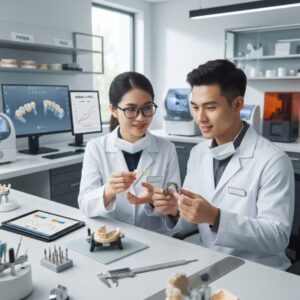
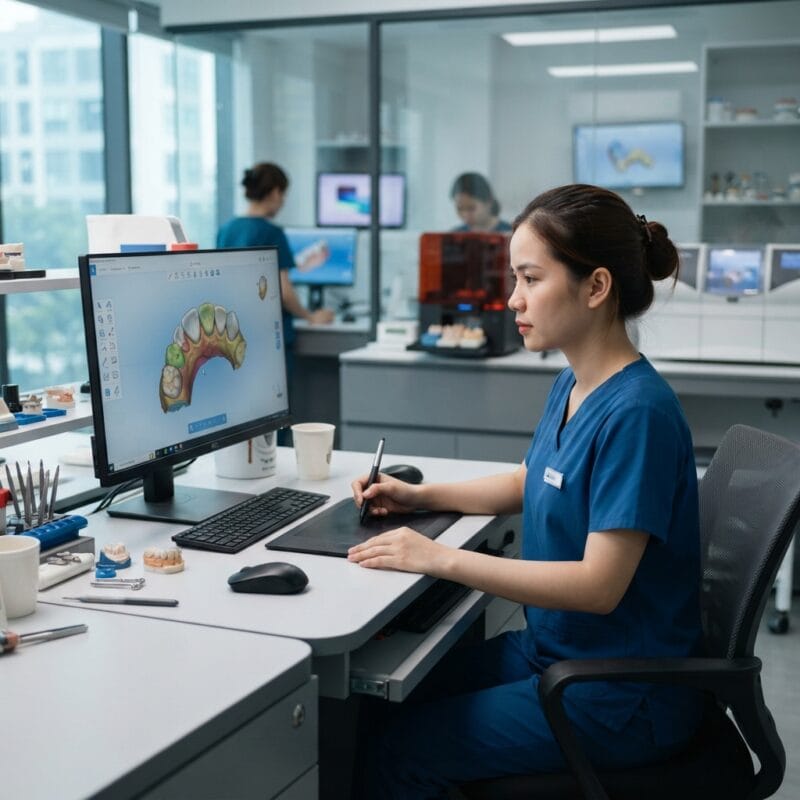
Using high-resolution scanners, patient data such as intraoral scans or impression models are converted into precise 3D digital models. Dental technicians then manipulate these virtual models to design crowns, bridges, implant abutments, surgical guides, dentures, and more. The designs are communicated to milling machines or 3D printers to fabricate the final restoration with exceptional accuracy.
Leading CAD software platforms like 3Shape and exocad provide intuitive interfaces and automated design features that reduce human error. This digital workflow enables dental labs to consistently produce high-quality restorations that fit seamlessly, reducing the need for adjustments or remakes.
Why are remake rates a significant concern for dental labs and DSOs?
Remake rates are a major concern because they represent wasted time, materials, and labor costs, while also delaying patient treatment and reducing customer satisfaction.
High remake rates can erode a lab’s profitability and strain relationships with dental practices. In DSOs, which often rely on standardized processes across multiple clinics, controlling remake rates is even more critical to maintaining operational efficiency and patient trust. Common causes of remakes include poor fit, occlusion errors, aesthetic mismatches, and inaccuracies in implant positioning.
By addressing these issues through precise digital design and manufacturing, labs can reduce the frequency of remakes substantially.
How 3D dental design reduces remake rates in 2026: Key benefits
In 2026, the impact of 3D dental design on reducing remake rates is more pronounced due to advances in software algorithms, scanning technology, and manufacturing precision. The key benefits include:
- Enhanced Accuracy: 3D design software allows for micron-level precision that minimizes fit issues and occlusal errors.
- Improved Collaboration: Digital files can be easily shared between labs, dentists, and implant manufacturers, ensuring alignment on design specifications.
- Automated Quality Checks: Built-in software tools detect potential design flaws before production, preventing costly errors.
- Consistent Reproducibility: Once a successful design is created, it can be stored and reused, ensuring consistent quality for future cases.
- Faster Turnaround Times: Digital workflows streamline production, reducing delays that can lead to rushed, error-prone work.
What role do CAD/CAM technologies play in minimizing remakes?
CAD/CAM technologies enable the precise translation of digital designs into physical restorations, eliminating many manual errors.
By integrating milling machines and 3D printers with CAD software, labs can fabricate crowns, bridges, and implant components with exact specifications. The consistency of CAD/CAM reduces variability that traditionally led to poor fits or occlusal problems, major contributors to remakes. Additionally, CAD/CAM systems often include simulation tools that predict how restorations will behave intraorally, allowing technicians to preemptively correct issues.
The impact of digital design on different dental prosthetics
How 3D dental design reduces remake rates in 2026 can be examined through its application across various prosthetic categories:
Crowns and Bridges
Digital impressions and 3D design enable precise margin definition and occlusal mapping. This results in restorations that require minimal adjustment chairside. The ability to simulate occlusion digitally ensures optimal bite alignment, decreasing the risk of post-cementation issues and remakes.
Implants and Surgical Guides
Implant surgical guides designed digitally ensure accurate implant placement, reducing complications during surgery. The precise fit of implant abutments and crowns designed via 3D CAD reduces misfits that often cause prosthetic failure. These digital guides are often produced using data from CBCT scans integrated into design software, improving clinical outcomes. For more on this, labs can explore surgical guide design services to complement their offerings.
Dentures and Orthodontic Aligners
3D design improves the precision of denture base and tooth arrangement, allowing better fit and function, which reduces patient complaints and remake requests. Similarly, digital workflows for orthodontic aligners enable staged tooth movement predictions, minimizing adjustments and remakes during treatment.
Night Guards
Digitally designed night guards ensure comfortable occlusal coverage and thickness, reducing the need for refitting. The precision of 3D scanning and design eliminates common causes of patient discomfort, the leading reasons for remakes in this category.
How does outsourcing 3D dental design benefit dental labs and DSOs?
Outsourcing 3D dental design to specialized providers offers dental labs and DSOs access to expert technicians and cutting-edge software without the overhead costs of in-house teams.
This approach allows labs to scale production quickly, maintain consistent quality, and reduce remake rates by leveraging providers who specialize exclusively in digital design workflows. Outsourcing partners often update their software regularly and invest in continuous training, ensuring clients benefit from the latest advances and best practices.
Moreover, outsourcing can free up internal staff to focus on manufacturing and finishing, further improving overall efficiency. Many outsourcing firms also provide integration with popular practice management systems and CAD/CAM platforms, facilitating seamless digital communication and case tracking.
What are the latest software advancements driving remake reduction in 3D dental design?
Recent improvements in artificial intelligence (AI) and machine learning have been integrated into dental CAD software to automate design optimizations that reduce human error.
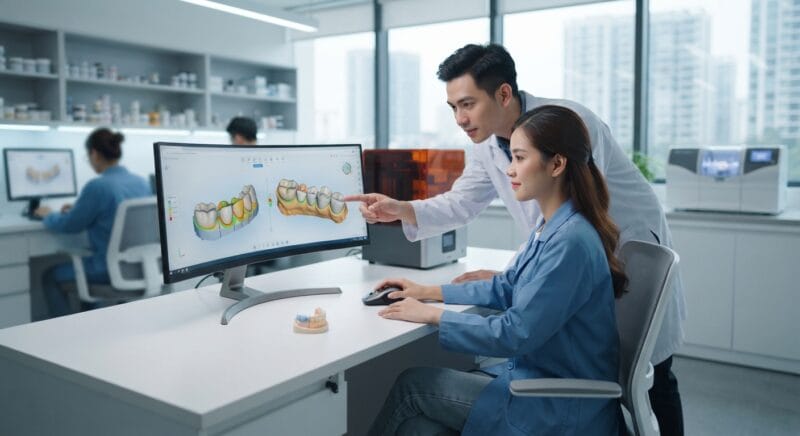
For example, some programs now automatically detect undercuts, interferences, and occlusal discrepancies, prompting technicians to make corrections before production. Enhanced simulation features allow virtual try-ins to predict fit and strength, significantly lowering the likelihood of remakes. Additionally, cloud-based collaboration tools enable real-time feedback between dentists, labs, and design specialists, ensuring that designs meet clinical expectations precisely.
Software providers such as Medit and Dentsply Sirona continue to push these innovations, making digital workflows faster and more reliable.
How 3D dental design reduces remake rates in 2026 through improved scanning accuracy
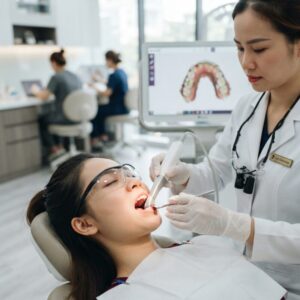
The foundation of effective 3D dental design is accurate digital data capture. Modern intraoral scanners have evolved to capture detailed, color-accurate impressions with minimal distortion. This high-fidelity data ensures that digital models reflect the patient’s anatomy precisely, which is essential for designing restorations that fit perfectly.
Improved scanning reduces errors caused by traditional impression materials such as shrinkage or bubbles, common sources of remakes. By starting with flawless digital impressions, labs reduce the need for rework caused by inaccurate models.
What are practical tips for labs to maximize the benefits of 3D dental design?
To fully realize how 3D dental design reduces remake rates in 2026, labs should consider the following strategies:
- Invest in training: Ensure technicians are proficient with the latest CAD software and digital design principles.
- Standardize workflows: Develop consistent protocols for scanning, design, and production to minimize variability.
- Leverage digital communication: Use integrated platforms to facilitate collaboration with dentists and other stakeholders.
- Utilize quality control tools: Employ software features that automatically check designs before fabrication.
- Partner with trusted outsourcing providers: Complement in-house capabilities with expert digital design services for complex cases.
Following these practical tips can significantly improve case acceptance rates and reduce costly remakes.
The future outlook: How 3D dental design reduces remake rates in 2026 and beyond
The trajectory of digital dental technology points toward even greater integration of AI, augmented reality, and automated manufacturing processes. This evolution will further reduce remake rates by enabling predictive analytics that forecast potential fit or aesthetic issues before production begins.
Additionally, emerging materials compatible with 3D printing and milling will enhance the durability and biocompatibility of restorations, reducing clinical failures and remakes. As more DSOs and labs adopt these technologies, standardized digital workflows will become the norm, elevating quality standards industry-wide.
Ultimately, understanding how 3D dental design reduces remake rates in 2026 equips labs to stay competitive and deliver superior outcomes to their dental partners.
How can labs integrate 3D dental design with other digital services?
Labs can integrate 3D dental design with complementary services such as digital shade matching, virtual articulators, and in-office scanning systems to create a comprehensive digital ecosystem.
This integration enhances communication between clinical and laboratory teams, leading to better case planning and fewer remakes. For example, combining implant design with precise surgical guides ensures restorations fit immediately upon placement, eliminating adjustment stages. This approach also works well alongside surgical guide design services.
Conclusion: Embracing digital design to reduce remakes and boost lab success
How 3D dental design reduces remake rates in 2026 is no longer theoretical but a proven reality for labs and DSOs embracing digital workflows. By adopting advanced CAD/CAM technologies, leveraging expert outsourcing, and standardizing processes, dental labs can achieve significant reductions in remakes.
This translates to improved profitability, higher client satisfaction, and better patient outcomes. Staying current with software advancements and scanning technology is essential to maintain this competitive advantage in 2026 and beyond.
If you want to learn more about optimizing your dental lab’s digital design processes, contact us today. Let our expert team help you reduce remake rates and elevate your lab’s performance.