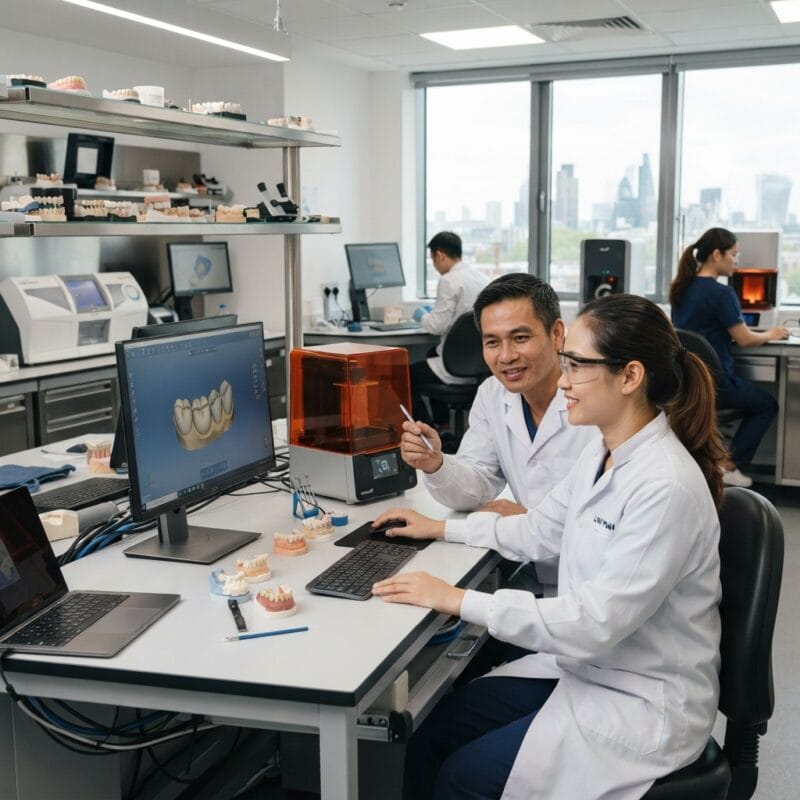
Understanding the dental technician shortage in the UK: practical solutions for dental labs in 2026
The dental technician shortage in the UK: practical solutions for dental labs in 2026 are critical to sustaining high-quality prosthetic production amid workforce challenges. The UK dental industry faces a significant gap between demand and the availability of skilled dental technicians, driven by retiring professionals, insufficient training capacity, and increased treatment complexity. This shortage threatens turnaround times, quality consistency, and ultimately patient outcomes. However, advancements in CAD/CAM digital design outsourcing provide actionable solutions that dental labs and Dental Support Organizations (DSOs) can adopt to mitigate these issues effectively.
What factors contribute to the dental technician shortage in the UK?
The dental technician shortage in the UK is caused by a combination of demographic shifts, training limitations, and evolving clinical demands. An aging technician workforce is retiring faster than new entrants are being trained, partly due to a lack of awareness about dental technology careers and limited educational programs. Additionally, the increasing complexity of restorations, including implant-supported prostheses and orthodontic aligners, demands higher skill levels and continuous professional development, which many labs struggle to provide. These factors collectively exacerbate the shortage, putting pressure on dental labs to find innovative ways to maintain service levels.
How can dental labs leverage CAD/CAM digital design outsourcing?
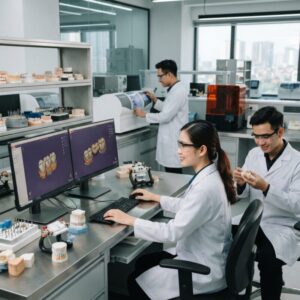
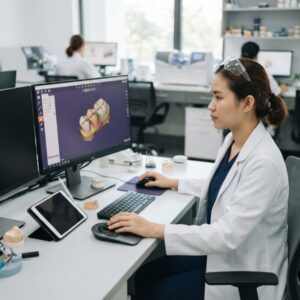
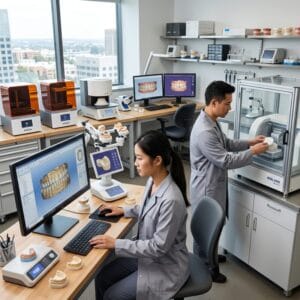
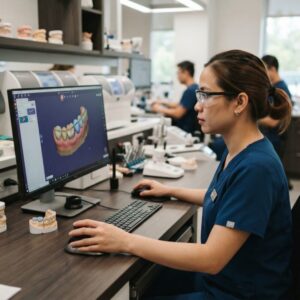
CAD/CAM digital design outsourcing allows dental labs to delegate complex design tasks such as crowns, bridges, implants, surgical guides, dentures, orthodontic aligners, and night guards to specialized external providers. This model offers a flexible, scalable solution that compensates for internal staffing shortages by tapping into expert digital design teams. Outsourcing partners equipped with the latest software platforms, such as those from Exocad or 3Shape, ensure high precision and rapid turnaround. By integrating outsourced digital workflows, labs can maintain production quality and speed while reallocating their limited in-house technicians to critical manual tasks.
Key benefits of digital design outsourcing amid the technician shortage
- Access to skilled digital designers: External CAD/CAM teams have specialized experience with complex cases, reducing the learning curve and errors.
- Increased capacity: Outsourcing expands design output without the need for permanent hires, helping labs meet growing demand.
- Cost efficiency: Labs avoid costs of recruitment, training, and software licenses by partnering with digital design providers.
- Faster turnaround times: Dedicated digital teams can prioritize urgent cases, improving lab responsiveness.
- Consistent quality: Standardized digital protocols minimize variability in prosthetic design and fit.
Which dental prosthetics benefit most from CAD/CAM outsourcing?
Crown and bridge restorations, implant surgical guides, dentures, orthodontic aligners, and night guards all benefit significantly from CAD/CAM outsourcing. Crowns and bridges require precise margin design and occlusal anatomy, which expert digital designers can deliver efficiently. Implant surgical guides must be meticulously modeled based on CBCT data for accuracy in implant placement, a specialty of many outsourced design services. Dentures and orthodontic aligners also demand intricate 3D modeling to ensure patient comfort and effectiveness. Night guards require custom occlusal adjustments that digital design can optimize. Outsourcing these products enables labs to maintain high standards despite technician shortages.
What role does technology play in addressing the technician shortage in 2026?
Technology is central to practical solutions for the dental technician shortage in the UK: practical solutions for dental labs in 2026. Advanced CAD/CAM software platforms automate design processes, reducing manual input and human error. Machine learning and AI integration within these platforms enhance design accuracy and workflow efficiency. Additionally, cloud-based collaboration tools enable seamless communication between labs, clinicians, and outsourced design teams, ensuring real-time feedback and adjustments. These technological innovations empower labs to optimize limited human resources and meet increasing clinical demands.
How does integrating CAD/CAM software improve lab workflows?
Integrating CAD/CAM software streamlines workflows by digitizing traditionally manual steps such as impression scanning, margin marking, design articulation, and milling preparation. This integration reduces the dependency on large technician teams by enabling automation of repetitive tasks and enhancing data accuracy. For example, software from Dentsply Sirona supports end-to-end digital workflows that optimize time and reduce errors. Labs can also track case progress digitally, improving transparency and scheduling. This leads to higher throughput with fewer technicians, directly countering the shortages faced.
How can DSOs benefit from outsourcing digital dental design services?
DSOs, managing multiple dental practices, can leverage outsourced digital design services to centralize and standardize prosthetic production across their network. This approach mitigates regional technician shortages by pooling design tasks with expert external teams. Outsourcing supports consistent quality control, reduces operational complexity, and allows DSOs to scale services without extensive capital investment in training or equipment. By adopting these practical solutions for the dental technician shortage in the UK: practical solutions for dental labs in 2026, DSOs can enhance patient satisfaction through timely and precise restorations.
What are the challenges and considerations when outsourcing dental lab design?
Outsourcing requires careful selection of partners with proven expertise, secure data handling protocols, and compatibility with existing lab systems. Communication must be clear to avoid design misunderstandings, and turnaround times agreed upon to meet clinical schedules. Labs should ensure that outsourced designs comply with UK regulatory standards and that intellectual property rights are respected. Despite these challenges, the benefits of overcoming the dental technician shortage in the UK: practical solutions for dental labs in 2026 through outsourcing outweigh the risks when managed properly.
What training and upskilling strategies can labs adopt alongside outsourcing?
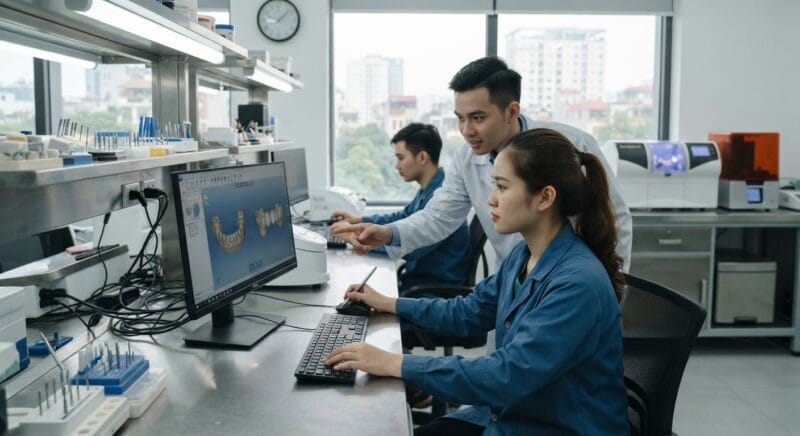
While outsourcing addresses immediate capacity needs, investing in training and upskilling remaining in-house technicians is vital for long-term sustainability. Labs can implement continuous education programs focused on digital design skills, CAD/CAM software proficiency, and emerging prosthetic materials. Partnering with accredited institutions or professional bodies like the American Dental Association for best practices can enhance technician capabilities. These strategies complement outsourcing efforts by empowering labs to better manage complex cases internally and reduce reliance on external providers.
How do digital workflows support technician retention?
Digital workflows reduce technician burnout by automating repetitive tasks and enabling focus on higher-value activities such as quality control and complex case design. This increases job satisfaction and professional growth opportunities, helping retain skilled staff. Moreover, access to cutting-edge technology attracts younger talent interested in digital dentistry careers, gradually addressing the root causes of the dental technician shortage in the UK: practical solutions for dental labs in 2026.
What future trends will impact solutions for the dental technician shortage?
Emerging trends such as AI-driven design automation, augmented reality (AR) for virtual case reviews, and integration of intraoral scanners with cloud-based design platforms will further revolutionize dental lab operations. These technologies will enable even smaller labs to deliver complex prosthetics efficiently without large teams. Additionally, increased collaboration between clinicians, labs, and outsourced digital providers through interoperable platforms will enhance precision and patient outcomes. Staying ahead of these trends is essential for labs seeking sustainable solutions for the dental technician shortage in the UK: practical solutions for dental labs in 2026.
How will regulatory changes affect outsourcing and digital design?
Regulatory bodies are increasingly emphasizing data security, traceability, and patient safety in digital workflows. Labs must ensure outsourced providers comply with UK Medical Device Regulations and GDPR standards. Adherence to these regulations assures clinical teams and patients of the safety and reliability of digitally designed restorations. Proactive regulatory compliance will be a competitive advantage for labs addressing the dental technician shortage in the UK: practical solutions for dental labs in 2026.
Summary: Implementing practical solutions for the dental technician shortage in the UK
- Recognize the multifactorial causes behind the technician shortage and its impact on lab operations.
- Leverage CAD/CAM digital design outsourcing to access skilled designers and augment capacity.
- Integrate advanced CAD/CAM software to optimize workflows and reduce technician workload.
- DSOs can centralize prosthetic production through outsourcing for consistent quality and scalability.
- Invest in upskilling programs to empower in-house technicians and improve retention.
- Stay informed on emerging digital trends and regulatory changes to future-proof lab practices.
By embracing these practical solutions for the dental technician shortage in the UK: practical solutions for dental labs in 2026, dental labs and DSOs can sustain high-quality prosthetic delivery despite workforce constraints. This approach ensures patient satisfaction, operational efficiency, and business growth in an evolving dental industry landscape.
Outsourcing digital dental design also works well alongside surgical guide design services and complements in-house production facilities to balance workload effectively.
For labs considering this strategic shift, partnering with experienced CAD/CAM dental design providers who specialize in crown and bridge, implants, dentures, orthodontic aligners, and night guards is essential to maximize benefits and mitigate risks.
Contact us today to learn how we can help your lab overcome the dental technician shortage in the UK with tailored CAD/CAM digital design outsourcing solutions. Let’s ensure your lab stays competitive and efficient in 2026 and beyond.