Understanding Medical Device Compliance for Dental Labs in Canada (Health Canada) in 2026
Medical device compliance for dental labs in Canada (Health Canada) in 2026 refers to adhering to the regulatory standards and requirements set forth by Health Canada that govern the design, manufacture, and sale of dental medical devices. These regulations ensure patient safety, device efficacy, and quality control within the dental industry. As digital technologies such as CAD/CAM design and 3D printing accelerate innovation in dental prosthetics, dental labs and Dental Service Organizations (DSOs) must stay current with these evolving compliance mandates.
In 2026, Health Canada’s regulatory framework continues to emphasize rigorous licensing, quality management systems, and post-market surveillance for medical devices including crowns, bridges, implants, surgical guides, dentures, orthodontic aligners, and night guards. Dental labs leveraging outsourced CAD/CAM digital design services must also ensure their partners meet these compliance requirements to avoid regulatory penalties and protect patient health.
What Are the Key Regulatory Updates for 2026 Affecting Dental Labs?
The key regulatory updates impacting medical device compliance for dental labs in Canada (Health Canada) in 2026 include stricter requirements on device classification, enhanced quality management system (QMS) expectations, and expanded post-market safety obligations. Health Canada has updated its Medical Devices Regulations (SOR/98-282) to better align with international standards such as ISO 13485 and the Medical Device Single Audit Program (MDSAP).
Dental labs must now classify devices more precisely, with many dental prosthetics falling under Class II or III medical devices, requiring appropriate licensing and registration. The QMS must cover all steps from digital design through manufacturing and distribution, including risk management, traceability, and corrective action processes. Additionally, labs must maintain vigilance through adverse event reporting and mandatory recalls if safety issues arise.
These updates are designed to increase transparency, improve patient safety, and foster innovation while ensuring compliance. Outsourcing CAD/CAM design services must also comply with these updated regulations, necessitating thorough vendor assessments and contractual compliance clauses.
How Does Medical Device Compliance Impact Dental CAD/CAM Digital Design Outsourcing?
Medical device compliance for dental labs in Canada (Health Canada) in 2026 directly affects outsourcing CAD/CAM digital design services by establishing strict regulatory expectations on third-party providers. Outsourcing partners must demonstrate compliance through certification, quality audits, and adherence to Health Canada’s licensing requirements for medical devices.
Dental labs that outsource crown and bridge designs, implant planning, surgical guides, or orthodontic aligners must ensure that their partners operate under a compliant quality management system that aligns with Canadian regulations. Non-compliance risks not only regulatory fines but also delays in product approval, potential recalls, and damage to professional reputation.
Integrating compliance requirements into outsourcing contracts, performing due diligence on digital design vendors, and coordinating regulatory reporting responsibilities are critical. This collaboration ensures the digital design outputs meet Canadian medical device standards, facilitating smooth device licensing and market entry.
What Are the Medical Device Classifications Relevant to Dental Devices?
Medical device classification in Canada is a tiered system that categorizes devices based on risk, ranging from Class I (lowest risk) to Class IV (highest risk). For dental labs, understanding these classifications is vital for compliance. Common dental devices such as crowns, bridges, dentures, and night guards generally fall under Class II devices, whereas dental implants and surgical guides are typically Class III due to their higher risk profile.
Class II devices require a medical device license (MDL) issued by Health Canada supported by evidence of safety and effectiveness. Class III devices demand more rigorous clinical data and quality controls. Orthodontic aligners may be classified depending on their use and complexity.
Compliance for each classification entails specific documentation, testing, and licensing protocols. Dental labs and DSOs must verify the classification of their devices early in the design process and ensure their CAD/CAM outputs meet the necessary standards to facilitate Health Canada approval.
Which Quality Management Systems Support Medical Device Compliance in Dental Labs?
Implementing a robust Quality Management System (QMS) is essential for medical device compliance for dental labs in Canada (Health Canada) in 2026. The most widely recognized standard is ISO 13485, which specifies requirements for a comprehensive QMS for the design and manufacture of medical devices.
Dental labs adopting CAD/CAM digital design outsourcing should ensure their own QMS integrates vendor controls, supplier evaluations, and design validation processes. This includes defining procedures for risk management, document control, traceability, and corrective and preventive actions (CAPA).
Health Canada also accepts conformity assessment reports from audits conducted under the Medical Device Single Audit Program (MDSAP), which covers Canadian regulations alongside other global markets. Labs aligned with MDSAP protocols can streamline compliance and reduce audit redundancies.
Adopting these QMS frameworks helps dental labs manage compliance proactively, minimize errors in digital design and manufacturing, and maintain regulatory readiness.
How Does Health Canada’s Licensing Process Work for Dental Medical Devices?
Health Canada’s licensing process for dental medical devices requires manufacturers or importers to submit a medical device license application demonstrating the device’s safety, effectiveness, and quality. This process applies equally to devices produced by dental labs or outsourced CAD/CAM design providers.
The application package includes detailed device descriptions, labeling, clinical evidence if applicable, and proof of compliance with recognized standards. Health Canada reviews this information and issues a license if requirements are met, allowing the device to be marketed in Canada.
For Class II devices, the process typically involves submitting a Medical Device License Application Form and device-specific information. Class III devices require more comprehensive documentation, including clinical trial data and manufacturing process validation.
Dental labs must maintain their license throughout the device lifecycle, updating Health Canada on any significant changes. Partnering with experienced CAD/CAM outsourcing providers who understand these licensing requirements can simplify compliance management.
What Are the Post-Market Surveillance Obligations for Dental Labs?
Post-market surveillance is a critical aspect of medical device compliance for dental labs in Canada (Health Canada) in 2026, ensuring ongoing safety and performance of dental devices after they enter the market. Dental labs and DSOs must monitor device performance, report adverse events, and implement corrective actions as needed.
This includes maintaining complaint handling systems, tracking device distribution, and conducting vigilance reporting to Health Canada when incidents or malfunctions occur. Surgical guides, implants, and orthodontic aligners require particular attention due to their direct impact on patient health.
Dental labs utilizing CAD/CAM outsourcing must coordinate post-market responsibilities with their design partners, ensuring data sharing and compliance with reporting timelines. Effective post-market surveillance helps prevent device recalls and protects the lab’s reputation.
How Can Dental Labs Prepare for Compliance Audits in 2026?
Dental labs can prepare for medical device compliance audits by establishing documented procedures, maintaining comprehensive records, and training staff on regulatory requirements. Audits assess conformity with Health Canada’s regulations, ISO 13485, and applicable licensing conditions.
Preparation involves conducting internal audits, validating CAD/CAM digital designs, and demonstrating effective risk management. Ensuring traceability from raw materials through final device delivery is essential. Outsourced design partners must also be audit-ready, with accessible quality records and certifications.
Engaging compliance consultants or leveraging audit management software tailored for dental labs can streamline the process. Preparing for audits reduces the risk of non-compliance findings and supports continuous improvement in device quality and patient safety.
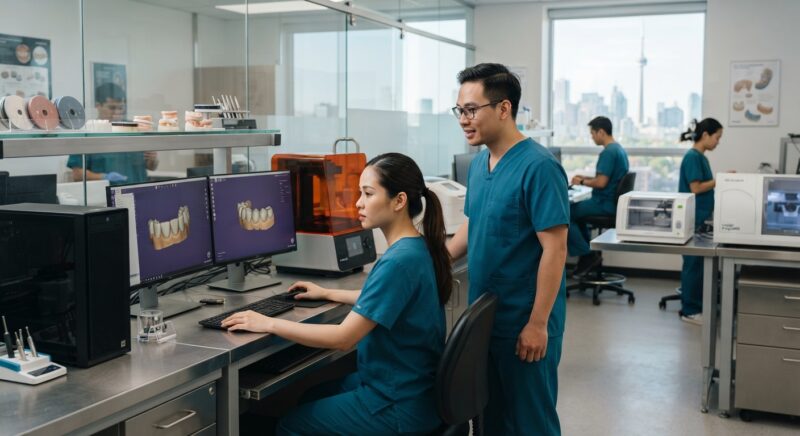
What Role Does Technology Play in Ensuring Compliance for Dental Labs?
Technology plays a transformative role in achieving medical device compliance for dental labs in Canada (Health Canada) in 2026, particularly through CAD/CAM digital design, 3D printing, and quality management software. Advanced digital workflows enable precise device design, consistent manufacturing, and real-time quality monitoring.
Using software platforms from trusted providers like 3Shape or exocad, dental labs can maintain design control, version histories, and output validation essential for regulatory compliance. Digital data archives facilitate traceability and audit responses.
In addition, integrating compliance checklists and automatic alerts within CAD/CAM software helps reduce human errors and enforce design standards. Cloud-based systems also enable collaboration with outsourcing partners while maintaining secure data governance.
Overall, leveraging technology not only increases operational efficiency but also strengthens compliance with Health Canada’s evolving medical device regulations.
Conclusion: Navigating Medical Device Compliance Successfully in 2026
Medical device compliance for dental labs in Canada (Health Canada) in 2026 is a complex but manageable challenge that requires a thorough understanding of regulatory updates, device classifications, quality management systems, and licensing processes. Dental labs and DSOs must ensure their internal teams and outsourcing partners adhere to stringent standards governing dental prosthetics and devices.
By proactively implementing ISO 13485-aligned QMS, conducting risk management, preparing for audits, and utilizing advanced CAD/CAM technologies, dental labs can maintain compliance and deliver safe, effective medical devices to patients across Canada.
For dental labs seeking expert CAD/CAM digital design outsourcing services that comply fully with Health Canada regulations, partnering with a trusted provider is essential for seamless compliance management and business success.
Contact Us
Practical Cost and Quality Considerations for Compliance in Dental Labs
Balancing cost efficiency with strict regulatory compliance is one of the most critical challenges dental labs face in 2026. While adhering to Health Canada’s medical device standards ensures patient safety and product reliability, it also brings increased operational expenses that can impact profitability. Understanding where to invest and where to optimize is essential for sustainable compliance management.
Budgeting for Compliance: Key Cost Drivers
- Quality Management System (QMS) Implementation: Establishing or upgrading a QMS aligned with ISO 13485 and Health Canada requirements involves software acquisition, staff training, and potentially hiring quality assurance specialists.
- Device Testing and Validation: Costs associated with prototype testing, biocompatibility assessments, and clinical evaluations can be significant, especially for novel dental devices.
- Regulatory Submissions and Licensing: Fees for device licensing applications, regulatory consultancy services, and maintaining up-to-date documentation add to expenses.
- Post-Market Surveillance and Reporting: Monitoring device performance post-launch requires investment in data collection systems and dedicated personnel to manage adverse event reporting.
- Technology Upgrades: Integrating compliant CAD/CAM software and 3D printing technology with traceability capabilities may involve upfront capital expenditure.
Quality vs. Cost: Real-World Tradeoffs
Dental labs often face decisions such as whether to outsource certain production steps or keep them in-house. For example, outsourcing complicated prosthetic fabrication to a specialized lab with established compliance infrastructure might reduce internal costs but increase per-unit expenses. Conversely, investing in in-house digital manufacturing capabilities can improve turnaround times but requires upfront compliance investments.
One practical approach is conducting a thorough cost-benefit analysis that includes:
- Evaluating compliance risks and potential penalties of non-compliance.
- Assessing long-term savings from quality improvements (e.g., reduced remakes and returns).
- Considering customer expectations for quality and compliance certifications.
By prioritizing quality management investments that also streamline operations, dental labs can avoid costly recalls and build stronger relationships with dental practices.
Step-by-Step Guidance for Integrating Compliance into Daily Lab Operations
Integrating Health Canada’s medical device compliance requirements into daily workflows ensures ongoing adherence and reduces the risk of audit findings or regulatory action. Below is a detailed stepwise approach for dental labs to embed compliance seamlessly:
Step 1: Conduct a Compliance Gap Analysis
- Review current processes against Health Canada regulations and ISO 13485 standards.
- Identify gaps in documentation, training, quality controls, and device tracking.
- Prioritize gaps based on risk level and resource availability.
Step 2: Develop or Update Standard Operating Procedures (SOPs)
- Create clear SOPs covering device design, manufacturing, quality checks, and documentation.
- Include procedures for handling nonconformities and corrective/preventive actions (CAPA).
- Ensure SOPs reflect latest regulatory changes and are accessible to all staff.
Step 3: Implement Training Programs
- Train all employees on compliance requirements relevant to their roles.
- Use a combination of classroom, hands-on, and digital learning methods.
- Maintain training records for audit purposes.
Step 4: Establish Document Control and Traceability Systems
- Use digital document management systems to control versions and approvals.
- Implement unique device identification (UDI) or batch tracking for every product.
- Ensure traceability from raw materials through final product delivery.
Step 5: Perform Routine Internal Audits
- Schedule regular audits to verify compliance adherence.
- Use audit findings to improve processes and update training.
- Document all corrective actions taken.
Step 6: Maintain Open Communication with Dental Practices
- Establish feedback loops with client dental practices regarding device performance.
- Promptly address any post-market quality issues.
- Share compliance certification updates to build trust and transparency.
Common Mistakes Dental Labs Make in Medical Device Compliance and How to Avoid Them
Even experienced dental labs can stumble on compliance requirements, leading to costly delays, fines, or reputational damage. Awareness of frequent pitfalls and proactive prevention strategies is crucial.
1. Incomplete or Outdated Documentation
Failure to maintain comprehensive and current documentation is perhaps the most common compliance error. This includes missing device history records, incomplete corrective action logs, or obsolete SOPs.
- Prevention Tips: Implement a centralized document management system with automated alerts for review dates. Assign responsibility for document control to a dedicated compliance officer.
2. Insufficient Staff Training and Awareness
Non-compliance often arises from employees not fully understanding regulatory requirements or their role in maintaining compliance.
- Prevention Tips: Schedule regular mandatory training sessions and refresher courses. Use quizzes and practical assessments to confirm comprehension.
3. Neglecting Post-Market Surveillance Obligations
Some labs overlook the importance of monitoring devices after they reach the market, missing adverse event reports or failing to update risk assessments.
- Prevention Tips: Designate a post-market surveillance coordinator. Use digital tools to track customer feedback and complaints systematically.
4. Poor Supplier and Outsourcing Controls
Unvetted suppliers or outsourcing partners can introduce compliance risks if their processes do not meet Health Canada standards.
- Prevention Tips: Conduct thorough supplier audits and require documented compliance certifications. Include compliance clauses in contracts.
5. Underestimating Technology Integration Challenges
Introducing new CAD/CAM or 3D printing technologies without proper validation can lead to non-compliant devices.
- Prevention Tips: Perform comprehensive software and equipment validation. Document all testing results and maintain change control records.
Market-Specific Compliance Considerations for Canadian Dental Labs in 2026
The Canadian dental device market presents unique regulatory and business environment factors that dental labs must consider beyond standard Health Canada compliance. These market specifics influence how labs design, manufacture, and distribute dental medical devices.
Regional Regulatory Variations
While Health Canada sets federal regulations, provincial health authorities and dental regulatory bodies may impose additional requirements or guidelines affecting device use and distribution. For example, Quebec’s provincial health system has specific procurement rules that dental labs must navigate when contracting with public dental clinics.
Dental labs operating across multiple provinces should establish compliance teams familiar with regional nuances to ensure all legal obligations are met.
Supply Chain and Material Sourcing Challenges
Global supply chain disruptions can impact access to compliant raw materials such as biocompatible resins or metals. Canadian labs must develop robust supplier qualification processes and maintain alternative approved suppliers to avoid production delays that could jeopardize compliance deadlines.
Customer Expectations and Market Trends
Dental practices increasingly demand rapid turnaround times, personalized device solutions, and digital integration. Labs that align compliance efforts with these trends—such as adopting validated CAD/CAM workflows and maintaining transparent traceability—gain competitive advantages.
Moreover, the growing emphasis on sustainability in healthcare means that some clients prefer labs that demonstrate environmentally responsible manufacturing practices alongside regulatory compliance.
Pricing Strategies Under Compliance Constraints
Given the rising costs of compliance, dental labs must carefully set pricing to cover expenses without alienating cost-sensitive dental practices. Transparent communication about the value of compliance—such as improved safety, reliability, and reduced liability risks—can justify premium pricing.
Offering tiered service levels or customizable device options can also enable labs to tailor pricing while maintaining compliance standards across all offerings.
Contact us today to learn how our CAD/CAM digital design outsourcing services ensure full medical device compliance for dental labs in Canada (Health Canada) in 2026. Let’s help your lab stay ahead of regulations and deliver exceptional dental solutions.