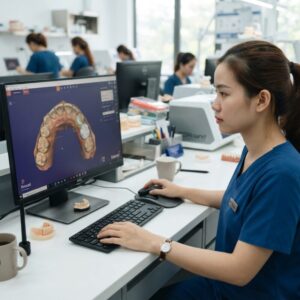
Understanding the Importance of Accurate Digital Records in Dentistry
Accurate digital records are the foundation of a streamlined restorative workflow, and they play a critical role in reducing costly remakes. In the context of how dentists can reduce remake rates with better digital records 2026, it is essential to recognize that digital impressions, 3D scans, and precise design data collectively ensure the dental lab receives clear, comprehensive information for fabrication.
Digital records eliminate many traditional errors associated with physical impressions, such as distortion or damage during transit. These records not only improve communication between dental practices and labs but also serve as a permanent, accessible reference that can be reexamined or modified without repeated patient visits. This advantage is particularly significant for complex restorations like implants, surgical guides, dentures, and orthodontic appliances.
Moreover, the integration of CAD/CAM technology enables the creation of highly customized prosthetics, reducing guesswork and manual adjustments. For dental service organizations (DSOs) managing multiple offices, standardized digital record protocols can create consistency across cases, further lowering remake rates and enhancing efficiency.
How Does Digital Impression Accuracy Impact Remake Rates?
Digital impression accuracy directly affects the fit and function of dental restorations, making it a key factor in how dentists can reduce remake rates with better digital records 2026.
Inaccurate digital scans can lead to ill-fitting crowns, bridges, or surgical guides, resulting in remakes that increase costs and patient dissatisfaction. Modern intraoral scanners capture high-resolution 3D data with minimal distortion, but operator skill and scanning protocols also influence outcomes.
Ensuring proper scanner calibration, adequate soft tissue management, and thorough scanning techniques can help produce precise digital impressions. Additionally, selecting scanners from reputable manufacturers like 3Shape or iTero can improve data quality. When combined with expert digital design outsourcing, these accurate records minimize errors during the manufacturing process.
What Role Does CAD/CAM Digital Design Outsourcing Play in Reducing Remake Rates?
CAD/CAM digital design outsourcing provides dental labs and DSOs access to specialized expertise and advanced technology, which is crucial for how dentists can reduce remake rates with better digital records 2026.
Outsourcing allows labs to leverage experienced technicians skilled in digital workflows, ensuring restorations meet exact specifications. This reduces inconsistencies common in in-house designs, such as improper margin design or occlusal discrepancies. Furthermore, outsourced design teams often use cutting-edge software platforms like exocad or Amann Girrbach, enabling precise customization of crowns, bridges, implants, dentures, night guards, and orthodontic aligners.
By partnering with a trusted CAD/CAM design service, dentists and labs benefit from faster turnaround times, improved case communication, and fewer remakes, directly addressing common pain points in restorative dentistry.
Steps Dentists Can Take to Improve Digital Record Quality
To maximize the benefits of digital workflows, dentists should adopt several best practices that support how dentists can reduce remake rates with better digital records 2026.
- Training and Certification: Ensure clinical staff are trained in intraoral scanning techniques to capture complete and accurate images.
- Standardized Protocols: Develop standardized scanning and data submission protocols to maintain consistency across all cases.
- Pre-Scan Preparation: Manage soft tissue, isolate the area, and control saliva to reduce scan artifacts.
- Use of High-Quality Equipment: Invest in reliable scanners and regularly update software to benefit from the latest improvements.
- Quality Control Checks: Review digital records for completeness and detail before sending to the lab or design service.
These measures ensure that the digital records provided are accurate and actionable, reducing the risk of remakes caused by incomplete or flawed data.
How Can Digital Workflows Enhance Communication Between Dentists and Dental Labs?
Effective communication is essential in how dentists can reduce remake rates with better digital records 2026, and digital workflows facilitate this by enabling seamless data exchange.
Cloud-based platforms and secure file sharing allow dentists to transmit digital impressions and design files instantly to labs and outsourcing partners. This real-time collaboration enables clarification of case requirements, review of preliminary designs, and prompt feedback on issues, reducing delays and misunderstandings.
Moreover, digital workflows often include integrated messaging, case tracking, and version control, which help maintain transparency and accountability throughout the restorative process. Labs can also provide virtual try-ins or design previews, allowing dentists to approve or request modifications early, preventing costly remakes.
These communication enhancements are especially valuable for DSOs coordinating between multiple offices and centralized labs, supporting uniform quality and efficiency.
What Are Common Challenges in Digital Record Management and How to Overcome Them?
Despite advancements, challenges remain in how dentists can reduce remake rates with better digital records 2026 due to data management issues such as file incompatibility, incomplete scans, and software learning curves.
File compatibility problems can occur when mismatched systems or outdated software hinder smooth data transfer between clinics and labs. To overcome this, adopting open-standard file formats like STL or PLY and ensuring all parties update their CAD/CAM software regularly is critical.
Incomplete scans often result from operator error or patient movement. Addressing this requires ongoing training and patient management strategies to minimize retakes. Additionally, implementing quality assurance protocols to verify digital records before submission can catch errors early.
The learning curve associated with new digital tools can slow adoption. Partnering with experienced digital design outsourcing services helps bridge this gap by providing expert support and guidance, allowing clinicians to focus on patient care.

How Does Integration of Digital Records with Surgical Guide and Implant Planning Reduce Remakes?
Integrating digital records with surgical guide and implant planning drastically reduces remakes by ensuring precise implant placement and prosthetic fit, a key aspect of how dentists can reduce remake rates with better digital records 2026.
Advanced software allows clinicians to merge CBCT data with intraoral scans, creating a comprehensive 3D model for virtual implant planning. This integration facilitates the design of highly accurate surgical guides that translate virtual plans to clinical reality, minimizing errors during implant placement.
When combined with outsourced CAD/CAM design, these guides and prosthetics are fabricated to exact specifications, reducing adjustments and remakes. Additionally, this approach improves patient outcomes by decreasing surgical time and enhancing prosthetic longevity.
Such digital integration is gaining traction among DSOs aiming to standardize implant workflows across multiple sites, ensuring consistency and quality.
What Are the Benefits of Outsourcing Night Guard and Orthodontic Aligner Design Digitally?
Outsourcing night guard and orthodontic aligner design digitally offers key advantages in how dentists can reduce remake rates with better digital records 2026 by leveraging specialized design expertise and technology.
Night guards require precise occlusal contact and comfortable fit, which can be challenging to achieve without advanced CAD tools. Expert design services optimize thickness, relief areas, and material usage to enhance patient compliance and device durability.
Similarly, orthodontic aligners depend on accurate digital models for incremental tooth movement. Outsourced designers use dedicated software to plan and fabricate aligners that fit seamlessly, reducing the need for refitting or remakes.
By entrusting these designs to experienced CAD/CAM providers, dental labs and practices can improve turnaround times and quality, freeing up internal resources and enhancing patient satisfaction.
How Can Dentists Leverage Technology Updates to Stay Ahead in Digital Record Accuracy?
Staying current with technology updates is vital for how dentists can reduce remake rates with better digital records 2026, as new tools and software improvements continuously enhance scan accuracy and design capabilities.
Regular updates often include improved scanning algorithms, enhanced surface detection, and better integration with lab software. Dentists and labs should establish relationships with manufacturers like Dentsply Sirona or Straumann to receive timely updates and training resources.
Additionally, emerging technologies such as AI-assisted margin detection, automated design suggestions, and faster 3D printing materials are transforming workflows. Early adoption of these innovations positions practices and labs to reduce remakes by improving overall precision and predictability.
Participation in continuing education and industry events also helps teams stay informed about best practices and new capabilities.
Final Thoughts: The Future of Digital Records in Reducing Remakes
Understanding how dentists can reduce remake rates with better digital records 2026 requires embracing digital transformation and strategic partnerships. Accurate digital impressions, efficient communication, and expert CAD/CAM design outsourcing collectively minimize errors that often lead to remakes.
By investing in technology, training, and trusted design partners, dental labs and DSOs can enhance case quality, reduce turnaround times, and improve patient satisfaction. This holistic approach not only lowers costs associated with remakes but also strengthens the reputation of dental practices in providing reliable, high-quality restorations.
Integrating these strategies alongside surgical guide design and digital crown design services will further optimize workflows and outcomes.
Contact Us for Expert CAD/CAM Digital Design Outsourcing
Practical Checklist for Ensuring High-Quality Digital Records in Dental Practices
Implementing a systematic checklist can significantly enhance the accuracy and consistency of digital records, leading to fewer remakes and smoother collaboration with dental labs. Here is a step-by-step checklist dental practices can adopt:
- Pre-Scan Preparation: Ensure the patient’s teeth are clean and dry before scanning to avoid artifacts caused by saliva or debris.
- Scanner Calibration: Verify that intraoral scanners are calibrated according to manufacturer guidelines before each use to maintain precision.
- Complete Arch Capture: Capture full dental arches and occlusal relationships in multiple angles to provide comprehensive data for restorations.
- Soft Tissue Documentation: Include detailed scans of gingival margins and soft tissue contours, as these are critical for crown and bridge fit.
- File Format Verification: Confirm the digital files are saved in compatible formats accepted by the partnering dental lab (e.g., STL, PLY).
- Data Review: Immediately review the digital impression for voids, distortions, or missing areas and rescan if necessary before submission.
- Detailed Prescription: Accompany digital files with clear instructions specifying material preferences, shade, margin design, and any patient-specific considerations.
- Secure Data Transfer: Use encrypted and reliable digital platforms to send records to the lab, minimizing data corruption or loss during transmission.
Common Mistakes in Digital Record Handling and How to Avoid Them
Despite advances in digital dentistry, errors in handling digital records remain a leading cause of remakes. Understanding and avoiding these pitfalls can save time and resources.
Incomplete or Inaccurate Scans
Failing to capture the entire dental anatomy, especially margin lines or opposing arches, leads to ill-fitting restorations. Avoid this by training staff thoroughly on scanner use and enforcing the checklist above.
Ignoring Soft Tissue Dynamics
Soft tissue can move or change shape during scanning, especially around implants or in patients with inflammation. Neglecting these dynamics can cause ill-fitting prostheses. Use retraction techniques and capture multiple scans if needed.
Using Outdated or Incompatible Software
Software incompatibility between the dental practice and lab can cause file corruption or data loss. Regularly update scanning software and verify lab compatibility before sending files.
Poor Communication of Case Details
Digital files alone do not convey clinical nuances. Without detailed prescriptions or communication, labs may make assumptions leading to unsatisfactory outcomes. Establish standardized communication protocols with your lab.
Inadequate Training and Protocol Compliance
Staff unfamiliarity with technology or inconsistent adherence to scanning protocols can introduce errors. Continuous training programs and periodic audits help maintain high standards.
Cost and Quality Considerations When Choosing Digital Solutions for Dental Labs and Practices
Investing in digital technologies requires balancing upfront costs against long-term savings in time, remakes, and patient satisfaction. Here’s a breakdown of key cost and quality factors:
Initial Investment vs. Return on Investment (ROI)
Purchasing intraoral scanners, CAD/CAM software, and secure data transfer systems can be costly. However, reducing remakes, improving turnaround times, and enhancing patient experience often justify these expenses within 12-24 months.
Subscription and Maintenance Fees
Some digital platforms require monthly subscriptions or annual maintenance contracts. Practices and labs should factor these into budgeting and negotiate terms that match their case volumes.
Material and Fabrication Quality
Higher-quality digital records enable labs to utilize premium materials such as zirconia or lithium disilicate with precision. This results in durable, esthetic restorations that reduce chairside adjustments and remakes.
Training and Support Costs
Ongoing staff training and technical support are essential to maximize technology benefits. Budgeting for these ensures smoother workflows and fewer costly errors.
Scalability and Flexibility
Choose digital solutions that can scale with your practice or lab growth and integrate with future technologies, preventing costly replacements or disruptions.
Market-Specific Insights: Tailoring Digital Record Strategies for Dental Labs and Practices
The digital dentistry landscape varies by region, market size, and practice type. Tailoring strategies to your specific context can enhance efficiency and outcomes.
Small Practices vs. Large Dental Chains
Small practices may prioritize cost-effective, user-friendly digital solutions with straightforward lab partnerships. Large dental chains often require scalable, interoperable platforms that support high patient volumes and multiple locations.
Urban vs. Rural Markets
Urban practices and labs benefit from faster internet connectivity and proximity to technology vendors, enabling real-time collaboration. Rural providers may face bandwidth challenges and rely more on asynchronous communication, demanding robust file compression and error-checking tools.
Specialized Practices (Orthodontics, Implantology)
Orthodontic practices benefit from integrating digital records with aligner design software, while implantology relies heavily on surgical guide planning and precise implant placement data. Identifying specialty-specific digital needs ensures maximum utility and fewer remakes.
Regulatory and Privacy Considerations
Different countries and regions impose varying data privacy and storage regulations. Ensure your digital record management complies with local laws to avoid legal complications and protect patient confidentiality.
Collaborative Lab Relationships
Establishing strong partnerships with labs experienced in your market segment facilitates better understanding of digital record expectations, turnaround times, and quality benchmarks. Regular feedback loops and joint training sessions can further enhance outcomes.
Ready to reduce remake rates and improve digital record accuracy? Contact us today to learn how our expert CAD/CAM design outsourcing can elevate your dental lab’s workflow and patient outcomes.