Introduction to How a 3D Dental Lab Handles Complex Implant Cases 2026
In the evolving landscape of dental technology, understanding how a 3D dental lab handles complex implant cases 2026 is vital for dental labs and DSOs seeking to optimize their implant restorations and surgical planning. The integration of advanced CAD/CAM systems, digital design software, and additive manufacturing allows dental labs to manage even the most challenging implant scenarios with enhanced precision and predictability.
This comprehensive article explores the workflow, technologies, and best practices that define modern 3D dental labs’ approach to complex implant cases, including crowns & bridges, surgical guides, dentures, orthodontic aligners, and night guards.
What is the role of digital design in implant cases?
The role of digital design in implant cases is to create highly accurate, customized restorations and surgical guides that improve clinical outcomes and streamline lab workflows.
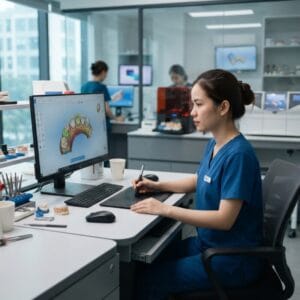
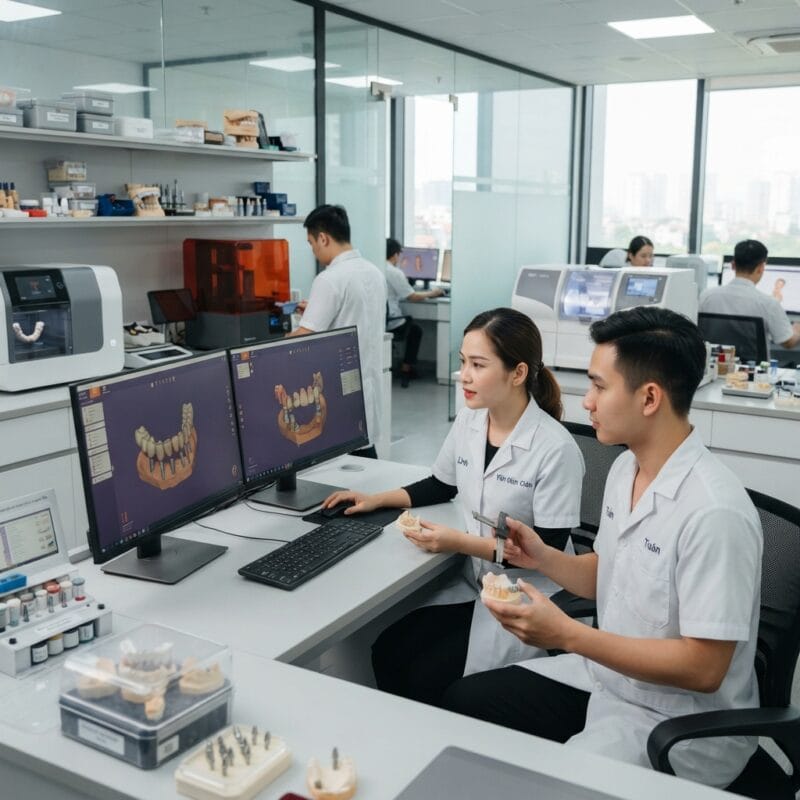
Digital design enables dental technicians to virtually plan implant positions, design abutments, crowns, and bridges, and fabricate precise surgical guides using 3D printers. This reduces manual errors and turnaround times compared to traditional methods. Software platforms like 3Shape and exocad provide intuitive CAD tools tailored to implant prosthetics, allowing for detailed customization even in complex cases involving multiple implants or compromised anatomy.
How a 3D dental lab handles complex implant cases 2026: The digital workflow
At the core of how a 3D dental lab handles complex implant cases 2026 is a seamless digital workflow that integrates data acquisition, design, and fabrication.
- Step 1: Data Acquisition – The lab receives intraoral scans or CBCT data from the dental practice, providing detailed 3D information on patient anatomy and implant sites.
- Step 2: Virtual Implant Planning – Using specialized implant planning software, technicians simulate implant placement to optimize angulation and depth, ensuring prosthetic-driven outcomes.
- Step 3: CAD Design of Restorations and Guides – Crowns, bridges, abutments, and surgical guides are digitally designed with precision, accommodating complex implant geometries and soft tissue considerations.
- Step 4: Additive Manufacturing and Milling – 3D printing and CNC milling technologies produce surgical guides and definitive restorations with tight tolerances and biocompatible materials.
- Step 5: Quality Control and Final Adjustments – The lab performs thorough inspections using digital verification tools to ensure fit and function before shipping.
This integrated digital workflow reduces errors, shortens turnaround times, and enhances collaboration between the lab and clinician, crucial for complex implant cases.
What technologies are essential for handling complex implant cases?
Essential technologies for handling complex implant cases include advanced intraoral scanners, implant planning software, CAD/CAM design platforms, and high-resolution 3D printers or milling machines.
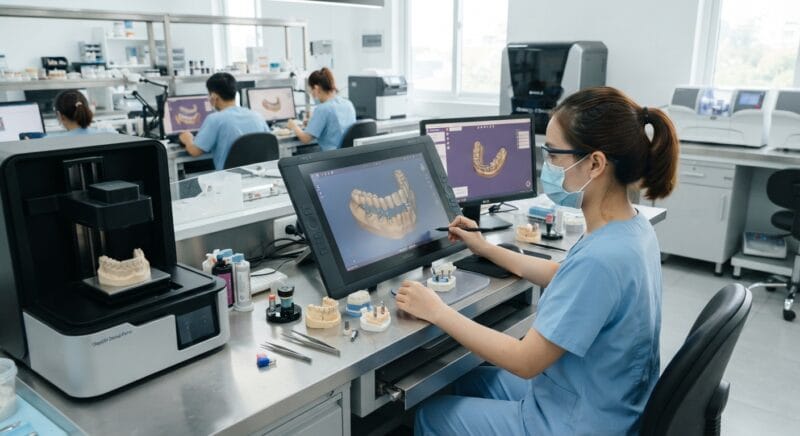
Intraoral scanners provide accurate digital impressions that eliminate the need for traditional molds. Software like Medit and Dentsply Sirona enable detailed implant planning and prosthetic design. 3D printers using biocompatible resins allow precise fabrication of surgical guides, while milling machines create durable zirconia or titanium abutments and crowns. These technologies combined enable the lab to handle anatomical complexities and patient-specific restorations efficiently.
Challenges in Complex Implant Cases and How 3D Labs Overcome Them
Complex implant cases often present challenges such as limited interocclusal space, atypical implant angulations, multiple implants in close proximity, and compromised bone or soft tissue conditions. How a 3D dental lab handles complex implant cases 2026 involves addressing these hurdles through digital customization and iterative design improvements.
- Customized Abutments: The lab designs custom abutments to correct angulation issues and optimize emergence profiles, improving esthetics and function.
- Multi-Unit Bridges: Digital design allows for precise fit and occlusion in multi-unit implant bridges, even when implants are non-parallel.
- Surgical Guides for Complex Anatomy: Custom surgical guides with metal sleeves or reinforced resin bases ensure accurate implant placement in challenging bone morphology.
- Immediate Load Cases: Digital workflows enable rapid turnaround of provisional restorations to support immediate loading protocols.
These solutions are integral to the lab’s ability to manage complex implant cases efficiently and predictably.
How does CAD CAM dental lab outsourcing enhance complex implant workflows?
CAD CAM dental lab outsourcing enhances complex implant workflows by providing specialized expertise, advanced technology access, and scalable production capacity.
Many dental labs and DSOs outsource their digital design and manufacturing needs to expert 3D dental labs that invest heavily in the latest software and hardware. This allows internal teams to focus on clinical case planning while outsourcing partners handle the intricate digital design aspects, especially for complex implant restorations and guides. Outsourcing also facilitates consistent quality control and faster turnaround times, critical for high-volume implant practices.
Quality Assurance and Precision in 3D Dental Labs
Precision and quality assurance are non-negotiable in implant dentistry. How a 3D dental lab handles complex implant cases 2026 includes rigorous quality control protocols at every stage.
- Digital Fit Verification: Software tools analyze the virtual fit of implant components before fabrication, minimizing adjustment needs.
- Material Validation: Use of biocompatible, FDA-approved materials ensures safety and longevity of restorations and guides.
- Post-Processing Inspections: After printing or milling, restorations undergo microscopic inspection and functional testing.
- Traceability and Documentation: Digital records of design files and production parameters support traceability and reproducibility.
These measures ensure that complex implant cases meet clinical expectations and regulatory standards.
What are the benefits of using a 3D dental lab for surgical guide fabrication?
Using a 3D dental lab for surgical guide fabrication offers precise implant placement, reduced surgery time, and improved patient outcomes.
Surgical guides produced by 3D labs are designed to fit patient anatomy exactly, guiding drills at planned angles and depths. This precision minimizes errors and complications during implant surgery. Additionally, 3D printed guides can be produced quickly and customized with features like metal drill sleeves or ventilation channels. Collaborating with a specialized 3D lab ensures surgical guides are validated digitally and physically before delivery, supporting smoother clinical workflows.
Integrating Complex Implant Cases with Other Digital Prosthetics
Handling complex implant cases is often part of a broader digital prosthetic ecosystem that includes dentures, orthodontic aligners, night guards, and crown & bridge work. How a 3D dental lab handles complex implant cases 2026 also involves integrating these services into a cohesive digital platform.
A 3D dental lab’s ability to manage diverse prosthetic types using the same digital infrastructure improves efficiency and case coordination. For example, implant restorations designed with CAD software can be programmed alongside orthodontic aligners or night guards to ensure occlusal harmony. This holistic approach benefits clinicians by providing comprehensive prosthetic planning and delivery from a single digital partner, enhancing patient satisfaction and practice productivity.
This synergy also works well alongside surgical guide design services.
Future Trends in 3D Dental Lab Implant Case Handling
Looking ahead, how a 3D dental lab handles complex implant cases 2026 will be shaped by AI-driven design, enhanced materials, and even more integrated digital workflows.
- AI and Machine Learning: Automated design suggestions and error detection promise to speed up complex implant planning and reduce human error.
- Advanced Biomaterials: New ceramic and polymer materials will improve restoration aesthetics and durability.
- Real-Time Collaboration: Cloud-based platforms will allow clinicians and labs to co-design cases synchronously, improving communication and outcomes.
- Expanded Digital Integration: Combining facial scans, jaw motion tracking, and implant planning software will enable truly personalized implant restorations.
Staying informed on these innovations is key for labs and DSOs relying on expert 3D dental lab partners.
How can dental labs ensure seamless integration with 3D dental lab outsourcing partners?
Dental labs can ensure seamless integration with 3D dental lab outsourcing partners by establishing clear communication protocols, standardized data formats, and shared digital platforms.
Consistent file formats like STL and DICOM, combined with cloud-based case management systems, facilitate quick data exchange. Additionally, labs should clarify turnaround expectations and quality standards upfront. Regular training sessions and feedback loops between the internal team and the 3D outsourcing partner foster continuous improvement and alignment on complex implant case requirements.
Such collaboration enhances the overall workflow and patient care quality.
Conclusion: Why Choose a 3D Dental Lab for Complex Implant Cases?
Understanding how a 3D dental lab handles complex implant cases 2026 reveals the significant advantages of leveraging advanced digital workflows, specialized expertise, and cutting-edge manufacturing technologies. These labs provide dental labs and DSOs with precision, efficiency, and reliability necessary for managing even the most demanding implant restorations and surgical guides.
By partnering with a dedicated 3D dental lab, practices can expect improved clinical outcomes, faster turnaround times, and access to the latest innovations in dental prosthetics. For more information on digital implant design and outsourcing benefits, visit the American Dental Association or explore implant solutions at Straumann.
Complex implant cases no longer need to be a bottleneck; the future is digital, connected, and precise.
Contact Us
Ready to elevate your implant workflows with expert 3D dental lab outsourcing? Contact us today to learn how we can support your complex implant cases efficiently and accurately.