Introduction: Understanding How a Dental Lab Portal Reduces Errors, Remakes and Delays in 2026
In the rapidly evolving dental industry, the integration of digital technology has become imperative for improving efficiency and accuracy. Particularly, how a dental lab portal reduces errors, remakes and delays in 2026 is a question many dental labs and DSOs are actively exploring. A dental lab portal acts as a centralized digital platform that streamlines communication, design submissions, approvals, and case tracking. This article delves deeply into the mechanisms by which such portals enhance workflow, reduce costly mistakes, and improve turnaround times.
Dental labs face challenges such as miscommunication, incomplete prescriptions, and delays caused by manual processes. The adoption of a dedicated dental lab portal addresses these issues by enabling real-time collaboration between clinicians and lab technicians. This synergy is critical in delivering precision prosthetics like crowns, bridges, implants, surgical guides, dentures, orthodontic aligners, and night guards.
What is a Dental Lab Portal and How Does It Function?
A dental lab portal is a secure, cloud-based platform that facilitates the digital exchange of dental case information between dental practices and laboratories.
Its core functionalities include case submission with detailed prescriptions, digital impressions upload, CAD/CAM design review, messaging, and status tracking. By digitizing these traditionally manual steps, the portal minimizes transcription errors and misinterpretations. Additionally, the portal often integrates with CAD/CAM software systems from leaders like 3Shape and exocad, allowing seamless transfer of digital design files. This integration is crucial in understanding how a dental lab portal reduces errors, remakes and delays in 2026 by ensuring data consistency and version control across stakeholders.
Key Features That Enable Error Reduction in Dental Lab Portals
Modern dental lab portals incorporate several features designed specifically to reduce errors, which are a leading cause of remakes and delays:
- Automated Prescription Validation: Portals use built-in logic to verify that all necessary prescription fields are complete and correctly formatted before submission.
- Digital Impression Compatibility: Acceptance of multiple file formats (STL, PLY, OBJ) ensures accuracy in transferring 3D scans, reducing inaccuracies compared to physical impressions.
- Real-Time Communication and Clarifications: Messaging functions enable immediate queries and clarifications, reducing misunderstandings.
- Design Approval Workflows: Interactive design review and approval tools let clinicians approve or request changes before fabrication, minimizing remakes.
- Audit Trails and Documentation: Detailed logs of all case activities help identify where errors may have originated for continuous improvement.
These features collectively demonstrate how a dental lab portal reduces errors, remakes and delays in 2026 by changing the traditional back-and-forth paper-based communication into an efficient digital workflow.
How Does Using a Dental Lab Portal Impact Turnaround Times?
Turnaround time is a critical KPI for dental labs and DSOs, as delays can affect patient satisfaction and practice revenue. The question “How does using a dental lab portal impact turnaround times?” is essential for decision-makers.
Simply put, dental lab portals accelerate case processing by automating many manual steps and enabling 24/7 access to case data. For example, labs no longer wait for physical impression shipments or faxes with prescriptions. Digital uploads are instantaneous, and built-in alerts notify technicians and clinicians of pending actions. This streamlined workflow reduces idle times significantly.
Moreover, the portal’s ability to facilitate synchronous communication means that issues can be resolved faster without waiting days for emails or phone calls. This immediacy translates directly into reduced delays, a primary factor in understanding how a dental lab portal reduces errors, remakes and delays in 2026.
What Types of Dental Prosthetics Benefit Most from Dental Lab Portals?
The answer is that virtually all dental prosthetics benefit, but crowns and bridges, implants, surgical guides, dentures, orthodontic aligners, and night guards see the most pronounced improvements.
For crowns and bridges, precise digital impressions and CAD/CAM designs reduce fit issues that cause remakes. Implant cases benefit from surgical guide design integration and enhanced communication between surgeons and labs. Dentures and orthodontic aligners require exact digital workflows for custom fit, and portals allow iterative design feedback to optimize comfort and function.
Night guards, often requiring quicker turnaround, gain from expedited case submission and approval processes. Each of these prosthetic categories relies on detailed digital workflows that a dental lab portal supports, showing the broad applicability of understanding how a dental lab portal reduces errors, remakes and delays in 2026.
Integration with CAD/CAM Systems: Why It Matters
Integration with CAD/CAM systems is a cornerstone of modern dental lab portals and crucial for reducing errors and remakes.
Leading CAD/CAM platforms such as Dentsply Sirona or 3Shape generate highly precise digital designs. When a dental lab portal seamlessly integrates with these platforms, it enables direct transfer of design files without manual data entry, eliminating transcription errors. This also allows for real-time updating of design statuses and changes.
Such integration supports the entire digital workflow from impression to final prosthetic fabrication, which directly addresses how a dental lab portal reduces errors, remakes and delays in 2026 by maintaining data integrity and speeding communication.
How Does a Dental Lab Portal Improve Communication Between Labs and DSOs?
A dental lab portal improves communication by centralizing all case-related interactions in one secure platform accessible by both labs and DSOs.
This reduces the reliance on fragmented communication channels such as phone calls, emails, or faxes that can be missed or misunderstood. The portal’s messaging and notification features ensure that all stakeholders are promptly informed of case status updates, requests for additional information, or design approvals.
By providing transparent tracking and audit trails, the portal fosters accountability and trust. The ability to share images, notes, and digital designs instantly means fewer errors caused by miscommunication, a key factor in understanding how a dental lab portal reduces errors, remakes and delays in 2026.
Security and Compliance: Protecting Sensitive Patient Data
Dental labs and DSOs handle sensitive patient information, making data security and compliance a top priority.
Dental lab portals are designed with advanced encryption protocols, user authentication, and compliance with HIPAA and other relevant regulations. These measures ensure that digital files, prescriptions, and communications are protected from unauthorized access.
Secure portals not only protect patient privacy but also maintain the integrity of case data, which is essential in reducing errors and remakes. This security assurance is a vital consideration when evaluating how a dental lab portal reduces errors, remakes and delays in 2026.
What Role Does Real-Time Tracking Play in Reducing Delays?
Real-time tracking provides immediate visibility into the status of every case, from submission through design to delivery.
This capability allows labs and DSOs to anticipate bottlenecks, adjust priorities, and keep all parties informed. By reducing uncertainty and enabling proactive management, real-time tracking helps prevent unnecessary delays and last-minute rushes.
Consequently, real-time tracking is a fundamental component of understanding how a dental lab portal reduces errors, remakes and delays in 2026, as it fosters smoother workflows and better resource allocation.
How Does a Dental Lab Portal Support Quality Control and Continuous Improvement?
A dental lab portal supports quality control by providing detailed case histories, feedback loops, and data analytics.
Technicians and clinicians can review past cases, identify common error sources, and implement corrective actions. Portals can also generate reports on remake rates, turnaround times, and communication effectiveness, which labs use to improve processes continuously.
This data-driven approach is instrumental in demonstrating how a dental lab portal reduces errors, remakes and delays in 2026 by fostering a culture of ongoing quality enhancement.
Case Study: Success Stories from Labs Using Dental Lab Portals
Many dental labs and DSOs have reported measurable improvements after adopting dental lab portals.
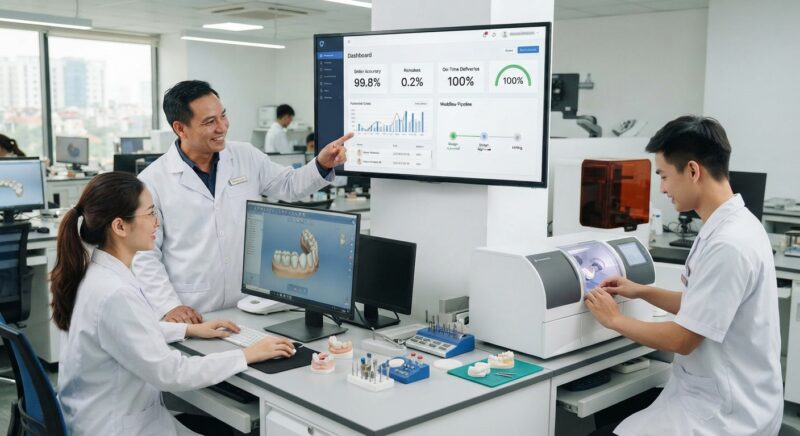
For instance, a midsize dental lab specializing in crown and bridge prosthetics reduced remakes by 40% within six months due to improved prescription accuracy and faster design approvals. Another DSO improved patient satisfaction scores by 25% by minimizing turnaround delays through real-time case tracking.
These examples highlight practical evidence of how a dental lab portal reduces errors, remakes and delays in 2026, making a compelling case for wider adoption.
Future Trends: How Will Dental Lab Portals Evolve Beyond 2026?
Looking beyond 2026, dental lab portals are expected to integrate AI-powered diagnostics, predictive analytics, and augmented reality design reviews.
Such advancements will further reduce human error, personalize prosthetic design, and enhance interdisciplinary collaboration. The continued evolution of cloud computing and IoT devices will ensure portals remain central to efficient and error-free dental lab operations.
Understanding how a dental lab portal reduces errors, remakes and delays in 2026 provides a foundation for anticipating these future capabilities and preparing labs for digital transformation.
Conclusion: Embracing Dental Lab Portals for Competitive Advantage
In conclusion, the question of how a dental lab portal reduces errors, remakes and delays in 2026 is answered through its ability to digitize workflows, enhance communication, integrate with CAD/CAM systems, and provide real-time tracking and quality control.
Dental labs and DSOs that embrace these portals will experience improved accuracy, faster turnaround, reduced costs, and higher patient satisfaction. For labs still relying on traditional methods, adopting a dental lab portal is an essential step toward future-proofing their operations and staying competitive in the digital age.
For further insights on digital dental workflows, see digital crown design.
Additionally, dental lab portals also work well alongside surgical guide design services to expand digital capabilities.
Contact Us to Transform Your Dental Lab Workflow
Step-by-Step Implementation Guide for Dental Labs Adopting a Portal
Introducing a dental lab portal into your existing workflow can seem daunting, but a structured approach ensures a smooth transition with minimal disruption. Here is a detailed step-by-step guide to help dental labs implement a portal effectively:
1. Assess Current Workflow and Identify Pain Points
- Map existing processes: Document how cases currently flow from order intake to delivery, highlighting communication channels, approval stages, and turnaround times.
- Identify error hotspots: Look for recurring causes of remakes or delays, such as unclear prescriptions, lost case files, or manual data entry mistakes.
- Engage stakeholders: Include technicians, customer service reps, and partner practices to gather diverse perspectives on challenges.
2. Define Portal Requirements and Objectives
- Set clear goals: Examples include reducing remakes by 30%, cutting average turnaround time by 20%, or improving communication transparency.
- Prioritize features: Decide which portal capabilities are essential (e.g., digital impression uploads, automated notifications) versus nice-to-have (e.g., AI-based design suggestions).
- Plan integration: Ensure compatibility with current CAD/CAM software and practice management systems.
3. Choose the Right Portal Provider
- Evaluate vendor options: Consider factors like customization, user interface, customer support, security certifications, and pricing.
- Request demos and trials: Involve your team to test usability and feature set in real-world scenarios.
- Check references: Speak with other dental labs or DSOs who use the platform to understand potential challenges and benefits.
4. Plan Data Migration and System Setup
- Prepare existing data: Clean and standardize patient and case records for smooth import.
- Configure user roles: Define access permissions for technicians, managers, and partner practices.
- Set up notifications and alerts: Customize communication protocols to ensure timely updates throughout the case lifecycle.
5. Train Staff and Pilot the Portal
- Conduct hands-on training: Provide role-based sessions focusing on everyday tasks and troubleshooting.
- Run a pilot phase: Start with a limited number of cases or partner practices to gather feedback and identify issues.
- Iterate on process improvements: Adjust workflows, templates, or communication protocols based on pilot learnings.
6. Full Rollout and Continuous Monitoring
- Go live with all cases: Ensure support resources are available to address user questions promptly.
- Track performance metrics: Monitor key indicators like error rates, turnaround times, and user satisfaction to measure ROI.
- Implement continuous improvement: Schedule regular reviews to refine portal usage and incorporate new features as they become available.
Common Mistakes to Avoid When Using Dental Lab Portals
Despite the many advantages of dental lab portals, certain pitfalls can diminish their effectiveness. Understanding these common mistakes helps dental labs and practices maximize the portal’s benefits.
1. Incomplete or Inaccurate Case Submissions
Failing to upload complete digital impressions, shade information, or prescription details leads to unnecessary back-and-forth communication, delays, and remakes. Encourage practices to double-check submissions before sending and use portal validation tools if available.
2. Ignoring User Training and Onboarding
Underestimating the learning curve or skipping formal training results in improper use of features, missed notifications, and resistance among staff. Comprehensive, role-specific training ensures confident portal usage and reduces errors.
3. Overlooking Integration with Existing Systems
Using the portal as a standalone tool without syncing with CAD/CAM or practice management systems creates duplicate work and potential data inconsistencies. Invest time in proper integration setup to streamline workflows end-to-end.
4. Failing to Set Clear Communication Protocols
Without defined guidelines on who responds to messages, approval processes, or escalation paths, miscommunications and delays are inevitable. Establishing standardized communication workflows within the portal fosters accountability and faster resolution.
5. Neglecting Security Best Practices
Dental labs handle sensitive patient data, so weak passwords, shared accounts, or ignoring portal security updates expose risks of breaches or HIPAA violations. Enforce strong password policies, multi-factor authentication, and regular security audits.
6. Not Monitoring Portal Analytics and Feedback
Portals often provide usage statistics and error reports that can reveal bottlenecks or training gaps. Ignoring these insights prevents continuous improvement. Establish a routine review cadence to act on data-driven findings.
Cost and Quality Considerations When Selecting a Dental Lab Portal
Choosing the right dental lab portal requires balancing cost against quality and feature completeness. Below are crucial factors to consider that impact your return on investment and operational excellence.
Upfront and Recurring Costs
- Licensing and subscription fees: Some portals charge monthly or annual fees per user or case volume. Understand your expected case load to forecast expenses.
- Implementation and training: Budget for setup fees, data migration services, and staff training sessions.
- Hardware requirements: Check if additional scanners, servers, or upgraded workstations are needed to support the portal.
Impact on Operational Efficiency
- Reduction in remakes and errors: High-quality portals with automated validation and workflow management directly cut costly rework.
- Turnaround time improvements: Faster approvals and real-time tracking can accelerate case completion, leading to increased throughput.
- Labor savings: Streamlined communication reduces phone calls and emails, freeing staff for higher-value tasks.
Quality Assurance Features
- Digital design review: Portals with integrated digital design viewers allow labs and dentists to catch issues early.
- Audit trails and documentation: Comprehensive logs support regulatory compliance and traceability.
- Feedback loops: Built-in mechanisms to record and analyze remakes or errors help drive continuous improvement.
Scalability and Flexibility
Consider whether the portal can adapt as your business grows or changes, such as supporting new prosthetic types, adding more users, or integrating with emerging technologies without excessive cost.
Vendor Support and Updates
Reliable customer service and regular software updates ensure your portal remains secure, compliant, and aligned with industry best practices.
Market-Specific Insights: Tailoring Dental Lab Portals for Different Regions and Practice Types
Dental markets vary widely across regions and practice models, influencing how dental lab portals should be configured and used for maximum impact.
Regional Regulatory and Compliance Variations
- Data privacy laws: Some countries require data localization or have stricter patient consent rules affecting portal design.
- Laboratory certification requirements: Certain markets mandate specific quality standards that portals must support through audit-ready documentation.
- Reimbursement structures: Fee schedules and insurance interactions influence case approval and billing workflows.
Differences Between Independent Practices and DSOs
- Scale of operations: DSOs often handle high volumes and need portals optimized for multi-location coordination, while independent practices may prioritize simplicity and direct communication.
- Decision-making processes: DSOs may have centralized approval chains requiring role-based access controls, whereas single practices benefit from more streamlined interfaces.
- Customization needs: DSOs may demand advanced reporting and analytics across their network, while independents focus on individual case management.
Adapting Portals for Specialty Dental Labs
Specialty labs focusing on orthodontics, implantology, or esthetic restorations have unique workflows and data requirements. Portals tailored for these specialties incorporate specialized design modules, material tracking, and integration with niche CAD/CAM tools.
Examples of Market-Specific Customizations
- North America: Emphasis on HIPAA compliance and integration with major dental practice management software.
- Europe: Strong focus on GDPR compliance and multilingual support for cross-border collaborations.
- Asia-Pacific: Portals often accommodate rapid growth markets by supporting mobile-friendly interfaces and cloud-based solutions.
Checklist for Selecting a Market-Appropriate Portal
- Does the portal support local regulatory requirements for data security and patient consent?
- Can the platform be customized for your practice size and specialty?
- Is multilingual support available if you serve diverse patient populations or international partners?
- Does the vendor provide regional customer support and training resources?
- Are integrations available with locally prevalent CAD/CAM and practice management systems?
Ready to reduce errors, remakes, and delays with a state-of-the-art dental lab portal? Contact us today to learn how our outsourcing services can enhance your lab’s digital design processes.