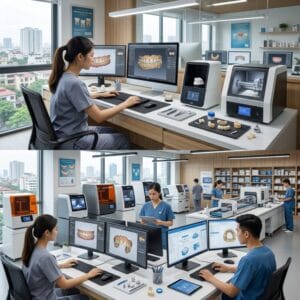
Understanding the Technician Shortage Impact on Small Dental Labs
In 2026, the dental industry is experiencing a profound shortage of skilled dental technicians, which poses a significant challenge for small dental labs striving to maintain quality and turnaround times. How small dental labs survive the technician shortage without lowering quality in 2026 requires both strategic workforce management and the adoption of advanced technologies. The aging workforce, fewer new entrants, and high demand for complex restorations such as implants and surgical guides exacerbate this shortage.
Small labs often operate with limited staff, making them especially vulnerable to delays and errors. However, unlike larger DSOs and corporate labs that can absorb technician absences more easily, small labs must innovate operationally. This includes investing in CAD/CAM digital design outsourcing services that augment the capabilities of their in-house teams.
Outsourcing digital design tasks to specialized providers not only mitigates the impact of technician scarcity but also enhances product precision and consistency. By leveraging the expertise of CAD/CAM specialists, small labs can maintain competitive quality while meeting increasing case volumes.
What is dental lab outsourcing and how does it help small labs?
Dental lab outsourcing is the practice of delegating specific manufacturing or design tasks, such as CAD/CAM digital modeling, to external specialized service providers. This approach enables small dental labs to access skilled technicians and advanced technology without the overhead of hiring full-time staff or investing heavily in equipment.
Outsourcing can encompass crown and bridge design, implant abutments, orthodontic aligners, night guards, dentures, and surgical guides. By partnering with expert digital design firms, labs can overcome bottlenecks caused by technician shortages and maintain consistent quality standards.
For example, a small lab overwhelmed with implant cases can outsource the complex digital modeling to a CAD/CAM service that employs certified technicians and uses industry-leading software from companies like 3Shape or exocad. This ensures precise fit and aesthetics, key factors in patient satisfaction and clinical success.
How does CAD/CAM technology transform technician workflows?
CAD/CAM technology streamlines dental technician workflows by automating complex design processes and enhancing accuracy. This transformation allows technicians to focus on quality control and customization rather than time-consuming manual tasks.
Digital design software enables technicians to create highly detailed restorations on computer screens, reducing human error and improving reproducibility. It also facilitates easier adjustments and communication with dentists, allowing for faster revisions and approvals.
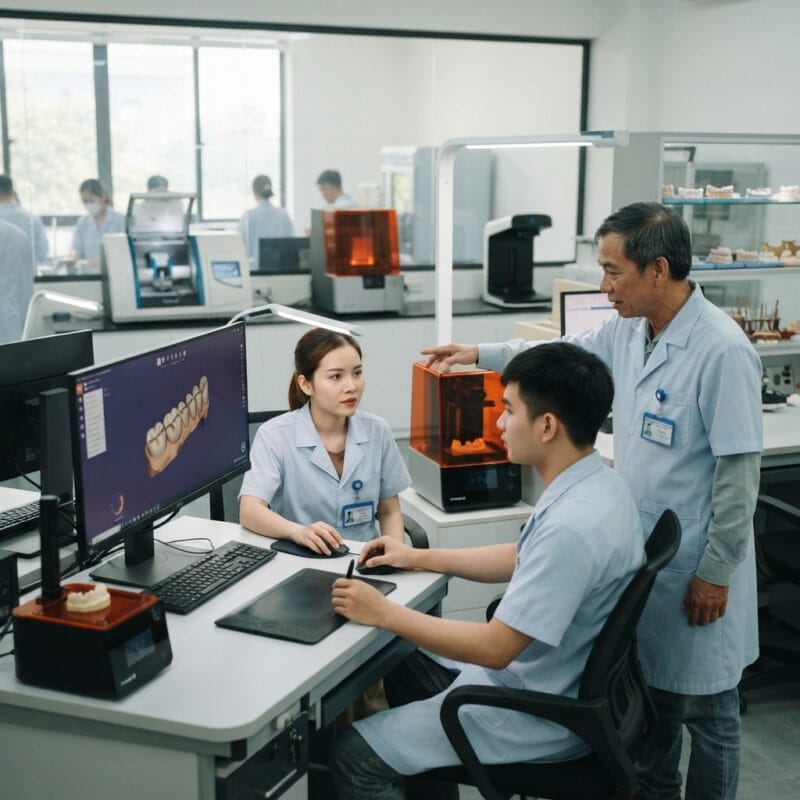
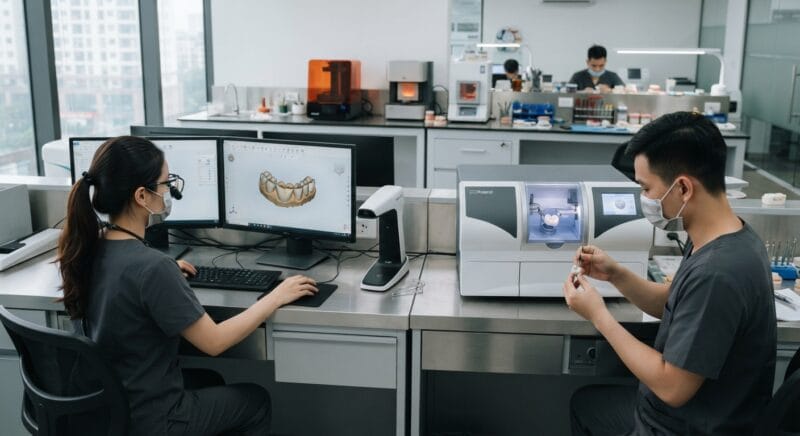
Small dental labs adopting CAD/CAM digital design can compensate for fewer technicians by improving individual productivity. The integration of digital scanners, design software, and milling machines creates a seamless workflow that reduces turnaround times and operational costs.
Moreover, CAD/CAM workflows support remote collaboration. Outsourced digital design teams can work asynchronously with labs, enabling work to continue outside regular business hours and across time zones.
Why is quality control critical when technician numbers are low?
Quality control ensures that every dental restoration meets clinical and aesthetic standards, which is vital when technician availability is limited. Maintaining stringent quality checks prevents costly remakes and protects a lab’s reputation.
When small dental labs face a technician shortage, the risk of compromised quality increases due to rushed work or overextended staff. Implementing standardized protocols for digital designs and physical fabrications helps mitigate these risks.
Outsourcing partners often provide documented quality assurance processes, including digital verification of margins, occlusion, and fit. This complements in-house inspections and enhances overall reliability.
Utilizing quality management systems integrated with CAD/CAM software facilitates tracking of errors and continuous improvement, helping small labs uphold high standards despite workforce constraints.
What types of dental restorations benefit most from CAD/CAM outsourcing?
Crown and bridge restorations, implant abutments, surgical guides, dentures, orthodontic aligners, and night guards all benefit significantly from CAD/CAM outsourcing. Each restoration type requires precision and customization that skilled digital design teams can efficiently provide.
For crown and bridge work, digital design ensures anatomic accuracy and optimal fit, minimizing chairside adjustments. Implant cases demand exact positioning and angulation, best achieved with digital planning and surgical guide fabrication.
Dentures and orthodontic aligners benefit from digital scans and modeling, which enhance patient comfort and treatment outcomes. Night guards require precise occlusal design to prevent wear and discomfort.
By outsourcing these diverse restoration designs, small dental labs can handle complex cases without expanding their technician headcount, thus effectively addressing the shortage while maintaining product quality.
How do small dental labs select the right CAD/CAM outsourcing partner?
Choosing the right CAD/CAM outsourcing partner involves evaluating their technical expertise, software platforms, quality assurance measures, and turnaround times.
Labs should confirm that the partner uses industry-standard software such as Medit scanners, 3Shape, or exocad, which ensures compatibility and precision. Additionally, the outsourcing provider’s technicians should have certifications and experience relevant to the specific restoration types required.
Communication channels and data security protocols are also critical, as labs share sensitive patient and design information. A reliable partner will offer secure file transfer and transparent case tracking.
Finally, turnaround time commitments must align with the lab’s workflow demands. Flexible service levels and volume scalability enable small labs to manage fluctuating case loads and technician shortages efficiently.
What operational changes support survival amid technician shortages?
Operational changes such as workflow digitization, staff cross-training, and strategic outsourcing help small dental labs survive the technician shortage without lowering quality in 2026.
Digitizing the entire production process—from impression scanning to final restoration delivery—reduces manual steps prone to error and rework. Cross-training existing staff in multiple competencies increases flexibility and resilience.
Integrating outsourcing into everyday operations ensures excess workload is transferred seamlessly, preventing burnout of in-house technicians. Labs should also invest in ongoing training to keep their teams adept at using digital tools.
Effective inventory management and lean manufacturing principles complement these changes by minimizing waste and optimizing resource allocation, which is vital when staff numbers are limited.
The role of digital communication in managing technician shortages
Digital communication platforms facilitate efficient collaboration between small dental labs and their outsourcing partners, enabling timely case updates and faster problem resolution.
Cloud-based design review tools allow dentists and technicians to comment directly on digital models, accelerating approvals and modifications. This reduces the need for physical transfers and in-person meetings, saving time.
Real-time messaging and video conferencing improve alignment on case specifics, ensuring that outsourcing partners deliver restorations that meet exact clinical requirements. Such communication also supports continuous feedback loops, enhancing quality over time.
By embracing these digital communication methods, small labs can maintain control over case management despite reduced in-house technician capacity, reinforcing how small dental labs survive the technician shortage without lowering quality in 2026.
How small dental labs survive the technician shortage without lowering quality in 2026: Key takeaways
The question of how small dental labs survive the technician shortage without lowering quality in 2026 is answered through a multifaceted approach focused on innovation, outsourcing, and operational excellence.
Key strategies include:
- Adopting CAD/CAM digital design outsourcing to supplement limited technician resources.
- Implementing rigorous quality control protocols supported by digital verification tools.
- Leveraging software platforms from industry leaders like 3Shape and exocad to ensure precision and compatibility.
- Optimizing workflows with digitization and cross-training to increase flexibility.
- Maintaining open digital communication channels with partners and clients.
By combining these tactics, small dental labs not only navigate the technician shortage but also position themselves for sustainable growth and enhanced service quality. This approach also works well alongside surgical guide design services to expand clinical capabilities.
Industry trends shaping the future of dental lab technician roles
Emerging trends in dental technology and workforce demographics will continue to influence how small labs operate. The ongoing integration of AI-driven design tools and automated milling systems promises to further reduce dependency on manual technician input.
Additionally, partnerships between dental education institutions and labs aim to address technician shortages by fostering new talent pipelines. Meanwhile, increased adoption of digital impressions and tele-dentistry expands the reach of digital dental services.
Small dental labs adopting these trends early will be better equipped to meet evolving clinical demands without compromising quality. For more detailed insights into evolving dental technology, visit the American Dental Association.
Conclusion and next steps for small dental labs
Ultimately, how small dental labs survive the technician shortage without lowering quality in 2026 hinges on embracing digital transformation and strategic outsourcing partnerships. These solutions mitigate labor challenges while enhancing precision and efficiency.
Small labs should evaluate their current workflows, identify bottlenecks caused by technician scarcity, and explore CAD/CAM outsourcing options tailored to their case mix. Monitoring industry advancements and investing in continuous staff development will also be critical.
By taking proactive measures today, small dental labs can ensure they remain competitive, profitable, and capable of delivering outstanding dental restorations through 2026 and beyond.
Contact Us to Overcome Technician Shortages Today
Ready to discover how our CAD/CAM digital design outsourcing can help your lab thrive despite technician shortages? Contact us now to elevate your lab’s quality and efficiency in 2026.