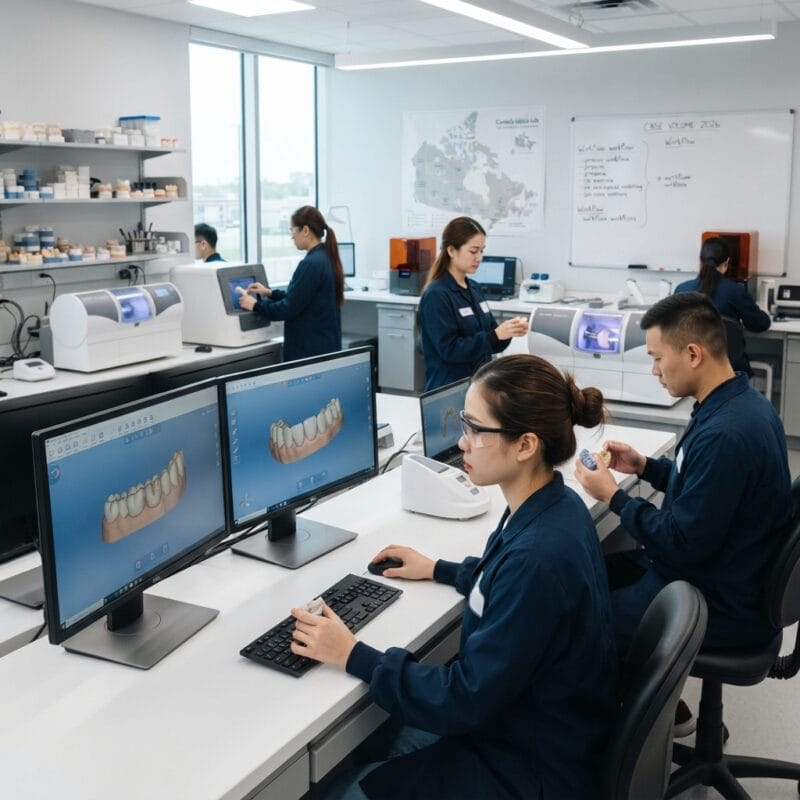
Understanding the Dental Technician Shortage in Canada: How Labs Keep Up with Case Volume in 2026
The dental technician shortage in Canada: how labs keep up with case volume in 2026 has become a critical challenge for dental laboratories and dental service organizations (DSOs). With the aging population and increasing demand for complex restorations such as crowns, bridges, implants, and orthodontic appliances, the pressure on available skilled technicians is intensifying. This article delves into the causes of this shortage and the innovative strategies that Canadian labs are adopting to maintain productivity and quality despite workforce constraints.
What is Causing the Dental Technician Shortage in Canada?
The dental technician shortage in Canada stems primarily from demographic shifts, retiring workforce, and a limited influx of new talent. Many experienced technicians are approaching retirement age, while fewer young professionals are entering the field due to limited training programs and a lack of awareness about the profession’s opportunities. Additionally, the complexity of modern dental restorations demands highly specialized skills, which are not quickly acquired.
This shortage is compounded by the increasing case volume driven by higher patient demand for esthetic and implant-supported restorations. As a result, labs must find solutions to handle more cases with fewer human resources, making the dental technician shortage in Canada: how labs keep up with case volume in 2026 a top priority for industry stakeholders.
How Does CAD/CAM Digital Design Outsourcing Help Address the Technician Shortage?
CAD/CAM digital design outsourcing enables dental labs to supplement their in-house capabilities by partnering with specialized service providers who deliver high-quality digital designs remotely.
This approach allows labs to manage the dental technician shortage in Canada: how labs keep up with case volume in 2026 by leveraging state-of-the-art software platforms such as 3Shape and exocad. Outsourced CAD/CAM design specialists handle crown and bridge frameworks, implant planning, surgical guides, dentures, orthodontic aligners, and night guards with precision and efficiency.
- Reduces the in-house workload for overburdened technicians
- Improves turnaround times for complex cases
- Enables access to expert designers with advanced skills
- Supports scalability as case volumes fluctuate
By integrating digital workflows and outsourcing, labs can maintain quality standards and fulfill increasing demand despite the technician shortage.
What Are the Key Benefits of Digital Design Outsourcing for DSOs and Labs?
Digital design outsourcing offers multiple benefits that directly address the challenges posed by the dental technician shortage in Canada: how labs keep up with case volume in 2026. These include:
- Cost Efficiency: Outsourcing reduces the need for significant investment in software licenses and training of internal technicians.
- Flexibility: Labs can scale services up or down based on patient demand without hiring or laying off staff.
- Access to Expertise: Specialized design teams stay current with evolving technologies and materials, ensuring optimal restoration designs.
- Improved Accuracy: Digital workflows minimize human error, enhancing the fit and function of prosthetics.
- Time Savings: Rapid digital turnaround accelerates case completion and patient satisfaction.
How Are Labs Integrating CAD/CAM Technologies to Combat the Shortage?
Labs facing the dental technician shortage in Canada: how labs keep up with case volume in 2026 are increasingly adopting CAD/CAM systems that streamline and automate parts of the design and manufacturing process.
Key integration strategies include:
- Implementing intraoral scanning to capture digital impressions directly, reducing manual steps
- Utilizing automated design software with artificial intelligence features to assist technicians
- Partnering with remote digital design centers for outsourcing complex cases
- Employing additive manufacturing (3D printing) for surgical guides and orthodontic appliances
For instance, implant surgical guide production benefits from precise digital planning tools offered by companies like Straumann and Nobel Biocare, enabling labs to deliver reliable, customized solutions faster.
What Are Common Challenges Labs Face When Outsourcing Digital Design?
While outsourcing digital design helps mitigate the dental technician shortage in Canada: how labs keep up with case volume in 2026, some obstacles remain, including:
- Communication Barriers: Remote collaboration requires clear protocols to avoid misunderstandings about case specifications.
- Data Security Concerns: Patient and case data must be transmitted securely to comply with privacy regulations.
- Quality Control: Ensuring outsourced designs meet the lab’s standards necessitates rigorous review processes.
- Integration Complexity: Aligning outsourced files with existing lab CAD/CAM systems can require technical expertise.
Addressing these challenges involves investing in secure cloud platforms, standardized workflows, and training personnel to manage digital partnerships effectively.
What Role Do Advanced Materials Play Amid the Technician Shortage?
Advanced dental materials complement digital design outsourcing by simplifying fabrication and reducing remakes, which is critical when technician availability is limited.
Materials such as high-strength zirconia, hybrid ceramics, and customizable PMMA allow for faster milling and fewer manual adjustments. This efficiency enables labs to process higher volumes with less technician intervention, helping to offset the dental technician shortage in Canada: how labs keep up with case volume in 2026.
Moreover, these materials support a wide range of prosthetics from implant abutments to esthetic veneers, expanding lab capabilities without requiring specialized manual skills for each case.
What Is the Future Outlook for Dental Technician Workforce in Canada?
The dental technician shortage in Canada: how labs keep up with case volume in 2026 is expected to persist unless systemic changes occur. Efforts to attract new entrants include enhanced training programs, apprenticeships, and increased industry awareness. However, technology adoption will remain a critical factor in bridging the gap.
Emerging trends such as AI-driven design, cloud-based collaboration, and hybrid human-machine workflows promise to transform technician roles, focusing on oversight and quality control rather than manual design tasks. Labs investing in these technologies today will be better positioned to handle case volumes sustainably.
How Can Labs Ensure Quality While Outsourcing Digital Design Services?
Labs can maintain high-quality standards despite the dental technician shortage in Canada: how labs keep up with case volume in 2026 by implementing strict quality assurance protocols with their outsourcing partners.
These protocols include:
- Detailed case instructions and design templates to minimize errors
- Regular communication and feedback loops between in-house technicians and remote designers
- Verification of digital designs through virtual articulators and simulation software before manufacturing
- Sample audits and random checks of outsourced work
By fostering partnerships based on trust and transparency, labs can confidently scale their operations without sacrificing excellence.
What Types of Cases Benefit Most from Digital Design Outsourcing?
Digital design outsourcing is particularly effective for cases requiring complex customization, precision, and multiple design iterations, including:
- Crown and bridge restorations with intricate margins and occlusion
- Implant-supported prosthetics and surgical guides needing precise digital planning
- Complete dentures and partials with digital setup and esthetic considerations
- Orthodontic aligners and night guards designed with advanced software
This diversity helps labs address the dental technician shortage in Canada: how labs keep up with case volume in 2026 by distributing workload and accelerating turnaround times across multiple product lines.
What Are Best Practices for Labs When Selecting a Digital Design Outsourcing Partner?
Choosing the right outsourcing partner is essential for labs managing the dental technician shortage in Canada: how labs keep up with case volume in 2026. Labs should consider the following:
- Technology Compatibility: The partner uses compatible CAD/CAM platforms and file formats.
- Experience and Expertise: Proven track record with diverse dental restorations and materials.
- Turnaround Time: Ability to meet deadlines without compromising quality.
- Security and Compliance: Robust data protection policies aligned with Canadian healthcare regulations.
- Customer Support: Responsive communication channels for quick issue resolution.
Labs should request sample cases or pilot projects to evaluate performance before long-term engagement.
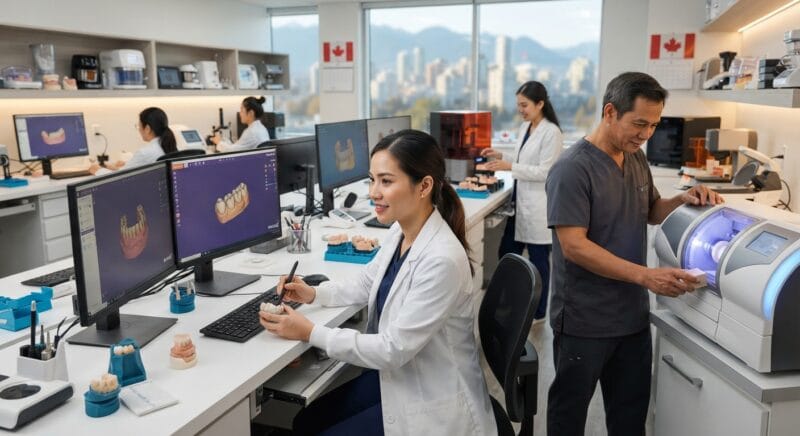
How Do Digital Workflows Improve Efficiency Amid the Technician Shortage?
Digital workflows streamline communication, design, and production processes, enabling labs to handle the dental technician shortage in Canada: how labs keep up with case volume in 2026 more effectively.
By integrating intraoral scans, cloud-based design sharing, and automated CAM milling, labs reduce manual steps and minimize errors. This acceleration allows technicians to focus on complex adjustments and quality assurance rather than repetitive design tasks.
For example, surgical guide design can be expedited by sharing digital implant plans with outsourcing partners who specialize in precise guide fabrication, allowing labs to deliver high-quality products rapidly and reliably.
How Does Outsourcing Support Lab Growth and Scalability?
Outsourcing digital design services provides labs and DSOs with vital scalability during periods of increased demand, helping them navigate the dental technician shortage in Canada: how labs keep up with case volume in 2026.
Rather than committing to permanent hires or expensive infrastructure, labs can flexibly adjust capacity by outsourcing design work. This model supports business growth without compromising quality or customer service, enabling labs to win larger contracts and expand their service offerings.
What Are Some Examples of Successful Lab Adaptations to the Technician Shortage?
Several Canadian labs have successfully tackled the dental technician shortage in Canada: how labs keep up with case volume in 2026 by adopting hybrid models combining in-house talent and outsourced digital design.
One lab integrated cloud-based CAD software to collaborate with an overseas digital design center, reducing turnaround times by 30% while maintaining quality. Another lab invested in automated design tools and partnered with a surgical guide specialist to streamline implant cases, leading to a 25% increase in case acceptance.
These examples illustrate how embracing technology and strategic partnerships can mitigate workforce challenges.
How Important Is Training in Overcoming the Technician Shortage?
Training remains vital in addressing the dental technician shortage in Canada: how labs keep up with case volume in 2026 by upskilling existing staff to handle advanced CAD/CAM tools and workflows.
Continuous education ensures technicians remain proficient with evolving materials and design software, maximizing productivity and reducing errors. Many labs also encourage cross-training to create versatile teams capable of managing different case types efficiently.
Partnerships with educational institutions and participation in industry workshops foster a pipeline of skilled professionals and help retain talent within the industry.
How Does the Dental Technician Shortage Affect Patient Care?
The dental technician shortage in Canada: how labs keep up with case volume in 2026 can indirectly impact patient care by causing delays in prosthetic delivery and increasing costs.
However, labs employing digital design outsourcing and efficient workflows help reduce wait times and maintain restoration quality, ensuring patients receive timely and reliable dental solutions.
By embracing technology and strategic partnerships, labs contribute to sustaining high standards of care despite workforce challenges.
What Role Do Industry Associations Play in Addressing the Shortage?
Industry associations such as the American Dental Association play a supportive role by promoting education, certification, and advocacy related to the dental technician shortage in Canada: how labs keep up with case volume in 2026.
They facilitate knowledge sharing, provide resources for workforce development, and encourage adoption of digital technologies. These efforts help labs stay informed about best practices and emerging solutions to workforce challenges.
How Can Labs Leverage Emerging Technologies to Future-Proof Operations?
Emerging technologies like artificial intelligence, machine learning, and advanced 3D printing are transforming dental lab workflows and helping labs manage the dental technician shortage in Canada: how labs keep up with case volume in 2026 more effectively.
- AI-assisted design software reduces manual input and improves design accuracy.
- Machine learning algorithms optimize case planning and predict potential design issues.
- Advanced 3D printing enables rapid fabrication of complex appliances and models.
By adopting these innovations early, labs gain competitive advantages and ensure long-term sustainability.
How Do Labs Manage Data Security When Outsourcing?
Data security is paramount when addressing the dental technician shortage in Canada: how labs keep up with case volume in 2026 through outsourcing.
Labs must ensure that digital design partners comply with Canadian privacy laws such as PIPEDA by employing encrypted data transfers, secure cloud storage, and strict access controls.
Regular audits and clear confidentiality agreements further protect sensitive patient information and maintain trust throughout the digital workflow.
What Are the Environmental Benefits of Digital Outsourcing?
Digital design outsourcing contributes to sustainability efforts by reducing physical model production, minimizing material waste, and lowering energy consumption associated with traditional manual workflows.
This eco-friendly approach aligns with growing environmental awareness in the dental industry while helping labs address the dental technician shortage in Canada: how labs keep up with case volume in 2026 more responsibly.
How Can DSOs Benefit from Outsourcing Digital Design Services?
Dental Service Organizations (DSOs) managing multiple clinics benefit significantly from outsourcing digital design services as they face the dental technician shortage in Canada: how labs keep up with case volume in 2026.
Outsourcing centralizes design workflows, standardizes quality across locations, and reduces overhead associated with in-house technician hiring and training. This centralized approach improves efficiency and patient outcomes at scale.
DSOs can also leverage volume discounts and faster turnaround times by partnering with specialized digital design providers.
Conclusion and Call to Action
The dental technician shortage in Canada: how labs keep up with case volume in 2026 is a complex challenge that requires innovative solutions combining technology, outsourcing, and workforce development. By embracing CAD/CAM digital design outsourcing and advanced workflows, labs and DSOs can maintain high-quality production, enhance efficiency, and scale their operations to meet growing patient demands.
Contact us today to learn how our expert CAD/CAM digital design outsourcing services can help your lab overcome workforce challenges and thrive in 2026 and beyond.