Understanding Turnaround Time Pressure in Dental Labs 2026: How Outsourced CAD Design Helps
Turnaround time pressure in dental labs 2026: how outsourced CAD design helps remains a critical challenge as dental labs and DSOs face increasing case volumes and complexity. With the demand for faster prosthetics production such as crowns, bridges, implants, surgical guides, dentures, orthodontic aligners, and night guards steadily rising, labs must find efficient ways to maintain quality and meet deadlines. Outsourcing CAD/CAM digital design services offers a strategic solution to alleviate bottlenecks in the design phase, speeding up workflow without sacrificing precision.
By delegating complex digital design tasks to specialized external teams, dental labs can focus on manufacturing and delivery, reducing internal workload and turnaround times. This article explores the dynamics of turnaround pressures and details how outsourced CAD design is transforming lab operations in 2026.
What is dental lab CAD/CAM outsourced design?
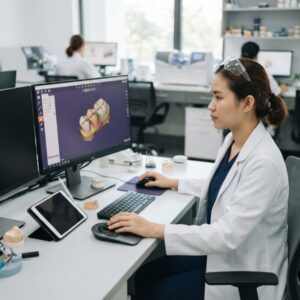
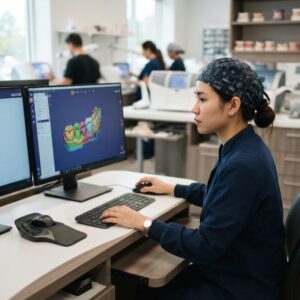
Dental lab CAD/CAM outsourced design is a service where dental labs or DSOs contract external experts to create digital designs for dental restorations using computer-aided design and manufacturing technology.
This process typically involves sending scanned patient data or intraoral scans to a specialized design team who then produce precise digital models for prosthetics like crowns, bridges, implants, dentures, and orthodontic appliances. These designs are then sent back to the lab for fabrication. Outsourcing CAD design helps labs handle larger case volumes and reduce turnaround time pressure by leveraging experienced designers and advanced software such as those offered by 3Shape or exocad.
Why is turnaround time pressure increasing in dental labs by 2026?
Turnaround time pressure in dental labs 2026: how outsourced CAD design helps is driven by several converging industry trends. First, the rise in dental patient volume, partly due to an aging population and increased awareness of oral health, creates higher demand for prosthetics. Second, dental service organizations (DSOs) and multi-location practices expect faster delivery to maintain patient satisfaction and clinical efficiency.
Technological advances have also raised expectations; patients and clinicians anticipate quicker, digitally precise restorations. However, many labs face talent shortages, software learning curves, and capacity limits that slow internal design workflows. Consequently, turnaround times are squeezed tighter than ever.
How do outsourced CAD design services reduce turnaround time pressure in dental labs 2026?
Outsourced CAD design services reduce turnaround time pressure in dental labs 2026: how outsourced CAD design helps by providing scalable, expert digital design capabilities that supplement or replace in-house design teams.
- Increased Capacity: Outsourcing allows labs to handle peak workloads without hiring full-time staff.
- Expertise Access: Specialized design teams bring advanced knowledge of software and dental anatomy that accelerates design accuracy.
- Faster Turnaround: With dedicated resources, external designers can complete cases promptly, helping labs meet tight deadlines.
- Workflow Integration: Digital transfer of files streamlines communication and reduces manual errors.
Overall, the partnership between labs and outsourcing providers creates a more flexible and efficient production pipeline.
What types of dental restorations benefit most from outsourced CAD design?
Outsourced CAD design is especially beneficial for complex and high-volume dental restorations such as crowns and bridges, dental implants, surgical guides, dentures, orthodontic aligners, and night guards.
For crowns and bridges, precise margin design and occlusal adjustments require detailed digital work that outsourced experts excel at. Implant cases demand accurate digital planning and designing of abutments and frameworks, which can be accelerated by external CAD teams. Surgical guides benefit from highly detailed 3D designs based on CBCT scans, often performed by specialized designers.
Dentures and orthodontic aligners, which involve multiple iterative designs and adjustments, also gain efficiency through outsourcing. Night guards, often urgent cases, can be turned around faster when digital design is contracted out.
Which software platforms are commonly used for outsourced dental CAD design?
Outsourced CAD design providers typically use industry-leading software platforms to ensure compatibility and precision. Popular tools include exocad and 3Shape, both known for their powerful dental design modules covering crowns, implants, dentures, and orthodontics.
Some providers also utilize specialized implant planning software offered by companies like Nobel Biocare or Straumann. Integration with intraoral scanners such as iTero ensures seamless transfer of digital impressions to the design team. This software ecosystem supports highly accurate and efficient design processes, critical to reducing turnaround time pressure in dental labs 2026: how outsourced CAD design helps.
How does digital design outsourcing improve quality control in dental labs?
Digital design outsourcing enhances quality control by leveraging specialized expertise and standardized workflows that internal teams may struggle to maintain under time pressure.
Outsourced design teams often employ rigorous review processes, including multiple design iterations, cross-checking anatomical accuracy, and digital simulations of prosthetic fit. Their experience with diverse case types leads to fewer design errors and remakes, reducing costly delays. Additionally, cloud-based platforms allow labs and clinicians to review and approve designs remotely, improving transparency and collaborative quality assurance.
What are the data security considerations when outsourcing dental CAD design?
Data security is paramount when outsourcing dental CAD design, as patient scans and personal information are involved.
Reputable outsourcing providers implement robust encryption protocols for file transfer and storage, comply with HIPAA regulations in the US, and maintain secure access controls. Before contracting, labs should verify the provider’s security certifications and ask about data retention policies. Secure platforms and encrypted communication channels ensure that turnaround time pressure in dental labs 2026: how outsourced CAD design helps without compromising patient confidentiality or compliance.
What costs are associated with outsourcing dental lab CAD design?
Costs of outsourcing dental lab CAD design vary based on case complexity, volume, and service level agreements.
Typically, labs pay per design or per case, which can be more cost-effective than maintaining full-time in-house design staff, especially during fluctuating demand. Outsourcing eliminates expenses related to software licensing, training, and hardware upgrades. Labs can also avoid overtime labor costs and reduce remakes due to expert design quality. When evaluating costs, consider turnaround time reductions and increased capacity, which contribute to overall profitability and customer satisfaction.
How do outsourced CAD design services integrate with dental lab workflows?
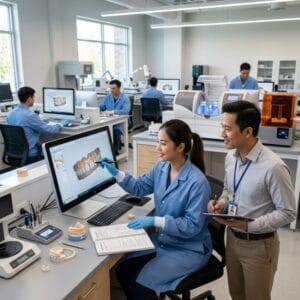
Outsourced CAD design services integrate with dental lab workflows through digital file exchange, communication platforms, and standardized protocols.
Labs typically upload scan data and case instructions to a secure portal or cloud system where the design team accesses them. Once the design is completed, the digital files are sent back for manufacturing. Many providers offer collaborative tools for real-time feedback and revision requests. This seamless integration minimizes delays and reduces manual handling errors, effectively addressing turnaround time pressure in dental labs 2026: how outsourced CAD design helps.
What are common challenges labs face when implementing outsourced CAD design?
Common challenges include ensuring consistent communication, aligning software compatibility, managing workflow transitions, and maintaining quality standards.
Some labs worry about losing control over the design process or face resistance to change from staff accustomed to in-house design. There can be initial delays as teams adjust to new protocols and digital systems. However, selecting a provider with proven experience, clear SLAs, and responsive support mitigates these issues. Training lab personnel to effectively interact with the outsourcing team also smooths integration.

How can dental labs measure the impact of outsourcing on turnaround time?
Dental labs can measure impact by tracking key performance indicators (KPIs) such as average case turnaround time, remake rates, design revision frequency, and overall production throughput before and after outsourcing.
Using digital workflow software, labs can generate reports showing time saved in the design phase and faster case completion. Improved customer satisfaction and increased case acceptance rates are qualitative indicators. These metrics provide tangible evidence of how turnaround time pressure in dental labs 2026: how outsourced CAD design helps translate into operational benefits and competitive advantage.
What future trends will affect turnaround time pressure in dental labs and outsourced CAD design?
Emerging trends include AI-assisted dental design, increased automation, integration with 3D printing technologies, and expanded remote collaboration tools.
Artificial intelligence will help automate routine design tasks, further reducing turnaround times. Advanced 3D printing platforms like those from Formlabs and Asiga will streamline production of digitally designed restorations. Cloud-based platforms will enable real-time global collaboration between labs, clinicians, and design providers, enhancing responsiveness. These innovations will reinforce the critical role of outsourced CAD design in managing turnaround time pressure in dental labs 2026: how outsourced CAD design helps.
How does outsourcing CAD design support DSOs differently than single-location labs?
DSOs benefit from outsourced CAD design by standardizing digital workflows across multiple locations, improving consistency, and scaling case management efficiently.
Unlike single-location labs, DSOs handle higher case volumes and require fast, reliable design support to meet diverse clinical needs. Outsourcing allows DSOs to centralize design resources without replicating expensive infrastructure at each site. This consolidation reduces turnaround time pressure in dental labs 2026: how outsourced CAD design helps, particularly for implant cases and surgical guides that demand precise coordination across teams and locations.
Conclusion: Embracing Outsourced CAD Design to Overcome Turnaround Pressure
Turnaround time pressure in dental labs 2026: how outsourced CAD design helps is a defining challenge requiring innovative solutions. Outsourcing CAD/CAM digital design services enables labs and DSOs to manage increasing demands efficiently while maintaining high-quality standards. By leveraging expert designers, advanced software platforms, and streamlined workflows, dental labs can reduce delays, control costs, and enhance client satisfaction.
As the dental industry continues evolving, partnering with trusted CAD design outsourcing providers will be essential for labs aiming to thrive amid growing turnaround time pressures.
Contact Us
Implementing Outsourced CAD Design: A Step-by-Step Guide for Dental Labs
Successfully integrating outsourced CAD design into a dental lab’s workflow requires careful planning and execution. Below is a practical step-by-step guide to help labs implement outsourcing efficiently, minimizing disruption and maximizing benefits.
Step 1: Assess Your Lab’s Current Workflow and Pain Points
Before outsourcing, analyze your existing design processes to identify bottlenecks, capacity constraints, and quality issues. Key questions include:
- Which cases cause the most delays in design turnaround?
- Are there recurring quality or revision problems with in-house designs?
- What is your current design capacity versus demand?
- Which types of restorations consume the most design time?
This assessment helps determine which cases to outsource first and sets a benchmark for measuring improvements.
Step 2: Select the Right Outsourcing Partner
Choose a CAD design service that matches your lab’s specific needs. Consider:
- Specialization: Does the partner have expertise in the restorations you produce most?
- Turnaround guarantees: Are they able to meet your required deadlines?
- Integration capabilities: Can they work with your existing software and file formats?
- Data security measures: Are they compliant with industry standards?
- Communication: Is there a clear channel for feedback and revisions?
Step 3: Define Processes and Protocols
Establish explicit workflows for case submission, feedback, and revision cycles:
- Create standardized digital file formats and naming conventions for seamless exchange.
- Set expectations for turnaround times per restoration type.
- Designate points of contact for both your lab and the outsourcing partner.
- Develop quality checklists to ensure designs meet lab and clinician requirements before production.
Step 4: Pilot Outsourcing with Low-Risk Cases
Start by outsourcing a small volume of cases or simpler restorations. This allows you to:
- Test communication and file exchange protocols.
- Evaluate design quality against your standards.
- Refine turnaround time expectations.
- Identify any unforeseen challenges early.
Step 5: Monitor Performance and Scale Gradually
Use key performance indicators (KPIs) such as:
- Average design turnaround time.
- Revision rates and reasons.
- Impact on overall lab throughput.
- Customer satisfaction from dentists and clinicians.
Analyze results regularly and adjust workflows or partners as needed before expanding outsourcing volumes.
Common Mistakes to Avoid When Outsourcing Dental CAD Design
Even with clear benefits, outsourcing CAD design can lead to pitfalls if not managed carefully. Below are common errors that dental labs should avoid.
1. Lack of Clear Communication
Failing to provide detailed specifications, margin lines, or clinical notes can result in designs that require multiple revisions, negating time savings. Always establish clear communication channels and provide comprehensive case information upfront.
2. Ignoring Compatibility Issues
Sending files in incompatible formats or using software platforms that don’t align with the outsourcing partner’s tools can cause delays and errors. Confirm compatible file types and software versions before starting.
3. Overloading the Outsourcing Partner Too Quickly
Trying to outsource all cases immediately may overwhelm the partner and risk quality and turnaround time. Scale outsourcing gradually based on pilot results.
4. Neglecting Quality Control on Receipt
Assuming all outsourced designs are perfect without internal quality checks can lead to costly remakes and unhappy clinicians. Always have a designated in-house quality review before manufacturing.
5. Underestimating Data Security Risks
Failing to ensure that the outsourcing partner meets data protection standards can expose your lab to compliance violations and data breaches. Verify security protocols and sign appropriate agreements.
Cost and Quality Considerations When Outsourcing CAD Design
Outsourcing design work affects both the financial and qualitative aspects of a dental lab’s operations. Understanding and balancing these factors is critical for sustainable success.
Cost Considerations
Outsourcing CAD design typically involves per-case or per-unit fees. Key cost factors include:
- Volume discounts: Higher case volumes often reduce per-case pricing.
- Complexity premiums: More complex restorations like full-arch implant guides may cost more.
- Software and integration fees: Some partners charge setup or integration fees.
- Revision costs: Multiple rounds of revisions can increase expenses.
However, these costs must be weighed against savings from reduced overtime, fewer remakes, and faster delivery leading to increased capacity and revenue potential.
Quality Considerations
Outsourcing design does not mean sacrificing quality. In fact, many specialized CAD design firms employ expert technicians who stay current with the latest digital dentistry trends and software upgrades. To ensure quality:
- Request portfolios or case studies from the provider.
- Evaluate the precision of margin lines, anatomical accuracy, and occlusal contacts in initial cases.
- Maintain an open feedback loop to refine designs and align with your lab’s standards.
- Check for compliance with materials and production requirements (e.g., milling or 3D printing constraints).
Balancing cost and quality involves choosing a partner who understands both your clinical needs and your lab’s business goals.
Market-Specific Factors Influencing CAD Design Outsourcing in Different Regions
The decision to outsource CAD design and the associated workflow adjustments can vary significantly based on regional market conditions, regulations, and technology adoption levels.
North America
Labs in the U.S. and Canada often face high labor costs and stringent data privacy regulations (e.g., HIPAA). Outsourcing CAD design to domestic partners can provide faster turnaround and simpler compliance, but at a premium price. Some labs opt for nearshore outsourcing to Mexico or the Caribbean to balance cost and speed.
Europe
European dental labs contend with diverse regulations across countries, impacting data handling and cross-border outsourcing. Language and time zone differences also affect communication. However, mature CAD/CAM adoption and strong local design services create a competitive market. Labs often outsource within the EU to maintain regulatory alignment and quality standards.
Asia-Pacific
In fast-growing markets like China, India, and Southeast Asia, dental labs benefit from a large pool of digitally skilled technicians at lower labor costs. However, quality standards and intellectual property protection may vary, requiring careful partner vetting. Time zone differences can delay communication, so labs may reserve outsourcing for non-urgent cases or use partners with overlapping working hours.
Latin America
Latin American labs face challenges of limited local CAD design expertise and technology investment but benefit from proximity to North American markets. Outsourcing within the region can reduce turnaround times compared to overseas providers. Cross-border regulatory harmonization is improving, facilitating easier data exchange.
Checklist for Market-Specific Partner Evaluation
- Assess local labor costs versus quality expectations.
- Verify compliance with regional data protection laws.
- Consider language and time zone impacts on communication.
- Evaluate partner’s experience with your target restoration types.
- Check for certifications and industry accreditations.
Cost and Quality Considerations When Outsourcing Dental CAD Design
When dental labs decide to outsource their CAD design services, balancing cost and quality is paramount. While outsourcing can reduce in-house labor costs and speed up turnaround times, it’s essential to evaluate the total cost of ownership and ensure the quality standards meet or exceed your lab’s reputation.
Breaking Down the Cost Factors
- Per-Case Design Fees: Most outsourced services charge based on the number and complexity of cases. Understanding the pricing tiers for standard crowns versus complex implant cases is critical to budgeting accurately.
- Software and File Compatibility: Some services may require additional fees for converting or optimizing files to fit your lab’s production tools.
- Revisions and Adjustments: Factor in the possibility of revision cycles if initial designs do not meet specifications. Some providers include a fixed number of revisions in the cost, while others charge separately.
- Shipping and Data Transfer: Although most workflows are digital, occasional physical model shipments or high-volume data transfers can add indirect costs.
Ensuring Quality Without Compromise
- Certification and Experience: Choose partners with proven expertise in dental CAD design, ideally with certified dental technicians familiar with your case types.
- Standardized Quality Checks: Confirm that the outsourcing partner implements stringent internal quality control protocols, including cross-checks and virtual try-ins.
- Turnaround Time vs. Quality Trade-offs: While faster turnaround is attractive, rushed designs may overlook critical fit or occlusion details. Establish clear guidelines on acceptable turnaround without sacrificing quality.
- Sample and Benchmarking: Request sample designs and compare them against in-house outputs to assess the level of detail, accuracy, and finish.
Practical Checklist for Integrating Outsourced CAD Design into Your Lab Workflow
Successful integration of outsourced CAD design services requires detailed planning and continuous coordination. Below is a practical checklist to streamline the onboarding and daily operations:
- Assess Current Workflow: Map out every step from impression scanning to final restoration delivery to identify bottlenecks.
- Identify Cases for Outsourcing: Select initial case types such as standard crowns or bridges that have predictable workflows.
- Set Data Transfer Protocols: Establish secure file formats, naming conventions, and transfer methods (e.g., cloud portals, VPN).
- Define Communication Channels: Assign dedicated contacts on both sides and set regular check-in schedules.
- Implement Quality Control Steps: Include review stages for received designs before production to catch errors early.
- Train Staff: Educate your technicians on how to interact with outsourced designs and troubleshoot common issues.
- Document Processes: Maintain detailed SOPs for handling outsourced cases, including escalation protocols.
- Monitor KPIs: Track turnaround times, revision rates, and customer satisfaction to evaluate effectiveness.
- Plan for Scaling: Gradually increase outsourcing volume as confidence and process maturity grow.
Common Pitfalls and How to Avoid Them When Outsourcing Dental CAD Design
Outsourcing CAD design brings many benefits but also risks that can disrupt lab productivity if not carefully managed. Here are some common pitfalls and practical tips for avoiding them:
1. Overlooking Compatibility Between Systems
Dental labs often use multiple systems for scanning, design, and milling. A frequent mistake is failing to verify whether the outsourced CAD files are compatible with the lab’s production equipment. This can lead to delays and costly redesigns.
- Tip: Conduct compatibility tests before full integration and clarify accepted file formats and software versions with your outsourcing partner.
2. Inadequate Communication Leading to Misunderstandings
Without clear communication, critical details such as margin lines, occlusal adjustments, or material preferences can be misinterpreted, resulting in remakes.
- Tip: Use standardized case submission forms with detailed instructions and incorporate video calls or screen-sharing sessions for complex cases.
3. Rushing Pilot Phases
Some labs attempt to outsource a large volume of cases immediately, which can overwhelm the new partner and expose workflow gaps.
- Tip: Start with a pilot phase of low-risk cases, thoroughly review outputs, and refine processes before scaling.
4. Ignoring Data Security and HIPAA Compliance
Dental labs handle sensitive patient information, and improper handling during outsourcing can expose them to legal risks.
- Tip: Verify that the partner complies with relevant data protection standards and uses encrypted file transfers and secure cloud storage.
Market-Specific Factors Influencing Outsourced CAD Design Adoption
Different markets and geographies present unique challenges and opportunities that affect how dental labs adopt outsourced CAD design services.
Regulatory Environment
Regions with stringent medical device regulations may require tighter controls on design workflows and documentation. For example, European labs adhering to MDR (Medical Device Regulation) must ensure their outsourcing partners comply with traceability and quality requirements, potentially limiting options.
Labor Market and Skills Availability
In markets where skilled dental CAD technicians are scarce or command high wages, outsourcing becomes an attractive solution to maintain throughput and quality. Conversely, in areas with abundant local talent, labs may prefer to keep designs in-house for better control.
Cost Sensitivity and Pricing Models
Price sensitivity varies widely. Labs operating in highly competitive, cost-driven markets often prioritize outsourcing partners offering flexible pricing models such as pay-per-case or subscription-based services. In contrast, premium labs focusing on high-end restorations may prioritize quality and customization over cost.
Technological Infrastructure
Reliable high-speed internet and cloud infrastructure are prerequisites for seamless CAD design outsourcing. Labs in regions with limited connectivity may face challenges with large file transfers, prompting hybrid workflows combining local and outsourced design.
Case Study: A Mid-Sized Lab in the US Midwest
A 20-technician lab serving multiple dental practices integrated outsourced CAD design for implant cases. By starting with a pilot focused on surgical guides, the lab reduced design turnaround from 48 hours to 24 hours, enabling faster production and delivery. The lab’s partner provided dedicated account management and customized design templates, ensuring consistent quality. Over six months, the lab expanded outsourcing to full-contour crowns and bridges, achieving a 30% overall reduction in case cycle time.
Ready to reduce turnaround time pressure in your dental lab? Contact us today to learn how our outsourced CAD design services can help you meet your 2026 goals efficiently and accurately.