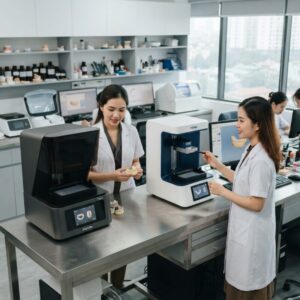
Introduction to the Best 3D Dental Printers for Labs: Complete Buying Guide 2026
The dental lab industry is rapidly evolving with digital technology, especially in the realm of 3D printing. The Best 3D dental printers for labs: complete buying guide 2026 offers a deep dive into selecting the optimal 3D printing technology tailored to crown & bridge work, implants, surgical guides, dentures, orthodontic aligners, and night guards. Understanding the nuances of various printers helps labs and DSOs leverage CAD/CAM workflows and improve production quality, turnaround time, and cost-efficiency.
What Are the Key Features to Look for in Dental Lab 3D Printers?
The key features to look for in dental lab 3D printers include printing resolution, build volume, material compatibility, speed, and software integration. High resolution ensures detailed and accurate prosthetics, while build volume affects batch production capacity. Compatibility with dental-specific resins, including biocompatible materials for surgical guides and aligners, is critical. Fast print speeds reduce turnaround times and improve lab throughput. Seamless integration with CAD/CAM software, such as those from exocad and 3Shape, supports efficient digital workflows.
Why Is Resolution Important in Dental 3D Printing?
Resolution determines the level of detail and surface finish achievable by a printer. For dental labs, this translates to the accuracy of crowns, bridges, and implant guides. Printers with resolutions of 25-50 microns are generally preferred because they produce smooth, precise parts that require minimal post-processing. This is especially vital for orthodontic aligners and night guards where fit and comfort are paramount.
How Does Material Compatibility Affect Dental Lab Production?
Material compatibility affects both the functionality and regulatory compliance of dental devices. The best 3D dental printers support a wide range of dental resins, including flexible, rigid, transparent, and biocompatible materials certified for intraoral use. This versatility enables labs to print surgical guides, denture bases, and temporary crowns without switching devices, reducing costs and complexity.
Which 3D Printing Technologies Are Best for Dental Labs?
The main 3D printing technologies used in dental labs are Digital Light Processing (DLP), Stereolithography (SLA), and Continuous Liquid Interface Production (CLIP). Each has unique strengths.
- DLP printers cure resin layer-by-layer with a projector, offering fast print speeds and high accuracy, ideal for crowns and bridges.
- SLA uses a laser to cure resin and typically achieves the highest surface finish quality, making it perfect for surgical guides and detailed orthodontic models.
- CLIP is a newer technology offering rapid production and excellent accuracy but often comes at a higher price point.
Choosing between these depends on your lab’s case mix, budget, and production speed requirements.
What Are the Top Brands Offering the Best 3D Dental Printers for Labs in 2026?
Leading manufacturers known for producing reliable dental 3D printers include Dentsply Sirona, Medit, Straumann, and Nobel Biocare. Their printers are designed specifically for dental applications, ensuring compliance and long-term support.
- Dentsply Sirona: Offers the Sprintray Pro, known for ultra-fast printing and high detail, suitable for surgical guides and implant models.
- Medit: Their Medit L500 is praised for accuracy and affordability, with flexible material compatibility ideal for dentures and night guards.
- Straumann: Provides high-end printers optimized for crown and bridge fabrication, integrating tightly with their digital ecosystem.
- Nobel Biocare: Known for implant-focused 3D printing solutions, often paired with their surgical planning software.
How Does the Best 3D Dental Printers for Labs: Complete Buying Guide 2026 Address Cost Considerations?
Cost is a significant factor when investing in dental 3D printers. This guide emphasizes total cost of ownership, including initial purchase price, materials, maintenance, and software licenses. While entry-level printers may cost less upfront, professional-grade devices reduce post-processing and remakes, saving money long-term. Labs should also consider the availability and price of compatible dental resins specific to their production needs.
What Is the Impact of Print Speed and Throughput on Lab Profitability?
Print speed directly influences throughput and turnaround times. Faster printers allow labs to handle larger case volumes, increasing revenue potential. However, speed should not compromise accuracy or surface finish. This guide highlights models that strike a balance, enabling labs to meet tight clinical deadlines without sacrificing quality.
What Software Compatibility Should Labs Expect from Dental 3D Printers?
Software compatibility is crucial to streamline lab workflows. The best 3D dental printers integrate with popular CAD/CAM platforms such as exocad and 3Shape. This integration supports direct print file export, reducing errors and manual intervention. Additionally, some printers come with proprietary slicing software optimized for dental materials and print settings, enhancing ease of use for lab technicians.
How Does Post-Processing Affect the Selection of the Best 3D Dental Printers for Labs?
Post-processing steps—cleaning, curing, and finishing—are essential for producing clinically viable dental restorations. Some printers offer automated post-processing solutions or are compatible with third-party devices that reduce labor intensity. Choosing a printer with streamlined post-processing features improves efficiency and consistency in final product quality.
Which Models Excel in Printing Specific Dental Applications?
Different printers excel at various dental applications:
- Crowns & Bridges: High-resolution DLP printers like the Sprintray Pro provide the detail and speed necessary for these intricate restorations.
- Implants & Surgical Guides: SLA printers with certified biocompatible resins ensure precise fit and safety, critical for surgical success.
- Dentures & Night Guards: Flexible resin compatibility and larger build volumes enable efficient batch printing of these devices.
- Orthodontic Aligners: Transparent, flexible materials printed with high accuracy produce comfortable and effective aligners.
This targeted approach helps labs select printers that align with their primary production focus.
What Maintenance and Support Should Labs Expect from Their 3D Printer Providers?
Reliable maintenance and customer support are vital to minimize downtime. The best 3D dental printers come with comprehensive warranties, training resources, and responsive technical support. Some vendors offer service contracts and remote diagnostics. Labs should evaluate these offerings alongside the printer capabilities to ensure long-term operational stability.
How Can Outsourcing CAD/CAM Design Services Complement 3D Printing in Dental Labs?
Outsourcing CAD/CAM digital design services can complement the investment in 3D printing by providing expert design work and case management. This partnership reduces the learning curve for complex cases and enhances digital workflow efficiency. For example, combining in-house printing with outsourced crown and bridge or implant design services can improve turnaround times and case quality, helping labs scale effectively. This also works well alongside surgical guide design services.

What Are the Environmental and Safety Considerations for Dental 3D Printers?
Environmental and safety factors include proper ventilation for resin fumes, disposal of waste materials, and handling of biocompatible resins. Labs should select printers with closed resin systems and features that minimize exposure risks. Compliance with dental and medical device regulations such as those outlined by the American Dental Association ensures safe clinical outcomes.
How to Evaluate ROI When Purchasing the Best 3D Dental Printers for Labs: Complete Buying Guide 2026
Return on investment (ROI) depends on factors like increased production capacity, reduced remakes, and improved product quality. This guide advises labs to calculate expected case volume growth and material savings from precise printing. Investing in a 3D printer that integrates seamlessly with existing CAD/CAM systems and supports a broad range of dental applications maximizes ROI. Additionally, pairing printing capabilities with digital design outsourcing enhances overall lab efficiency and profitability, as seen when combined with CAD/CAM dental lab workflow optimization services.
Conclusion: Choosing the Best 3D Dental Printers for Labs in 2026
The Best 3D dental printers for labs: complete buying guide 2026 provides a comprehensive framework to assess the vast options available. By focusing on resolution, material compatibility, print speed, software integration, and post-processing, dental labs and DSOs can select printers that elevate their digital manufacturing capabilities. Leading brands offer tailored solutions for every dental application from crowns and bridges to surgical guides and orthodontic aligners.
For further insights, consider exploring the latest advancements from Straumann and Nobel Biocare, whose ecosystems support end-to-end digital dentistry workflows.
Contact us today to discuss how our dental lab CAD/CAM digital design outsourcing services can complement your investment in the best 3D dental printers for labs, accelerating your lab’s growth and precision.