Introduction: Why Dental Labs in Japan and South Korea Are Outsourcing CAD Design to Vietnam in 2026
The trend of why dental labs in Japan and South Korea are outsourcing CAD design to Vietnam in 2026 is rooted in the pursuit of competitive advantages in cost, quality, and digital innovation. As dental labs and Dental Service Organizations (DSOs) expand their digital workflows, they increasingly rely on skilled, cost-effective outsourcing partners to manage complex CAD/CAM designs for crowns, bridges, implants, surgical guides, dentures, orthodontic aligners, and night guards.
Vietnam has emerged as a strategic hub for dental CAD/CAM outsourcing due to a combination of technical expertise, advanced digital infrastructure, and favorable economic conditions. This article provides an in-depth analysis of the factors driving this shift and practical insights for dental labs considering outsourcing their CAD design services.
What is dental lab outsourcing and why is it growing in Asia?
Dental lab outsourcing is the practice of contracting external providers to handle parts of the dental prosthetic design and manufacturing process, especially CAD design, to improve efficiency and reduce costs.
In Asia, the growth of dental lab outsourcing is fueled by rising labor costs in developed countries like Japan and South Korea, increased demand for high-quality digital dental products, and the expansion of DSOs requiring scalable, reliable design services. Outsourcing CAD design allows dental labs to focus on core competencies such as clinical consultations and final quality control, while leveraging the specialized skills of digital design experts abroad.
Vietnam, in particular, offers a growing pool of CAD/CAM-trained technicians familiar with global dental standards, making it a preferred destination for outsourcing.
How does digital crown and bridge design work in outsourced CAD/CAM services?
Digital crown and bridge design in outsourced CAD/CAM services involves using specialized software to create precise 3D models of dental restorations that fit patients’ unique anatomy.
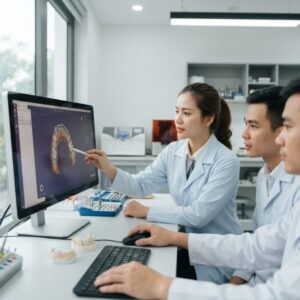
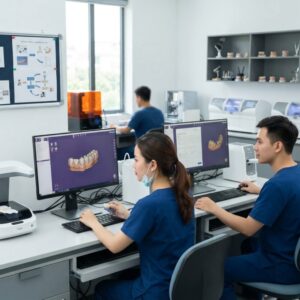
Designers in Vietnam utilize platforms like exocad and 3Shape to interpret intraoral scans and convert them into detailed prosthetic designs. They ensure proper occlusion, margin integrity, and anatomical morphology, which is crucial for patient comfort and restoration longevity. Outsourced teams collaborate closely with Japanese and South Korean labs via cloud-based design sharing and real-time communication tools, ensuring seamless integration into the workflow.
Why are cost-efficiency and skilled labor major factors in outsourcing CAD design to Vietnam?
Cost-efficiency combined with a skilled workforce is a primary reason why dental labs in Japan and South Korea are outsourcing CAD design to Vietnam in 2026.
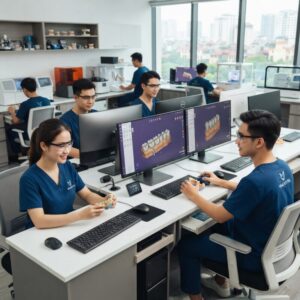
Vietnam offers significantly lower labor costs than Japan and South Korea while maintaining high educational standards in dental technology and digital design. Universities and technical institutes in Vietnam provide robust training programs in CAD/CAM dentistry, creating a workforce proficient in the latest design tools and dental materials knowledge. This balance allows dental labs to reduce operational expenses without sacrificing quality, thus improving profit margins and competitiveness.
What technological advantages does Vietnam provide for dental CAD/CAM outsourcing?
Vietnam’s technological advantages include advanced digital infrastructure, widespread high-speed internet access, and adoption of state-of-the-art CAD/CAM software.
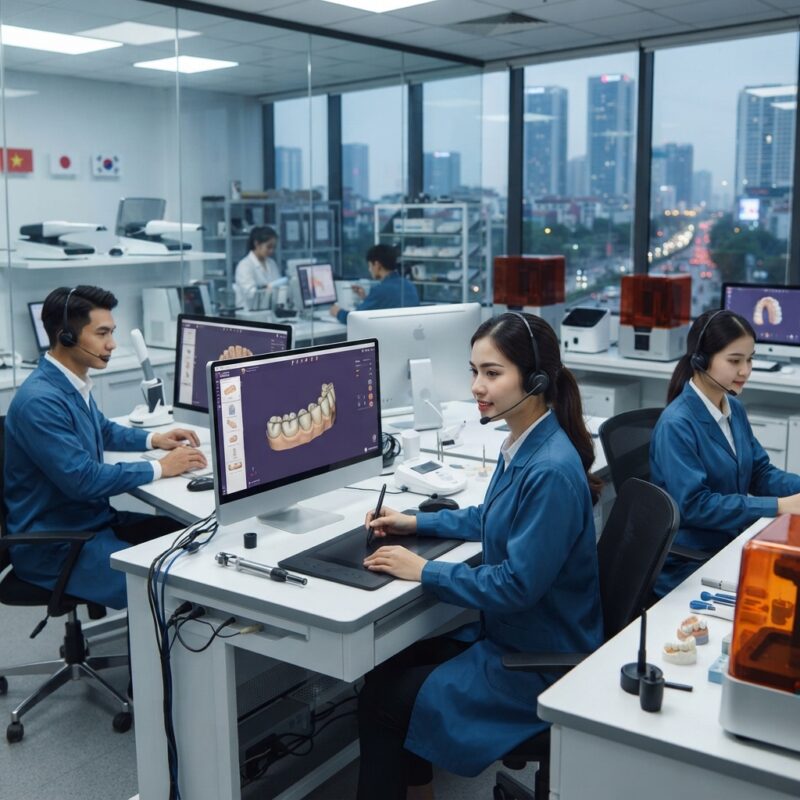
Many outsourcing providers in Vietnam invest heavily in the latest dental design platforms and 3D modeling technologies, ensuring compliance with global dental standards. The country’s growing ecosystem of dental tech companies also supports ongoing innovation and quick adaptation to new digital trends such as AI-assisted design and virtual articulators. This environment supports the high accuracy and customization demanded by Japanese and South Korean dental labs.
How do cultural and communication factors influence outsourcing success?
Cultural compatibility and effective communication are critical to the success of outsourcing CAD design projects.
Vietnamese dental CAD designers have increasingly developed proficiency in English and Japanese, facilitating smooth communication with clients in Japan and South Korea. This reduces misunderstandings and accelerates project turnaround. Moreover, Vietnamese work culture emphasizes diligence and precision, aligning well with the high quality standards in Japanese and Korean dental industries. Regular video conferences and project management platforms help maintain transparency and foster collaborative relationships.
What quality control measures ensure high standards in outsourced CAD designs?
High-quality control is ensured through rigorous multi-stage review processes, digital verification tools, and adherence to international dental standards.
Outsourced CAD design providers in Vietnam implement detailed quality assurance protocols including cross-checking margin lines, occlusal contacts, and material compatibility before delivering design files. They also use advanced software simulations to predict fit and function. Many labs require compliance with ISO dental standards and provide certification, which reassures Japanese and South Korean clients about the reliability of their outsourced services.
How does outsourcing CAD design impact turnaround times and lab capacity?
Outsourcing CAD design to Vietnam significantly improves turnaround times and expands lab capacity for Japanese and South Korean dental labs.
By delegating labor-intensive design tasks, domestic labs free up their in-house technicians to focus on milling, finishing, and clinical adjustments. The time zone difference is often leveraged to enable round-the-clock workflows, accelerating project delivery. Additionally, outsourcing partners can scale resources dynamically to handle peak demands, ensuring labs meet deadlines without compromising quality. This flexibility supports DSOs with high-volume implant and orthodontic cases.
What role does digital workflow integration play in outsourcing partnerships?
Seamless digital workflow integration is essential for effective outsourcing partnerships in dental CAD design.
Vietnamese CAD service providers align their processes with clients’ digital ecosystems, including intraoral scanning systems, CAD software, and CAM milling machines. This compatibility allows design files to be transferred and edited without data loss or format issues. Cloud-based platforms and secure file sharing facilitate real-time updates and feedback. Such integration reduces errors and rework, enhancing productivity and client satisfaction.
What types of dental prosthetics are most commonly outsourced to Vietnam?
The most commonly outsourced dental prosthetics to Vietnam include crowns and bridges, implant abutments, surgical guides, dentures, orthodontic aligners, and night guards.
Vietnamese CAD/CAM teams specialize in designing these complex restorations with precision and customization. For surgical guides, they incorporate CBCT data to create accurate drill paths critical for implant success. Orthodontic aligner designs require detailed tooth movement simulations, which are handled expertly by Vietnamese technicians. Night guards and dentures are also digitally designed to ensure patient comfort and durability. This broad expertise makes Vietnam a versatile partner for diverse prosthetic needs.

How do Japanese and South Korean dental labs ensure data security when outsourcing?
Dental labs ensure data security by implementing strict confidentiality agreements, using encrypted file transfers, and selecting outsourcing partners with robust cybersecurity protocols.
Vietnamese outsourcing firms comply with international privacy regulations and standard operating procedures to protect patient data during CAD design exchanges. Secure VPNs and cloud services with multi-factor authentication prevent unauthorized access. Clients often perform audits and require regular security reports to maintain trust. This focus on data protection is critical when outsourcing sensitive clinical information across borders.
What are future trends in dental CAD design outsourcing in Asia?
Future trends include increased adoption of AI-assisted design, virtual reality for patient case visualization, and expanded use of additive manufacturing workflows integrated with outsourced CAD design.
Vietnam is poised to be at the forefront of these innovations due to its growing tech ecosystem and investment in dental digital education. Furthermore, sustainability and eco-friendly material choices in prosthetics design are gaining importance. Japanese and South Korean labs are expected to deepen collaborations with Vietnamese partners to leverage these advancements, optimizing both cost and clinical outcomes.
Conclusion and Call to Action
Understanding why dental labs in Japan and South Korea are outsourcing CAD design to Vietnam in 2026 reveals a strategic shift toward cost-effective, high-quality, and technologically advanced dental lab services. Vietnam’s skilled workforce, technological infrastructure, and cultural alignment make it an ideal partner for complex digital dental design needs.
Step-by-Step Guide to Successfully Outsourcing Dental CAD Design to Vietnam
Outsourcing dental CAD design to Vietnam presents significant opportunities but requires a well-structured approach to maximize benefits and minimize risks. Below is a detailed step-by-step guide dental labs and practices in Japan and South Korea can follow to establish a productive outsourcing partnership.
1. Assess Your Internal Needs and Capabilities
- Evaluate Current Workflow: Understand which parts of your CAD design process are bottlenecks or require specialized skills.
- Identify Volume and Complexity: Determine the volume of cases and the complexity of prosthetics you intend to outsource.
- Set Clear Objectives: Are you outsourcing to reduce cost, increase capacity, improve turnaround, or access new expertise?
2. Research and Select Potential Vietnamese Partners
- Technical Expertise: Verify the partner’s experience with your required prosthetic types and CAD software platforms.
- Quality Certifications: Look for ISO certifications, dental-specific accreditations, and client testimonials.
- Communication Capability: Assess language skills and responsiveness to ensure smooth collaboration.
3. Pilot Project Execution
- Start Small: Begin with a limited number of cases to validate quality, turnaround, and communication.
- Feedback Loop: Establish regular reviews and feedback sessions to fine-tune expectations and processes.
- Data Security Validation: Confirm secure handling of digital patient data during the pilot phase.
4. Develop Integration Protocols
- Standardize File Formats: Ensure compatibility of STL, OBJ, or proprietary files used for CAD design.
- Define Turnaround Times: Agree on realistic timelines for typical cases, including contingencies.
- Quality Control Checks: Implement checkpoints and approval stages before finalizing designs.
5. Scale the Partnership
- Expand Volume Gradually: Increase outsourced cases as trust and efficiency grow.
- Continuous Training: Share updates on design preferences and new products or materials.
- Regular Performance Reviews: Monitor KPIs such as error rates, turnaround, and client satisfaction.
6. Establish Contingency Plans
- Backup Providers: Identify secondary partners to mitigate risks of disruption.
- Dispute Resolution: Agree on processes for handling disagreements or defects.
- Technology Failures: Develop protocols for data recovery and communication during outages.
Common Mistakes to Avoid When Outsourcing Dental CAD Design
While outsourcing can be highly beneficial, many dental labs and practices fall into avoidable pitfalls that compromise quality, efficiency, and cost savings. Recognizing these common mistakes upfront can save time and resources.
1. Inadequate Partner Vetting
Rushing to engage a vendor without thorough due diligence often leads to subpar quality or missed deadlines. Labs sometimes overlook verifying technical competency or neglect to check references and certifications.
2. Poor Communication Setup
Failing to establish clear communication channels, schedules, and language protocols creates misunderstandings and delays. For example, not agreeing on preferred messaging platforms or time zone overlaps can disrupt project flow.
3. Overlooking Cultural Differences
Ignoring cultural nuances can lead to frustrations. In Vietnam, indirect communication is common, so Japanese and Korean labs should encourage open feedback and clarify expectations explicitly.
4. Neglecting Data Security Measures
Some labs underestimate the importance of secure file transfers and data protection. Without encrypted transmission and access controls, sensitive patient information can be exposed.
5. Skipping Pilot Testing
Jumping straight to full-scale outsourcing without pilot projects risks large-scale errors and wasted resources. Initial small batches allow for process refinement and quality assessment.
6. Ambiguous Contracts and SLAs
Failing to define service level agreements (SLAs) and contract terms around quality, turnaround, liability, and confidentiality can cause disputes and inconsistent performance.
7. Ignoring Local Market Specificities
Vietnam’s dental CAD market has unique labor cost structures, software preferences, and regulatory environments. Not adapting to these specifics can reduce competitiveness.
Cost and Quality Considerations: Balancing Investment and Outcome
Outsourcing dental CAD design involves a careful balance between cost savings and maintaining the high-quality standards demanded by dental labs and practices. Below are practical considerations to help achieve this balance.
Understanding Cost Components
- Labor Costs: Vietnam offers lower hourly rates for experienced CAD designers compared to Japan and South Korea, often reducing design costs by 40-60%.
- Technology Investment: Some partners include software licensing and cloud storage fees in their pricing, while others pass these costs separately.
- Communication and Management: Budget for project management time and translation services if needed.
- Quality Assurance: Additional costs may arise from multiple revision cycles or third-party quality audits.
Measuring Quality Beyond Aesthetics
Quality in dental CAD design is multi-faceted, including:
- Precision Fit: Accurate margins and occlusion to minimize remakes.
- Material Compatibility: Designs must align with the chosen manufacturing materials (zirconia, PMMA, titanium).
- Functional Design: Considerations for patient comfort, longevity, and ease of placement by dentists.
- Compliance: Adherence to local regulatory standards and patient data privacy laws.
Cost-Quality Trade-Offs: Real-World Examples
Example 1: A mid-sized dental lab in Seoul outsourced crown designs to a Vietnamese partner with aggressive pricing. Initially, turnaround time was fast, but 15% of designs required rework due to margin inaccuracies, leading to higher overall expenses and client dissatisfaction.
Example 2: A large DSO in Tokyo chose a slightly more expensive CAD outsourcing firm that followed strict quality protocols and integrated digital workflows. Although the initial cost was higher, the lab saved money on remakes, improved turnaround, and scaled production efficiently.
Checklist for Cost-Quality Evaluation
- Compare hourly or per-case pricing against your internal cost baseline.
- Request sample designs and validate accuracy with your fabrication team.
- Confirm the partner’s experience with your required prosthetic materials.
- Assess the cost impact of multiple revision cycles.
- Evaluate technology infrastructure and software compatibility.
- Include anticipated savings from increased throughput and reduced labor overhead.
- Review SLAs related to quality guarantees and remediation policies.
Market Specifics: Navigating Regulatory and Competitive Landscapes in Asia
Understanding the unique regulatory environments and competitive dynamics in Japan, South Korea, and Vietnam is essential for successful outsourcing partnerships in dental CAD design.
Regulatory Considerations
- Data Protection Laws: Japan’s Act on the Protection of Personal Information (APPI) and South Korea’s Personal Information Protection Act (PIPA) impose strict rules on handling patient data. Vietnamese partners must comply with these laws when processing digital files.
- Medical Device Regulations: Dental prosthetics are classified differently across countries; ensuring outsourced designs meet local approval standards is critical.
- Export and Import Controls: Some materials and digital data transfers may be subject to export/import restrictions or customs duties.
Competitive Landscape Insights
Vietnam’s dental outsourcing market has grown rapidly due to government incentives and an expanding skilled workforce. Several factors shape competition:
- Price Pressure: Many providers compete on cost, but the highest-value contracts go to those demonstrating quality and reliability.
- Specialization: Providers increasingly focus on niches such as implant surgical guides, complex orthodontic appliances, or full-arch prosthetics.
- Technology Adoption: Early adopters of AI-powered design tools and cloud collaboration platforms gain competitive advantages.
Strategic Tips for Navigating the Market
- Engage local legal counsel to ensure contracts comply with cross-border regulations.
- Consider partners with joint ventures or subsidiaries in Japan or South Korea to ease compliance and communication.
- Monitor emerging Vietnamese government policies that may affect labor costs or export incentives.
- Leverage trade shows and industry forums in Asia to evaluate new technology trends and potential partners.
Cost and Quality Considerations: Balancing Value with Precision
Outsourcing dental CAD design to Vietnam offers significant cost advantages, but dental labs and practices must carefully balance price with quality to ensure optimal outcomes. While Vietnamese CAD technicians typically charge 30-50% less than their Japanese or South Korean counterparts, the selection of partners solely based on lowest cost can compromise prosthetic fit, function, and aesthetics.
Key cost and quality factors to evaluate include:
- Hourly rates vs. project pricing: Some Vietnamese vendors offer fixed pricing per design, which simplifies budgeting but may lead to hidden costs if revisions are frequent. Hourly rates allow flexibility but require close monitoring of time spent.
- Quality certifications and training: Prioritize outsourcing partners with ISO certifications or proven track records in dental CAD/CAM. Many Vietnamese firms invest heavily in employee training on international dental standards and software updates.
- Material compatibility: Ensure that the CAD designs are optimized for the specific materials used in your lab (zirconia, lithium disilicate, PMMA, etc.) to avoid costly remakes.
- Revision policies: Confirm how many rounds of design revisions are included in the price and the cost per additional revision. This helps avoid unexpected budget overruns.
For example, a mid-sized dental lab in Osaka partnered with a Vietnamese firm offering CAD design at 40% lower costs. By implementing a trial project focusing on single crowns, they identified minor fit issues initially but worked collaboratively to refine the workflow. After three months, they achieved a consistent first-time-right rate exceeding 90%, yielding a 25% overall cost saving when factoring in reduced remakes.
Ultimately, the best approach combines competitive pricing with rigorous quality assessment through pilot runs and ongoing performance monitoring.
Market Specifics: Navigating Regulatory and Industry Nuances in Japan and South Korea
Understanding the regulatory environment and industry expectations in Japan and South Korea is essential for successful outsourcing partnerships with Vietnamese CAD design providers.
Regulatory Compliance and Dental Standards
Both Japan and South Korea have stringent regulations governing dental materials, prosthetics, and digital workflows. Outsourced CAD designs must comply with each country’s medical device laws, which often require traceability, material safety validation, and documentation for audits.
- Vietnamese partners must be trained in the specific standards such as Japan’s Pharmaceutical and Medical Device Act (PMDA) and South Korea’s Ministry of Food and Drug Safety (MFDS) guidelines.
- Data formats and design parameters need to align with local CNC milling or 3D printing equipment used by the labs.
- Language localization of design files and instructions is critical to avoid misunderstandings during prosthetic fabrication.
Industry Expectations and Customer Preferences
Japanese and South Korean dental clinics often demand ultra-high aesthetics, especially for anterior restorations, reflecting patient expectations for natural appearance and comfort.
- Vietnamese designers must be skilled in subtle anatomical details—such as surface texture, translucency, and margin finishing—to meet these preferences.
- Customization requests, such as characterizations or layering guidance, should be clearly communicated and incorporated into the CAD workflow.
- Quick turnaround times are highly valued in both markets, often requiring Vietnamese vendors to adjust staffing and shift work schedules to meet deadlines.
Step-by-Step Checklist for Integrating Vietnamese CAD Design into Your Workflow
To maximize the benefits of outsourcing dental CAD design from Vietnam, labs and dental practices should follow a structured integration approach:
- Step 1: Define Clear Project Scope and Objectives
Specify which prosthetics (crowns, bridges, implants) will be outsourced, expected turnaround times, quality benchmarks, and communication protocols. - Step 2: Standardize Data Transfer Formats
Agree on file formats (e.g., STL, PLY), naming conventions, and secure sharing platforms to streamline project handoffs. - Step 3: Conduct a Pilot Project
Start with a small batch of cases to test design accuracy, communication flow, and revision processes. - Step 4: Implement Quality Assurance Protocols
Set up periodic reviews of design outputs, including digital mockups and fit trials, to catch errors early. - Step 5: Train Internal Staff on New Workflows
Ensure technicians and clinicians understand how to interpret outsourced CAD designs and provide feedback efficiently. - Step 6: Establish Regular Communication and Feedback Loops
Schedule weekly or biweekly meetings to discuss performance metrics, challenges, and continuous improvement. - Step 7: Monitor Cost and Time Metrics
Track project costs versus in-house design expenses and measure average turnaround times to evaluate ROI. - Step 8: Develop Contingency Plans
Prepare backup options such as secondary vendors or in-house resources in case of delays or quality issues.
Common Mistakes in Outsourcing Dental CAD Design and How to Avoid Them
Even experienced dental labs can stumble when outsourcing CAD design. Avoiding these pitfalls will help maintain quality and efficiency:
- Underestimating the Importance of Cultural Nuances: Misunderstanding work ethics, holidays, or communication styles can delay projects. Solution: invest in cultural training and appoint dedicated liaison personnel.
- Failing to Verify Technological Compatibility: Incompatible CAD software versions or data formats can cause file corruption or design errors. Solution: confirm software compatibility before starting collaboration.
- Ignoring Intellectual Property Protections: Sharing proprietary design templates without proper NDAs risks IP theft. Solution: establish strict confidentiality agreements and use secure data exchange methods.
- Overlooking Language Barriers: Ambiguous instructions due to language differences may lead to design inaccuracies. Solution: use bilingual staff or professional translation services to clarify specifications.
- Neglecting Long-Term Relationship Building: Treating outsourcing as a transactional, one-off arrangement can limit improvements. Solution: foster partnerships through regular feedback, joint training, and shared innovation initiatives.
If your lab is exploring outsourcing options to enhance efficiency and scalability, contact us today to learn how our Vietnam-based CAD design services can help you stay competitive and innovative.