Introduction to Ivoclar Programat vs Dekema Austromat sintering furnace 2026
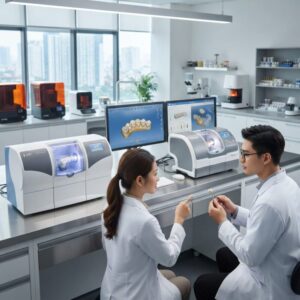
The decision between the Ivoclar Programat vs Dekema Austromat sintering furnace 2026 models is a pivotal one for dental labs, dental service organizations (DSOs), and dental practices investing in digital workflows. Both furnaces are leaders in sintering technology, designed to process zirconia and other ceramic materials critical for crowns, bridges, implants, and orthodontic appliances. This guide provides an in-depth comparison to help professionals understand which furnace aligns best with their production volume, budget, and desired workflow efficiency.
What is a dental sintering furnace and why is it important?
A dental sintering furnace is a specialized device used to heat zirconia and ceramic restorations to high temperatures, typically between 1350°C and 1600°C, to achieve optimal strength and aesthetics. This process is essential for the finalization of crowns, bridges, surgical guides, dentures, and orthodontic appliances. Without proper sintering, restorations risk being brittle or failing prematurely. Therefore, selecting a sintering furnace that ensures consistent temperature control, reliability, and integration with CAD/CAM workflows is crucial for dental labs and DSOs aiming for high-quality outputs.
Key features and technology in Ivoclar Programat sintering furnaces
The Ivoclar Programat series, including the latest 2026 models, are renowned for their precision and automation in sintering processes. Their furnaces offer:
- Advanced temperature control: Precise heating and cooling curves tailored for various zirconia types and multilayer discs.
- Large sintering chamber: Accommodates multiple restorations or larger prosthetics in one run, enhancing batch efficiency.
- User-friendly software integration: Seamless connection with Ivoclar’s digital design software and other CAD/CAM systems.
- Automated programs: Pre-set sintering cycles optimized for Ivoclar’s material portfolio, reducing user error.
- Durability and maintenance: Designed for continuous high-volume use with straightforward maintenance schedules.
These characteristics make the Programat series especially popular among medium to large dental labs and DSOs with consistent sintering demands. For example, labs producing large batches of crowns and bridges can benefit from the furnace’s capacity and workflow automation.
What distinguishes the Dekema Austromat sintering furnace 2026?
The Dekema Austromat sintering furnace 2026 is a sophisticated device favored for its modular design and versatility. Its distinguishing features include:
- Modular chamber system: Allows customization with multiple sintering chambers or additional functions like presintering or cooling stations.
- High-temperature precision: Exceptional thermal homogeneity for consistent sintering results across batches.
- Flexible programming: Users can create custom sintering profiles, ideal for labs working with diverse materials beyond standard zirconia.
- Compact footprint: Suitable for labs with limited floor space without sacrificing capacity.
- Remote monitoring capabilities: Integration with network systems allows tracking and alerts, improving lab management.
This furnace suits labs and DSOs requiring flexibility in their sintering processes or those exploring advanced materials and workflows, such as custom surgical guides or complex implant restorations.
How do Ivoclar Programat and Dekema Austromat compare in workflow integration?
Ivoclar Programat vs Dekema Austromat sintering furnace 2026 integration capabilities differ primarily in software ecosystems and automation levels. Ivoclar Programat is tightly integrated with Ivoclar’s proprietary CAD software and material systems, offering a plug-and-play experience with minimal setup. This is advantageous for labs standardizing on Ivoclar materials and digital design solutions.
In contrast, Dekema Austromat provides more flexibility to integrate with third-party CAD/CAM platforms such as exocad and 3Shape. Its open programming environment allows labs to adapt sintering profiles for a wider range of materials and workflows, which benefits labs diversifying their production lines or experimenting with new materials.
Both units support digital workflows required for producing crowns, bridges, implants, and orthodontic devices, but the choice depends on the lab’s preferred software ecosystem and the level of automation desired for batch processing.
What are the total cost of ownership considerations?
Total cost of ownership (TCO) is a crucial factor in the Ivoclar Programat vs Dekema Austromat sintering furnace 2026 debate. Initial purchase prices vary, with Ivoclar generally positioned at a slightly higher upfront investment due to its automation and integrated software. Dekema Austromat’s modularity can either increase or decrease costs depending on configuration.
Other TCO factors include:
- Maintenance and service: Both manufacturers offer comprehensive service plans; however, Ivoclar’s integrated system may reduce downtime through automated alerts.
- Consumable costs: Replacement of heating elements and zirconia trays should be budgeted; costs vary by model and region.
- Energy consumption: Energy efficiency ratings are comparable, but actual costs depend on usage intensity and cycle frequency.
- Training requirements: Ivoclar’s user-friendly interface may reduce staff training time and errors, whereas Dekema’s flexibility might require more skilled operators.
Ultimately, labs should request detailed quotes including maintenance contracts and energy consumption estimates from each manufacturer or distributor, as figures vary by region and date.
Ivoclar Programat vs Dekema Austromat sintering furnace 2026: Which is better for high-volume labs?
High-volume dental labs prioritize throughput, reliability, and automation. The Ivoclar Programat vs Dekema Austromat sintering furnace 2026 comparison in this context favors the Ivoclar Programat for its large sintering chamber and automated workflows. This furnace can process multiple full arches and a variety of prosthetics in a single cycle, reducing cycle times and operator intervention.
- Best for: Large dental labs, DSOs with multiple production sites, labs focused on Ivoclar materials.
- Strengths: High capacity, automation, integrated software, consistent quality.
- Limitations: Higher upfront cost, less flexible for non-Ivoclar materials.
While Dekema Austromat offers flexibility, its modular setup can be less advantageous for uninterrupted high-throughput production unless configured with multiple chambers, which adds complexity and cost.
Who should consider Dekema Austromat sintering furnace 2026?
The Dekema Austromat is ideal for small to medium labs or practices that require customization and multi-material sintering capabilities. For labs producing a diverse range of restorations, including surgical guides, implant components, or research applications, the furnace’s programmable nature is a significant advantage.
- Best for: Small labs, specialty labs, clinics with in-house sintering needs, labs experimenting with advanced ceramics.
- Strengths: Flexible programming, modular design, compact size, remote monitoring.
- Limitations: Smaller chamber size, requires more operator expertise, potential need for multiple units for high volume.
This makes it a good fit for dental service organizations needing flexible workflows or single-dentist practices with moderate sintering demands.
Comparison Table: Ivoclar Programat vs Dekema Austromat sintering furnace 2026
| Feature | Ivoclar Programat | Dekema Austromat |
|---|---|---|
| Max Temperature | Up to 1600°C | Up to 1600°C |
| Sintering Chamber Size | Large (up to full arch batches) | Modular, smaller per chamber |
| Automation Level | High (automated cycles and loading) | Moderate (programmable but manual loading) |
| Software Integration | Ivoclar proprietary software, seamless | Open to third-party CAD/CAM software |
| Best Use Case | High-volume labs, DSOs | Small/medium labs, flexible workflows |
How do these furnaces impact digital dental workflows?
Both furnaces are designed to complement modern CAD/CAM dental workflows, which rely on precise milling or 3D printing of zirconia-based restorations followed by sintering. The choice between Ivoclar Programat vs Dekema Austromat sintering furnace 2026 affects workflow efficiency:
- Ivoclar’s furnace can automatically sync with Ivoclar’s CAD software, reducing manual input and errors in cycle selection.
- Dekema’s flexibility allows labs to tailor sintering profiles for experimental materials or complex prosthetics such as surgical guide design.
Integrating a high-quality sintering furnace ensures restorations meet strength and aesthetic standards, enabling labs to offer reliable crowns, bridges, implants, and orthodontic devices to their clients.
Do you need design capacity for your new equipment?
If you are investing in a new sintering furnace but lack in-house CAD design resources, outsourcing your digital dental design can maximize your equipment’s potential. Our CAD/CAM digital design outsourcing service provides expert designs for crowns, bridges, implants, surgical guides, dentures, orthodontic aligners, and night guards, so you can run your furnace or mill efficiently without hiring additional designers. This service integrates seamlessly with both Ivoclar Programat and Dekema Austromat workflows, supporting your lab or practice in delivering high-quality restorations with reduced overhead.

Maintenance and support: What to expect?
Reliable maintenance and customer support can significantly influence long-term satisfaction with your sintering furnace. Ivoclar offers dedicated technical support and a global network of service centers, providing quick turnaround for repairs and consumable replacements. Dekema also has a reputable support system, with modular parts that can be serviced individually to minimize downtime.
Both companies provide training resources; however, Ivoclar’s user-friendly interface typically requires less intensive training. Dekema’s flexibility may demand more experienced operators to optimize custom sintering profiles and modular configurations.
Energy efficiency and environmental considerations
Energy consumption is an important operational cost factor. Both Ivoclar Programat vs Dekema Austromat sintering furnace 2026 models use advanced insulation and heating element technologies to minimize energy use per cycle. Ivoclar’s automated cooling cycles can further reduce power consumption by optimizing cycle times based on batch size. Dekema’s modular system allows shutting down unused chambers, potentially saving energy in lower-volume settings.
Environmentally conscious labs should evaluate power ratings and real-world energy use, ideally requesting data from manufacturers or distributors to compare energy consumption tailored to their expected workloads.
What are user experiences and feedback from the field?
Based on industry reports and user reviews, the Ivoclar Programat sintering furnace is praised for its reliability and ease of use in busy production environments. Users highlight the furnace’s consistency in producing high-quality sintered zirconia restorations without frequent adjustments.
Dekema Austromat users appreciate the flexibility and ability to customize sintering programs, especially for labs that handle a broad variety of ceramic materials or require multi-chamber setups for different production lines. Some report a steeper learning curve but greater long-term adaptability.
Both furnaces are regarded as investments that improve the quality and efficiency of dental restorations when matched appropriately to the lab’s workflow and volume.
Conclusion: Making the right choice between Ivoclar Programat vs Dekema Austromat sintering furnace 2026
Choosing between the Ivoclar Programat vs Dekema Austromat sintering furnace 2026 ultimately depends on your lab or DSO’s unique production needs, workflow preferences, and budget constraints. For high-volume labs focused on streamlined, automated workflows and Ivoclar material compatibility, the Programat furnace offers unmatched consistency and capacity.
Conversely, for labs or clinics seeking modular flexibility, multi-material support, and customizable sintering processes, the Dekema Austromat is a compelling choice, particularly in smaller-scale or specialty environments.
To optimize your investment, consider your current and projected workload, software environment, and staff expertise. Additionally, leverage outsourcing options for CAD/CAM design to maximize your furnace’s productivity without expanding your in-house team.
For further guidance on digital workflows and equipment integration, visit the American Dental Association ADA website or explore detailed CAD/CAM resources at Dentsply Sirona.
Step-by-Step Guide to Implementing a Sintering Furnace in Your Dental Lab
Integrating a new sintering furnace such as the Ivoclar Programat or Dekema Austromat into your dental lab workflow requires careful planning to maximize efficiency and maintain quality. Here’s a practical step-by-step guide to help ensure a smooth transition and optimal use:
Step 1: Assess Your Production Needs and Lab Capacity
- Evaluate current daily and weekly case volumes to determine furnace capacity requirements.
- Consider the types of restorations you produce (crowns, bridges, implants, orthodontic appliances) and their material demands.
- Identify available lab space and electrical infrastructure to accommodate the furnace.
Step 2: Select the Appropriate Furnace Model
- Match furnace features with your production volume and material preferences.
- Factor in integration needs with existing CAD/CAM systems and software.
- Consider future scalability to avoid outgrowing the equipment rapidly.
Step 3: Plan Installation and Training
- Schedule installation during low production periods to minimize disruption.
- Arrange comprehensive operator training with the manufacturer or distributor to ensure correct usage and maintenance.
- Develop standard operating procedures (SOPs) tailored to your lab’s workflow incorporating the new furnace.
Step 4: Establish Quality Control Protocols
- Implement regular calibration and validation of sintering cycles.
- Document sintering parameters for different materials to ensure repeatability.
- Set up a checklist for post-sintering inspection, including surface finish, fit, and color consistency.
Step 5: Monitor and Optimize Workflow
- Track throughput times and identify bottlenecks related to sintering.
- Gather feedback from technicians on ease of use and common issues.
- Adjust scheduling and batch sizes to maximize furnace utilization without compromising quality.
Common Mistakes to Avoid When Using Dental Sintering Furnaces
Even with advanced technology, dental labs and practices can face challenges that impact productivity and restoration quality. Understanding typical pitfalls can save time and money:
- Improper Loading: Overloading the furnace or uneven loading can cause inconsistent sintering, leading to warping or incomplete densification of zirconia restorations.
- Neglecting Cooling Cycles: Rushing the cooling phase or interrupting it prematurely may induce internal stresses, resulting in cracks or fractures.
- Ignoring Maintenance Schedules: Failing to clean and maintain heating elements and sensors reduces furnace accuracy and lifespan.
- Using Incorrect Sintering Programs: Applying default or outdated programs without adjusting for material brand or thickness can compromise strength and aesthetics.
- Inadequate Training: Operators unfamiliar with specific furnace interfaces and alarms may misinterpret error messages, causing unnecessary downtime or damage.
Cost vs. Quality: Balancing Investment and Output in Dental Sintering Furnaces
Selecting between the Ivoclar Programat and Dekema Austromat requires balancing upfront investment with long-term quality outcomes and operational costs. Below are practical considerations and real-world examples to guide decision-making:
Initial Purchase Price and Installation Costs
The Dekema Austromat often has a higher initial price tag due to advanced automation and larger capacity features, making it more suitable for high-volume labs or DSOs. Ivoclar Programat models may offer more affordable entry points for smaller labs or practices focusing on mid-range production.
Consumables and Replacement Parts
Both manufacturers provide proprietary accessories and consumables, such as sintering trays and heating elements. Labs should budget for periodic replacements and verify warranty coverage. For example, one medium-sized lab reported annual consumable costs of approximately 5-7% of the furnace’s purchase price.
Energy Consumption and Operating Costs
Energy-efficient models can reduce operational expenses, especially in labs running continuous sintering cycles. Real-world data suggests that the Ivoclar Programat’s optimized heating algorithms can reduce energy use by up to 15% compared to older furnace models, while the Dekema Austromat’s insulation technology cuts heat loss significantly during longer cycles.
Quality of Final Restorations
The investment in a premium furnace often correlates with improved restoration quality. For example, a dental lab using the Dekema Austromat noted fewer post-sintering adjustments and higher patient satisfaction due to consistent translucency and fit. However, Ivoclar Programat users also report excellent outcomes when protocols are strictly followed, highlighting that operator expertise remains crucial.
Return on Investment (ROI)
A high-volume lab that upgraded from a manual furnace to the Dekema Austromat saw a 20% increase in throughput within six months, translating to quicker turnaround times and increased client capacity. Conversely, a smaller practice adopting the Ivoclar Programat benefited from reduced labor costs and minimized errors, achieving ROI within the first year.
Checklist for Evaluating Sintering Furnace Options in Your Market
Before committing to a sintering furnace purchase, consider the following checklist tailored to your local market conditions and business model:
- Production Volume Alignment: Does the furnace capacity match your current and projected demand?
- Material Compatibility: Is the furnace certified or optimized for the zirconia and ceramic materials you use?
- Local Service and Support: Are authorized technicians and parts readily available in your region?
- Energy Costs: How does local electricity pricing affect operational expenses for high-frequency sintering?
- Regulatory Compliance: Does the equipment meet local safety and medical device standards?
- Training Resources: Are manufacturer training sessions accessible or available remotely?
- Integration with Regional Digital Workflows: Does the furnace software support your CAD/CAM systems used locally?
- Warranty and Service Contracts: What are the terms for repairs and maintenance? Are extended warranties practical in your market?
- Financing Options: Are leasing or financing programs available to ease upfront costs?
- Peer Recommendations: What do other local labs or dental practices recommend based on their experience?
If you want expert help to decide between Ivoclar Programat vs Dekema Austromat sintering furnace 2026 or need reliable digital design outsourcing to complement your new equipment, contact us today to discuss your requirements and get tailored solutions.