Understanding the Dental Lab Cost Challenges in Australia in 2026
Dental labs and dental service organizations (DSOs) in Australia face increasing financial pressures in 2026 due to rising material costs, labour shortages, and evolving technology demands. Understanding how to reduce dental lab costs in Australia in 2026 begins with a comprehensive analysis of current expense drivers.
Material expenses for crowns, bridges, implants, and dentures have steadily increased as premium biocompatible materials become standard. Additionally, traditional lab workflows often involve repetitive manual processes that increase labour hours and human error risk. As more labs adopt digital dentistry, investment in CAD/CAM technology is essential but can be cost-prohibitive upfront.
However, the key to cost reduction lies in optimizing workflows, outsourcing strategic tasks like digital design, and adopting scalable technology solutions. By tackling these challenges head-on, labs can preserve quality while improving margins.
What is dental lab CAD/CAM digital design outsourcing?
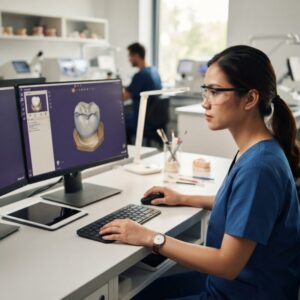
Dental lab CAD/CAM digital design outsourcing is the practice of contracting specialized external providers to handle the computer-aided design and manufacturing planning of dental restorations and appliances.
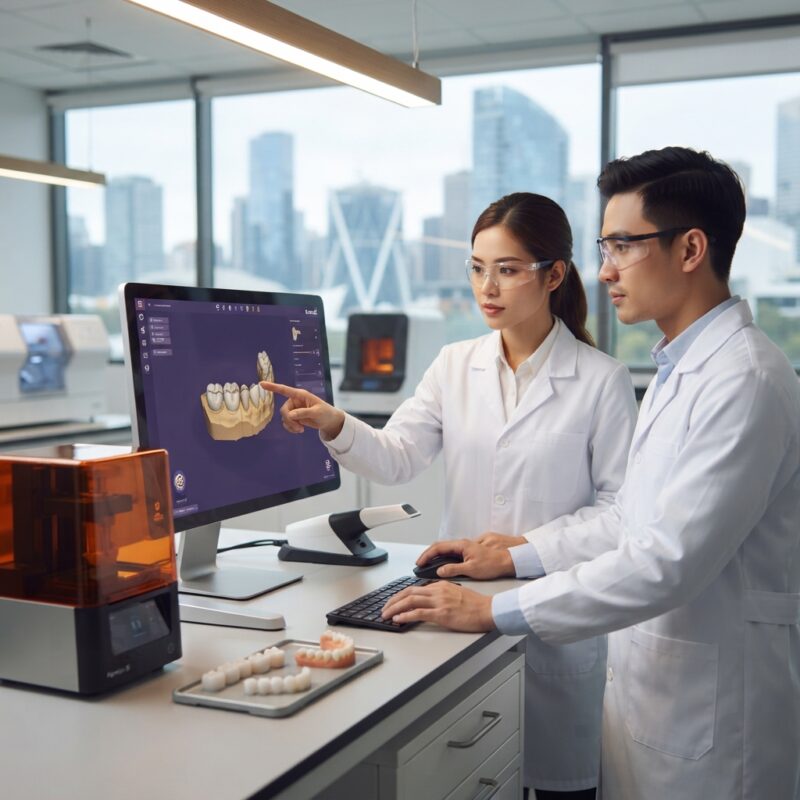
This service allows dental labs and DSOs to delegate complex digital design tasks—such as crowns, bridges, implants, surgical guides, dentures, orthodontic aligners, and night guards—to experts using advanced CAD software and high-precision manufacturing systems. Outsourcing reduces the need to invest heavily in expensive CAD/CAM equipment and skilled design staff. It also accelerates turnaround times and minimizes errors by leveraging proven digital workflows.
Leading outsourcing partners often use industry-standard software platforms like Exocad and 3Shape to ensure compatibility and quality. This approach is particularly effective for labs aiming to learn how to reduce dental lab costs in Australia in 2026 without compromising on product quality or service levels.
How does CAD/CAM technology contribute to cost savings?
CAD/CAM technology streamlines the dental restoration process by replacing manual steps with automated digital workflows, resulting in significant cost savings.
By digitally scanning impressions and designing restorations using CAD software, labs eliminate inaccuracies caused by physical impressions and model handling. CAM processes enable precise milling or 3D printing of dental prosthetics, reducing material waste and remakes.
In 2026, leveraging CAD/CAM allows Australian dental labs to optimize resource allocation, reduce labour costs, and increase production throughput. For example, digital design outsourcing can cut design hours per case by up to 50%, freeing internal staff for other valuable tasks. Additionally, digital files can be stored and shared easily, facilitating collaboration across multiple locations or with DSOs.
Integration with scanning systems such as iTero scanners and milling machines from trusted manufacturers like Roland DG ensures a seamless end-to-end process that enhances efficiency and reduces overhead.
What are the key strategies on how to reduce dental lab costs in Australia in 2026?
The most effective strategies on how to reduce dental lab costs in Australia in 2026 revolve around embracing digital transformation and strategic outsourcing.
- Outsource CAD/CAM Design: Partner with a trusted external CAD/CAM design provider to lower labour costs and capital expenditure.
- Adopt Digital Impressions: Encourage clients to use intraoral scanners to reduce errors and improve fit accuracy.
- Standardize Materials: Use consistent, high-quality materials to reduce variability and waste.
- Implement Lean Workflow Processes: Streamline lab operations to eliminate non-value-added tasks.
- Leverage Data Analytics: Use production and case data to identify bottlenecks and cost drivers.
- Train Staff in Digital Tools: Up-skill technicians to maximize productivity with CAD/CAM software.
These combined efforts allow labs to lower operational costs while improving turnaround times and product quality, essential components in learning how to reduce dental lab costs in Australia in 2026 effectively.
How can digital design outsourcing improve turnaround times and reduce costs?
Digital design outsourcing improves turnaround times and reduces costs by leveraging specialized expertise and scalable digital infrastructure.
Outsourcing providers invest heavily in the latest CAD software, high-end computing resources, and skilled designers who work efficiently on complex cases. This expertise shortens design cycles, reduces remake rates, and ensures consistent quality across all types of dental restorations.
Moreover, outsourcing eliminates the need for labs to maintain a large in-house design team, reducing payroll and training costs. It also mitigates the expense of purchasing and upgrading costly CAD/CAM software licenses. By sending digital impressions and scans electronically, communication delays are minimized, expediting the overall production timeline.
For dental labs in Australia attempting to understand how to reduce dental lab costs in Australia in 2026, outsourcing digital design is a practical solution to balance cost containment with high-quality output.
Integrating CAD/CAM outsourcing with implant and surgical guide production
Implants and surgical guides require precision engineering and often involve complex digital workflows; integrating CAD/CAM outsourcing can significantly reduce costs and improve accuracy in their production.
Outsourcing digital design for implant crowns, bridges, and surgical guides ensures that all components fit perfectly with the patient’s anatomy, reducing chairside adjustment time. Expert outsourcing partners use software like Straumann and Nobel Biocare compatible systems to design guides that assist surgeons in accurate implant placement.
This integration eliminates costly remakes and streamlines collaboration between the dental lab, surgeon, and restorative dentist. Outsourcing also enables labs to offer a broader range of implant solutions without investing in specialized design personnel or equipment.
Such collaboration is crucial when learning how to reduce dental lab costs in Australia in 2026 while maintaining premium service for implant cases.
Cost-benefit analysis of outsourcing denture and orthodontic aligner designs
Outsourcing denture and orthodontic aligner designs provides measurable cost benefits by reducing labour-intensive steps and improving manufacturing precision.
Denture design requires meticulous customization to ensure patient comfort and function, which can be time-consuming for in-house technicians. By outsourcing, labs gain access to experts who utilize advanced CAD software for designing dentures that fit perfectly and can be manufactured efficiently using 3D printing or milling.
Similarly, orthodontic aligner production benefits from digital design outsourcing by shortening the design and refinement cycles, enabling faster patient delivery. Outsourcing partners often have direct interfaces with aligner manufacturers, streamlining production and reducing errors.
When considering how to reduce dental lab costs in Australia in 2026, outsourcing these specialized services can lower overhead, reduce material waste, and increase case acceptance rates due to improved product quality.
Choosing the right CAD/CAM outsourcing partner in Australia
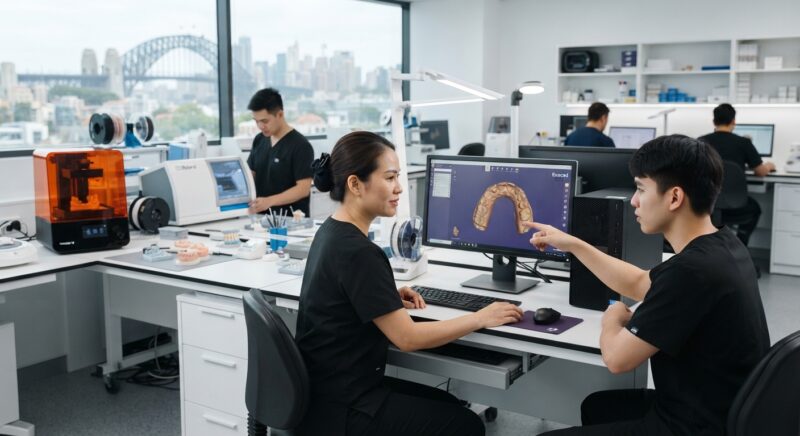
Selecting a reliable CAD/CAM outsourcing partner is critical to successfully reducing dental lab costs in Australia in 2026.
Labs should evaluate partners based on:
- Software Compatibility: Ensure the provider uses industry-standard CAD platforms like Exocad or 3Shape for seamless integration.
- Turnaround Time: Confirm that the partner can meet your lab’s case volume and delivery expectations.
- Quality Assurance: Check for certifications, quality control protocols, and case revision policies.
- Communication: A partner offering clear, responsive communication channels helps avoid costly misunderstandings.
- Pricing Models: Transparent and competitive pricing aligned with your lab’s budget.
By choosing the right partner, labs can confidently implement outsourcing strategies to learn how to reduce dental lab costs in Australia in 2026 while enhancing their service offerings. This also works well alongside surgical guide design services.
Leveraging technology trends to further reduce costs
Advancements in 3D printing, AI-driven design automation, and cloud-based collaboration tools offer additional avenues for reducing dental lab costs in Australia in 2026.
3D printing technologies from companies like Formlabs and Asiga enable cost-effective production of surgical guides, dentures, and night guards with minimal manual intervention. AI-powered CAD tools can automate routine design tasks, accelerating case completion and reducing human error.
Cloud platforms facilitate real-time collaboration between labs, dentists, and outsourcing partners, reducing delays and improving accuracy. Embracing these trends complements traditional CAD/CAM outsourcing, creating a holistic approach to cost reduction.
Labs aiming to master how to reduce dental lab costs in Australia in 2026 should stay abreast of these innovations to maintain a competitive edge.
Conclusion: Implementing a sustainable cost reduction plan
Understanding how to reduce dental lab costs in Australia in 2026 requires a strategic blend of outsourcing, technology adoption, and workflow optimization.
By embracing CAD/CAM digital design outsourcing, labs can lower labour and equipment costs while improving quality and turnaround times. Integrating implant and surgical guide design, denture and aligner workflows, and leveraging emerging technologies further amplifies savings.
Choosing the right outsourcing partner and continuously refining internal processes will empower Australian dental labs and DSOs to thrive sustainably.
Practical Step-by-Step Guide to Optimizing Dental Lab Costs Through Digital Transformation
While embracing digital transformation is a strategic necessity for dental labs in Australia, a structured approach ensures maximum cost optimization and operational efficiency. The following step-by-step guide highlights practical actions dental labs and practices can take to effectively reduce costs while maintaining quality.
Step 1: Conduct a Comprehensive Cost Audit
- Map Current Expenses: Break down costs into categories such as materials, labor, equipment depreciation, software licenses, and outsourcing fees.
- Identify High-Cost Drivers: Look for areas where expenses exceed benchmarks or industry averages.
- Gather Data on Turnaround Times: Analyze how delays or inefficiencies impact overheads and client satisfaction.
Step 2: Evaluate Current Technology Utilization
- Assess Existing Equipment and Software: Determine if current CAD/CAM systems are underutilized or outdated.
- Identify Bottlenecks: Pinpoint manual or redundant tasks that could be automated or digitized.
- Benchmark Against Competitors: Understand the tech capabilities within your market niche to stay competitive.
Step 3: Select Targeted Digital Solutions
- Prioritize Investment Areas: Focus on technologies that promise immediate ROI, such as digital impression scanning or automated milling.
- Consider Modular Implementation: Roll out technology upgrades in phases to spread costs and minimize disruptions.
- Explore Outsourcing Options: Identify tasks suitable for CAD/CAM digital design outsourcing to reduce labor overhead.
Step 4: Train Staff and Redesign Workflows
- Provide Hands-On Training: Ensure technicians and clinicians understand new digital tools and processes.
- Streamline Communication: Use integrated digital platforms to reduce errors and improve collaboration between labs and practices.
- Reengineer Workflow: Remove redundant steps and leverage automation to reduce turnaround times and labor costs.
Step 5: Implement Continuous Monitoring and Improvement
- Track Key Performance Indicators (KPIs): Monitor cost savings, turnaround times, and quality metrics regularly.
- Solicit Feedback: Engage staff and clients to identify new challenges or improvement opportunities.
- Adjust Strategies: Refine outsourcing arrangements, technology use, and training programs based on data.
By following these steps, dental labs and practices can systematically reduce costs while enhancing service quality and speed.
Common Mistakes That Inflate Dental Lab Costs and How to Avoid Them
Despite best intentions, many dental labs and DSOs inadvertently increase costs due to operational missteps. Recognizing and avoiding these common mistakes can lead to significant savings and improved client satisfaction.
1. Over-Reliance on Manual Processes
Despite the availability of digital tools, some labs persist with manual design and fabrication methods, resulting in higher labor costs, increased error rates, and longer turnaround times.
- Avoidance Strategy: Invest in CAD/CAM technologies and workflow automation to reduce manual intervention.
2. Poor Communication Between Labs and Practices
Miscommunication leads to remakes, delays, and wasted materials.
- Avoidance Strategy: Use integrated digital platforms and standardized file formats to streamline data exchange and feedback loops.
3. Inadequate Quality Control Procedures
Skipping or rushing quality checks increases the risk of remakes and dissatisfied clients.
- Avoidance Strategy: Implement standardized QC checklists at every stage—from impression scanning to final product delivery.
4. Selecting Outsourcing Partners Based Solely on Cost
Choosing the cheapest provider can compromise quality, leading to higher long-term costs due to remakes and reputational damage.
- Avoidance Strategy: Evaluate outsourcing partners based on quality certifications, turnaround reliability, and alignment with your lab’s standards.
5. Neglecting Staff Training and Development
Undertrained staff underutilize digital tools and make more mistakes.
- Avoidance Strategy: Regularly invest in staff upskilling to maximize technology benefits and reduce costly errors.
6. Ignoring Total Cost of Ownership (TCO) for Equipment
Focusing only on purchase price without considering maintenance, software updates, and consumables leads to budget overruns.
- Avoidance Strategy: Calculate full TCO before investing in new equipment and plan for lifecycle costs.
By proactively addressing these common pitfalls, dental labs in Australia can protect margins and sustain long-term growth.
Cost and Quality Considerations When Sourcing Dental Materials in Australia
Material costs represent one of the largest expense categories for dental labs. Strategic sourcing decisions can significantly influence both costs and final product quality.
Balancing Cost with Material Quality
Premium materials such as high-translucency zirconia or biocompatible titanium alloys command higher prices but often yield better clinical outcomes and patient satisfaction. Conversely, lower-cost alternatives may reduce upfront expenses but risk durability and aesthetics.
- Real-World Example: A Melbourne-based lab switched from mid-grade zirconia to premium translucent zirconia for anterior crowns. Although material costs rose by 15%, the lab saw a 25% reduction in remakes and increased client referrals due to superior aesthetics.
Supplier Relationships and Bulk Purchasing
Establishing strong relationships with local and international suppliers can unlock volume discounts, preferential payment terms, and priority delivery.
- Step-by-Step Checklist for Supplier Evaluation:
- Verify supplier certifications and compliance with Australian standards.
- Request detailed product specifications and test reports.
- Compare pricing across multiple vendors, including shipping and customs fees.
- Negotiate bulk purchasing or contract pricing agreements.
- Assess supplier responsiveness and support services.
Inventory Management to Reduce Waste and Costs
Overstocking materials ties up capital and increases the risk of obsolescence, especially for products with limited shelf lives.
- Implementation Tips:
- Adopt inventory management software to track stock levels and usage rates in real-time.
- Use just-in-time ordering strategies aligned with production schedules.
- Regularly review material consumption trends to adjust purchasing accordingly.
Local vs. Imported Materials
Imported materials may be cheaper but carry risks such as delayed shipments, customs clearance issues, and variable quality. Local suppliers offer faster turnaround and easier communication but may have higher base prices.
Dental labs should weigh these factors based on their operational priorities and client expectations.
Market-Specific Considerations: Navigating Australian Dental Lab Regulations and Reimbursement Landscape
Understanding the regulatory and reimbursement environment in Australia is essential when planning cost reduction strategies for dental labs and practices.
Compliance with Australian Dental Device and Material Standards
Dental labs must ensure all products meet standards set by the Therapeutic Goods Administration (TGA). Non-compliance risks fines, product recalls, and reputational damage.
- Checklist for Regulatory Compliance:
- Verify that all materials and devices hold TGA approval or exemption.
- Maintain detailed records of product traceability.
- Implement quality management systems aligned with ISO 13485 standards.
Impact of Public and Private Insurance Reimbursement Policies
Dental laboratories often indirectly feel the effects of reimbursement rates set by public schemes like the Child Dental Benefits Schedule and private health insurers.
- Lower reimbursement rates can pressure labs to reduce prices while maintaining quality.
- Understanding insurer coverage policies helps labs and practices optimize treatment plans and material choices.
Leveraging Government Grants and Incentives
In 2026, several Australian federal and state programs offer grants and incentives for digital transformation in healthcare sectors, including dental labs.
- Labs should explore eligibility for technology adoption grants to offset initial investment costs.
- Utilizing these incentives can accelerate ROI from CAD/CAM and digital outsourcing initiatives.
Case Study: Adapting to Market Specifics in Regional Australia
A dental lab in regional Queensland faced unique challenges including limited supplier access and slower logistics. By partnering with a local digital design outsourcing firm and leveraging government telehealth infrastructure grants, the lab reduced costs by 20% and improved turnaround times by 30% despite geographic constraints.
This example underscores the importance of tailoring cost reduction strategies to the specific Australian market context.
Contact us today to learn how our expert CAD/CAM outsourcing services can help your lab reduce costs and boost efficiency in 2026 and beyond.