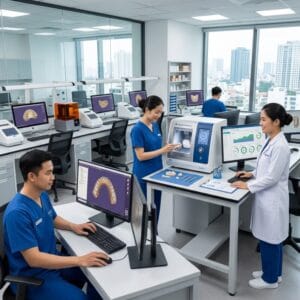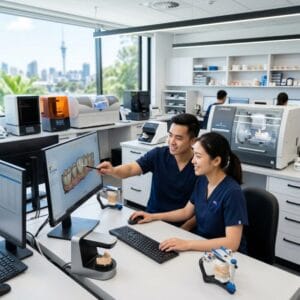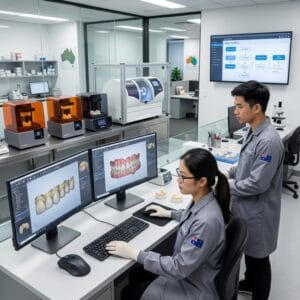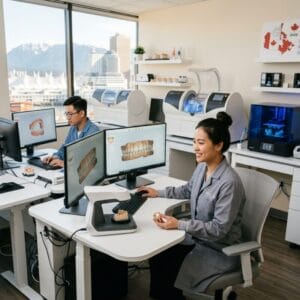
Launching a commercial dental laboratory in today’s fast-evolving technological landscape is both a lucrative venture and a significant financial undertaking. As dental practices across North America transition rapidly away from traditional alginate impressions toward digital intraoral scanning, modern laboratories must equip themselves with sophisticated digital infrastructure. Consequently, understanding total dental lab startup costs in Canada 2026 is essential for lab owners, dental technicians, and Dental Service Organizations (DSOs) planning to establish new operations or scale existing facilities across Canadian provinces.
The dental fabrication industry has experienced a paradigm shift. Historical capital expenditures once centered on physical plaster benches, casting machines, and manual wax-up stations. In contrast, evaluating modern dental lab startup costs in Canada 2026 requires analyzing advanced CAD/CAM software licenses, multi-axis milling units, high-precision 3D resin printers, specialized sintering furnaces, and certified technical talent. Navigating these capital requirements in Canadian Dollars (CAD)—while factoring in regional lease rates, Health Canada regulatory requirements, and supply chain dynamics—demands a meticulous financial strategy.
Evaluating the Canadian Dental Market Landscape in 2026
The Canadian dental market presents robust commercial opportunities driven by an aging population, expanding private dental insurance coverage, and the nationwide adoption of digital restorative workflows. However, establishing a physical facility from scratch requires a detailed calculation of initial dental lab startup costs in Canada 2026 to ensure capital adequacy and long-term liquidity.
Commercial laboratories in provinces such as Ontario, British Columbia, Alberta, and Quebec face distinct economic realities. High commercial real estate rates in urban centers like Toronto and Vancouver directly influence fixed overhead. Furthermore, importing specialized European and American CAD/CAM machinery introduces foreign exchange fluctuations that impact baseline dental lab startup costs in Canada 2026. Prospective lab founders must evaluate whether to invest heavily in end-to-end in-house production machinery or leverage modern hybrid operating models that pair local production hardware with remote digital design services.
What Are the Average Dental Lab Startup Costs in Canada 2026?
The average dental lab startup costs in Canada 2026 range from $150,000 CAD for a streamlined digital-only studio to over $500,000 CAD for a full-service production facility equipped with high-end mills and 3D printers.
A breakdown of these financial figures reveals significant capital variance based on business model scope and production volume capabilities. Below is an itemized estimate outlining baseline dental lab startup costs in Canada 2026 across three distinct facility configurations:
- Lean Digital Studio ($150,000 – $220,000 CAD): Focuses primarily on digital file receiving, CAD design, 3D printing of models/night guards, and finishing outsourced milled frameworks. Requires minimal physical square footage, basic bench equipment, desktop scanners, and mid-tier 3D printers.
- Mid-Sized Standard Production Lab ($250,000 – $400,000 CAD): Designed to process crown and bridge, simple implant restorations, and removable prosthetics in-house. Includes one dry 5-axis mill, a wet mill, sintering furnaces, vacuum porcelain furnaces, mid-range CAD licenses, and dedicated technician workbenches.
- Full-Service High-Volume Industrial Facility ($450,000 – $750,000+ CAD): Outfitted for comprehensive restoration portfolios including titanium custom abutments, chrome cobalt frameworks, complete dentures, clear aligners, and surgical guide design services. Incorporates heavy-duty industrial mills, multiple high-capacity 3D resin printers, automated post-processing stations, high-vacuum suction, and extensive office leaseholds.
Underestimating initial working capital requirements remains a common pitfall when projecting overall dental lab startup costs in Canada 2026. In addition to equipment hardware purchases, new entrepreneurs must secure 3 to 6 months of operational liquidity to cover facility rent, technician payroll, commercial insurance, and raw material inventory prior to achieving positive cash flow.
Core Machinery and Hardware Capital Expenditures
Hardware acquisition constitutes the largest single component of initial dental lab startup costs in Canada 2026. Transitioning digital impression files into physical restorations requires precise, medical-grade milling machines, high-temperature sintering ovens, and calibrated 3D printers.
To establish a fully functional digital workflow, lab directors must budget for the following essential hardware pieces, listed with typical 2026 Canadian market pricing:
- Desktop Laboratory Scanners ($12,000 – $35,000 CAD): High-precision optical or blue-light scanners designed to digitize physical stone models, impression trays, and bite registrations when practitioners submit conventional physical impressions. Optical devices from leading manufacturers such as 3Shape provide the accuracy necessary for multi-unit bridge and implant cases.
- 5-Axis Dry Dental Milling Machines ($45,000 – $95,000 CAD): Essential for dry milling zirconia, PMMA temporary restorations, and wax patterns. Multi-axis machinery provides the dexterity required for undercuts and complex anatomical occlusal surfaces.
- 5-Axis Wet Milling Units ($35,000 – $80,000 CAD): Specialized for processing glass ceramics (lithium disilicate), feldspathic porcelain, and titanium custom abutments. Wet mills require dedicated coolant filtration systems and integrated water reservoirs.
- High-Temperature Zirconia Sintering Furnaces ($15,000 – $32,000 CAD): High-capacity heating units capable of reaching temperatures up to 1,600°C with programmed heating curves to ensure proper translucency, material density, and marginal integrity.
- Vacuum Porcelain Furnaces ($8,000 – $18,000 CAD): Required for ceramic staining, glazing, and layering techniques for monolithic zirconia or porcelain-fused-to-zirconia restorations.
- Dental 3D Printers & Curing Units ($5,000 – $25,000 CAD): Medical-grade DLP or SLA resin 3D printers used to produce study models, castable resin patterns, surgical guides, night guards, and try-in dentures. Specialized wash and post-curing stations are necessary additions to satisfy health and safety regulations.
When aggregating these machinery expenses, hardware alone quickly elevates baseline dental lab startup costs in Canada 2026 beyond the $200,000 CAD mark before accounting for software infrastructure or facility renovations.
CAD/CAM Software Licensing and Digital Infrastructure
Operating modern CAD hardware demands advanced open-architecture design software. Software procurement and ongoing software maintenance agreements represent a recurrent, non-negotiable segment of total dental lab startup costs in Canada 2026.
Industry-standard CAD platforms, such as exocad DentalCAD and 3Shape Dental System, operate under specialized licensing structures. Laboratories can select perpetual licenses paired with annual upgrade fees or subscription-based models. Initial software module acquisition adds substantially to overall dental lab startup costs in Canada 2026, particularly when purchasing specialized add-on modules for customized implant abutments, full denture design, partial frameworks, and orthodontic aligners.
A typical CAD software suite setup includes:
- Core Design Engine License: $6,000 – $12,000 CAD initial outlay.
- Specialized Add-on Modules (Implants, Dentures, Splints, Aligners): $2,000 – $5,000 CAD per module.
- CAM Nesting & Output Software: $4,000 – $9,000 CAD for software driving automated milling toolpaths.
- High-Performance CAD Workstations: $3,500 – $6,000 CAD per workstation, requiring high-end multi-core CPUs, professional graphics cards (NVIDIA RTX series), and 64GB+ RAM.
- Annual Software Renewal & Support Fees: $2,500 – $5,500 CAD annually.
For a startup lab looking to offer a comprehensive range of prosthetics, software platform outlays alone can push dental lab startup costs in Canada 2026 up by $30,000 to $50,000 CAD within the first operational month.
How Can Digital Design Outsourcing Reduce Dental Lab Startup Costs in Canada 2026?
Digital design outsourcing reduces dental lab startup costs in Canada 2026 by eliminating the need for upfront CAD software module licenses and full-time specialized design staff salaries during the launch phase.
By partnering with an experienced offshore or nearshore digital CAD design outsourcing partner, Canadian startup laboratories can dramatically optimize their financial structure. Instead of committing tens of thousands of dollars toward perpetual software licenses, workstation hardware, and complex add-on design modules, startup founders can convert fixed capital expenses (CapEx) into predictable, pay-per-case operational expenses (OpEx).
Integrating a dedicated design outsourcing service impacts your financial pro forma by directly reducing dental lab startup costs in Canada 2026 in the following key areas:
- Software License Avoidance: Eliminates initial capital outlays for specialized CAD modules like custom implant bridges, night guards, and full arch denture design services.
- Hardware Savings: Reduces the immediate requirement to purchase multiple ultra-high-performance CAD computers and specialized graphic monitors.
- Payroll Optimization: Avoids the high fixed costs associated with hiring senior CAD designers in Canada, whose annual salaries range between $75,000 and $110,000 CAD plus benefits.
- Instant Scalability: Allows new labs to accept complex cases—including full-mouth rehabilitations, surgical guides, and clear aligners—from day one without extensive technical onboarding.
By utilizing professional design outsourcing, new lab owners can trim initial capital budgets by up to 40%, directly lowering baseline dental lab startup costs in Canada 2026 and shortening the path to profitability.
Facility Leaseholds, Utilities, and Infrastructure Build-Outs
Securing appropriate physical real estate and executing necessary facility upgrades represents another substantial variable when projecting dental lab startup costs in Canada 2026. Unlike standard administrative office spaces, a dental laboratory requires specialized mechanical, electrical, and plumbing (MEP) infrastructure.
Commercial lease rates across Canadian metropolitan areas vary significantly. Industrial-commercial flex space in suburban areas around Toronto, Vancouver, or Montreal averages between $18.00 and $32.00 CAD per square foot net, with additional common area maintenance (CAM) charges. A functional 1,200 to 2,500 square foot laboratory space incurs the following physical facility build-out costs, contributing directly to dental lab startup costs in Canada 2026:
- Compressed Air Infrastructure ($6,000 – $14,000 CAD): Industrial, oil-free, desiccant-dried air compressors designed to provide clean, dry compressed air to pneumatic milling machines and bench air handpieces.
- Centralized Dust Extraction and Vacuum Systems ($8,000 – $18,000 CAD): Heavy-duty suction units equipped with HEPA filtration to safely capture zirconia dust, resin particles, and alloy shavings. Proper air filtration is required under provincial occupational health and safety regulations.
- Electrical Upgrades ($10,000 – $25,000 CAD): Installation of dedicated 220V three-phase electrical panels to supply high-power milling machines, sintering furnaces, and central air systems.
- Plumbing and Filtration ($5,000 – $12,000 CAD): Specialized plaster traps, wet milling drainage, and dedicated water lines to prevent sediment from clogging municipal wastewater systems.
- HVAC and Climate Control ($7,000 – $15,000 CAD): Temperature and humidity control systems designed to maintain optimal environmental stability for 3D printing resins and high-precision optical scanners.
Executing these facility modifications adds significant momentum to initial financial burn rates. Consequently, planning these physical renovations accurately prevents unexpected overruns in overall dental lab startup costs in Canada 2026.
What Regulatory Fees Impact Dental Lab Startup Costs in Canada 2026?
Regulatory fees impacting dental lab startup costs in Canada 2026 include Health Canada Medical Device Establishment Licenses (MDEL), provincial regulatory body registrations, and annual facility inspections.
Compliance is mandatory for commercial dental laboratories operating within Canada. Depending on whether your facility manufactures custom-made medical devices or distributes imported components, administrative overhead and licensing contribute directly to dental lab startup costs in Canada 2026.
Key regulatory compliance obligations include:
- Health Canada Medical Device Establishment License (MDEL): Required for facilities importing or distributing Class II, III, or IV medical devices, or manufacturing specific Class I custom devices. Annual application and renewal fees range between $4,500 and $5,200 CAD.
- Provincial Regulatory Governing Bodies: In provinces such as Ontario (College of Dental Technologists of Ontario – CDTO) or British Columbia (College of Dental Technicians of BC – CDTBC), dental laboratories must be registered under a licensed Registered Dental Technologist (RDT). Annual registration fees and facility licensing costs typically average $1,800 to $3,500 CAD per year.
- Quality Management Systems (QMS): Developing compliant Standard Operating Procedures (SOPs) and ISO 13485-aligned tracking protocols for material lot numbers, patient records, and batch traceability adds an estimated $3,000 to $8,000 CAD in initial consulting and software tracking fees.
Incorporating these mandatory administrative fees into initial capital planning prevents regulatory delays that could otherwise inflate general dental lab startup costs in Canada 2026 during the pre-opening phase.
Operational Labor Costs vs. On-Demand CAD Outsourcing
Human capital planning represents a continuous operational investment that directly influences initial capital reserve requirements. When analyzing total baseline dental lab startup costs in Canada 2026, labor planning must balance immediate production capabilities against ongoing cash flow constraint.
In Canada, experienced dental CAD designers and master ceramists command competitive compensation due to a persistent skilled labor shortage across North America. The following table illustrates typical domestic labor costs versus an outsourced digital workflow model when evaluating total dental lab startup costs in Canada 2026:
- In-House Senior CAD Designer: Annual Salary: $80,000 – $110,000 CAD | Benefits & Taxes: $12,000 – $18,000 CAD | Software/Hardware Overhead: $6,000 CAD/year | Total Annual Cost: $98,000 – $134,000 CAD.
- In-House Junior Technician / Scanner: Annual Salary: $45,000 – $55,000 CAD | Benefits & Taxes: $7,000 – $9,000 CAD | Workstation Overhead: $3,000 CAD/year | Total Annual Cost: $55,000 – $67,000 CAD.
- Outsourced Digital Design Partner: Pay-Per-Case Fee Model ($8 – $25 CAD per unit depending on indication) | Zero fixed employee benefits | Zero software subscription overhead | Total Cost: Fully variable based directly on revenue volume.
By leveraging expert remote CAD designers for crown, bridge, implant, and aligner designs, new laboratories can reallocate saved working capital toward marketing, client relationship management, and physical fabrication hardware. This strategic shift dramatically improves early-stage cash flow stability and reduces overall dental lab startup costs in Canada 2026.
Product-Specific Cost Breakdown: From Crown & Bridge to Aligners
The total capital required to open a lab depends heavily on the specific restorative product lines offered to clinical clients. Each product line requires distinct equipment, software, and skill sets, directly impacting total dental lab startup costs in Canada 2026.
1. Crown & Bridge Restorations
Monolithic zirconia, lithium disilicate, and porcelain-fused-to-zirconia crowns remain the bread and butter of Canadian dental laboratories. Establishing a basic digital crown & bridge production line requires a 5-axis dry mill, a sintering oven, a glazing furnace, and standard crown & bridge CAD software modules. Total baseline investment ranges between $90,000 and $150,000 CAD, forming the primary component of initial dental lab startup costs in Canada 2026.
2. Implant Abutments and Screw-Retained Crowns
Implant prosthetics carry higher profit margins but demand strict precision. Fabrication requires high-accuracy scanners, dedicated implant design modules, and specialized milling machinery capable of processing titanium or pre-milled abutment blanks. Adding full implant capabilities increases overall dental lab startup costs in Canada 2026 by an additional $35,000 to $60,000 CAD in software modules and titanium-compatible wet mills.
3. Digital Dentures and Removable Prosthetics
Digital denture design represents one of the fastest-growing segments in North American prosthetics. Setting up a digital denture workflow involves purchasing specialized denture CAD modules, large-format 3D printers, or high-capacity milling units for monolithic PMMA denture discs. Incorporating digital denture services inflates baseline dental lab startup costs in Canada 2026 by approximately $25,000 to $45,000 CAD.
4. Surgical Guides and Implant Planning
Surgical guide fabrication offers high ROI with relatively low hardware overhead. A lab requires implant planning software, medical-grade autoclavable resin 3D printers, and UV curing chambers. However, software license fees for implant planning can be high. Outsourcing the initial CAD design and staging allows new labs to capture this market without expanding their fixed dental lab startup costs in Canada 2026.
5. Orthodontic Aligners and Night Guards
Producing clear aligners and night guards requires 3D model printing, thermoforming vacuum units or direct-print splint resins, and specialized trimming machinery. While physical thermoforming equipment is relatively inexpensive ($3,000 – $10,000 CAD), orthodontic staging software requires specialized skill sets. Partnering with a dedicated design service mitigates software licensing overhead, reducing total upfront dental lab startup costs in Canada 2026.
Financial Models: Traditional Full-Service vs. Outsourced Hybrid
To demonstrate the economic benefit of modern workflows, let us contrast the financial pro forma of a traditional full-service setup against a modern, design-outsourced hybrid laboratory setup when projecting dental lab startup costs in Canada 2026.
Consider the contrast in initial capital requirements for a mid-sized facility targeting 50 units per day:
Traditional Full-Service Startup Model
- High-End Scanners & CAD Workstations: $45,000 CAD
- Complete CAD Software Suite (All Perpetual Modules): $45,000 CAD
- 5-Axis Dry & Wet Mills (2 Units): $140,000 CAD
- Sintering & Glazing Furnaces: $35,000 CAD
- High-Capacity 3D Printers: $20,000 CAD
- Facility Build-Out & MEP Infrastructure: $65,000 CAD
- Regulatory Licensing & Legal Setup: $10,000 CAD
- Initial Working Capital (Payroll & Rent): $90,000 CAD
- Total Initial Capital Requirement: $450,000 CAD
In this traditional approach, initial dental lab startup costs in Canada 2026 reach nearly half a million dollars before a single restoration is delivered to a dentist.
Modern Design-Outsourced Hybrid Model
- Desktop Scanner & Basic CAD QC Workstation: $18,000 CAD
- Core CAM Software & Output Modules: $12,000 CAD
- Compact 5-Axis Dry Mill (1 Unit): $55,000 CAD
- Compact Sintering & Glazing Furnace: $22,000 CAD
- Mid-Range Medical 3D Printer: $8,000 CAD
- Facility Build-Out (Reduced Square Footage): $35,000 CAD
- Regulatory Licensing & Legal Setup: $10,000 CAD
- Design Outsourcing Partner Integration: $0 CAD upfront (pay-per-unit)
- Reduced Working Capital Reserves: $50,000 CAD
- Total Initial Capital Requirement: $210,000 CAD
By implementing an outsourced digital design workflow, prospective business owners can reduce their effective dental lab startup costs in Canada 2026 by over 50%. This capital conservation dramatically lowers financial risk while maintaining high-quality design outputs for clinical clients.
Strategic Blueprint for Launching a Dental Lab in Canada in 2026
To successfully navigate the launch of a new dental laboratory facility while keeping dental lab startup costs in Canada 2026 controlled, lab directors should follow a structured, phased implementation roadmap:
Phase 1: Market Analysis and Niche Identification (Months 1–2)
Identify your primary client targets. Are you serving local independent dental clinics, DSO networks, or specialized prosthodontists? Defining your clinical offerings—whether focused on crown and bridge, full arch implants, or removable splints—allows you to tailor equipment purchases precisely and prevent bloated baseline dental lab startup costs in Canada 2026.
Phase 2: Real Estate and Infrastructure Preparation (Months 3–4)
Secure commercial space with pre-existing heavy electrical capabilities and appropriate HVAC ventilation to minimize leasehold modification expenses. Ensure proper plumbing traps and compressed air lines are professionally installed to prevent costly retrofits after equipment delivery, keeping your dental lab startup costs in Canada 2026 within forecasted boundaries.