Understanding Common dental CAD design mistakes and how to avoid them 2026
In the evolving landscape of dental technology, mastering Common dental CAD design mistakes and how to avoid them 2026 is essential for dental labs and Dental Service Organizations (DSOs) to deliver high-quality restorations efficiently. Digital design workflows, especially in crown & bridge, implants, surgical guides, dentures, orthodontic aligners, and night guards, require precision and attention to detail. This article dives deep into the frequent pitfalls encountered in dental CAD/CAM design and offers actionable solutions to prevent them, ensuring optimized outsourcing partnerships and superior clinical results.
What are the most frequent errors in dental CAD design?
The most frequent errors in dental CAD design stem from inadequate data input, improper margin definition, and failure to consider material-specific design parameters. These mistakes compromise fit, function, and aesthetics, leading to remakes and dissatisfied clients.
For example, inaccurate scan data can cause misfit crowns, while poorly designed implant abutments may result in screw loosening or biological complications. Additionally, ignoring the nuances of different prosthetic types—such as the flexibility needed for dentures versus the rigidity required for surgical guides—can create significant problems during production and clinical use.
Scan data inaccuracies and their impact
One of the primary sources of errors in dental CAD design is the use of suboptimal or incomplete scan data. Distorted or incomplete digital impressions lead to inaccurate models, which cascade into flawed restorations. Labs and DSOs must ensure that intraoral scans or model scans are of high resolution and properly captured. Common pitfalls include missing margins, soft tissue interference, and improper scanning angles.
Margin definition mistakes
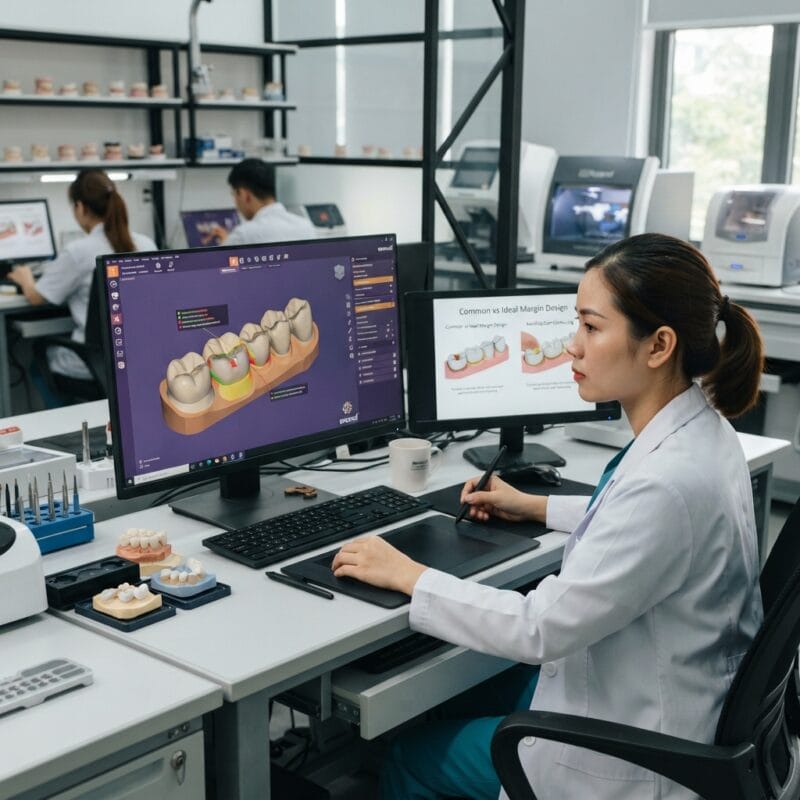
Incorrect identification and trimming of preparation margins is a critical error. Margins that are too thick or thin can affect the seating of crowns and bridges, compromising retention and cementation. A margin that extends beyond the preparation line may cause tissue irritation, while an insufficient margin can result in open margins. Precise margin marking during the CAD process is indispensable for restoration success.
How can dental labs avoid common CAD design errors in 2026?
Avoiding common dental CAD design mistakes in 2026 begins with adopting best practices in data management, design protocols, and continuous education. Labs should implement a multi-step verification process and leverage advanced CAD software features to catch errors early.
- Ensure high-quality digital impressions: Collaborate closely with clinicians to confirm that scan data is comprehensive and accurate.
- Utilize automated margin detection tools: Modern CAD platforms like 3Shape and exocad offer intelligent margin identification to reduce human error.
- Apply material-specific design rules: Each prosthetic material has unique properties; CAD designs must accommodate these to avoid fractures or deformation.
- Regularly train design technicians: Staying updated on software upgrades and clinical protocols minimizes outdated practices that cause mistakes.
Integrating quality checks and leveraging digital workflows that incorporate feedback loops can dramatically reduce remakes and improve turnaround times.
What role does outsourcing play in reducing CAD design mistakes?
Outsourcing dental CAD design to specialized providers helps reduce errors by leveraging expert knowledge, dedicated software, and rigorous quality control processes. Outsourced teams often have more experience handling complex cases such as implant restorations and surgical guides.
By partnering with a trusted CAD/CAM digital design outsourcing service, dental labs and DSOs can access cutting-edge technology without the overhead of maintaining it in-house. Outsourcing also enables scalability to manage peak workloads while maintaining consistent quality. For example, a lab that struggles with designing orthodontic aligners can benefit from an outsourcing partner who specializes in that niche, ensuring accuracy and patient satisfaction.
Common dental CAD design mistakes and how to avoid them 2026: specific examples
Let’s examine specific recurring mistakes in various prosthetic categories and how to avoid them effectively.
Crown & Bridge Design Errors
- Incorrect occlusal clearance: Insufficient space for restorative material leads to premature contacts and fracture risks.
- Improper connector dimensions: Bridges require adequate connector strength; undersized connectors cause breakage.
- Neglecting cement space: Too little or too much cement gap affects seating and retention.
Solution: Follow established design guidelines for occlusal thickness and connector size, and use software presets for cement space adjustments.
Implant and Surgical Guide Mistakes
- Misaligned implant positions: Poor digital planning can result in implants placed at incorrect angulations or depths.
- Inaccurate guide sleeve placement: Leads to drilling errors and compromised surgical outcomes.
- Ignoring bone quality and anatomical landmarks: Design must accommodate patient-specific anatomy to avoid complications.
Solution: Use integrated CBCT data and validated implant libraries within CAD software to improve accuracy. Outsourcing providers often incorporate these advanced planning tools.
Denture and Orthodontic Aligner Design Pitfalls
- Poor border molding simulation: Causes discomfort and poor retention in dentures.
- Failure to account for tooth movement in aligners: Leads to ineffective treatment and patient dissatisfaction.
- Insufficient undercut relief: Results in difficult insertion or removal of appliances.
Solution: Digital design must include soft tissue simulation and precise tooth movement staging, often supported by specialized software modules.
Night Guard Design Issues
- Excessive thickness: Causes discomfort and reduced patient compliance.
- Insufficient occlusal coverage: Fails to protect teeth adequately from bruxism.
- Ignoring centric relation: Incorrect jaw positioning compromises guard effectiveness.
Solution: Design night guards with balanced occlusal coverage and patient-specific jaw relation data, ensuring comfort and protection.
How does digital dental lab outsourcing improve CAD design quality?
Digital dental lab outsourcing improves CAD design quality by providing access to specialized expertise, up-to-date software, and robust quality assurance protocols. Outsourcing partners often dedicate resources exclusively to digital design, ensuring high precision and adherence to clinical standards.
Many outsourcing firms integrate seamlessly with popular CAD/CAM platforms like Medit and Dentsply Sirona, facilitating efficient communication and file exchange. Their teams routinely handle diverse restoration types, from crowns to complex implant cases, reducing the learning curve and increasing design consistency.
Quality control measures to prevent common dental CAD design mistakes and how to avoid them 2026
Implementing stringent quality control (QC) measures is fundamental to avoiding common dental CAD design mistakes. QC should encompass both software validation and human review stages.
- Automated Design Validation: Use software tools that check for undercuts, minimum thickness, and margin integrity.
- Peer Review Processes: Have experienced designers review complex cases before production.
- Test Printing and Fitting: Prototyping critical parts such as surgical guides and implant abutments to ensure accuracy.
- Client Feedback Loops: Encourage clinicians to provide feedback on fit and function for continuous improvement.
These measures, combined with a culture of quality, help reduce costly remakes and improve patient outcomes.
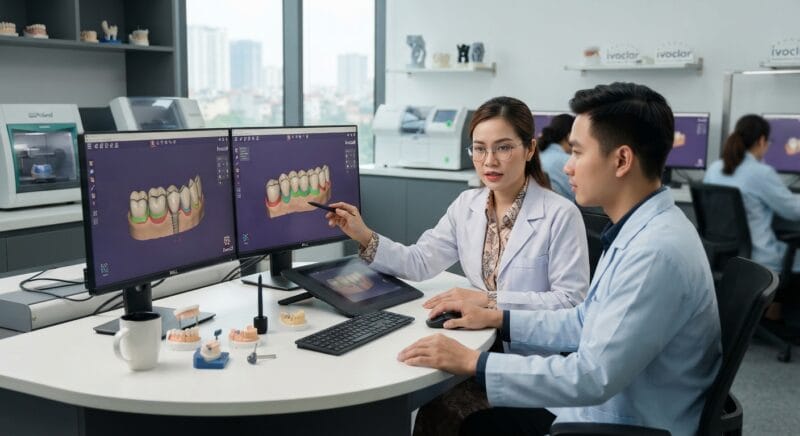
What software features help mitigate common dental CAD design mistakes?
Modern dental CAD software includes numerous features designed to reduce common design errors, such as automated margin detection, integrated implant libraries, and dynamic occlusion analysis.
For instance, exocad offers flexible design modules tailored to specific restoration types, while 3Shape provides real-time feedback on thickness and fit. Additionally, software that supports open architecture workflows enables labs to combine multiple tools for optimal results.
Leveraging such features ensures that common dental CAD design mistakes and how to avoid them 2026 are addressed proactively during the design phase rather than after production.
Best practices for communication between dental labs and clinics to reduce CAD errors
Effective communication between dental labs and clinics is critical to minimizing design errors. Clear and complete prescription forms, including detailed clinical notes and case photos, provide vital context for designers.
Using standardized digital workflows with cloud-based case management systems allows real-time file sharing and case tracking, reducing misunderstandings. Labs should also provide clinicians with design previews and seek confirmation before proceeding to production.
Such collaborative approaches facilitate early identification of potential issues and ensure that designs meet both functional and aesthetic expectations.
Conclusion and final thoughts
Understanding Common dental CAD design mistakes and how to avoid them 2026 is instrumental for dental labs and DSOs aiming to enhance restoration quality and operational efficiency. By recognizing frequent pitfalls—ranging from scan inaccuracies to software misuse—and implementing robust design protocols, dental professionals can significantly reduce errors.
Outsourcing digital design to specialized providers further enhances quality by bringing in expert knowledge, advanced technology, and rigorous quality control. Incorporating continuous training, communication best practices, and leveraging the latest CAD/CAM software features ensures that the evolving demands of modern dentistry are met with precision and reliability.
For more insights on digital dental workflows, consider exploring topics like surgical guide design and digital crown design optimization.
Contact us today to learn how our expert dental lab CAD/CAM digital design outsourcing services can help you avoid common mistakes and deliver exceptional restorations. Let’s elevate your lab’s digital design quality together.