Introduction to Zirconia vs Lithium Disilicate for Labs 2026
The debate around zirconia vs lithium disilicate for labs 2026 remains central to dental laboratories and dental service organizations (DSOs) as they optimize their CAD/CAM digital design and production workflows. Both materials have distinct mechanical properties, aesthetic qualities, and clinical indications that influence their suitability depending on case complexity, volume, and cost structure. This article provides an in-depth analysis tailored to dental labs and DSOs to guide material selection for crown & bridge, implants, surgical guides, dentures, orthodontic aligners, and night guards.
What Are the Key Material Properties of Zirconia and Lithium Disilicate?
Zirconia and lithium disilicate differ fundamentally in composition and physical characteristics, affecting their clinical performance and lab workflows.
- Zirconia is a polycrystalline ceramic known for high flexural strength (typically >900 MPa) and fracture toughness, making it ideal for load-bearing restorations.
- Lithium disilicate is a glass-ceramic with flexural strength around 360-400 MPa, prized for its superior translucency and esthetics but less fracture resistant than zirconia.
These properties determine their preferred indications: zirconia is favored in posterior crowns, bridges, and implant abutments, while lithium disilicate excels in anterior single crowns and veneers where esthetics are paramount. For labs leveraging CAD/CAM systems, understanding these differences influences milling strategies and post-processing protocols.
How Does the Choice Between Zirconia and Lithium Disilicate Impact Digital Workflow?
The choice between zirconia and lithium disilicate significantly affects dental labs’ CAD/CAM digital design and manufacturing steps. Zirconia often requires sintering post-milling, which adds time but enhances strength, whereas lithium disilicate is typically crystallized after milling to achieve final strength and esthetics.
For labs and DSOs with high-volume demands, zirconia’s faster milling times and robustness may improve throughput, but the sintering furnace investment and cycle times must be accounted for. Lithium disilicate offers easier finishing and glazing but may require more careful handling during milling due to brittleness.
Optimizing design parameters in software like 3Shape or exocad is critical for each material to balance margin fit, occlusal thickness, and connector size, ensuring clinical success and minimizing remakes.
What Are the Clinical Applications Best Suited to Zirconia vs Lithium Disilicate?
Zirconia and lithium disilicate have distinct clinical applications that labs and DSOs must evaluate when deciding which material to prioritize in 2026.
- Zirconia applications: multi-unit bridges, implant-supported crowns and abutments, full-arch prostheses, and frameworks for dentures requiring strength.
- Lithium disilicate applications: anterior crowns and veneers, single-unit restorations in esthetic zones, and inlays/onlays where translucency is critical.
By aligning material choice with case type, labs can improve fit and longevity, reducing chairside adjustments and enhancing patient satisfaction. The American Dental Association provides guidelines emphasizing these material-specific indications.
Cost Considerations: Total Cost of Ownership for Labs and DSOs
The total cost of ownership (TCO) for zirconia vs lithium disilicate includes material costs, equipment investment, labor, and post-processing expenses.
- Zirconia: higher initial material cost but offers durability that can reduce remakes; requires sintering furnaces and may involve higher equipment amortization.
- Lithium disilicate: comparatively lower raw material cost; simpler oven crystallization; milling tools may wear faster due to brittleness.
Labor costs also differ: zirconia demands careful sintering protocols, while lithium disilicate requires precise crystallization cycles. For DSOs managing multiple sites, centralized outsourcing or CAD design services can reduce overhead while maintaining quality.
How Do Zirconia and Lithium Disilicate Compare in Terms of Esthetics and Patient Outcomes?
Esthetics is a critical factor in material selection. Lithium disilicate is widely regarded as superior for mimicking natural tooth translucency due to its glass-ceramic nature, making it ideal for anterior restorations.
Zirconia has historically been more opaque, but advances in high-translucency zirconia formulations have narrowed this gap, offering better esthetic options for posterior and some anterior uses. Patient outcomes improve when labs tailor material choice to the restoration site and functional demands.
Comparison Table: Zirconia vs Lithium Disilicate for Labs 2026
| Criteria | Zirconia | Lithium Disilicate |
|---|---|---|
| Flexural Strength | 900+ MPa | 360-400 MPa |
| Esthetics | Moderate to High (new generations) | High (excellent translucency) |
| Indications | Posterior crowns, bridges, implants | Anterior crowns, veneers, inlays/onlays |
| Post-processing | Sintering (longer cycle) | Crystallization (shorter cycle) |
| Equipment Needs | Sintering furnace required | Crystallization oven required |
What Are the Workflow Implications for Small Labs Versus Large DSOs?
Small labs and DSOs have differing priorities when selecting between zirconia and lithium disilicate in 2026.
- Small labs: may prefer lithium disilicate for its esthetic versatility and simpler post-processing; limited capital may restrict investment in sintering furnaces.
- Large DSOs: benefit from zirconia’s strength and efficiency in high-volume production; capital investment in advanced sintering technology is more feasible, supporting multi-unit cases.
DSOs can leverage outsourcing CAD design services to streamline production and reduce the burden on internal teams, ensuring consistent quality across multiple locations.
How Does Material Choice Affect Implant and Surgical Guide Fabrication?
Zirconia’s mechanical properties make it a preferred material for implant abutments and frameworks requiring strength and biocompatibility, especially in posterior load-bearing areas.
Lithium disilicate is less commonly used for implant components due to lower fracture resistance but can be applied in esthetic zones for custom abutments. For surgical guides, biocompatible resins printed via 3D printing remain standard, but zirconia frameworks can provide durable bases for complex prosthetics.
Integrating digital design platforms like 3Shape and scanners such as iTero enhances accuracy in both materials’ workflows.
What Are the Maintenance and Longevity Expectations for Both Materials?
Zirconia restorations generally offer superior longevity due to their high strength and resistance to chipping and fracture, with clinical survival rates often exceeding 10 years for crowns and bridges.
Lithium disilicate restorations, while esthetic, may require more cautious handling and are more susceptible to chipping, especially in posterior molar regions under heavy occlusal loads.
Proper design, occlusal adjustments, and finishing techniques significantly influence the lifespan of both materials in clinical service.
How Does Outsourcing CAD/CAM Design Enhance Material Utilization?
Outsourcing digital design allows labs and DSOs to maximize the strengths of both zirconia and lithium disilicate by leveraging expert CAD designers familiar with each material’s design nuances.
Experienced designers ensure optimal restoration thickness, connector dimensions, and margin integrity, reducing remakes and improving clinical outcomes. This approach is especially beneficial for labs without dedicated in-house design teams or for DSOs managing multiple production sites.
This service also works well alongside surgical guide design services, enabling seamless integration between restorative and surgical workflows.
Which CAD/CAM Equipment Is Best Suited for Zirconia and Lithium Disilicate?
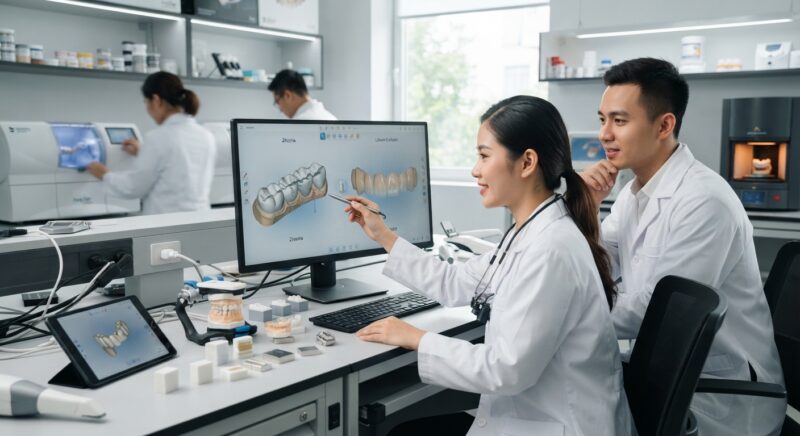
The choice of milling machines and furnaces impacts the efficiency and quality of zirconia and lithium disilicate restorations.
- Zirconia: robust milling units capable of handling dense blocks, such as those from Roland DG or Amann Girrbach, paired with high-temperature sintering furnaces.
- Lithium disilicate: precise milling systems with fine toolpaths to prevent chipping, plus reliable crystallization ovens.
Labs should consider total workflow automation and integration with CAD software platforms to optimize turnaround times and consistency.
Do You Need Design Capacity for Your New Equipment?
Many dental labs and DSOs find that outsourcing CAD design services is a cost-effective solution to running milling or printing equipment without hiring full-time designers. This arrangement reduces overhead and ensures access to specialized expertise in both zirconia and lithium disilicate digital workflows.
Step-by-Step Guide to Optimizing Production Efficiency with Zirconia and Lithium Disilicate
Maximizing production efficiency while maintaining quality is a critical goal for dental labs and DSOs working with zirconia and lithium disilicate. Implementing a structured workflow can reduce material waste, minimize remakes, and improve turnaround times. Below is a detailed step-by-step guide to optimize your manufacturing process for both materials.
1. Case Assessment and Material Selection
- Evaluate case complexity: Analyze the clinical indication—single crowns, multi-unit bridges, implant restorations, etc.—to determine the material best suited for strength and esthetics.
- Consult with clinicians: Collaborate closely with dentists to understand patient-specific factors such as occlusion, esthetic demands, and preparation design.
- Confirm digital scan quality: Ensure intraoral scans or model scans capture accurate margins and details to avoid downstream milling errors.
2. Digital Design and Material Nesting
- Utilize software presets: Use CAD software presets optimized for zirconia and lithium disilicate to ensure appropriate layering, cement gap, and margin thickness.
- Efficient nesting: Arrange multiple restorations strategically on blocks or discs to minimize material waste and reduce milling time.
- Simulation and collision checks: Run simulations to detect potential milling collisions and adjust toolpaths accordingly.
3. Milling and Sintering Protocols
- Select appropriate burs: Use burs recommended by manufacturers to avoid chipping or surface defects, especially critical for lithium disilicate.
- Monitor milling parameters: Adjust feed rates and spindle speeds according to material density and size of restorations.
- Sintering cycles: Follow strict sintering schedules for zirconia to achieve optimal mechanical properties and avoid cracking.
- Cooling and handling: Allow controlled cooling to prevent thermal shock and carefully handle lithium disilicate restorations post-milling to avoid fractures.
4. Finishing and Quality Control
- Surface treatment: Apply glazing, staining, or polishing techniques adapted to the material’s properties for enhanced esthetics and strength.
- Marginal refinement: Use fine diamond burs and polishers to ensure smooth, well-defined margins that fit precisely to the die or model.
- Fit verification: Test the restoration on the model or printed die and adjust as needed to ensure perfect seating and occlusal contacts.
- Quality checklist: Confirm no cracks, chips, or discolorations are present before packaging and dispatch.
5. Packaging and Shipping
- Protective packaging: Use cushioned containers to prevent damage during transit, especially for fragile lithium disilicate restorations.
- Clear labeling: Include detailed case information, material used, and any special handling instructions for clinicians.
Applying this systematic approach leads to fewer remakes, higher client satisfaction, and more predictable margins.
Common Mistakes to Avoid When Working with Zirconia and Lithium Disilicate
Despite advances in CAD/CAM technologies and materials, dental labs and DSOs often encounter pitfalls that can compromise restoration quality or increase costs. Identifying and avoiding these common mistakes can drastically improve outcomes.
1. Inadequate Case Planning
Failing to fully assess case requirements or ignoring clinician input may lead to selecting the wrong material for the indication. For example, using lithium disilicate for a molar bridge with heavy occlusal forces can result in premature failure. Conversely, overusing zirconia in highly esthetic anterior cases may disappoint patients due to less natural translucency.
2. Poor Digital Impressions and Scans
Low-quality intraoral scans with incomplete margins or distorted surfaces cause inaccuracies in restoration design. This increases the risk of ill-fitting crowns, requiring time-consuming adjustments or remakes. Labs should establish protocols for scan validation and provide feedback to clinicians to improve scan quality.
3. Incorrect Milling Parameters
Using generic milling settings instead of material-specific parameters can cause chipping, excessive wear on burs, or incomplete milling. For example, lithium disilicate requires slower feed rates and more frequent tool changes due to its brittleness. Overlooking these details reduces efficiency and restoration lifespan.
4. Ignoring Post-Milling Procedures
Neglecting proper sintering cycles for zirconia or insufficient crystallization of lithium disilicate leads to compromised mechanical properties. Additionally, skipping polishing or glazing steps can result in surface roughness that attracts plaque or causes patient discomfort.
5. Failing to Communicate with Clinicians
Misalignment between labs and dental practices regarding material capabilities, esthetic expectations, or delivery timelines can cause frustration and lost business. Regular communication and educating clients on optimal material use are essential for long-term partnerships.
6. Overlooking Cost-Benefit Analysis
Choosing the cheapest material without factoring in remakes, adjustments, or patient satisfaction often leads to higher overall costs. Labs must balance upfront material costs against clinical performance and client preferences.
Practical Checklist for Managing Material Quality and Cost in Dental Labs
Ensuring consistent quality while controlling costs requires disciplined management of materials, equipment, and workflow. The following checklist helps labs and DSOs maintain high standards when working with zirconia and lithium disilicate.
- Material Inventory Management
- Track batch numbers and expiration dates of zirconia blocks and lithium disilicate discs.
- Store materials under recommended environmental conditions to preserve integrity.
- Rotate stock to avoid using outdated materials.
- Equipment Maintenance
- Schedule regular calibration and preventive maintenance of milling machines and sintering furnaces.
- Replace milling burs and polishing tools according to manufacturer guidelines.
- Document maintenance activities for quality assurance audits.
- Workflow Standardization
- Develop and follow standardized operating procedures for each material type.
- Train staff regularly on updated protocols and material handling techniques.
- Implement digital workflow checks to minimize human errors.
- Quality Control Checks
- Inspect milled restorations under magnification for defects before sintering.
- Verify fit and occlusion on models or printed dies prior to final finishing.
- Perform color matching tests and surface texture assessments.
- Cost Monitoring
- Calculate cost per unit including material, labor, machine time, and overhead.
- Track remake rates and identify root causes to reduce waste.
- Negotiate bulk purchasing agreements with suppliers for better pricing.
- Customer Feedback Loop
- Collect feedback from dental practices on restoration fit, esthetics, and durability.
- Use feedback to refine material selection and production processes.
- Maintain open communication channels for troubleshooting and continuous improvement.
Market-Specific Considerations for Zirconia and Lithium Disilicate in 2026
The global dental market has evolved considerably, influencing material demand, pricing, and technology adoption. Understanding regional and sector-specific dynamics helps labs and DSOs position themselves strategically.
North America and Europe: High Demand for Esthetics and Durability
In mature markets, patient expectations for natural-looking restorations are driving increased use of high-translucency zirconia and advanced lithium disilicate formulations. Labs are investing heavily in multi-layered blocks that mimic natural tooth gradients. Regulatory standards and reimbursement policies emphasize long-term durability, favoring proven materials and meticulous workflows.
- Pricing Pressure: Competitive pricing from large DSOs and centralized labs pushes smaller labs to focus on niche esthetic cases or rapid turnaround times.
- Technological Adoption: High penetration of 5-axis milling, 3D printing for models, and AI-assisted design tools streamline workflows and lower error rates.
Asia-Pacific: Rapid Growth and Volume-Driven Demand
Emerging markets in Asia-Pacific show exponential growth in dental care access, creating high-volume demand for cost-effective zirconia and lithium disilicate restorations.
- Cost Sensitivity: Labs must balance material quality with affordable pricing, often opting for less expensive zirconia variants or hybrid materials.
- Training Gaps: Rapid expansion sometimes outpaces workforce training, leading to variable restoration quality and higher remake rates.
- Outsourcing Trends: Many smaller clinics outsource design and production to centralized labs or overseas manufacturers to control costs.
Latin America and Middle East: Emphasis on Accessibility and Custom Solutions
These regions prioritize accessibility to dental care with tailored material choices based on local market affordability and clinical infrastructure.
- Hybrid Material Usage: Combining zirconia frameworks with lithium disilicate veneers is common to optimize esthetics and strength within budget constraints.
- Supply Chain Challenges: Fluctuating availability of high-quality blocks and discs drives labs to maintain flexible supplier networks.
- Growing Digital Adoption: Increasing use of intraoral scanners and CAD/CAM systems is gradually improving restoration consistency.
Impact of Regulatory and Environmental Factors
Stricter environmental regulations in various markets are influencing material choice and waste management practices.
- Material Recycling: Labs are exploring recycling programs for zirconia and lithium disilicate scraps to reduce environmental footprint and material costs.
- Biocompatibility Certifications: Complying with updated biocompatibility and safety standards ensures market access but may increase material costs.
- Energy Efficiency: Adoption of energy-efficient sintering furnaces and milling machines aligns with sustainability goals and reduces operating expenses.
Our outsourced CAD/CAM digital design service can help you scale production efficiently while maintaining the highest quality standards. Contact us today to learn how we can support your lab’s material choices and digital manufacturing needs.