Introduction to the Survey of Dentist Attitudes to AI in Dental Design and Diagnostics 2026
The survey of dentist attitudes to AI in dental design and diagnostics 2026 provides a detailed snapshot of how dental professionals perceive the growing role of artificial intelligence in their workflows. This comprehensive research captures opinions from general dentists, specialists, and dental service organizations (DSOs) regarding AI-driven tools in crown and bridge design, implant planning, surgical guides, dentures, orthodontic aligners, and night guards. As AI technologies become increasingly integrated into CAD/CAM digital design outsourcing services, understanding these attitudes is crucial for dental labs and service providers aiming to align their offerings with market demand.
The survey’s findings reflect not only enthusiasm and optimism but also caution and concerns about implementation, training, and accuracy. Dental labs leveraging AI-powered solutions can capitalize on these insights to refine their collaboration approaches with labs and DSOs, ensuring that digital workflows meet clinical expectations and regulatory standards.
What is the significance of AI in dental design and diagnostics?
The significance of AI in dental design and diagnostics lies in its ability to automate complex tasks, enhance precision, and improve clinical outcomes.
Artificial intelligence technologies, particularly machine learning algorithms and deep learning, are transforming how dentists and dental labs approach prosthetic design and diagnostics. AI can analyze vast datasets from intraoral scans, patient records, and imaging modalities to assist in creating highly accurate crowns, bridges, implants, and surgical guides faster than traditional methods. By reducing human error and streamlining workflows, AI supports dentists in making better-informed decisions and delivering personalized patient care.
Moreover, AI’s integration in diagnostics enables early detection of dental pathologies, such as caries or periodontal disease, through image analysis and pattern recognition, which enhances preventive care strategies. To stay competitive, dental labs and DSOs increasingly adopt AI-powered CAD/CAM digital design outsourcing services that enable rapid turnaround and scalable production without sacrificing quality.
How does the survey of dentist attitudes to AI in dental design and diagnostics 2026 inform dental labs and DSOs?
The survey of dentist attitudes to AI in dental design and diagnostics 2026 informs dental labs and DSOs by revealing user acceptance levels, perceived benefits, and barriers to adoption.
According to the data, approximately 68% of surveyed dentists express positive attitudes toward AI integration, highlighting improvements in design accuracy and time efficiency as primary advantages. However, 32% remain skeptical due to concerns about clinical reliability, data security, and potential job displacement. These nuanced perspectives help dental labs tailor their outsourcing services to emphasize transparency, continuous training, and robust quality assurance protocols.
DSOs, which manage multiple dental practices, show higher enthusiasm for AI adoption, driven by the scalability and standardization benefits. This trend suggests a growing market for outsourced AI-enhanced digital design services that can deliver consistent results across large provider networks. Understanding these attitudes enables labs to position their services as indispensable partners in the AI-driven dental ecosystem.
What are the key trends in AI adoption revealed by the survey of dentist attitudes to AI in dental design and diagnostics 2026?
The key trends in AI adoption revealed by the survey of dentist attitudes to AI in dental design and diagnostics 2026 include increased use in diagnostics, expanded digital workflows, and demand for AI-augmented collaboration.
First, AI-assisted diagnostic tools, such as automated caries detection and bone density analysis, are becoming common in clinical settings, improving early detection and treatment planning accuracy. Second, the integration of AI in digital design workflows for prosthetics like crowns, bridges, and dentures accelerates production and enhances fit precision, reducing chair time and remakes.
Third, dentists are seeking stronger collaboration tools that leverage AI for real-time feedback during case planning and design approval processes. This trend highlights the value of outsourcing partners who can provide AI-enhanced platforms that integrate seamlessly with existing practice management systems. Additionally, the survey underscores an increasing interest in AI for personalized orthodontic aligner design and night guard fabrication, areas where customization is critical.
What challenges do dentists face regarding AI in dental design and diagnostics?
Dentists face challenges regarding AI in dental design and diagnostics related to trust, training, data privacy, and regulatory compliance.
Trust remains a significant barrier, as many dentists question the accuracy and reliability of AI-generated designs and diagnostic suggestions. The survey of dentist attitudes to AI in dental design and diagnostics 2026 reports that nearly 40% of respondents express concerns about overreliance on automated systems potentially leading to clinical errors.
Training and education also pose hurdles, with many dental professionals indicating a need for clearer guidance on AI tool usage and integration into existing workflows. Data privacy and security are paramount, especially with the increasing exchange of sensitive patient information between clinics, labs, and cloud-based AI platforms. Compliance with HIPAA and other regulations requires stringent safeguards, which can complicate adoption.
Finally, regulatory frameworks for AI in dentistry are still evolving in many regions, creating uncertainty around liability and approval processes. Dental labs offering AI-powered CAD/CAM outsourcing must therefore ensure robust validation protocols and transparent communication to address these challenges effectively.
How are dental labs incorporating AI in their CAD/CAM outsourcing services?
Dental labs are incorporating AI in their CAD/CAM outsourcing services by integrating advanced design software, automating quality control, and optimizing production workflows.
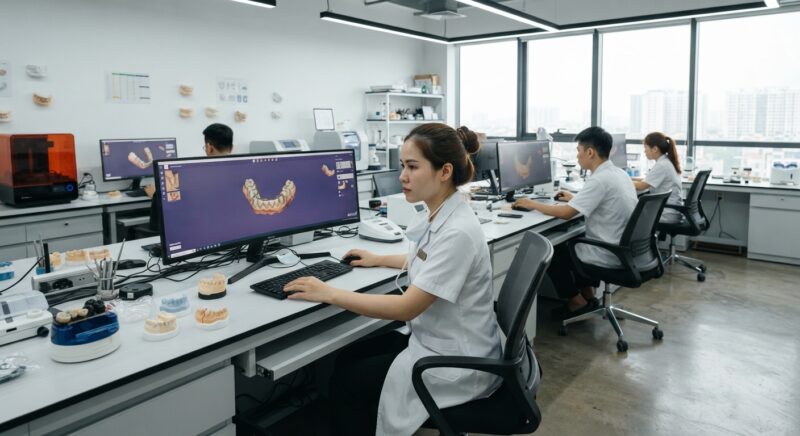
Leading dental labs partner with software providers such as 3Shape and exocad to utilize AI-driven digital design platforms that facilitate automated crown and bridge modeling, implant positioning, and surgical guide fabrication. These tools use AI algorithms to analyze scanned data, predict optimal prosthetic shapes, and generate precise milling instructions with minimal human intervention.
AI also supports labs in quality assurance by detecting design inaccuracies or potential fit issues early in the process, reducing remakes and improving patient satisfaction. Additionally, AI-powered predictive analytics help labs forecast case volumes, streamline material procurement, and optimize machine usage, enhancing operational efficiency.
By embracing AI, dental labs can offer faster turnaround times and scalable, cost-effective outsourcing solutions to DSOs and private practices, creating competitive differentiation in a rapidly evolving market.
What role does AI play in improving patient outcomes in dental prosthetics?
AI improves patient outcomes in dental prosthetics by enabling more precise, personalized, and timely restorations.
From crowns and bridges to dentures and orthodontic aligners, AI algorithms analyze patient-specific anatomical data to recommend optimized shapes and materials that enhance fit, function, and aesthetics. This customization reduces discomfort and improves long-term prosthetic performance. In implantology, AI assists in pre-surgical planning by simulating implant placement with high accuracy, minimizing surgical risks and improving osseointegration success rates.
Moreover, AI-driven diagnostics identify early signs of dental disease that might affect prosthetic success, allowing for timely interventions. Night guards designed with AI consideration of occlusal forces and bruxism patterns provide superior protection and durability. Collectively, these advances translate into fewer clinical adjustments, less chair time, and higher patient satisfaction, reinforcing the value of AI-powered CAD/CAM digital design outsourcing.
Which AI technologies are shaping the future of dental design and diagnostics?
The AI technologies shaping the future of dental design and diagnostics include machine learning, computer vision, natural language processing, and generative design algorithms.
Machine learning models analyze vast datasets from intraoral scanners and radiographs to detect anomalies and predict optimal treatment plans. Computer vision enables automated interpretation of 3D scans and X-rays, improving diagnostic speed and accuracy. Natural language processing supports virtual assistants and automated reporting, streamlining clinical documentation.
Generative design algorithms are particularly impactful in CAD/CAM workflows, where AI proposes multiple design alternatives for crowns, bridges, and orthodontic appliances based on biomechanical constraints and esthetic preferences. These technologies reduce manual design time and enhance creativity, allowing dental labs and clinicians to explore innovative restorative solutions.
Companies such as Formlabs and Medit continue to develop AI-powered scanners and printers that support these processes, accelerating the adoption of digital dentistry.
What are the future implications of the survey of dentist attitudes to AI in dental design and diagnostics 2026?
The future implications of the survey of dentist attitudes to AI in dental design and diagnostics 2026 suggest accelerated adoption, evolving training needs, and new partnership models.
As more dentists and DSOs recognize the benefits of AI, demand for AI-enhanced CAD/CAM outsourcing services will grow, driving innovation and competition among dental labs. Training programs will need to evolve to equip clinicians and technicians with skills to effectively use AI tools and interpret AI-driven recommendations. Regulatory bodies will also refine guidelines to ensure safety and efficacy without stifling innovation.
Partnerships between dental labs and technology providers will deepen, integrating AI capabilities into end-to-end digital workflows that span scanning, design, manufacturing, and delivery. This convergence will empower dentists to offer more precise, efficient, and patient-centered care. Labs that align their services with these evolving attitudes and technologies will secure leadership positions in the digital dental landscape.
For additional context on AI’s role in dental workflows, visit the American Dental Association and explore their resources on technology adoption.
Conclusion and Call to Action
The survey of dentist attitudes to AI in dental design and diagnostics 2026 highlights a transformative moment in dental technology adoption, with significant opportunities and challenges for dental labs and DSOs. Embracing AI-powered CAD/CAM digital design outsourcing can enhance accuracy, efficiency, and patient satisfaction while addressing concerns through education and quality assurance.
Step-by-Step Guide to Implementing AI in Dental Practice Workflows
Adopting AI technologies in dental practices and labs requires careful planning and execution to maximize benefits while minimizing disruptions. Below is a practical, step-by-step guide to integrating AI tools into your existing workflow:
1. Assess Current Workflow and Identify Pain Points
- Map out existing processes: Document current design, diagnostic, and treatment planning workflows to understand where inefficiencies or errors commonly occur.
- Gather team input: Engage dentists, hygienists, lab technicians, and administrative staff to identify frustration points or bottlenecks.
- Prioritize areas for AI intervention: Focus on high-impact areas such as crown design, implant planning, or diagnostics that could benefit most from automation or enhanced precision.
2. Research Available AI Solutions and Vendors
- Evaluate technology capabilities: Match AI features with your prioritized needs—e.g., automatic margin detection, predictive diagnostics, or 3D treatment simulation.
- Consider integration compatibility: Ensure AI software can seamlessly interface with your existing CAD/CAM systems, imaging hardware, and practice management software.
- Request demonstrations and trials: Test software on real cases to validate accuracy, ease of use, and time savings.
- Review vendor support and training: Check for comprehensive onboarding assistance and ongoing technical support.
3. Develop an Implementation Plan
- Set measurable goals: Define success metrics such as reduction in design turnaround time, improved diagnostic accuracy, or increased patient satisfaction scores.
- Assign responsibilities: Designate team members to champion adoption, manage training, and monitor progress.
- Schedule phased rollouts: Begin with pilot cases or a single department before scaling practice-wide.
- Create contingency plans: Anticipate potential technical issues or resistance, and prepare solutions or fallback procedures.
4. Train Staff Thoroughly
- Conduct hands-on training sessions: Focus on practical use, troubleshooting, and interpretation of AI-generated outputs.
- Provide documentation and FAQs: Develop easy-reference materials tailored to your practice’s specific AI tools.
- Encourage feedback loops: Foster open communication for staff to report issues and suggest improvements.
5. Monitor Performance and Optimize
- Track KPIs regularly: Use defined success metrics to measure impact on efficiency, quality, and patient outcomes.
- Adjust protocols based on data: Modify workflows, retrain staff, or fine-tune software settings to optimize results.
- Stay updated on AI advancements: Continuously evaluate new features or emerging tools that could enhance your practice further.
Common Mistakes to Avoid When Adopting AI in Dental Design and Diagnostics
While AI promises significant benefits, many dental labs and practices encounter pitfalls that hinder successful adoption. Understanding and avoiding these common mistakes can save time, money, and frustration.
1. Overestimating AI Capabilities
One prevalent error is assuming AI tools can replace human expertise entirely. AI excels at automating routine tasks and recognizing patterns but still requires professional oversight to validate outputs and make clinical judgments.
- Tip: Use AI as an assistant, not a substitute. Maintain clinician review to ensure quality and patient safety.
2. Neglecting Staff Training and Buy-In
Failing to adequately train team members or address their concerns leads to underutilization and resistance, negating AI’s potential benefits.
- Tip: Invest in comprehensive training and communicate clearly how AI will enhance—not threaten—their roles.
3. Poor Integration with Existing Systems
Introducing AI tools that do not seamlessly integrate with current CAD/CAM software or imaging devices causes workflow disruptions and data silos.
- Tip: Prioritize AI solutions designed for interoperability and conduct compatibility testing before purchase.
4. Ignoring Data Privacy and Compliance
Handling patient data with AI requires strict adherence to privacy regulations such as HIPAA or GDPR. Overlooking these can lead to legal and reputational risks.
- Tip: Work with vendors who emphasize secure data handling and ensure your practice follows best practices for data protection.
5. Focusing Solely on Cost Savings
While AI can reduce labor costs or turnaround times, focusing exclusively on short-term savings may compromise quality or patient care.
- Tip: Balance cost considerations with quality improvements and patient satisfaction to achieve sustainable benefits.
Cost and Quality Considerations When Choosing AI Solutions for Dental Labs and Practices
Investing in AI technology involves upfront and ongoing costs, but the impact on quality and efficiency can be transformative. Here are key cost and quality factors dental professionals should weigh:
Initial Investment vs. Long-Term ROI
AI software licenses, hardware upgrades, and staff training represent the initial financial outlay. However, improved accuracy and faster turnaround can translate into higher patient throughput and fewer remakes, yielding strong return on investment (ROI).
- Example: A dental lab implementing AI for crown margin detection reduced design errors by 30%, cutting remakes that cost an average of $150 each.
- Factor in subscription models: Many AI solutions operate on monthly or annual subscriptions, so practices should budget accordingly.
Quality of AI Algorithms
Not all AI tools are created equal. The sophistication of machine learning models, size and diversity of training datasets, and frequency of software updates affect accuracy and reliability.
- Clinical validation: Choose AI systems with peer-reviewed studies or real-world case examples demonstrating efficacy.
- Customization options: Tools that allow tuning for specific patient demographics or clinical scenarios yield better results.
Impact on Workflow Efficiency
AI that significantly reduces design time or automates routine diagnostics can generate cost savings indirectly by allowing staff to focus on higher-value tasks.
- Example: Orthodontic practices using AI-driven aligner setup software reported a 25% reduction in case setup time.
- Consider user interface: Intuitive interfaces reduce training time and minimize errors.
Hidden Costs to Consider
- Hardware upgrades: Some AI solutions require advanced scanners or GPUs.
- Maintenance and support: Ongoing vendor support fees and software updates.
- Data storage: Cloud-based AI may increase data hosting costs.
Market-Specific Factors Influencing AI Adoption in Dental Labs and Practices
The adoption of AI in dental design and diagnostics varies widely by region, practice type, and market dynamics. Understanding these factors helps vendors tailor offerings and practices strategize implementation.
Geographic and Regulatory Environment
Regions with supportive regulatory frameworks and incentives for digital health adoption tend to see faster AI uptake.
- Example: European countries with strict data protection laws require AI vendors to comply with GDPR, influencing solution design and adoption speed.
- Reimbursement policies: Areas where insurers reimburse for AI-enhanced diagnostics or treatment planning encourage investment.
Practice Size and Type
- Large DSOs and multi-location labs: Often have the capital and scale to justify upfront AI investments and deploy enterprise-grade solutions.
- Small private practices: May prefer modular, cost-effective AI tools with minimal infrastructure requirements.
- Specialty clinics (orthodontics, implantology): Tend to adopt AI tools that address niche workflows such as aligner design or surgical guide planning.
Market Competition and Patient Expectations
In highly competitive markets, AI adoption can be a differentiator to attract tech-savvy patients and improve treatment outcomes.
- Example: Urban dental practices leveraging AI diagnostics have reported increased patient trust and referral rates.
- Patient demographics: Younger patients often expect cutting-edge technology integration, influencing practice investment decisions.
Availability of Skilled Personnel
Access to technicians and clinicians with digital and AI literacy impacts adoption success.
- Training infrastructure: Markets with robust dental education programs incorporating digital dentistry facilitate smoother AI integration.
- Outsourcing possibilities: Practices in regions lacking AI expertise may rely more on external CAD/CAM outsourcing labs offering AI-enhanced services.
Contact us today to learn how our AI-enabled dental design services can support your lab or practice in navigating this exciting future.