Introduction: Why Knowing How to Evaluate a Dental CAD Design Service Provider 2026 Matters
In today’s fast-evolving dental lab landscape, outsourcing digital design services has become a strategic necessity for many dental labs and Dental Service Organizations (DSOs). Understanding how to evaluate a dental CAD design service provider 2026 is critical to ensure your lab’s success, productivity, and clinical accuracy across diverse prosthetics such as crowns, bridges, implants, dentures, orthodontic aligners, and night guards.
As CAD/CAM technology advances, the complexity and precision demanded from digital design providers increase. This article delves into comprehensive criteria and practical insights to help dental professionals make informed decisions when choosing a CAD design outsourcing partner.
What is dental CAD design outsourcing?
Dental CAD design outsourcing is the practice of delegating the digital modeling and design of dental restorations and appliances to specialized third-party providers.
This service allows dental labs and DSOs to leverage expert digital designers who use advanced CAD/CAM software to create precise models for crowns, bridges, implants, surgical guides, dentures, orthodontic aligners, and night guards. Outsourcing streamlines workflows, reduces in-house resource strain, and accelerates turnaround times while maintaining high-quality standards.
Leading CAD software platforms like 3Shape and exocad form the backbone of these outsourced services, enabling seamless communication and file transfer between labs and providers. Understanding this foundation is essential when learning how to evaluate a dental CAD design service provider 2026.
What are the critical criteria when learning how to evaluate a dental CAD design service provider 2026?
Knowing how to evaluate a dental CAD design service provider 2026 hinges on several key factors that impact quality, efficiency, and compatibility. These include:
- Technical expertise and certifications: Verify if designers are trained and certified on industry-leading CAD platforms and keep up with the latest design protocols.
- Range of design services: Confirm they cover all needed disciplines—crown & bridge, implants, surgical guides, dentures, orthodontic aligners, and night guards.
- Quality control processes: Ensure they have rigorous review workflows, error-checking systems, and version control to maintain accuracy.
- Turnaround time and scalability: Assess if the provider can meet your lab’s volume demands with consistent turnaround times.
- Data security and compliance: Confirm adherence to HIPAA and data protection standards to safeguard patient information.
- Communication and collaboration tools: Look for platforms that support real-time feedback, file sharing, and integration with your lab’s systems.
By thoroughly evaluating these aspects, dental professionals can select a provider who aligns with their operational goals and clinical expectations.
How does digital crown design work in outsourced CAD services?
Digital crown design in outsourced CAD services involves creating a precise 3D model of a crown restoration using specialized software, based on scans or impression data provided by the dental lab or clinic.
The CAD designer digitally sculpts the crown to fit the patient’s anatomy, occlusion, and aesthetic requirements. This process demands expertise in anatomy, material properties, and prosthetic design principles. The digital crown file is then sent back to the lab for CAM milling or 3D printing.
Outsourcing this task can dramatically reduce in-house design workload and improve turnaround times while ensuring consistent quality, especially when working with complex cases or high volume. Knowing how to evaluate a dental CAD design service provider 2026 includes verifying their proficiency in crown & bridge design and their familiarity with the latest CAD tools from top vendors like Dentsply Sirona.
What role does technology play in how to evaluate a dental CAD design service provider 2026?
Technology is foundational when considering how to evaluate a dental CAD design service provider 2026. Providers utilizing state-of-the-art CAD/CAM systems, such as Medit scanners, advanced software from exocad or 3Shape, and efficient file management platforms, tend to deliver superior results.
High-quality design software allows for intricate detailing needed in implant abutments, surgical guides, and orthodontic aligners. Providers who invest in AI-assisted design tools or offer cloud-based collaboration portals enable faster iterations and greater precision.
Additionally, compatibility with your lab’s existing technology stack ensures seamless integration and minimal workflow disruption. Evaluating a provider’s technology infrastructure is therefore essential to optimize efficiency and quality.
How to evaluate customer support and communication in dental CAD design outsourcing?
Customer support and communication are pivotal when learning how to evaluate a dental CAD design service provider 2026, as digital design often requires close collaboration to address case-specific nuances.
The best providers offer dedicated account managers, responsive communication channels, and platforms that allow real-time design review and modification requests. Transparent tracking of case status and rapid response to technical inquiries reduce delays and errors.
Providers who offer training or onboarding sessions for your team help maximize the value of their service. Positive client testimonials and case studies typically reflect strong communication practices, which are critical for long-term partnerships.
What quality assurance processes should you expect from a dental CAD design service provider?
Robust quality assurance (QA) processes are non-negotiable when considering how to evaluate a dental CAD design service provider 2026.
Expect multiple checkpoints, including initial design validation, cross-verification by senior designers, and revision cycles before final approval. Providers should employ design simulation and error detection algorithms to catch issues like undercuts, margin gaps, or occlusal interferences.
Documentation of all design stages and version control enables traceability and accountability. Some providers integrate QA directly into their CAD software, enhancing reliability. Effective QA reduces remakes and improves clinical outcomes, directly benefiting your lab’s reputation and cost-efficiency.
How to evaluate turnaround time and scalability for your digital design needs?
Turnaround time and scalability are critical for labs and DSOs with fluctuating workloads and urgent case demands.
Understanding how to evaluate a dental CAD design service provider 2026 must include a thorough assessment of their capacity to handle your volume without sacrificing quality or speed. Reliable providers offer transparent turnaround guarantees, often within 24 to 72 hours depending on case complexity.
Providers with scalable teams and workflow automation can accommodate sudden spikes, which is essential for busy labs or multi-location DSOs. Flexibility in service plans or volume-based pricing models can also enhance your operational efficiency.
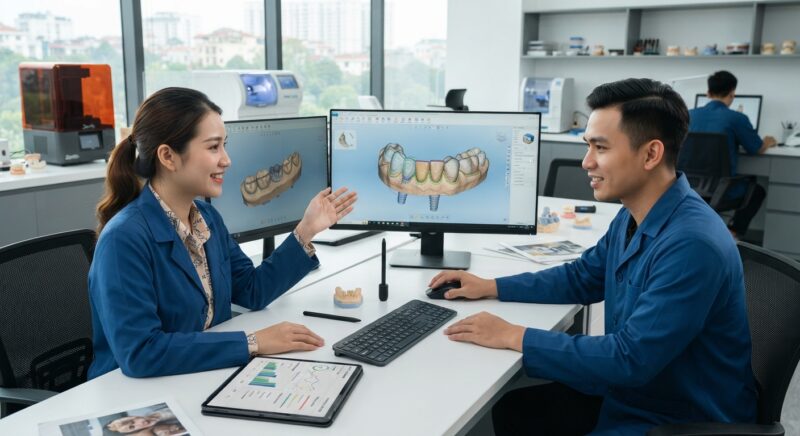
What data security standards should a dental CAD design service provider meet?
Data security is paramount due to the sensitive nature of patient information and compliance obligations such as HIPAA.
When learning how to evaluate a dental CAD design service provider 2026, prioritize providers who implement end-to-end encryption, secure file transfer protocols, and strict access controls. Regular security audits and adherence to international data protection laws demonstrate commitment to safeguarding data.
Providers that use cloud platforms with robust cybersecurity measures reduce the risk of breaches. Ensuring your provider’s security aligns with your lab’s policies protects your business and patient trust.
How can integration and workflow compatibility influence your choice?
Integration with your existing lab management systems and scanning hardware can greatly influence the efficiency of outsourcing digital design.
Providers that support common file formats (STL, PLY, OBJ) and integrate with popular lab management software enable smooth data transfer and reduce manual handling errors.
Understanding how to evaluate a dental CAD design service provider 2026 means verifying their compatibility with your scanners and milling devices, as well as their ability to customize workflows to fit your operational model. This reduces friction and accelerates case processing.
Also, their ability to collaborate on specialized projects, such as implant planning with companies like Straumann or Nobel Biocare, can add significant value. This also works well alongside surgical guide design services.
How to evaluate pricing and contract terms for CAD design outsourcing?
Pricing transparency and flexible contract terms are important considerations when choosing a CAD design outsourcing partner.
Providers may charge per case, per design type, or offer subscription-based pricing models. Understanding how to evaluate a dental CAD design service provider 2026 means analyzing if pricing aligns with your budget and volume, and if there are hidden fees for revisions or rush services.
Long-term contracts versus pay-as-you-go options each have benefits depending on your lab’s predictability. Look for providers offering trial periods or pilot projects to assess quality and value before committing.
Negotiating terms that allow for scalability, confidentiality, and clear service-level agreements (SLAs) ensures mutual benefit and risk mitigation.
Conclusion: Making an informed decision on how to evaluate a dental CAD design service provider 2026
Mastering how to evaluate a dental CAD design service provider 2026 requires a holistic approach encompassing technical skill, technology adoption, quality assurance, security, communication, and cost considerations.
Dental labs and DSOs that carefully vet outsourcing partners based on these criteria can enhance their digital workflows, reduce turnaround times, and ultimately deliver better clinical outcomes to patients.
Choosing the right partner is a strategic investment that supports your lab’s growth and reputation in an increasingly digital dental industry.
Contact Us
Step-by-Step Guide to Onboarding a Dental CAD Design Service Provider
Successfully integrating a dental CAD design service into your existing workflow requires careful planning and execution. A structured onboarding process minimizes disruptions while maximizing efficiency and quality from the outset. Here is a practical, step-by-step guide to help dental labs and practices onboard a new CAD design partner effectively.
Step 1: Define Your Specific Needs and Case Types
Begin by outlining the exact types of restorations and appliances you plan to outsource. Will you focus on crowns, bridges, implant cases, or full dentures? Clarify materials (zirconia, e.max, PMMA, etc.) and margin preferences. This clarity ensures the provider understands your expectations and can tailor designs accordingly.
Step 2: Establish Communication Channels and Protocols
Set up dedicated communication methods such as secure email, cloud portals, or integrated lab management software. Assign point persons on both sides to streamline queries and revisions. Define response time expectations clearly to avoid delays in case processing.
Step 3: Exchange Case Data and Sample Files
Send initial case files in your preferred format (e.g., STL, PLY) along with any specific design guidelines or digital impressions. Request sample designs to evaluate quality and fit. This step acts as a trial run and helps identify any file compatibility or design standard issues early.
Step 4: Conduct a Pilot Run with a Limited Case Volume
Start with a manageable batch of cases to monitor turnaround times, design accuracy, and communication efficiency. Use this phase to gather feedback from technicians or clinicians who will work with the final restorations. Adjust design parameters and workflow as necessary based on pilot results.
Step 5: Implement Feedback Loops and Quality Checks
Establish a system for ongoing feedback on each case, including fit issues, aesthetics, and articulation. Schedule regular review meetings with the provider to discuss trends, resolve issues, and implement process improvements. Consistent quality assurance prevents small problems from becoming systemic.
Step 6: Scale Up and Formalize Agreements
Once you are confident in the provider’s capabilities and workflow integration, gradually increase order volume. Formalize contractual terms including pricing, confidentiality, intellectual property rights, and service level agreements to protect both parties.
Common Mistakes to Avoid When Outsourcing Dental CAD Design
Outsourcing dental CAD design can be highly beneficial, but labs and practices often encounter pitfalls that undermine success. Being proactive about these common mistakes can save time, money, and frustration.
- Choosing Based Solely on Price: Low costs can be tempting, but poor design quality or slow turnaround can increase overall costs due to remakes and chairside adjustments. Prioritize value over the lowest bid.
- Ignoring Compatibility with Existing Systems: CAD files and software must seamlessly integrate with your CAD/CAM milling or 3D printing equipment. Failure to verify compatibility leads to delays and extra conversion steps.
- Overlooking Communication Responsiveness: A provider who is slow or unclear in communication can create bottlenecks. Make sure you test response times before committing to large orders.
- Neglecting to Define Clear Design Protocols: Ambiguous design instructions cause inconsistencies in margins, contacts, and occlusion. Document specifications clearly and review provider samples thoroughly.
- Failing to Conduct Trial Runs: Jumping directly to full production without pilot cases risks mass production of flawed prosthetics. Always test a few cases first to refine processes.
- Underestimating Data Security Needs: Dental labs handle sensitive patient data. Ensure providers comply with HIPAA or GDPR standards and use encrypted file transfers.
Cost and Quality Considerations When Evaluating Dental CAD Design Providers
Balancing cost and quality is a critical challenge when selecting a dental CAD design service. Here are practical factors to consider that influence both price and output quality.
Pricing Models and Hidden Costs
Providers may charge per case, per tooth, or offer monthly subscription models. Understand what is included: Are revisions free or charged separately? Are expedited turnarounds available at a premium? Check if file format conversions or technical support incur additional fees. Hidden costs can significantly impact your budget.
Quality Metrics to Assess
- Accuracy: Margins and occlusion must be exact to avoid remakes or chairside adjustments.
- Consistency: Designs should maintain uniform quality across all cases.
- Aesthetics: Especially for anterior restorations, design must support natural contours and surface texture.
- Material Compatibility: The design should accommodate the physical properties of the intended milling or printing materials.
Real-World Cost-Benefit Example
A mid-sized dental lab switched from an in-house CAD designer to an outsourcing partner offering competitive pricing. Initially, the lab saved 20% on design costs, but poor initial communication led to frequent redesigns, increasing turnaround time and labor costs by 15%. After implementing a structured onboarding process and establishing clear protocols, the lab achieved a net 25% cost reduction with improved design quality and faster case delivery, demonstrating the importance of process management alongside price considerations.
Market-Specific Factors Influencing Provider Selection
The dental CAD design market varies by region, regulatory environment, and target clientele. Understanding these factors helps tailor your evaluation criteria.
Regulatory Compliance and Certification
Providers operating in highly regulated markets must comply with standards such as FDA registration in the U.S. or CE marking in the EU. Ensure the provider can supply documentation of compliance and follows validated quality management systems (e.g., ISO 13485). This reduces legal risks and ensures patient safety.
Local vs. International Providers
Local providers offer advantages such as shorter shipping times for physical models, easier communication in the same time zone, and potentially better understanding of local clinical preferences. International providers may offer cost advantages or specialized expertise but require attention to language barriers, longer lead times, and data security regulations.
Specialization by Case Type or Technology
Some providers specialize in implant cases, offering advanced digital articulation and screw-retained crown design expertise. Others may excel in orthodontic aligner setups or full denture CAD. Matching your case mix to a provider’s strengths ensures higher quality and efficiency.
Industry Trends and Innovation Adoption
The pace of innovation in dental CAD software and materials impacts provider capabilities. Some labs prefer providers who rapidly adopt new technologies such as AI-driven margin detection or virtual try-ins. Staying informed about market trends allows you to select a partner aligned with your lab’s future growth and technology roadmap.
Ready to elevate your dental lab’s digital design capabilities? Contact us today to learn how our expert CAD/CAM outsourcing services can support your lab’s growth and quality goals.