Understanding the Basics of Dental CAD CAM Equipment Financing vs Leasing 2026
Dental CAD CAM equipment financing vs leasing 2026 centers on two primary methods dental labs and DSOs use to acquire advanced digital milling and printing technology: financing, which implies ownership through loan payments, and leasing, which provides equipment use rights for a fixed term without ownership. Choosing between these options impacts a lab’s cash flow, tax benefits, and long-term operational flexibility.
Financing typically involves securing a loan to purchase the equipment outright, resulting in ownership once payments conclude. Leasing, on the other hand, means paying a monthly fee to use the equipment over a set period, often with options to upgrade or return the equipment at lease end. Both routes have advantages depending on the lab’s size, capital availability, and growth plans.
For dental labs focusing on crown & bridge, implants, and orthodontic aligners, understanding the nuances of dental CAD CAM equipment financing vs leasing 2026 is essential to optimize costs while maintaining cutting-edge production capabilities. This article dives deep into these options, including total cost of ownership, workflow impact, and strategic considerations for 2026 and beyond.
What Are the Key Differences Between Financing and Leasing Dental CAD CAM Equipment?
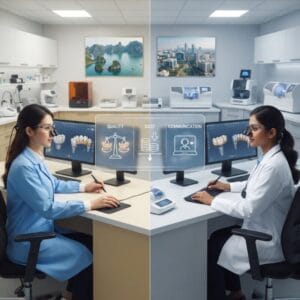
The key differences lie in ownership, payment structure, and flexibility. Financing dental CAD CAM equipment means you own the asset after completing payments, whereas leasing grants usage rights without ownership.
Financing advantages include building equity in the equipment, potential tax depreciation benefits, and no restrictions on usage or modifications. However, upfront costs and monthly payments may be higher, and responsibility for maintenance and obsolescence lies with the owner.
Leasing benefits often include lower initial costs, predictable monthly fees, and easier upgrades to newer technologies at lease end. Conversely, leasing may impose usage limits, lack equity accumulation, and sometimes incur penalties for early termination.
For labs processing high volumes of crowns, bridges, implants, and night guards, understanding these distinctions is critical to align equipment acquisition with operational needs and financial strategy. Leasing can suit smaller labs or DSOs seeking agility, while financing may appeal to established labs prioritizing long-term asset ownership.
How Does Dental CAD CAM Equipment Financing vs Leasing 2026 Affect Total Cost of Ownership?
Total cost of ownership (TCO) encompasses acquisition costs, maintenance, upgrades, and depreciation over the equipment’s lifecycle. Dental CAD CAM equipment financing vs leasing 2026 impacts TCO significantly.
- Financing TCO includes principal and interest payments, maintenance expenses, potential downtime costs, and depreciation. Ownership allows labs to claim depreciation for tax purposes, reducing effective cost.
- Leasing TCO bundles payments and often includes maintenance or service agreements, reducing unexpected costs. However, lease payments may be higher cumulatively, and no ownership means no asset value at lease end.
It is vital for labs to model TCO based on realistic usage, maintenance needs, and expected equipment lifespan. For example, a high-volume lab with predictable production may find financing more cost-effective, while a lab wanting to avoid obsolescence risks might prefer leasing.
| Criteria | Financing | Leasing |
|---|---|---|
| Ownership | Yes, after loan completion | No |
| Monthly Payments | Typically higher | Generally lower |
| Maintenance Responsibility | Owner | Often included |
| Upgrade Flexibility | Limited, may require new financing | High, with upgrade options |
| Tax Benefits | Depreciation and interest deductions | Lease payments deductible as expense |
Who Should Consider Financing Their Dental CAD CAM Equipment?
Dental CAD CAM equipment financing vs leasing 2026 suggests financing best suits labs and DSOs that want to build long-term asset value and have stable cash flow for higher upfront payments.
- Best for: Established high-volume dental labs, multi-location DSOs with capital reserves, labs planning to use equipment for many years.
- Strengths: Ownership equity, tax depreciation, freedom to customize equipment, no lease usage restrictions.
- Limitations: Higher initial costs, responsibility for maintenance and repair, risk of obsolescence.
For example, a large DSO investing in a 5-axis milling machine for implant crowns might finance to benefit from depreciation and full control, especially if the equipment will be heavily used over 5-7 years.
Who Benefits Most from Leasing Dental CAD CAM Equipment in 2026?
Leasing dental CAD CAM equipment is ideal for labs and dental practices that prioritize cash flow management, technology flexibility, and lower upfront investment.
- Best for: Small to mid-sized dental labs, single-dentist practices, startups, labs with rapidly evolving technology needs.
- Strengths: Lower upfront costs, included maintenance options, easy upgrades at lease end, preserved working capital.
- Limitations: No ownership equity, potential contract restrictions, total payments may exceed purchase price.
For instance, a startup lab specializing in night guards and orthodontic aligners might lease scanners and printers to stay current with evolving software from 3Shape or exocad, avoiding large capital outlays.
What Are the Financing and Leasing Trends in Dental CAD CAM Equipment in 2026?
The dental CAD CAM equipment financing vs leasing 2026 landscape reflects broader industry trends emphasizing digital transformation and cost efficiency. Financing options now often include flexible terms and competitive interest rates due to increased lender familiarity with dental technology markets.
Leasing providers increasingly bundle service and software updates into contracts, enabling labs to access the latest innovations with predictable costs. Subscription-based models are emerging, combining equipment use with cloud-based design software access, appealing to labs desiring bundled digital design workflows.
Market leaders such as Dentsply Sirona and Roland DG offer tailored financing and leasing packages, sometimes with trade-in programs for older equipment. These trends influence how dental labs plan capital investment and workflow integration.
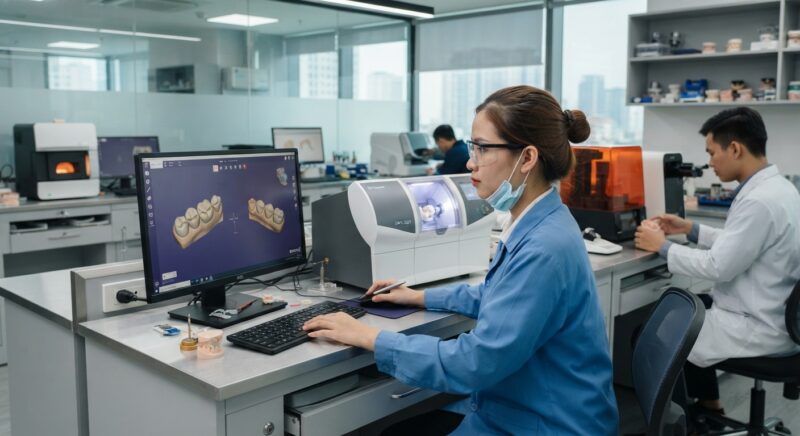
How Does Equipment Acquisition Choice Affect Dental Lab Workflow and Productivity?
Dental CAD CAM equipment financing vs leasing 2026 decisions directly impact workflow efficiency, production capacity, and staff allocation within labs and DSOs.
Ownership through financing may encourage labs to optimize equipment use fully since the capital investment is significant. However, maintenance downtime and technological obsolescence can disrupt workflows if upgrades are costly.
Leasing often provides labs with newer equipment versions more frequently, reducing downtime and enhancing productivity. Included maintenance contracts can minimize unexpected interruptions. Leasing also facilitates scaling up or down based on production demands, benefiting DSOs with variable patient volumes.
Choosing the right option depends on a lab’s production volume, the complexity of cases (e.g., implant surgical guides vs dentures), and how quickly they need to adopt new digital design workflows. Integration with outsourced CAD design services can further streamline operations.
What Financial and Tax Considerations Should Dental Labs Evaluate in 2026?
Dental CAD CAM equipment financing vs leasing 2026 decisions influence tax liabilities and financial statements.
- Financing: Equipment is recorded as an asset; labs can claim depreciation and interest expenses, potentially reducing taxable income. However, equipment is on the balance sheet, affecting debt ratios.
- Leasing: Lease payments are typically deductible as operating expenses, simplifying accounting and improving cash flow statements. Operating leases may not appear as liabilities on the balance sheet depending on lease terms.
Tax benefits vary by region and should be evaluated with a financial advisor. Some labs find leasing improves reported profitability while financing builds long-term asset equity. Understanding accounting standards like ASC 842 or IFRS 16 is also critical for accurate financial reporting.
How Do You Choose Between Dental CAD CAM Equipment Financing vs Leasing 2026?
Choosing between dental CAD CAM equipment financing vs leasing 2026 depends on the lab’s financial health, growth strategy, technology adoption rate, and operational priorities.
Start by assessing:
- Capital availability for upfront payments or down payments
- Expected equipment usage lifespan and production volume
- Need for frequent technology upgrades
- Tax and accounting impacts
- Maintenance and service preferences
Engaging with equipment vendors like Medit or Formlabs can provide customized financing or leasing offers tailored to the lab’s workflow. Comparing total cost of ownership and cash flow implications side-by-side helps clarify the best approach.
This strategic evaluation ensures dental labs and DSOs invest wisely in CAD CAM tools that support efficient crown & bridge fabrication, implant workflows, and orthodontic aligner production, as well as night guard and denture manufacturing.
Do You Need Design Capacity for Your New Equipment?
Outsourced dental CAD design services allow labs and clinics to maximize their milling and printing equipment utilization without hiring in-house designers, making digital workflows more scalable and efficient.
When deciding between dental CAD CAM equipment financing vs leasing 2026, consider whether your operation has sufficient CAD expertise. Partnering with a trusted digital design outsourcing provider can reduce overhead and accelerate turnaround times, especially for complex cases like surgical guides or implant restorations.
This approach complements any equipment acquisition strategy by enhancing productivity without additional staffing costs.
Conclusion: Make the Right Choice for Your Lab’s Future
Dental CAD CAM equipment financing vs leasing 2026 offers distinct benefits and trade-offs for labs and DSOs. Financing suits those seeking long-term asset ownership and tax depreciation benefits, while leasing offers flexibility, lower upfront costs, and easier technology upgrades.
Evaluate your lab’s production needs, cash flow, and growth plans thoroughly. Consider maintenance commitments, workflow impact, and tax implications before committing to a path.
Our dental lab CAD/CAM digital design outsourcing service can help you optimize your equipment use and design capacity. Contact us today to discuss how we can support your lab or DSO’s digital transformation and production goals.
digital crown design and surgical guide design services also work well alongside your equipment investment strategy for best results.