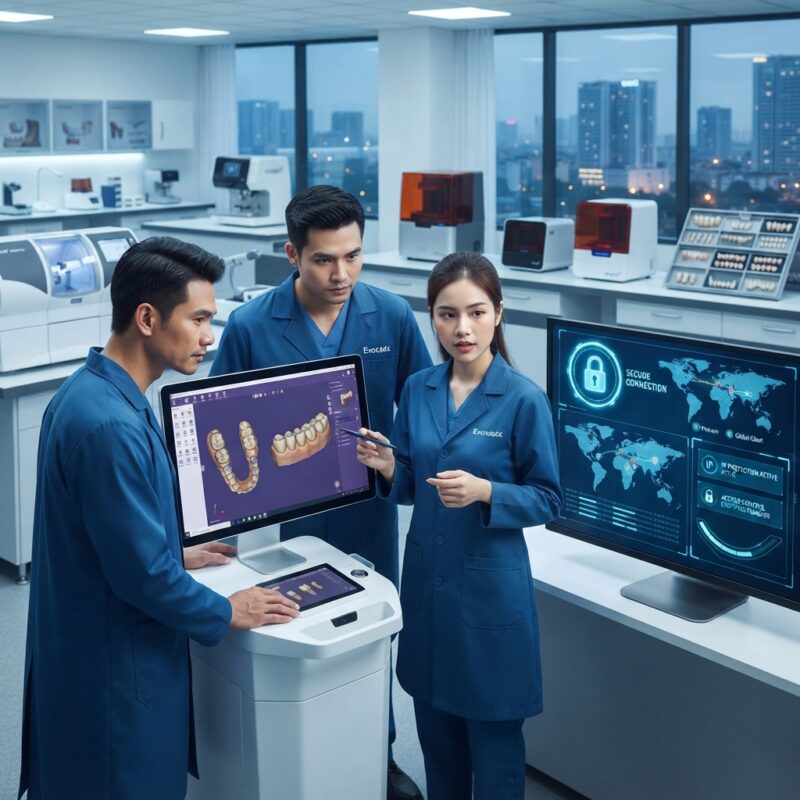
What is data security and IP protection when outsourcing dental design to Vietnam vs China in 2026?
Data security and IP protection when outsourcing dental design to Vietnam vs China in 2026 refer to the measures and legal frameworks that safeguard sensitive patient data and proprietary dental design intellectual property (IP) during digital CAD/CAM outsourcing processes in these countries.
As dental labs and DSOs increasingly outsource crown & bridge, implant, surgical guide, denture, orthodontic aligner, and night guard designs, protecting confidential patient information and proprietary design files is paramount. Both Vietnam and China offer growing digital dental design services, but their approaches to data security and IP enforcement differ significantly. Understanding these differences is critical for dental practices to mitigate risks related to data breaches, unauthorized use of designs, and IP theft.
Why is data security critical in dental CAD/CAM outsourcing?
Data security is fundamental in dental CAD/CAM outsourcing because dental designs contain sensitive patient health information and proprietary intellectual property that must comply with global privacy laws and industry standards.
Dental CAD files often include 3D scans, treatment plans, and customized prosthetic designs, making them valuable targets for cyber threats or misuse if not adequately protected. Ensuring secure data transmission, storage, and access controls protects patient confidentiality under regulations like HIPAA and GDPR and preserves the competitive edge of proprietary design innovations.
Outsourcing dental design without robust data security measures exposes dental labs and DSOs to risks such as legal penalties, loss of client trust, and IP infringement, which can jeopardize business reputation and revenue streams.
How do Vietnam and China compare in data security frameworks for dental design outsourcing?
Vietnam and China have implemented distinct data security frameworks that impact how dental design outsourcing is conducted securely in 2026.
Vietnam’s cybersecurity law, updated in recent years, emphasizes data localization, personal data protection, and stringent cybersecurity protocols, aligning closely with international standards. Vietnam’s government actively enforces regulations to protect sensitive health data and intellectual property, with growing investments in secure cloud infrastructure and encryption technologies within the dental CAD/CAM sector.
China’s cybersecurity law is comprehensive but involves strict government control over data flows and mandatory data localization. While China has strong technical capabilities for data security, concerns remain about government access to data and less transparent IP enforcement, which can affect foreign companies’ confidence in outsourcing dental design work.
Both countries require dental labs and DSOs to conduct due diligence on local service providers’ compliance with data security laws, certifications such as ISO/IEC 27001, and the use of encrypted communication channels for design file transfers.
What are the intellectual property protection differences between Vietnam and China for dental design?
Intellectual property protection in Vietnam and China varies significantly, affecting the security of proprietary dental designs during outsourcing engagements.
Vietnam has strengthened its IP laws and enforcement mechanisms in recent years, joining international treaties like the TRIPS Agreement. Dental labs outsourcing to Vietnam benefit from clearer IP ownership rights, faster dispute resolution, and growing government efforts to curb counterfeiting and design theft.
China, despite having a mature IP legal system, faces ongoing challenges with IP infringement, especially in technology sectors. Enforcement can be inconsistent, and foreign dental labs may encounter delays or difficulties in protecting proprietary digital designs. However, major cities in China have specialized IP courts and improved legal processes to address these issues.
Choosing between Vietnam and China requires dental labs and DSOs to consider the strength and reliability of IP protection in each jurisdiction, particularly for high-value implant and orthodontic aligner designs.
What are the practical data security measures implemented by dental design outsourcing providers in Vietnam and China?
Dental design outsourcing providers in both Vietnam and China employ various practical data security measures to safeguard client information and IP.
- Encryption: Both countries’ providers utilize end-to-end encryption for file transfer and storage to prevent unauthorized access.
- Access Controls: Strict user authentication and role-based access control limit who can view or modify sensitive dental design data.
- Secure Cloud Platforms: Many providers use secure cloud-based CAD/CAM platforms compliant with international security standards.
- Regular Audits: Periodic security audits and penetration testing help identify and mitigate vulnerabilities.
- Non-Disclosure Agreements (NDAs): Providers require NDAs and IP assignment contracts to legally bind confidentiality.
Vietnamese outsourcing companies often emphasize compliance with global dental standards and certifications, while Chinese providers may leverage advanced AI-powered cybersecurity tools. The choice depends on the dental lab’s comfort level with technology and legal safeguards.
How do cultural and business environments affect data security and IP protection in Vietnam vs China?
Cultural and business environments shape how data security and IP protection are approached in Vietnam and China.
Vietnam’s business culture is increasingly aligned with Western standards emphasizing transparency, legal compliance, and client confidentiality. This cultural shift benefits dental labs outsourcing CAD/CAM designs seeking reliable data protection partnerships.
In contrast, China’s business environment is highly competitive with a strong emphasis on rapid innovation but also includes complex regulatory oversight and state involvement in data management. This creates both opportunities and challenges for dental labs regarding IP protection and data security.
Understanding these cultural nuances helps decision-makers anticipate potential risks and choose outsourcing partners who prioritize secure collaboration.
What legal protections should dental labs ensure when outsourcing to Vietnam or China?
Dental labs should secure comprehensive legal protections to mitigate risks related to data security and IP protection when outsourcing dental design to Vietnam or China in 2026.
- Clear IP Ownership Clauses: Contracts must explicitly define ownership of dental designs and prohibit unauthorized use or distribution.
- Data Privacy Compliance: Ensure the provider complies with local and international data protection laws relevant to patient data.
- Confidentiality Agreements: Enforce NDAs to legally bind all parties to confidentiality obligations.
- Dispute Resolution Mechanisms: Include arbitration or jurisdiction clauses favoring neutral venues to resolve IP or data breaches.
- Audit Rights: Reserve rights to audit the provider’s security practices and compliance regularly.
Engaging legal counsel with expertise in international dental outsourcing can help tailor contracts that safeguard interests effectively.
What are the cost implications related to data security and IP protection in Vietnam vs China?
Costs associated with data security and IP protection vary between Vietnam and China and influence the total cost of ownership for dental labs outsourcing digital design work.
Vietnam generally offers competitive pricing for CAD/CAM outsourcing services, including robust security features, due to lower labor and operational costs. Investments in secure infrastructure tend to be more affordable, making it attractive for small to mid-sized dental labs and DSOs.
China’s services may command higher fees reflecting advanced technology deployment and extensive cybersecurity resources, which benefit high-volume labs requiring rapid turnaround and large-scale design production. However, additional costs may arise from navigating complex IP enforcement and regulatory compliance.
Dental labs must weigh these cost factors against their security and IP risk tolerance to select the most cost-effective outsourcing destination.
How do workflow and technology integration differ when outsourcing dental design to Vietnam vs China?
Workflow efficiency and technology integration are essential when outsourcing dental design, affecting turnaround times and collaboration quality between dental labs and outsourcing providers.
Vietnamese providers often adopt internationally recognized CAD/CAM software platforms such as Exocad and 3Shape, enabling seamless file compatibility and real-time design adjustments. This integration supports distributed teams working on crown & bridge, implants, and orthodontic aligner designs efficiently.
Chinese providers also support leading dental CAD systems, but their workflows may incorporate proprietary software or AI-driven design automation tools to accelerate production. This suits large DSOs requiring high-volume output but can introduce compatibility challenges for smaller labs.
Both countries’ providers prioritize secure file sharing platforms and encrypted communication channels to maintain data security and IP protection when outsourcing dental design to Vietnam vs China in 2026.
Comparison Table: Data Security and IP Protection Features in Vietnam vs China for Dental CAD/CAM Outsourcing
| Criteria | Vietnam | China |
|---|---|---|
| Cybersecurity Regulations | Strict, aligned with international standards | Comprehensive but with state control |
| IP Law Enforcement | Improving, faster dispute resolution | Advanced but variable enforcement |
| Data Localization | Required for sensitive data | Strictly enforced |
| Cost of Security Compliance | Lower operational costs | Higher due to advanced tech |
| Technology Platforms | International CAD software preferred | Mix of international and proprietary tools |
| Business Culture | Transparent, client-focused | Competitive, complex regulatory |

What are the best use cases for outsourcing dental design to Vietnam?
Outsourcing dental design to Vietnam suits dental labs and DSOs that prioritize a balance of cost-effectiveness, solid data security, and improving IP protection frameworks.
- Best for: Small to mid-sized labs, startups, DSOs looking for cost-efficient design capacity
- Strengths: Competitive pricing, growing legal protections, strong compliance with data privacy laws
- Limitations: Emerging market with slightly less mature IP enforcement than China, limited AI design tools
Vietnam’s expanding digital infrastructure supports high-quality crown & bridge and implant design outsourcing, and it also works well alongside surgical guide design services.
What are the best use cases for outsourcing dental design to China?
Outsourcing dental design to China is ideal for high-volume dental labs and DSOs requiring cutting-edge technology and extensive design automation capabilities.
- Best for: Large labs, DSOs with complex implant and orthodontic workflows, clients needing rapid turnaround
- Strengths: Advanced AI tools, strong technical cybersecurity, specialized IP courts
- Limitations: Higher costs, complex legal environment, potential concerns over government data access
China’s robust technology platforms integrate well with major CAD/CAM systems and support scalable outsourcing but require careful legal oversight to protect IP effectively.
How can dental labs assess potential outsourcing partners for data security and IP protection?
Dental labs should conduct thorough assessments of outsourcing partners to evaluate their data security and IP protection capabilities before entrusting sensitive dental design work.
- Request evidence of cybersecurity certifications such as ISO/IEC 27001
- Review compliance with local and international data privacy regulations
- Examine sample contracts for IP ownership and confidentiality provisions
- Assess technical infrastructure including encrypted file transfer and secure cloud storage
- Check client references and past performance on data breach incidents
Choosing partners with transparent policies and strong security cultures mitigates risks associated with data security and IP protection when outsourcing dental design to Vietnam vs China in 2026.
What role do emerging technologies play in enhancing data security for dental design outsourcing?
Emerging technologies such as blockchain, artificial intelligence, and advanced encryption methods are increasingly deployed to enhance data security in dental design outsourcing.
Blockchain can provide immutable audit trails for design file access and modifications, ensuring traceability and reducing IP theft risks. AI-powered cybersecurity tools detect and respond to threats in real-time, bolstering protection against cyberattacks. Advanced encryption algorithms secure data both at rest and in transit, maintaining confidentiality.
Vietnamese providers are gradually adopting these technologies, while Chinese firms often lead in integrating AI-driven security solutions. Dental labs and DSOs should evaluate their outsourcing partners’ technological capabilities as part of their security due diligence.
How does outsourcing dental design impact workflow and staff requirements in dental labs and DSOs?
Outsourcing dental design allows dental labs and DSOs to optimize workflow by offloading complex CAD/CAM digital design tasks to specialized teams, reducing the need for in-house design staff.
This model accelerates design turnaround times and enhances flexibility in managing case volumes. Labs can focus resources on milling, 3D printing, and finishing processes while relying on expert designers abroad to handle crown & bridge, implants, and orthodontic aligner designs securely.
Outsourcing also minimizes training costs and the need to keep pace with rapidly evolving design software, making it especially attractive for small labs and DSOs expanding their digital dentistry capabilities.
This approach integrates well with advanced manufacturing equipment and supports compliance with data security and IP protection when outsourcing dental design to Vietnam vs China in 2026.
Do you need design capacity for your new equipment?
If you are investing in milling machines or 3D printers but lack in-house CAD design expertise, outsourcing your dental design needs can provide immediate, secure access to skilled professionals without hiring full-time staff. Our CAD/CAM digital design outsourcing service ensures your workflows stay efficient, compliant, and protected against IP risks.
Step-by-Step Guide to Ensuring Data Security and IP Protection When Outsourcing Dental Design
Outsourcing dental design to Vietnam or China involves multiple stages where data security and intellectual property protection must be vigilantly maintained. Below is a practical step-by-step guide for dental labs and practices to follow, ensuring robust safeguards throughout the process.
1. Conduct a Preliminary Risk Assessment
- Identify sensitive data: Determine which patient records, design files, and proprietary assets require protection.
- Assess vendor capabilities: Evaluate potential outsourcing providers’ data security certifications, history of breaches, and IP protection policies.
- Understand local laws: Research Vietnamese and Chinese regulations impacting data privacy and IP enforcement relevant to dental design.
2. Draft Comprehensive Contracts and NDAs
- Include explicit IP clauses: Specify ownership rights, confidentiality obligations, and penalties for breaches.
- Define data handling protocols: Outline how data must be stored, transmitted, and destroyed after project completion.
- Set audit rights: Ensure your lab can audit the vendor’s compliance with security measures at any time.
3. Implement Secure Data Transfer and Storage Protocols
- Use encrypted channels: Employ VPNs, SSL/TLS, or other encryption methods for all digital file exchanges.
- Adopt secure file formats: Use non-editable or watermarked design files where possible to prevent unauthorized copying.
- Verify vendor infrastructure: Confirm the outsourcing partner uses secure servers, firewalls, and access controls.
4. Establish Clear Workflow and Access Controls
- Limit user access: Only authorized personnel at the vendor should access patient data and design IP.
- Track changes: Use version control systems to monitor modifications to design files.
- Set role-based permissions: Differentiate access levels between design, quality control, and management staff.
5. Conduct Regular Security Audits and Training
- Schedule periodic audits: Both internal and third-party assessments to identify vulnerabilities.
- Provide staff training: Ensure vendor employees are educated on data protection best practices and compliance requirements.
- Monitor incident response: Evaluate how quickly and effectively the vendor handles any security breaches.
6. Plan for Incident Management and Contingency
- Develop breach response plans: Outline steps for notification, containment, and remediation in case of data leaks.
- Ensure data backups: Verify backup procedures to prevent data loss or tampering.
- Negotiate liability clauses: Hold vendors accountable for damages caused by negligence or security failures.
Common Mistakes to Avoid When Outsourcing Dental Design to Vietnam and China
Many dental labs and practices encounter pitfalls in outsourcing dental CAD/CAM design that jeopardize data security and IP protection. Awareness and proactive avoidance of these mistakes can save significant time, money, and legal complications.
1. Neglecting Vendor Due Diligence
Failing to thoroughly vet outsourcing providers’ security infrastructure, reputation, and compliance with local laws often leads to vulnerabilities. Some labs rely solely on cost or turnaround time without verifying data protection capabilities.
2. Overlooking Cultural and Language Barriers
Miscommunications arising from cultural differences or language gaps can result in unclear data handling instructions or contract terms, increasing the risk of IP leaks or data misuse.
3. Using Inadequate or Generic Contracts
Contracts that lack detailed IP clauses, confidentiality agreements, or audit rights offer limited legal recourse if a breach occurs. Generic NDAs may not cover the nuances of dental design files or patient data.
4. Ignoring Technology Compatibility
Failing to align software platforms, file formats, and security protocols between the dental lab and outsourcing partner can cause data corruption, unauthorized access, or operational inefficiencies.
5. Skipping Regular Security Audits
Assuming the vendor continuously maintains security without scheduled audits leads to outdated protections and hidden breaches. Continuous monitoring is essential in fast-evolving cyber threat landscapes.
6. Underestimating the Cost of Security Measures
Some dental labs choose the cheapest outsourcing option without factoring in the true cost of insufficient security — including potential IP theft, regulatory fines, and reputational damage. Investing upfront in robust security pays off long-term.
Cost and Quality Considerations in Data Security and IP Protection
Understanding the financial and quality trade-offs involved when outsourcing dental design to Vietnam versus China is crucial for informed decision-making.
Cost Factors
- Security Infrastructure Investment: Vendors with ISO 27001 certification, advanced encryption, and dedicated cybersecurity teams typically charge premium fees.
- Legal and Compliance Costs: Negotiating and maintaining comprehensive contracts, including international legal counsel, adds to initial and ongoing expenses.
- Technology Integration: Custom software development or middleware to ensure secure data exchange may require additional investment.
- Training and Audits: Regular employee training and third-party audits increase operational costs but are essential for sustained security.
Quality Implications
- Design Accuracy and IP Fidelity: Vendors with strict IP controls and secure workflows reduce risks of design tampering or unauthorized reuse, preserving quality.
- Turnaround Time vs Security: Overly complex security protocols can sometimes slow down design delivery; balancing speed and protection is key.
- Vendor Expertise: High-security providers often have better-trained staff and more refined processes, positively impacting the quality of dental design outputs.
- Reputation and Reliability: Investing in reputable vendors ensures consistent quality and reduces risk of costly rework due to security breaches or IP loss.
Market Specifics Affecting Cost and Quality
Vietnam tends to offer competitive pricing with rapidly improving security standards, making it attractive for mid-size labs willing to invest in vendor training and audits. However, some providers may still be developing comprehensive IP protection frameworks.
China has a more mature outsourcing market with numerous providers certified for international security standards but often at a higher cost. Language barriers and complex bureaucracy can impact communication efficiency, indirectly affecting quality.
Checklist for Dental Labs to Evaluate Data Security and IP Protection When Outsourcing
Use the following checklist to systematically assess potential outsourcing partners’ capability to safeguard your dental design data and intellectual property:
- Vendor Credentials and Certifications: Verify ISO 27001, HIPAA compliance, or local equivalents.
- Data Encryption: Confirm encryption methods for data at rest and in transit.
- Access Controls: Check for role-based permissions and multi-factor authentication.
- Employee Training: Ensure regular security awareness programs are in place.
- IP Protection Policies: Review contract clauses on ownership, confidentiality, and penalties.
- Audit Rights and Transparency: Confirm ability to conduct regular security and compliance audits.
- Incident Response Plan: Evaluate documented procedures for handling data breaches.
- Technology Compatibility: Assess software platforms, file formats, and integration support.
- Past Security Record: Investigate any history of data breaches or IP disputes.
- Communication and Language Proficiency: Ensure clear channels and understanding to prevent misinterpretation.
- Data Backup and Recovery: Verify procedures for secure backups and disaster recovery.
- Physical Security: Confirm secure facilities restricting unauthorized physical access to servers and design workstations.
Contact us today to learn how we can support your lab or DSO with secure, high-quality dental design solutions.