The Strategic Evolution of Dental Case Acceptance in 2026
The dental landscape has reached a pivotal junction where patient expectations, technological maturation, and economic realities converge. Understanding how to improve dental case acceptance rate in 2026 requires a fundamental shift from traditional verbal treatment planning to immersive, visual, and highly predictable digital treatment proposals. Today’s dental patients do not merely evaluate clinical recommendations based on doctor authority; they act as informed consumers seeking transparency, visual evidence, immediate turnaround, and emotional connection to their proposed outcomes. Whether you operate a single-location private practice, manage a high-volume Dental Service Organization (DSO), or lead a commercial dental laboratory providing technical support, mastering how to improve dental case acceptance rate in 2026 is the ultimate driver of sustainable profit margins and clinical excellence.
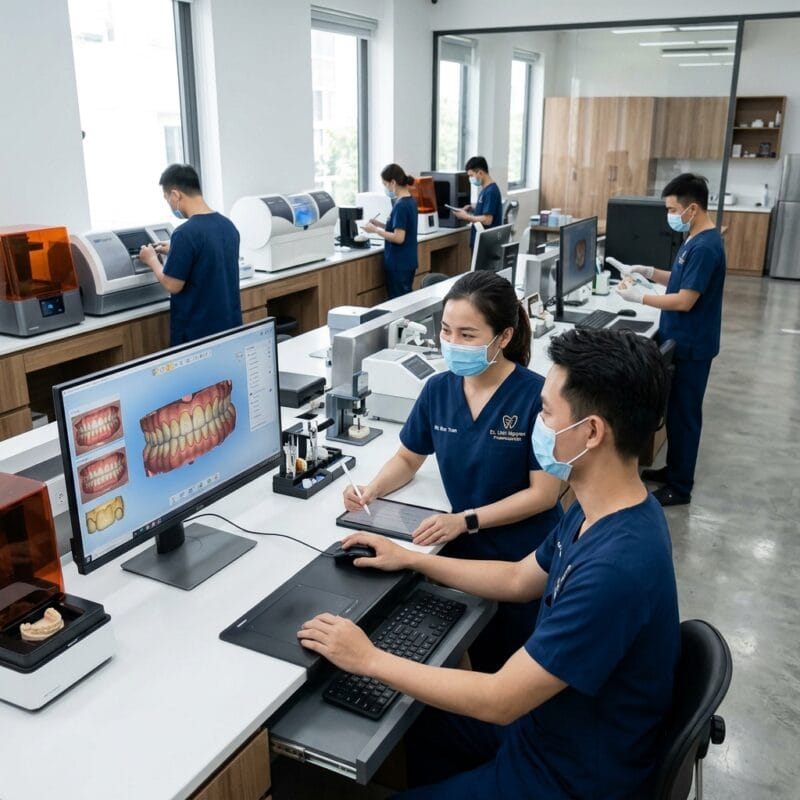
Historically, dental practices struggled with low treatment conversion, particularly for comprehensive restorative cases, implant reconstructions, full-arch restorations, clear aligners, and cosmetic digital smile designs. When clinical teams present complex crown and bridge or full-mouth reconstruction plans using static two-dimensional X-rays or dense clinical jargon, patient hesitation rises dramatically. When analyzing how to improve dental case acceptance rate in 2026, forward-thinking organizations recognize that the solution lies in leveraging high-precision digital dentistry workflows. By partnering with dedicated digital dental design labs that specialize in CAD/CAM design outsourcing, practices and labs can instantly generate photorealistic diagnostic wax-ups, custom surgical guides, highly aesthetic denture prototypes, and clear aligner staging models that bridge the gap between clinical diagnoses and patient understanding.
Furthermore, economic headwinds and competitive dynamics mean that clinicians cannot afford weeks of delay between the initial consultation and the delivery of a comprehensive treatment presentation. A core component of mastering how to improve dental case acceptance rate in 2026 is radical speed. Modern patients expect real-time feedback. Utilizing expert offshore and domestic CAD/CAM design teams allows dental labs and clinicians to obtain overnight digital designs. Intraoral scans captured during an initial morning consultation can be routed to experienced CAD specialists, returning full 3D visual proposals that are ready for patient review within 12 to 24 hours. When exploring how to improve dental case acceptance rate in 2026, implementing seamless digital workflows turns delayed consultations into immediate, high-converting patient commitments.
How does CAD/CAM design outsourcing help improve case acceptance?
CAD/CAM design outsourcing helps improve case acceptance by providing high-precision visual wax-ups and rapid turnaround times that allow clinicians to present compelling treatment plans immediately.
When dental practices and commercial laboratories outsource their complex digital CAD design demands—such as crown and bridge, implant abutments, full-arch bridges, surgical guides, night guards, and aligners—they unlock unprecedented operational bandwidth. Dental technicians within busy laboratories often face severe production bottlenecks, spending hours sitting in front of CAD software designing individual units rather than focusing on quality control, characterization, and high-value finishing work. By shifting CAD tasks to dedicated outsourcing specialists fluent in software like exocad design software solutions and 3Shape, dental labs can rapidly expand their daily unit output without increasing physical overhead. This efficiency directly impacts practice performance and illustrates how to improve dental case acceptance rate in 2026 across integrated care networks.
When dental labs deliver pristine, highly aesthetic CAD proposals back to the clinical team overnight, doctors can present digital smile designs and photorealistic diagnostic models while the patient’s interest remains fresh. If you analyze how to improve dental case acceptance rate in 2026 from an operational perspective, the relationship between rapid turnaround and conversion rate is stark: every day added between diagnostic scanning and case presentation decreases treatment conversion by up to 15 percent. Seamless outsourcing eliminates this friction, empowering doctors to present clear, digital options almost instantly.
Moreover, CAD/CAM design outsourcing ensures exceptional, standardized design quality. Expert CAD designers dedicate 100 percent of their time to mastering functional occlusion, tissue emergence profiles, contact points, and anatomical contours across all restorative disciplines. Whether designing a complex full-arch implant bridge design or an intricate clear aligner progression, external CAD experts maintain consistent clinical standards. This level of functional and aesthetic excellence gives clinicians unwavering confidence during consultations, which is a foundational element when studying how to improve dental case acceptance rate in 2026.
The Psychology of Patient Choice in Modern Dentistry
To fully grasp how to improve dental case acceptance rate in 2026, one must evaluate the psychological triggers that lead a patient to say “yes” to extensive treatment. Modern healthcare consumers respond primarily to visual communication, risk reduction, and perceived value. Traditional case presentations often fail because they focus heavily on the clinical *process*—drilling, implant placement, bone grafting, or teeth shaving—rather than the desirable *outcome*—a beautiful smile, restored chewing ability, eliminated pain, and elevated self-esteem.
Digital design tools radically pivot this dynamic. When dental professionals utilize 3D visual models created by elite CAD design services, the presentation transforms from an intimidating clinical explanation into an inspiring, collaborative discussion. Demonstrating digital diagnostic wax-ups, interactive smile simulations, or 3D-printed try-in mockups completely reframes the treatment conversation. Practitioners searching for how to improve dental case acceptance rate in 2026 frequently cite digital mockups as their most powerful conversion asset because patients can physically preview and emotionally connect with their new smile before committing to surgical or restorative procedures.
- Visual Clarity over Verbal Technicalities: Photorealistic renders display actual teeth, arch shapes, and harmonious aesthetic proportions, making the proposed outcomes easy for non-dentists to appreciate.
- Co-Diagnosis and Co-Design: Involving patients in selecting shape preferences or evaluating aligner staging creates psychological ownership of the treatment path.
- Elimination of the Unknown: Highlighting precise CAD outcomes reduces fear of unpredictable aesthetic or functional results.
- Transparent Value Perception: Premium digital treatment presentations justify major financial investments far more effectively than basic verbal quotes.
Every clinical team evaluating how to improve dental case acceptance rate in 2026 must understand that emotion drives decision-making, while visual proof provides the rational logic necessary to justify the decision. Integrating outsourced CAD visualization into daily consultation protocols satisfies both of these psychological requirements seamlessly.
What is the role of digital wax-ups in modern treatment presentations?
Digital wax-ups provide realistic 3D photorealistic visual models that allow patients to clearly visualize their post-treatment aesthetic outcomes prior to procedure approval.
Diagnostic wax-ups were once time-consuming manual tasks reserved exclusively for high-end cosmetic reconstructions. Technicians spent hours applying physical wax to stone models, yielding fragile representations that could not easily be shared digitally or modified on the fly. Today, digital diagnostic wax-ups designed through advanced software have revolutionized patient consultations. Understanding how to improve dental case acceptance rate in 2026 requires leveraging these digital wax-ups across almost every multidisciplinary treatment plan.
Using digital design services, intraoral scan files (STL/PLY format) captured with modern scanners—like 3Shape digital scanner ecosystems—are quickly transformed into complete digital diagnostic models. These models reflect ideal gingival architecture, tooth morphology, facial midline alignment, and occlusal relationships tailored precisely to the patient’s facial aesthetics. Clinicians can present these digital renderings directly on high-definition touchscreens or print a quick 3D diagnostic model for an in-mouth temporary preview (direct composite mockup). When dentists consider how to improve dental case acceptance rate in 2026, placing a tangible, beautiful mockup inside a patient’s mouth during their initial consultation remains the single most effective conversion strategy available in modern dental care.
Furthermore, digital wax-ups serve as the master blueprint for all subsequent clinical stages. The exact CAD file used for patient presentation is subsequently utilized to manufacture temporary restorations, prepare surgical guides, guide conservative crown preps, and fabricate the final zirconia, lithium disilicate, or titanium prostheses. This consistency builds deep clinical confidence. For practices studying how to improve dental case acceptance rate in 2026, digital wax-ups unify aesthetic predictability with structural accuracy, ensuring that what the patient approves on screen is precisely what is delivered in the final seat appointment.
Optimizing Turnaround Times for DSO and Multi-Location Practices
For Dental Service Organizations (DSOs) and large group practices, operational consistency and scalability are essential. When executive teams evaluate how to improve dental case acceptance rate in 2026 across dozens or hundreds of clinical locations, standardizing the diagnostic presentation workflow is vital. Intraoral scanners are now commonplace across DSO practices, but software license costs, designer labor shortages, and variable clinical expertise often create operational bottlenecks that hamper growth.
Outsourced CAD/CAM digital design services provide DSOs with an instant, centralized design engine. Instead of requiring each office to hire dedicated CAD technicians or forcing dentists to design crowns, night guards, and aligners after clinical hours, scan data is routed directly to specialized offshore digital design hubs. This workflow standardizes design quality, reduces administrative overhead, and provides turnaround times as fast as 6 to 12 hours. DSOs mastering how to improve dental case acceptance rate in 2026 leverage this rapid turnaround to implement efficient “same-day” or “next-day” treatment presentation workflows.
Consider a patient presenting for a comprehensive hygiene appointment who expresses interest in cosmetic realignment or replacing broken posterior restorations. In a traditional DSO workflow, scans are taken, sent to an internal queue, and the patient is scheduled to return weeks later for a treatment proposal—by which point personal interest may have waned. In an optimized 2026 digital workflow, the intraoral scan is instantly uploaded to a digital design partner. By the following morning, complete 3D digital proposals for crown and bridge restorations, night guards, or orthodontic aligner progressions are waiting in the patient’s chart. The consultation coordinator reaches out immediately while motivation is high. Establishing this level of responsiveness is a cornerstone strategy when determining how to improve dental case acceptance rate in 2026.
Why is turnaround speed critical when learning how to improve dental case acceptance rate in 2026?
Rapid lab turnaround speed captures patient enthusiasm while motivation is high, preventing treatment drop-off and delayed decision-making.
Human psychology dictates that excitement and urgency decay rapidly over time. When a patient arrives at a dental clinic with functional discomfort, cosmetic insecurity, or an interest in restorative improvements, their motivation to proceed with treatment is at its peak during that initial clinical interaction. Any delay introduced into the diagnostic or planning phase creates opportunity for doubt, financial second-guessing, or competing personal priorities. Therefore, analyzing how to improve dental case acceptance rate in 2026 requires treating time as a critical clinical variables.
Partnering with high-capacity digital design outsourcing laboratories grants clinical practices instant access to round-the-clock design teams operating across multiple time zones. While a practice is closed overnight, skilled CAD technicians are actively working on crown preps, implant custom abutments, surgical guide trajectories, night guard relief spaces, and denture tooth arrangements. Dentists wake up to fully realized 3D design files ready for 3D printing or milling. When examining how to improve dental case acceptance rate in 2026, this continuous operational cycle gives practices the unique ability to strike while the iron is hot, transforming multi-week treatment sales cycles into agile, high-velocity patient conversions.
To highlight the practical contrast between traditional lab workflows and modern CAD-outsourced workflows, review the comparison below:
- Traditional Workflow: Physical impressions, postal delivery to lab, manual waxing (5–10 days), physical consult return visit, potential rework delay. Result: High drop-off rate (~40-50% conversion).
- Modern Digital Outsourced Workflow: Direct intraoral scan, overnight CAD design service delivery, 3D printed diagnostic mockup, treatment presentation within 24–48 hours. Result: Superior patient engagement (~75-85% conversion).
It becomes evident that mastering how to improve dental case acceptance rate in 2026 is deeply tied to digital agility and rapid visual communication.

Surgical Guides & Implants: Building Patient Trust Through Precision
Implant dentistry represents one of the highest revenue categories for modern dental practices, yet surgical treatment proposals often trigger high levels of patient anxiety. Fear of pain, surgical complications, long recovery windows, and high financial investment lead to significant case abandonment. Any strategic inquiry into how to improve dental case acceptance rate in 2026 must specifically address how to mitigate patient anxiety surrounding implant and surgical guide procedures.
Digital implant planning combined with 3D printed surgical guides transforms surgical treatment proposals from intimidating surgical procedures into controlled, highly accurate clinical steps. By pairing CBCT 3D bone data with digital intraoral scans, expert digital design teams create comprehensive 3D implant planning proposals. Clinicians can show patients exact 3D renderings of their jawbone, the targeted implant position, neighboring anatomic structures, and the final aesthetic crown or bridge prosthesis. Demonstrating this high level of digital planning is essential when teaching clinical teams how to improve dental case acceptance rate in 2026.
When patients observe that their surgery is meticulously mapped out digitally before a incision is made, their perceived risk plummets while their trust in the clinician soars. Explaining that a custom surgical guide will be designed in CAD software and 3D printed to ensure exact depth, angle, and position creates immense peace of mind. For dental labs and practices exploring how to improve dental case acceptance rate in 2026, featuring guided surgery protocols in implant consultations consistently increases full-arch and single-unit implant case acceptance.
Full-Arch Restorations and Immediate Load Protocols
Full-arch fixed implant restorations (such as All-on-X protocols) represent the pinnacle of restorative dentistry, requiring extensive clinical planning and substantial financial investment from patients. Achieving high conversion rates on full-arch cases requires an impeccable presentation strategy. Mastering how to improve dental case acceptance rate in 2026 for full-arch procedures hinges on demonstrating clear aesthetic and functional transformations through digital design flexibility.
By leveraging expert CAD/CAM design outsourcing services, labs and clinicians can present full-arch cases with complete digital clarity:
- Facial-Driven Digital Smile Design: Merging facial 3D scans, extraoral clinical photos, and intraoral scan files to craft full-arch prostheses that harmonize with the patient’s facial profile, lip line, and natural aesthetics.
- Stackable Surgical Guides: Designing multi-piece stackable guide systems (bone reduction guides, osteotomy guides, carrier guides, and immediate temp prostheses) that prove to the patient the surgical delivery will be efficient, precise, and streamlined.
- 3D Printed Monolithic Try-Ins: Delivering low-cost, highly accurate printed monolithic try-in arches that patients can wear in-mouth to evaluate phonetics, occlusal feel, and facial aesthetics before final ceramic or zirconia fabrication.
When a patient who has suffered from terminal dentition or failing prosthetics actually sees and feels a photorealistic 3D visual preview of their restored smile, the decision to proceed becomes effortless. Practice growth consultants studying how to improve dental case acceptance rate in 2026 highlight that visual visual proof and physical try-ins remain the ultimate keys to closing high-value full-arch treatment plans.
Removable Dentures and Night Guards: Unlocking Untapped Practice Revenue
While complex implant cases receive significant focus, preventive and removable care—specifically digital night guards, partial dentures, and full removable prostheses—represents a vast, frequently underutilized source of consistent revenue. Many practices fail to convert patients on occlusal guards or replacement dentures because traditional impression techniques are uncomfortable and physical adjustments require multiple tedious appointments. Analyzing how to improve dental case acceptance rate in 2026 for these daily clinical services requires digitizing the patient presentation and delivery workflow.
Digital night guard design and digital denture CAD workflows offer exceptional precision. Scans sent to specialized CAD design labs result in perfectly fit, occlusally balanced night guards engineered with uniform clearance spaces and optimal bite contact points. When presenting night guards to patients suffering from bruxism or facial pain, clinicians can display digital wear analysis software models that visually highlight tooth wear patterns and force distribution. Dentists actively learning how to improve dental case acceptance rate in 2026 find that showing visual evidence of attrition alongside a 3D CAD design of the protective guard dramatically increases patient compliance and purchase approval.
Similarly, digital denture design eliminates the hassle of traditional bite blocks and multiple wax try-ins. CAD designers can generate balanced full denture designs overnight, allowing practices to 3D print try-ins or final monolithic dentures rapidly. Patients appreciate fewer appointments, superior retentive fit, and the ability to retain permanent digital back-ups of their prostheses in the cloud. Incorporating these digital conveniences directly answers the challenge of how to improve dental case acceptance rate in 2026 for aging patient demographics seeking removable options.
Orthodontic Aligners: Capitalizing on the Cosmetic Movement
The demand for clear aligner therapy continues to expand rapidly across adult demographic groups. However, patients often shop around, comparing private practice quotes against direct-to-consumer alternatives or competing clinics. Understanding how to improve dental case acceptance rate in 2026 in the competitive clear aligner market requires speed, interactive visual staging, and competitive fee structures made possible through white-label aligner design outsourcing.
Rather than paying high third-party aligner brand fees that elevate patient costs, practices and DSO networks are increasingly adopting in-house aligner workflows supported by expert CAD design partners. The intraoral scan is submitted to an expert aligner CAD designer, who generates a complete 3D tooth movement staging setup. This setup visually shows step-by-step arch expansion, attachment placements, IPR requirements, and final tooth positions. Clinicians looking for effective tactics on how to improve dental case acceptance rate in 2026 present these interactive video animations during the initial consult.
When patients observe a 3D animation detailing their exact step-by-step smile transformation alongside lower treatment costs made possible by open-architecture digital workflows, case acceptance rises significantly. Furthermore, because CAD design fees for aligners are affordable when outsourced, practices can offer aligner evaluations with minimal upfront risk. Leveraging open CAD aligner setups is a proven model when evaluating how to improve dental case acceptance rate in 2026 while protecting healthy practice profit margins.
Operational Integration: Bridging the Gap Between Lab and Clinic
The successful execution of any strategy focused on how to improve dental case acceptance rate in 2026 relies on seamless operational collaboration between dental practices and their laboratory partners. Friction, file format incompatibility, slow communication, or unclear design instructions destroy conversion efficiency. Building an integrated, digital design-driven workflow requires clear communication protocols and modern technology stacks.
To maximize efficiency, dental laboratories and clinical practices should implement standardized digital handoff protocols:
- Standardized Scan Capture: Train clinical staff to take accurate full-arch intraoral scans, capturing clear bite registrations and complete gingival margins to prevent design delays.
- Detailed CAD Prescriptions: Utilize structured digital order portals that specify material preferences, shade profiles, stump shades, contact tightness, and occlusal relief values clearly.
- Cloud-Based Case Management: Leverage open cloud platforms to view, annotate, and approve 3D CAD designs in real-time on tablets or desktop devices.
- Dedicated Technical Communication: Establish direct instant communication channels between clinical teams and CAD design leads for rapid case adjustments during patient consultations.
By establishing these seamless communication pathways, dental teams eliminate miscommunication, shorten production cycles, and create a smooth patient journey. Dental leaders seeking practical advice on how to improve dental case acceptance rate in 2026 understand that operational harmony between clinic and CAD design partner directly drives financial performance.
Financial Planning, ROI, and Communication Strategies for 2026
While visual 3D technology and rapid digital turnaround provide the foundation, the financial presentation remains the ultimate decision point for patients. Even the most stunning photorealistic CAD smile presentation will fail if the patient cannot align the proposed treatment with their personal budget. Therefore, any master strategy covering how to improve dental case acceptance rate in 2026 must integrate transparent financial options alongside digital diagnostics.
Combining outsourced CAD design efficiency with flexible patient financing unlocks unprecedented conversion rates. Because CAD design outsourcing lowers lab operating costs for crown and bridge, implants, and aligners, practices can maintain competitive fee structures while retaining strong margins. When presenting comprehensive treatment, team members should present clear, tiered financing options alongside the 3D CAD design renderings.
Consider the structured approach outlined below for high-value restorative or implant cases:
- Step 1: Digital Discovery & 3D Scanning. Capture complete intraoral scans and CBCT data during the initial consultation. Express genuine interest in the patient’s functional and aesthetic goals.
- Step 2: Rapid CAD Diagnostic Design. Route digital files to a high-capacity CAD design service to generate 3D diagnostic wax-ups, surgical plans, or aligner progressions within 24 hours.
- Step 3: Interactive Visual Presentation. Review the 3D CAD model directly with the patient. Utilize physical printed mockups or smile design software to showcase the exact post-treatment outcome.
- Step 4: Phased Financial Structuring. Offer multi-tiered treatment plans (e.g., phased restorative steps or flexible monthly payment plans through modern patient financing portals).
Practices that systematically combine rapid digital diagnostic visualization with streamlined financial presentation options master how to improve dental case acceptance rate in 2026, outperforming legacy practices in patient retention, average case value, and overall revenue growth.
Overcoming Staffing Challenges and Elevating Practice Overhead
In 2026, labor shortages remain a primary operational hurdle for commercial dental laboratories and clinical dental practices alike. Finding, hiring, and retaining experienced CAD technicians who excel in exocad, 3Shape, or Dental Wings software is increasingly difficult and costly. High technician salaries, software licensing fees, workstation hardware upgrades, and ongoing training consume significant operating capital. Laboratories attempting to solve how to improve dental case acceptance rate in 2026 entirely in-house often find their profit margins squeezed by overhead expenses.
Outsourcing dental CAD design offers an ideal solution to these staffing and overhead challenges. By partnering with established digital design services, labs and DSOs gain on-demand access to hundreds of certified, highly trained CAD designers without adding fixed payroll liabilities. CAD design outsourcing convert fixed labor costs into flexible variable expenses that scale directly with case volume. When labs lower operational overhead through design outsourcing, they can offer more competitive pricing and faster turnaround to clinical clients. This efficiency trickles down to clinicians, providing them with the rapid turnarounds and high-end visual diagnostic models needed to solve how to improve dental case acceptance rate in 2026 across their patient base.
Conclusion: Executing Your 2026 Case Acceptance Strategy
Elevating patient conversion in today’s dental market is not a matter of aggressive sales tactics or traditional marketing spend. Mastering how to improve dental case acceptance rate in 2026 requires adopting advanced digital workflows, delivering exceptional visual clarity, eliminating treatment delays, and leveraging expert CAD/CAM design outsourcing. By turning raw intraoral scans into photorealistic 3D diagnostic models, precision surgical guide plans, functional aligner progressions, and beautiful smile mockups, dental professionals provide patients with the visual confidence they need to proceed with care.
Whether you manage a progressive commercial dental laboratory, direct clinical operations for a growing DSO, or run a patient-focused private practice, integrating dedicated digital design services into your daily workflow is the ultimate catalyst for growth. Embracing rapid 24-hour turnaround times, superior functional occlusion designs, and transparent visual patient communication provides a clear path forward. As you plan your strategic initiatives, prioritizing digital CAD design integration serves as the most effective formula for mastering how to improve dental case acceptance rate in 2026, driving superior clinical outcomes, enhanced operational capacity, and sustained economic success.
Ready to elevate your lab’s capacity and supercharge your clinical case acceptance rates with fast, precision CAD design? Contact our expert digital design team today to start your free trial and experience seamless overnight turnaround!