Introduction to Digital Workflow Standards
In the rapidly evolving landscape of dental technology, maintaining compliance with industry standards is crucial for success. As we move through 2026, laboratories must navigate complex accreditation protocols to ensure quality and trust. The NADL membership requirements for dental labs 2026 represent a significant benchmark for operational excellence. Labs that adhere to these guidelines often see improved efficiency and client satisfaction. By understanding the NADL membership requirements for dental labs 2026, practices can better align their internal processes. This alignment ensures that every digital file sent for design meets high standards. Furthermore, meeting the NADL membership requirements for dental labs 2026 signals reliability to dental practices. It demonstrates a commitment to precision and patient safety. As digital workflows become more integrated, the importance of these standards grows. Laboratories ignoring the NADL membership requirements for dental labs 2026 risk falling behind competitors. Therefore, proactive adaptation is essential for long-term viability in this sector.
What are the NADL membership requirements for dental labs 2026?
The core criteria focus on digital accuracy, material traceability, and certified technician training. To meet the NADL membership requirements for dental labs 2026, labs must utilize validated software and hardware. This includes regular calibration of scanning and milling equipment. Documentation of every case is also part of the NADL membership requirements for dental labs 2026. Labs must keep records of design parameters and material batches. Quality control checks are mandatory under the NADL membership requirements for dental labs 2026. These checks ensure that every restoration fits correctly before shipping. Staff must also complete continuing education relevant to the NADL membership requirements for dental labs 2026. This ensures that the team stays updated on the latest techniques. Adhering to the NADL membership requirements for dental labs 2026 builds a foundation of trust with dentists. It reduces the risk of remakes and enhances overall practice efficiency.
Why Digital Precision Matters
Digital precision is the backbone of modern dental restoration workflows. When labs prioritize accuracy, they reduce errors in the final product. This focus supports the NADL membership requirements for dental labs 2026 by minimizing clinical adjustments. High-precision scans lead to better outcomes for patients. The NADL membership requirements for dental labs 2026 emphasize this need for exactness. Labs invest in high-resolution scanners to meet these demands. Software algorithms also play a role in fulfilling NADL membership requirements for dental labs 2026. They help automate fit checks and margin detection. By leveraging these tools, labs can consistently meet the NADL membership requirements for dental labs 2026. This consistency is vital for building a strong reputation in the market.
Crown and Bridge Design Outsourcing
Outsourcing crown and bridge design is a common strategy for busy laboratories. It allows internal teams to focus on fabrication and finishing. However, partners must understand the NADL membership requirements for dental labs 2026. External designers need to follow the same quality protocols. This ensures that the final product meets the NADL membership requirements for dental labs 2026. Many labs choose specialized partners to handle the design phase. These partners often have dedicated software for crown and bridge work. They ensure that every margin is smooth and anatomically correct. This attention to detail is required by the NADL membership requirements for dental labs 2026. By outsourcing, labs can scale their operations without compromising quality. It also helps in managing peak times when internal capacity is limited.
How does digital crown design work?
Digital crown design uses 3D models to create virtual restorations. The process begins with a scan of the prepared tooth. Designers then build the crown to match the surrounding anatomy. This workflow supports the NADL membership requirements for dental labs 2026 by reducing manual errors. Software tools allow for precise occlusion checks during design. The result is a restoration that fits well on the first try. This efficiency is a key part of NADL membership requirements for dental labs 2026. Labs using this method can turn around cases faster. It also allows for easy adjustments if the dentist requests changes.
Implant Planning and Surgical Guides
Implant cases require a high level of precision and planning. Surgical guides help dentists place implants accurately in the jaw. Creating these guides involves complex 3D modeling. Labs must ensure their guide designs meet the NADL membership requirements for dental labs 2026. This includes verifying the fit of the guide on the patient’s anatomy. Material selection is also critical under NADL membership requirements for dental labs 2026. Biocompatible materials must be used for intraoral devices. Partnerships with implant manufacturers can help labs meet these standards. They provide the necessary data to design compatible guides. Following the NADL membership requirements for dental labs 2026 ensures patient safety. It minimizes the risk of surgical complications due to guide error.
Why choose CAD CAM dental lab partners?
Partners with advanced CAD/CAM capabilities offer superior design outcomes. They invest in the latest software and hardware tools. This investment helps them meet the NADL membership requirements for dental labs 2026 easily. These partners often have dedicated teams for complex cases. They provide faster turnaround times and higher accuracy. Choosing the right partner is essential for meeting NADL membership requirements for dental labs 2026. It ensures that your lab can handle diverse case types efficiently. This capability is increasingly important in the competitive dental market.
Denture and Aligner Design Services
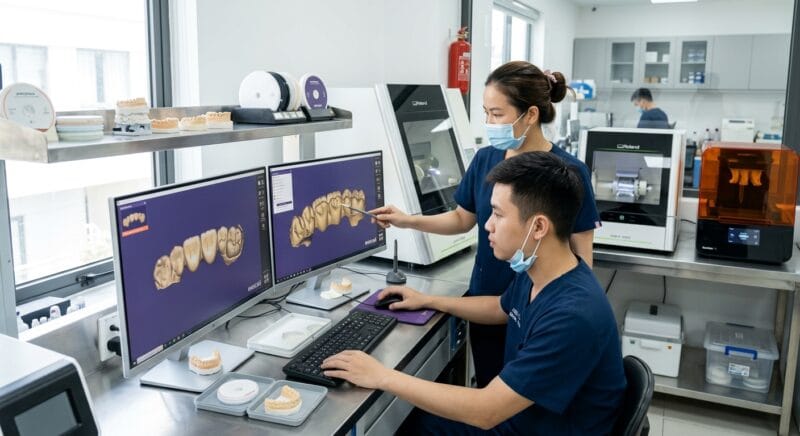
Dentures and aligners represent a significant portion of digital lab work. Full arch dentures require careful planning for aesthetics and function. Aligners need precise tooth movement simulations. Both services must comply with the NADL membership requirements for dental labs 2026. This means ensuring that digital models are accurate and complete. Labs often use specialized software for aligner staging. This software helps predict tooth movement over time. It is a critical tool for meeting NADL membership requirements for dental labs 2026. For dentures, the design must consider gum contours and bite relations. Meeting the NADL membership requirements for dental labs 2026 ensures patient comfort. It reduces the number of adjustments needed after delivery.
What are the main challenges in aligner design?
Aligner design involves complex biomechanics and material science. Designers must account for tooth mobility and root movement. This complexity requires adherence to strict NADL membership requirements for dental labs 2026. Labs need to validate their staging plans before production. This validation ensures that teeth move as predicted. It also helps in avoiding unwanted tooth movements. Meeting NADL membership requirements for dental labs 2026 helps mitigate these risks. Labs use simulation tools to test designs virtually. This step is crucial for maintaining high quality standards.
Technology and Software Integration
Seamless integration between systems is vital for modern labs. Data must flow smoothly from scanners to design software. This flow supports the NADL membership requirements for dental labs 2026 by reducing manual entry. Labs often use cloud platforms to manage files. This allows for real-time collaboration between dentists and designers. Ensuring data security is also part of the NADL membership requirements for dental labs 2026. Labs must protect patient information during transmission. Using established software vendors helps maintain these standards. They provide updates that keep the system compliant. The NADL membership requirements for dental labs 2026 encourage the use of interoperable systems. This ensures that different devices can communicate effectively.
Software updates are frequent in the digital dental space. Labs must stay current to avoid compatibility issues. This proactive approach is encouraged by the NADL membership requirements for dental labs 2026. Outdated software can lead to design errors and delays. By keeping systems updated, labs ensure consistent quality. It also helps in meeting the NADL membership requirements for dental labs 2026. Staff training on new features is also necessary. This ensures that the team can utilize the full potential of the tools. Adhering to these tech standards is key to success.
Building Strategic Partnerships
Collaboration with trusted partners is essential for growth. Labs often outsource specific tasks to specialized providers. These partnerships must align with the NADL membership requirements for dental labs 2026. It ensures that the outsourced work meets the same quality standards. Clear communication is key to successful partnerships. Labs should discuss expectations regarding timelines and quality. This discussion helps in meeting the NADL membership requirements for dental labs 2026. It sets a clear framework for the working relationship. Regular reviews of performance can also help. They ensure that the partner continues to meet standards. This ongoing evaluation is part of the NADL membership requirements for dental labs 2026. It maintains high levels of service over time.
Choosing the right outsourcing partner requires careful vetting. Labs should look for certifications and reviews. This vetting process supports the NADL membership requirements for dental labs 2026. It ensures that the partner has a proven track record. Reliable partners reduce the risk of quality issues. They also help labs scale operations effectively. By focusing on strong partnerships, labs can meet the NADL membership requirements for dental labs 2026 more easily. It allows them to focus on their core competencies. This strategic approach is vital for long-term stability.
Future Outlook for 2026
The dental industry is moving towards more automation and AI. These technologies will play a larger role in 2026. Labs need to prepare for these changes to meet evolving standards. The NADL membership requirements for dental labs 2026 reflect this shift. They encourage the use of intelligent design tools. Automation can help reduce human error in design. It can also speed up the production process. However, human oversight remains important. This balance is part of the NADL membership requirements for dental labs 2026. Labs must ensure that AI tools are validated. This validation ensures that outputs are safe and accurate.
Training will also evolve with these new technologies. Staff will need to learn how to manage automated systems. This learning is necessary to meet the NADL membership requirements for dental labs 2026. Labs that invest in training will stay competitive. They will be able to offer more services efficiently. The focus on continuous improvement is a key part of NADL membership requirements for dental labs 2026. It ensures that labs remain at the forefront of innovation. By embracing change, labs can secure their future in the market.
Night Guard and Occlusal Splint Design
Night guards are essential for protecting teeth from grinding. Designing them requires accurate bite registration. This accuracy is critical for meeting the NADL membership requirements for dental labs 2026. Labs use digital scans to capture the patient’s occlusion. Software then creates a splint that fits perfectly. This process reduces the need for physical adjustments. It also improves patient comfort significantly. Following the NADL membership requirements for dental labs 2026 ensures that these devices function correctly. Labs must verify the thickness and material properties. This verification is part of the quality control process. By maintaining high standards, labs ensure patient safety and satisfaction.
Quality Control Protocols
Robust quality control is non-negotiable in 2026. Labs must check every design before it is manufactured. This step is central to the NADL membership requirements for dental labs 2026. It catches errors before they reach the patient. Quality checks include verifying margins, contacts, and occlusion. Software tools can automate some of these checks. However, human review is still required for complex cases. This dual approach ensures that the NADL membership requirements for dental labs 2026 are met. It reduces the rate of remakes and returns. Consistent quality builds trust with dental practices.
Data Security and Patient Privacy
Protecting patient data is a top priority for labs. Digital files contain sensitive health information. Labs must secure these files during storage and transfer. This security is mandated by the NADL membership requirements for dental labs 2026. Encryption and secure servers are standard practices. Labs should also limit access to authorized personnel. Regular audits help ensure compliance with security standards. This compliance is a vital part of NADL membership requirements for dental labs 2026. It protects the lab from legal and reputational risks. Maintaining trust with patients is essential for business continuity.
Material Selection and Traceability
Choosing the right materials is crucial for restoration success. Labs must track every batch of material used. This traceability is required by the NADL membership requirements for dental labs 2026. It allows labs to identify issues if they arise. Proper documentation ensures that materials are stored correctly. This process supports the overall quality of the final product. By following these guidelines, labs can meet the NADL membership requirements for dental labs 2026. It demonstrates a commitment to safety and precision. Traceability also helps in regulatory compliance.
Conclusion
Adhering to high standards is essential for success in the digital dental era. Understanding the NADL membership requirements for dental labs 2026 is the first step. Labs must integrate these standards into their daily workflows. This integration ensures that every case meets high-quality benchmarks. By focusing on precision, technology, and partnerships, labs can thrive. The future belongs to those who embrace these changes. We hope this guide helps you navigate the landscape effectively.
Contact us today to learn how our design services align with your lab’s goals. We offer free consultations for new partners.