Introduction: Why Choosing the Right CAD CAM Design Partner for Orthodontic Aligner Production 2026 Matters
In today’s rapidly advancing dental technology landscape, choosing the right CAD CAM design partner for orthodontic aligner production 2026 is critical to maintaining a competitive edge. With increasing demand for clear aligners and digital workflows, dental labs and DSOs must carefully evaluate their CAD CAM design outsourcing options to ensure accuracy, speed, and cost-effectiveness. This article delves deep into the criteria, benefits, and challenges associated with selecting the ideal partner tailored to your production needs.
What is CAD CAM Design Outsourcing for Orthodontic Aligner Production?
CAD CAM design outsourcing for orthodontic aligner production involves contracting external experts to create the digital models and treatment plans necessary for manufacturing aligners. This service typically handles crown & bridge, implants, surgical guides, dentures, and orthodontic appliances like aligners and night guards.
Outsourcing design can dramatically reduce the need for in-house CAD expertise, lower operational costs, and speed up turnaround times, especially beneficial for labs and DSOs lacking full digital design teams. It also allows access to specialized skills and up-to-date software platforms, such as those from industry leaders like 3Shape and exocad.
What Are the Key Criteria When Choosing a CAD CAM Design Partner?
The primary considerations when choosing the right CAD CAM design partner for orthodontic aligner production 2026 include design accuracy, turnaround time, software compatibility, scalability, and cost. Additionally, data security, communication efficiency, and support services factor heavily into decision-making.
- Design Accuracy: Precision in digital models ensures better fitting aligners and reduces remakes.
- Turnaround Time: Quick design delivery supports faster production cycles and improved patient satisfaction.
- Software Compatibility: The partner’s software must integrate smoothly with your scanners and manufacturing equipment.
- Scalability: Ability to manage fluctuating order volumes without quality compromise.
- Cost Efficiency: Transparent pricing models that balance upfront costs with long-term value.
How Does the CAD CAM Design Process Work for Orthodontic Aligners?
The CAD CAM design process for orthodontic aligners starts with digital scans of the patient’s dentition or impression models. A design partner then uses specialized software like 3Shape Ortho System or exocad Ortho to create a series of staged aligner models that progressively adjust tooth position.
After design approval, these digital models are exported in STL or other compatible formats for 3D printing or milling. The process requires precise biomechanics understanding and software expertise to ensure effective treatment outcomes.
Which Types of Dental Labs and DSOs Benefit Most from Outsourcing CAD CAM Design?
Choosing the right CAD CAM design partner for orthodontic aligner production 2026 depends on your lab or DSO’s size, volume, and in-house capabilities.
- High-Volume Labs and DSOs: Benefit from scalable services that manage peak workloads without hiring additional full-time staff.
- Small to Medium Labs: Gain access to expert design services without investing heavily in CAD software and training.
- Single-Dentist Practices: Often lack dedicated design teams and rely on outsourcing to deliver aligners efficiently.
Outsourcing CAD design can also complement labs that have milling or printing equipment but prefer to focus resources on production rather than design, especially for complex cases like surgical guides or implant-supported aligners surgical guide design.
What Are the Common Software Platforms Used by CAD CAM Design Partners?
Leading CAD CAM design partners utilize robust software platforms tailored to orthodontic aligner production. The most common include:
- 3Shape Ortho System: Offers comprehensive orthodontic design tools with cloud-based collaboration capabilities.
- exocad Ortho Module: Known for user-friendly interfaces and integration with various scanners and printers.
- Medit Ortho Studio: Provides flexible workflows focused on aligner design and treatment planning.
These platforms support various file formats and allow seamless communication with milling and 3D printing systems, such as those by Roland DG and Formlabs. Compatibility is a critical factor when choosing the right CAD CAM design partner for orthodontic aligner production 2026.
How Do Pricing Models Affect the Choice of a CAD CAM Design Partner?
Pricing can vary significantly depending on service scope, volume commitments, and software licensing arrangements. Most partners offer per-case pricing, monthly subscriptions, or volume-based discounts. When choosing the right CAD CAM design partner for orthodontic aligner production 2026, labs should consider:
- Upfront fees vs. pay-per-design: Subscription models may offer predictable costs, while pay-per-case models scale with usage.
- Hidden costs: Look for potential charges related to revisions, rush orders, or data management.
- Value-added services: Some partners provide training, design consultation, or integration support at no extra cost.
Transparency in pricing helps labs budget accurately and avoid surprises that impact profitability.
What Are the Workflow Impacts of Outsourcing CAD CAM Design?
Outsourcing design shifts part of the digital workflow outside the lab or DSO, which can streamline internal processes but requires robust coordination. Key workflow considerations include:
- Data Transfer: Secure, fast transmission of scans and design files is essential to maintain turnaround times.
- Communication: Real-time collaboration tools and clear revision protocols reduce errors and delays.
- Integration: Design files must be compatible with your manufacturing equipment to avoid rework.
When choosing the right CAD CAM design partner for orthodontic aligner production 2026, labs should evaluate the partner’s communication platforms and data security measures to ensure smooth workflow integration.
Comparison of CAD CAM Design Partner Options
| Option | Best For | Strengths | Limitations | Typical Cost Range |
|---|---|---|---|---|
| Large-Scale Outsourcing Partners | High-volume labs, DSOs | Scalability, expertise, fast turnaround | Less personalized service, potential communication lag | $15–$30 per case |
| Specialized Boutique Design Studios | Small to medium labs, complex cases | High customization, close collaboration | Higher cost, limited volume capacity | $25–$50 per case |
| In-House Design Teams | Labs with steady volume and budget | Full control, immediate revisions | High fixed costs, requires training | $50k+ annual software and salaries |
| Hybrid Models (Design + Production Outsourcing) | Labs wanting flexibility | Balanced cost, flexible scaling | Complex management, potential integration issues | Varies by agreement |
What Quality Assurance Measures Should You Expect From a CAD CAM Design Partner?
Quality assurance is paramount when choosing the right CAD CAM design partner for orthodontic aligner production 2026. Reliable partners implement rigorous checks such as:
- Multi-stage digital model validation to ensure biomechanical accuracy
- Cross-verification with clinical requirements and treatment plans
- Compliance with data security standards like HIPAA
- Regular software updates aligned with industry best practices
Some partners offer detailed design reports and revision tracking, which add transparency and confidence in the final product quality.
How Does Outsourcing Align with Evolving Orthodontic Technologies?
Advancements in materials, 3D printing, and AI-driven treatment planning are reshaping orthodontic aligner production. Outsourcing CAD CAM design allows labs and DSOs to stay updated with these technologies without large capital investments.
For instance, partners leveraging AI-assisted design can optimize tooth movement sequences and minimize treatment times. Integration with emerging 3D printing technologies from Formlabs or Asiga further enhances production speed and accuracy.
Thus, choosing the right CAD CAM design partner for orthodontic aligner production 2026 means selecting a provider committed to continuous innovation and technology adoption.
Do You Need Design Capacity for Your New Equipment?
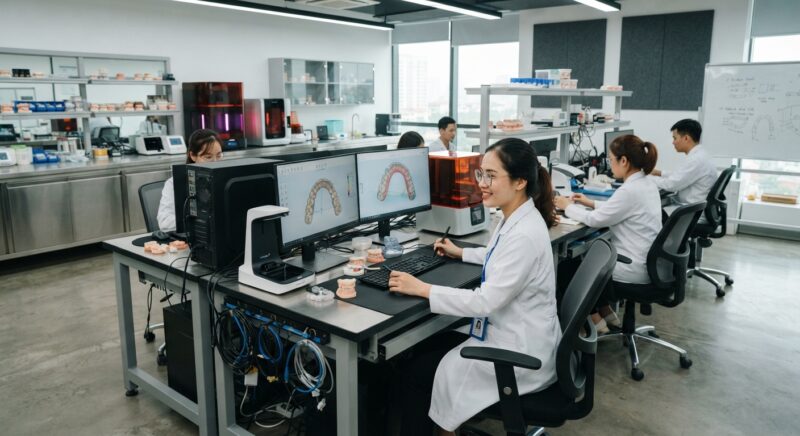
If you’ve invested in milling machines or 3D printers but lack dedicated CAD designers, outsourcing your CAD CAM design is a strategic solution. This service lets you operate your equipment at full capacity without hiring and training costly design specialists. You gain access to expert design talent, faster turnaround, and scalable support tailored to your production needs.
Consider integrating outsourced design services to maximize your equipment ROI and streamline your orthodontic aligner production workflow.
Conclusion and Call to Action
Choosing the right CAD CAM design partner for orthodontic aligner production 2026 is a vital decision that impacts quality, efficiency, and profitability. Evaluate partners based on accuracy, workflow integration, cost, and technology compatibility to find the best fit for your lab or DSO.
Step-by-Step Guide to Integrating a CAD CAM Design Partner into Your Lab Workflow
Successfully integrating a CAD CAM design partner into your dental lab or orthodontic practice workflow requires more than just signing a contract. It demands careful planning, clear communication, and ongoing management to ensure smooth collaboration. Below is a detailed, step-by-step guide to help you onboard and work effectively with your chosen design partner.
1. Define Your Objectives and Scope
- Identify volume and types of cases: Assess your current and projected orthodontic aligner production to determine how much design work you’ll outsource.
- Set quality and turnaround time goals: Establish clear expectations regarding accuracy, material compatibility, and delivery timelines.
- Determine integration needs: Decide whether you require the partner to integrate with your existing lab management software or scanner hardware.
2. Establish Communication Protocols
- Assign liaison personnel: Designate point persons on both sides to handle daily communications, troubleshooting, and workflow updates.
- Agree on file formats and transmission methods: Confirm preferred digital formats (e.g., STL, PLY) and secure data transfer channels.
- Set regular check-in schedules: Weekly or monthly meetings to review performance metrics, case feedback, and upcoming production changes.
3. Conduct Initial Pilot Projects
- Start with a limited batch: Send a small number of cases through the partner to evaluate design quality and process efficiency.
- Review and validate designs: Examine digital designs for fit, aesthetics, and compliance with your clinical protocols.
- Provide constructive feedback: Document any adjustments or corrections needed to fine-tune the partnership.
4. Integrate Data and Production Systems
- Implement API or software integration: If available, utilize APIs to automate file transfers and status updates.
- Train staff: Educate your team on new workflows, tools, or software interfaces to reduce errors.
- Develop contingency plans: Establish backup procedures for data transmission failures or urgent cases.
5. Monitor and Optimize Ongoing Collaboration
- Track key performance indicators (KPIs): Metrics such as turnaround time, case revision rates, and customer satisfaction should be regularly reviewed.
- Conduct quarterly reviews: Evaluate partnership performance, discuss challenges, and identify improvement opportunities.
- Stay updated on technology advancements: Collaborate on adopting new software versions, AI-driven design tools, or enhanced materials.
Common Mistakes When Outsourcing CAD CAM Design and How to Avoid Them
Outsourcing CAD CAM design can transform orthodontic aligner production, but it is not without pitfalls. Many dental labs and DSOs encounter challenges that can lead to inefficiencies, increased costs, or compromised quality. Understanding these common mistakes and proactively addressing them can safeguard your investment and improve outcomes.
1. Inadequate Vetting of Design Partners
Choosing a partner solely based on cost often leads to subpar design quality or unreliable service. Labs should:
- Request sample cases: Evaluate actual design files and physical models produced by the partner.
- Check references: Speak with existing clients to verify track record and responsiveness.
- Assess technology stack: Confirm the partner uses up-to-date software and hardware compatible with your systems.
2. Poor Communication and Expectations Management
Misalignment on timelines, design specifications, or file delivery can cause costly delays. To avoid this:
- Set clear SLAs (Service Level Agreements): Document turnaround times, revision policies, and quality standards.
- Establish transparent feedback loops: Use shared platforms or project management tools for case tracking and comments.
- Maintain regular contact: Schedule consistent meetings and updates to stay aligned.
3. Ignoring Regulatory and Data Security Compliance
Handling patient data requires strict adherence to privacy laws such as HIPAA or GDPR. Common oversights include:
- Failing to verify partner’s compliance: Confirm certifications and data handling policies.
- Not using secure file transfer protocols: Avoid unsecured email or public cloud storage for sensitive data.
- Lack of data backup and disaster recovery plans: Ensure partners have robust systems to prevent data loss.
4. Underestimating the Importance of Training and Change Management
New workflows and software can disrupt operations if staff are not adequately trained. Common mistakes include:
- Skipping training sessions: Allocate time and resources for comprehensive onboarding.
- Not documenting processes: Develop clear SOPs (Standard Operating Procedures) for design submission and review.
- Ignoring staff feedback: Encourage frontline users to report issues and suggest improvements.
Cost and Quality Considerations: Balancing Your Investment
Determining the right balance between cost and quality when outsourcing CAD CAM design is crucial for profitability and patient satisfaction. Understanding the nuances that affect both elements will empower labs and DSOs to make informed decisions.
Factors Influencing Cost
- Pricing models: Some partners charge per case, others on subscription or hourly basis. Volume discounts or bundled service packages can impact overall spend.
- Complexity of cases: Advanced designs requiring intricate tooth movements, attachments, or auxiliaries may incur higher fees.
- Turnaround time requirements: Expedited services typically cost more.
- Integration and training: Initial setup fees and staff training may be additional expenses.
- Revision policies: Understand whether corrections or redesigns are included or billed separately.
Quality Drivers to Evaluate
- Accuracy of digital designs: Precision in tooth positioning and occlusion directly affects aligner fit and treatment outcomes.
- Technological capabilities: Use of AI-assisted design, simulation tools, and validated algorithms improves predictability.
- Material compatibility: Ensure designs are optimized for the aligner materials you use to avoid manufacturing issues.
- Consistency and repeatability: Reliable partners maintain uniform quality across batches and over time.
- Compliance with clinical protocols: Adherence to your lab’s or DSO’s treatment philosophies and guidelines.
Strategies to Optimize Cost-Quality Balance
- Negotiate tiered pricing: Align costs with volume and complexity to reduce marginal expense.
- Leverage hybrid models: Outsource routine cases while retaining complex designs in-house.
- Set clear quality benchmarks: Use detailed design specifications and acceptance criteria to avoid costly remakes.
- Regularly audit outputs: Monitor design quality and intervene when deviations occur.
Market-Specific Insights: Tailoring CAD CAM Design Partnerships by Region and Practice Type
Market dynamics vary significantly across regions and types of dental practices or labs. Understanding these specifics can help tailor CAD CAM design partnerships for maximum efficiency and growth.
Regional Variations
- North America: High demand for digital workflows and regulatory scrutiny necessitate partners with strong compliance and innovation focus.
- Europe: Diverse regulatory environments and multilingual requirements call for partners with localized support and adaptability.
- Asia-Pacific: Rapidly growing orthodontic markets with price-sensitive customers require flexible pricing and scalable design capacity.
- Latin America: Emerging markets benefit from partners offering training and technology transfer to build local capabilities.
Practice and Lab Type Considerations
- Small independent labs: May prioritize affordability and ease of integration; require partners offering personalized support and training.
- Large DSOs: Need scalable, high-throughput design services with robust data security and centralized management features.
- Specialty orthodontic practices: Often demand highly customized designs and rapid turnaround for complex cases.
- Hybrid practices with in-house labs: Benefit from hybrid outsourcing models and software compatibility for seamless collaboration.
Adapting to Market Trends
- Increasing patient demand for aesthetics: Drives the need for more precise and esthetically optimized aligner designs.
- Growth of teledentistry: Requires design partners capable of supporting remote case submissions and virtual consultations.
- Focus on sustainability: Encourages partners to adopt eco-friendly materials and digital workflows minimizing waste.
Contact us today to learn how our expert CAD CAM design outsourcing can elevate your orthodontic aligner production capabilities and streamline your digital workflows.