Introduction to Tooth Preparation Guidelines for Monolithic Zirconia Crowns 2026
The tooth preparation guidelines for monolithic zirconia crowns 2026 are crucial for dental labs, DSOs, and clinicians aiming to deliver durable, esthetic, and well-fitting restorations. Monolithic zirconia crowns have gained prominence due to their superior strength and biocompatibility, making them a preferred choice for both anterior and posterior restorations. However, optimizing tooth prep according to the latest protocols is essential to achieve ideal crown longevity and patient satisfaction.
This comprehensive guide covers the key aspects of tooth preparation, including margin design, reduction requirements, occlusal considerations, and material-specific factors. It integrates clinical insights with CAD/CAM digital design outsourcing strategies, helping labs and practices enhance workflow efficiency and restorative outcomes.
What Are the Fundamental Tooth Preparation Guidelines for Monolithic Zirconia Crowns 2026?
The fundamental tooth preparation guidelines for monolithic zirconia crowns 2026 require a uniform occlusal reduction of 1.0 to 1.5 mm and a circumferential axial reduction of approximately 0.8 to 1.0 mm with a chamfer margin design.
These guidelines ensure adequate material thickness for strength while preserving as much natural tooth structure as possible. The margin should be clearly defined, smooth, and preferably a rounded chamfer to prevent stress concentration and facilitate accurate digital impressions. Proper taper (6 to 10 degrees total convergence angle) enhances crown retention and seating accuracy. The guidelines also emphasize avoiding sharp line angles and undercuts that can complicate CAD/CAM milling and bonding.
Why Is Proper Tooth Preparation Critical for Monolithic Zirconia Crowns?
Proper tooth preparation is critical for monolithic zirconia crowns because it directly influences crown fit, fracture resistance, and long-term clinical success.
Over-reduction can weaken the tooth and compromise pulp vitality, while under-reduction risks insufficient material thickness, leading to crown fracture or wear. An accurate and smooth preparation allows CAD/CAM systems to scan and design the restoration precisely, reducing the need for adjustments and remakes. Furthermore, correct preparation margins improve cement adhesion and minimize microleakage, which is essential for preventing secondary caries and periodontal complications.
How Does Tooth Preparation Affect CAD/CAM Digital Design Outsourcing?
Tooth preparation affects CAD/CAM digital design outsourcing by determining the quality and accuracy of the digital impression and subsequent crown design.
Well-executed preparations with clear margins and proper reduction enable design technicians to create precise digital models and restorations with fewer iterations. This reduces turnaround time and costs, benefiting both outsourcing dental labs and DSOs. Inadequate preparations may necessitate additional communication, redesigns, and potential remakes, increasing overall workflow inefficiencies. Outsourcing services specializing in monolithic zirconia crowns rely on consistent, guideline-compliant preparations to deliver high-quality digital designs and maintain client satisfaction.
Recommended Margin Designs for Monolithic Zirconia Crowns
The preferred margin design for monolithic zirconia crowns per the tooth preparation guidelines for monolithic zirconia crowns 2026 is a rounded chamfer or slight shoulder.
- Best for: Labs and clinicians seeking optimal marginal fit and stress distribution.
- Strengths: Reduces stress concentration, facilitates CAD/CAM scanning, enhances crown adaptation.
- Limitations: May require precise rotary instruments to achieve ideal smoothness; shoulder margins increase tooth reduction.
A feather-edge or knife-edge margin is generally discouraged for zirconia due to increased risk of marginal chipping and difficulty in digital scanning. The chamfer margin balances conservation of tooth structure and crown durability, aligning with CAD/CAM milling capabilities and zirconia sintering shrinkage allowances.
Occlusal and Axial Reduction Requirements
Following the tooth preparation guidelines for monolithic zirconia crowns 2026, the recommended occlusal reduction is between 1.0 and 1.5 mm to ensure sufficient material thickness for strength and esthetics.
- Best for: High-stress posterior crowns and anterior restorations requiring translucency.
- Strengths: Adequate thickness prevents crown fracture; supports shade layering if necessary.
- Limitations: Excessive reduction risks pulpal exposure; insufficient reduction compromises durability.
Axial reduction should be uniform, around 0.8 to 1.0 mm, with a total taper of 6 to 10 degrees. This geometry aids in crown retention and facilitates a consistent cement space during CAD design. Maintaining smooth axial walls without undercuts is critical for digital impression accuracy and milling precision.
What Are the Best Practices for Managing Occlusion in Monolithic Zirconia Crowns?
Best practices for managing occlusion in monolithic zirconia crowns involve designing occlusal contacts to withstand functional forces while minimizing stress concentrations.
Ensure occlusal anatomy is reduced and simplified slightly compared to natural dentition to prevent high-stress points. CAD/CAM software can simulate occlusal contacts and guide design adjustments. Communicate with the outsourcing CAD design team to review occlusal schemes, especially in DSOs managing complex cases. Proper occlusal management reduces the risk of crown fracture and antagonist wear, preserving long-term function.
Impact of Digital Impression Quality on Tooth Preparation and Crown Design
Digital impression quality directly impacts the success of tooth preparation guidelines for monolithic zirconia crowns 2026 by dictating the accuracy of crown margins and fit.
Clear, well-defined preparation margins are easier to capture with intraoral scanners, reducing the need for retakes and adjustments. High-resolution scans allow CAD technicians to create precise crown designs that align perfectly with the prepared tooth. Outsourcing dental labs often partner with advanced scanner manufacturers such as 3Shape and iTero to ensure optimal digital data quality, which complements the preparation guidelines and streamlines production workflows.
Comparison of Tooth Preparation Approaches by Practice Type
| Practice Type | Preparation Complexity | Best For | Strengths | Limitations |
|---|---|---|---|---|
| High-Volume Dental Labs | Standardized, precise | Large batch production | Consistent results, scalability | Less customization per case |
| Small Labs | Flexible, detailed | Custom, complex cases | Personalized service, adaptability | Longer turnaround times |
| Single-Dentist Practices | Moderate, efficient | Routine crowns | Cost-effective, simple workflow | Limited in-house design capacity |
| Dental Service Organizations (DSOs) | Highly standardized | Multi-site uniformity | Streamlined workflow, economies of scale | Requires centralized design coordination |
How Do Material Advances Affect Tooth Preparation Guidelines for Monolithic Zirconia Crowns 2026?
Material advances in zirconia, such as improved translucency and strength, impact tooth preparation guidelines by allowing slightly reduced thicknesses without compromising durability.
New generation high-translucency zirconia can be used with minimal occlusal reduction close to 1.0 mm while maintaining esthetic outcomes for anterior crowns. However, clinicians and labs must balance esthetics with strength requirements, particularly in posterior regions. These material improvements also influence CAD/CAM milling parameters and sintering protocols, which digital design outsourcing services must accommodate for optimal crown fabrication.
Integration of CAD/CAM Digital Design Outsourcing with Tooth Preparation Protocols
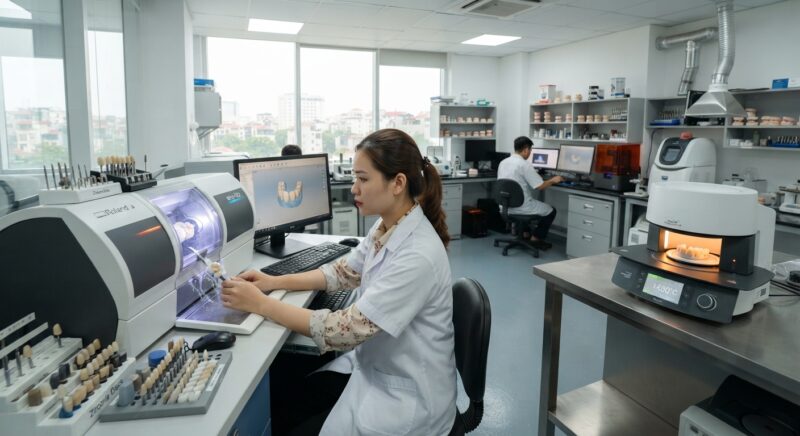
Integrating CAD/CAM digital design outsourcing with tooth preparation protocols ensures seamless workflows and consistent restoration quality.
Outsourcing design services specializing in monolithic zirconia crowns apply the tooth preparation guidelines for monolithic zirconia crowns 2026 to create highly accurate digital models, reducing chairside adjustments. This partnership benefits labs and DSOs lacking in-house design capacity or seeking to optimize throughput. Digital design providers can adjust crown parameters based on preparation scans and clinician feedback, accelerating turnaround and minimizing remakes.
What Are the Cost Considerations When Implementing These Guidelines?
Cost considerations when implementing tooth preparation guidelines for monolithic zirconia crowns 2026 include investment in precision rotary instruments, training, CAD/CAM scanning equipment, and outsourcing fees for digital design.
High-volume labs and DSOs may justify these investments through scalability and reduced remake rates. Smaller labs and single practices can leverage outsourcing to avoid upfront design software and personnel costs. Additional expenses may arise from updated milling machines or sintering furnaces compatible with advanced zirconia materials. Overall, adhering to these guidelines optimizes cost efficiency by minimizing material waste and improving restoration longevity.
Do You Need Design Capacity for Your New Equipment?
If your lab or clinic has recently invested in new milling or 3D printing equipment but lacks in-house CAD design expertise, outsourcing your digital design needs is an effective solution.
Our specialized CAD/CAM dental lab outsourcing service provides expert monolithic zirconia crown designs aligned with the latest tooth preparation guidelines for monolithic zirconia crowns 2026, allowing you to maximize your equipment’s potential without hiring additional staff.
Conclusion and Next Steps
Adhering to the tooth preparation guidelines for monolithic zirconia crowns 2026 is essential for dental labs, DSOs, and clinicians aiming to produce durable, esthetic, and precisely fitting crowns. Proper margin design, reduction protocols, and occlusal management, combined with advanced CAD/CAM digital design outsourcing, streamline workflows and enhance patient outcomes.
Contact us today to learn how our dental lab CAD/CAM digital design outsourcing service can help you implement these guidelines efficiently and elevate your restorative capabilities.
surgical guide design and digital crown design services also work well alongside these preparation protocols for comprehensive digital dentistry solutions.
For further clinical best practices, visit the American Dental Association and explore zirconia material innovations at Ivoclar Vivadent.
Step-by-Step Clinical Workflow for Optimizing Tooth Preparation
To achieve predictable outcomes with monolithic zirconia crowns, dental practitioners should adopt a structured, stepwise clinical workflow that integrates tooth preparation guidelines with modern digital tools and lab communication. Below is a detailed guide to navigating this process efficiently:
1. Comprehensive Case Assessment
- Patient Evaluation: Assess occlusion, periodontal health, existing restorations, and esthetic demands. Identify cases where monolithic zirconia is preferred due to strength needs, such as bruxism or posterior restorations.
- Diagnostic Imaging: Utilize CBCT or intraoral scanners to evaluate bone support and tooth morphology, facilitating preparation planning.
2. Pre-Preparation Planning
- Digital Mockups: Use CAD software to simulate crown shape, volume, and occlusal contacts based on initial scans, helping define reduction parameters.
- Selection of Margin Type: Choose margin design (shoulder, chamfer) based on esthetic zone, periodontal considerations, and lab capabilities.
3. Tooth Preparation Execution
- Use of Preparation Guides: Fabricate reduction guides (3D printed or vacuum-formed) corresponding to the planned reduction depths to ensure uniform occlusal and axial reduction.
- Stepwise Reduction: Perform initial gross reduction with coarse burs, followed by fine finishing burs to achieve smooth, rounded internal line angles and avoid sharp edges that can cause crown misfit or stress concentration.
- Margin Refinement: Carefully finish margin to create a well-defined line that the lab can accurately capture in scans or impressions.
4. Digital Impression and Communication
- Scan Verification: Immediately scan the prepared tooth to verify margin clarity and adequate reduction; rescan if necessary.
- Detailed Lab Prescription: Provide comprehensive notes to the lab, including occlusal scheme, preferred materials, and any patient-specific nuances.
5. Temporary Restoration and Follow-Up
- Provisionalization: Fabricate a provisional crown that protects the prep, maintains occlusal relationships, and supports soft tissues.
- Patient Instructions: Advise on care to prevent damage or movement before final seating.
- Final Assessment: Schedule follow-up to evaluate tissue response and prepare for final cementation.
Common Mistakes in Tooth Preparation for Monolithic Zirconia Crowns and How to Avoid Them
Despite advances in materials and technology, many dental professionals encounter pitfalls during tooth preparation that compromise crown fit, function, and longevity. Recognizing and mitigating these errors is vital:
1. Inadequate Occlusal Reduction
Problem: Insufficient occlusal reduction leads to thin zirconia walls, increasing risk of fracture or chipping, especially under heavy masticatory forces.
Solution: Follow manufacturer guidelines strictly, typically providing 1.0–1.5 mm occlusal reduction. Use reduction guides to ensure consistency.
2. Sharp Internal Line Angles
Problem: Sharp angles concentrate stress within the zirconia crown, causing cracks or distortions during sintering or loading.
Solution: Round all internal line angles smoothly using fine finishing burs to reduce stress risers and improve crown adaptation.
3. Poor Margin Visibility in Digital Scans
Problem: Margins that are subgingival or irregular can be obscured in scans, leading to inaccurate crown fabrication and marginal gaps.
Solution: Ensure margins are clearly visible, ideally at or just above the gingival crest. Use retraction cord or paste prior to scanning to displace soft tissues.
4. Over-Preparation Leading to Pulpal Exposure
Problem: Aggressive reduction beyond necessary guidelines compromises tooth vitality and increases postoperative sensitivity.
Solution: Carefully measure reduction depths with calibrated burs and guides. Preserve dentin thickness above pulp chambers.
5. Neglecting Occlusal Scheme Integration
Problem: Ignoring the patient’s occlusal scheme during prep results in premature contacts or interferences after crown cementation.
Solution: Analyze occlusion pre- and intra-operatively; adjust preparation to accommodate functional and parafunctional movements.
Cost and Quality Considerations for Dental Labs and Practices
Optimizing tooth preparation protocols for monolithic zirconia crowns directly impacts both operational costs and restoration quality. Dental labs and practices must balance these factors strategically to maintain profitability while ensuring clinical excellence.
Material Costs and Equipment Investment
Monolithic zirconia materials vary in quality and price, ranging from standard translucent blocks to high-translucency, multi-layered blanks. While premium materials enhance esthetics and strength, they also increase costs. Practices must evaluate:
- Bulk Purchasing: Negotiate volume discounts with suppliers to reduce per-unit costs.
- Equipment Upgrades: Invest in updated milling units and sintering furnaces that improve restoration precision and reduce remakes, justifying capital expense through efficiency gains.
Laboratory Workflow and Turnaround Times
Efficient lab processes, including digital impression integration and streamlined communication, reduce turnaround times and remakes, saving costs. Labs should:
- Implement standardized preparation acceptance criteria to minimize back-and-forth corrections.
- Use digital workflows that allow rapid design adjustments and quality control before milling.
Practice-Level Cost Efficiency
Clinicians can control costs by minimizing chair time and avoiding remakes through adherence to preparation guidelines. Practical strategies include:
- Utilizing preparation guides and digital scans to reduce errors.
- Training staff on updated protocols to ensure consistency.
- Maintaining open communication with labs to clarify expectations upfront.
Quality vs. Cost Trade-offs
While lower-cost zirconia blocks and faster milling may reduce immediate expenses, they risk compromised crown fit and longevity, leading to increased long-term costs from repairs or replacements. Both labs and practices should prioritize adherence to preparation standards and invest in proven materials and technologies for optimal outcomes.
Market-Specific Insights: Tailoring Preparation Guidelines for Different Dental Markets
The adoption of monolithic zirconia crowns and corresponding tooth preparation protocols varies globally, influenced by market-specific factors such as regulatory environments, patient demographics, and prevalent clinical practices. Understanding these nuances helps labs and clinicians customize approaches for regional success.
North America
This market favors high esthetic demands combined with durability, especially in private practices and DSOs. Practices benefit from:
- Advanced digital impression systems widely available for precise margin capture.
- Higher patient willingness to invest in premium materials, supporting multi-layered zirconia and custom shading.
- Stringent regulatory oversight requiring documentation of material biocompatibility and preparation quality.
Europe
European dental markets often emphasize minimally invasive dentistry and conservative preparations. Key considerations include:
- Adherence to strict CE standards for materials and devices.
- Preference for subgingival margin designs to optimize esthetics in anterior zones.
- Growing adoption of CAD/CAM outsourcing to centralized labs with expertise in zirconia restorations.
Asia-Pacific
Rapid urbanization and rising middle-class populations drive demand for durable, affordable restorations. Market-specific factors include:
- High volume of public and private dental clinics requiring efficient workflows and cost-effective solutions.
- Increasing use of digital dentistry, although penetration varies widely between urban and rural areas.
- Greater acceptance of monolithic zirconia in posterior teeth due to functional priorities over esthetics.
Emerging Markets
In developing regions, challenges include limited access to cutting-edge CAD/CAM equipment and materials. Labs and practices should:
- Focus on training clinicians in fundamental preparation principles to maximize outcomes with available resources.
- Leverage regional labs that can provide affordable zirconia blocks and milling services.
- Adopt simplified margin designs and preparation techniques suitable for manual impression workflows.